

Too Long? Read This First
- TikTok reaches nearly 2 billion monthly active users and generates the highest average engagement rate of any major social platform, at 3.70%.
- A TikTok marketing strategy connects content, advertising, and customer engagement to one measurable business goal. Posting alone isn't a strategy.
- 36% of direct social media purchases happen on TikTok, second only to Facebook, making it a real part of the buying journey, not just discovery.
- Managing comments and DMs matters as much as posting; slow replies lose leads a business has already earned.
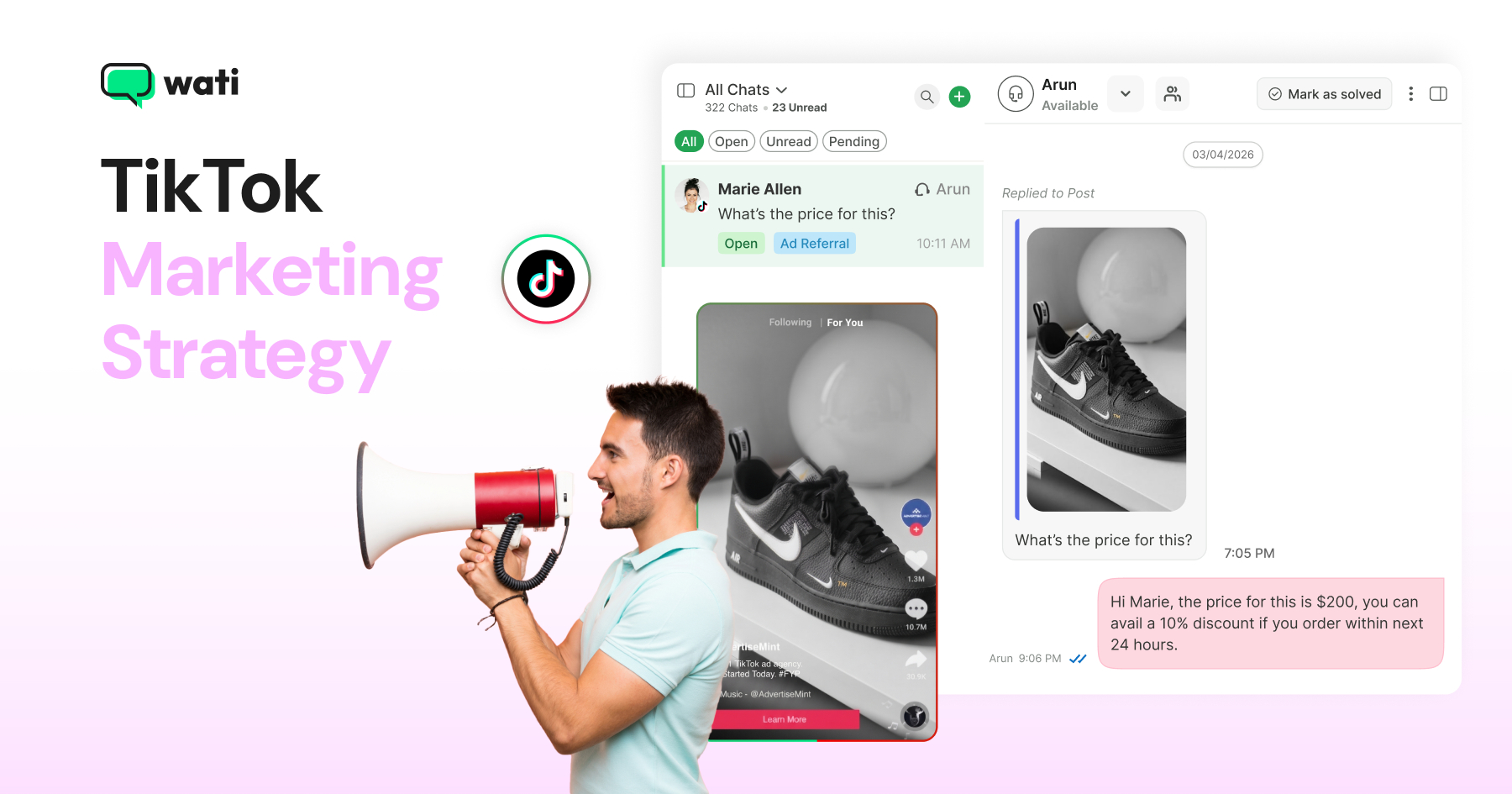
A TikTok marketing strategy is a plan that connects content, advertising, and customer conversations to one measurable business goal, and in 2026, it's one of the highest-leverage plans a business can build.
Businesses now use TikTok throughout the customer journey, from product discovery and consideration to direct purchases through TikTok Shop. Many customers and businesses also use TikTok Business Messaging to answer customer questions, continue conversations, and convert interest into sales.
Publishing videos consistently isn't enough. A successful TikTok marketing strategy connects content, advertising, and customer engagement to measurable business goals.
This guide explains how to build a TikTok marketing strategy, covering everything from planning content and running ads to measuring performance and improving results.
What is a TikTok Marketing Strategy?
A TikTok marketing strategy is a plan for using TikTok to achieve specific business goals, such as increasing brand awareness, generating leads, or driving sales. It brings together content, advertising, creator partnerships, and customer engagement into a single plan.
With a clear strategy, businesses can decide what to publish, where to invest their ad budget, and which metrics to track. Performance data also shows where campaigns need improvement.
Learn more about TikTok for Business to understand how businesses use the platform for content, advertising, and customer engagement.
Why Businesses Need a TikTok Marketing Strategy
Posting regularly on TikTok doesn't automatically translate into business growth. A marketing strategy connects content, advertising, and customer engagement to clear business goals, so businesses can measure what's working and where to improve.
Align Marketing Activities with Business Goals
Without a strategy, content, advertising, and customer engagement often work separately. A TikTok marketing strategy keeps all three focused on the same business goal.
Reach New Audiences Without a Large Following
TikTok's recommendation system surfaces content based on user interest and engagement rather than follower count alone. Businesses with smaller audiences can still expand their reach by publishing content that aligns with what their audience wants to see.
Support Product Discovery Throughout the Buying Journey
People use TikTok to discover products, compare brands, and decide what to buy. 36% of direct social media purchases happen on TikTok, second only to Facebook. A marketing strategy lets businesses create the right content for each stage of that journey instead of focusing only on awareness.
Reduce Friction Between Discovery and Purchase
Features like TikTok Shop, product tags, and live shopping let customers buy without leaving the app. Planning content around these features creates a smoother buying experience.
Measure Business Outcomes, Not Vanity Metrics
Views and likes help show how content is performing, but they rarely reflect business performance on their own. A TikTok marketing strategy defines the metrics that matter, whether that's website traffic, qualified leads, purchases, or return on ad spend. Looking beyond views helps identify which campaigns are contributing to business goals.
Start with a TikTok Business Account
A TikTok Business Account gives businesses access to the tools needed to run and measure a marketing strategy. Features such as analytics, TikTok Ads Manager, and TikTok Shop make it easier to track performance, reach new audiences, and manage commerce activities from a single account.
Every TikTok account starts as a Personal Account, and switching to a Business Account is free. Completing this step before publishing content or launching campaigns ensures access to the marketing and reporting features needed to support long-term growth.
For a step-by-step walkthrough, read How to Set Up a TikTok Business Account.
How to Build a TikTok Marketing Strategy
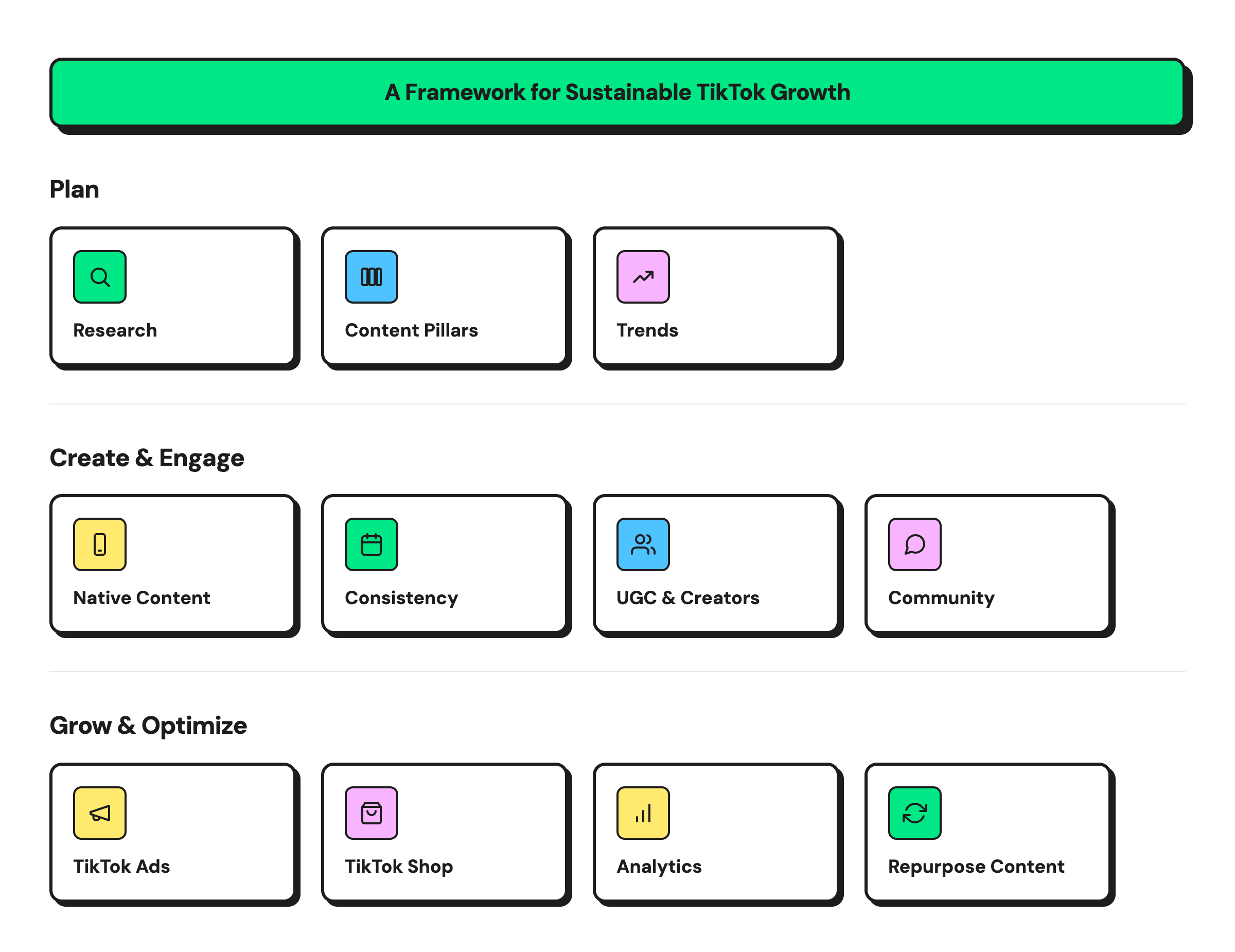
Building a TikTok marketing strategy involves more than posting videos consistently. It starts with understanding the audience, then creating content, running campaigns, engaging with customers, and measuring what works. The framework below walks through each step.
Step | Focus | Purpose |
1 | Research & TikTok Search | Understand your audience, competitors, and the keywords people actually search for on TikTok. |
2 | Content Pillars | Define 3–5 content themes that support your marketing goals. |
3 | Trends | Participate in trends that align with your brand and audience. |
4 | Native Content | Create videos that match TikTok's style and user expectations. |
5 | Consistency | Publish regularly and test different content formats. |
6 | User-Generated Content (UGC) and Creators | Build trust with authentic customer and creator content. |
7 | Community Engagement | Respond to comments and direct messages to strengthen customer relationships. |
8 | TikTok Ads | Scale high-performing organic content. |
9 | TikTok Shop | Sell products directly on TikTok. |
10 | Analytics | Measure performance and improve future campaigns. |
11 | Repurposing | Reuse successful content across channels. |
1. Research Your Audience, Competitors, and TikTok Search
- Understand your audience first: Analyze the topics they engage with, the questions they ask, and the problems they're trying to solve.
- Use TikTok Search for research: Explore search suggestions, trending videos, and comment sections to uncover what people are actively searching for.
- Optimize for TikTok SEO: Include the exact keywords your audience searches for in your captions, on-screen text, and spoken audio, as TikTok indexes all three.
- Analyze your competitors: Review their top-performing videos, content themes, creative formats, posting frequency, and audience engagement to identify gaps and opportunities.
- Use TikTok Creative Center: Discover trending keywords, hashtags, creators, and ads relevant to your industry.
- Plan content using data: Build your content strategy based on audience demand and search trends rather than assumptions.
2. Define Your Content Pillars
Content pillars are the main topics a business posts about on TikTok. Choosing three to five pillars creates a clear structure for planning content.
Build each pillar around what the audience wants to see and what the business knows best. Common content pillars include:
- Educational: Tips, tutorials, and industry insights.
- Products: Demonstrations, launches, and feature highlights.
- Behind the scenes: Team culture, workflows, or how a product or service is delivered.
- Customer stories: Testimonials, case studies, user-generated content, and success stories.
- Frequently asked questions: Answers to common customer questions and buying concerns.
A mix of educational, product, and customer-focused posts creates a more balanced content strategy rather than relying on a single type of video.
3. Participate in Relevant TikTok Trends
- Focus on relevant trends: Participate only in trends that naturally align with your brand, products, services, or audience interests.
- Don't chase every viral trend: Prioritize trends that support your content goals rather than jumping on every popular format.
- Evaluate audience relevance: Make sure each trend resonates with your target audience before creating content.
- Use trends to strengthen your message: Trending sounds, hashtags, formats, and challenges should enhance your content, not distract from it.
4. Create Native TikTok Content
- Create content specifically for TikTok: Avoid simply repurposing ads or campaigns from other platforms.
- Match the platform's style: Videos that feel native to TikTok are more engaging than traditional, ad-like content.
- Provide value through your content: Demonstrate products, answer common questions, share quick tips, or offer behind-the-scenes insights.
- Integrate your product naturally: Let your product or service fit organically into the story instead of making it the sole focus.
- Prioritize authenticity over advertising: Native content should feel like regular TikTok content while remaining aligned with your brand and production standards.
5. Post Consistently and Test New Formats
- Prioritize consistency: Choose a posting schedule your team can maintain and stick to it over the long term.
- Learn from regular publishing: Consistent posting helps identify which topics, formats, and content styles perform best.
- Experiment with different formats: Test various hooks, video lengths, editing styles, and storytelling techniques.
- Optimize through testing: Small creative changes can quickly reveal what resonates with your audience.
- Review and refine your strategy: Analyze performance regularly, double down on successful formats, and continue testing new ideas.
6. Build Trust with TikTok UGC and Creator Content
- Incorporate user-generated content (UGC): Customer-created content builds trust and provides authentic social proof.
- Encourage customer participation: Ask customers to share reviews, product demonstrations, or post-purchase experiences on TikTok.
- Repurpose UGC with permission: Feature customer content on your brand's TikTok account to add authenticity and variety.
- Partner with relevant creators: Collaborate with creators whose audience closely matches your target customers.
- Prioritize engagement over follower count: Creators with highly engaged, relevant audiences often deliver better results than larger, less-targeted influencers.
7. Engage with Customers Through Comments and DMs
- Respond quickly to comments and DMs: Timely replies help build trust and keep potential customers engaged.
- Actively engage with your audience: Answer questions, acknowledge feedback, and continue meaningful conversations in the comments.
- Move complex conversations to DMs: Shift detailed inquiries to direct messages when personalized support is needed.
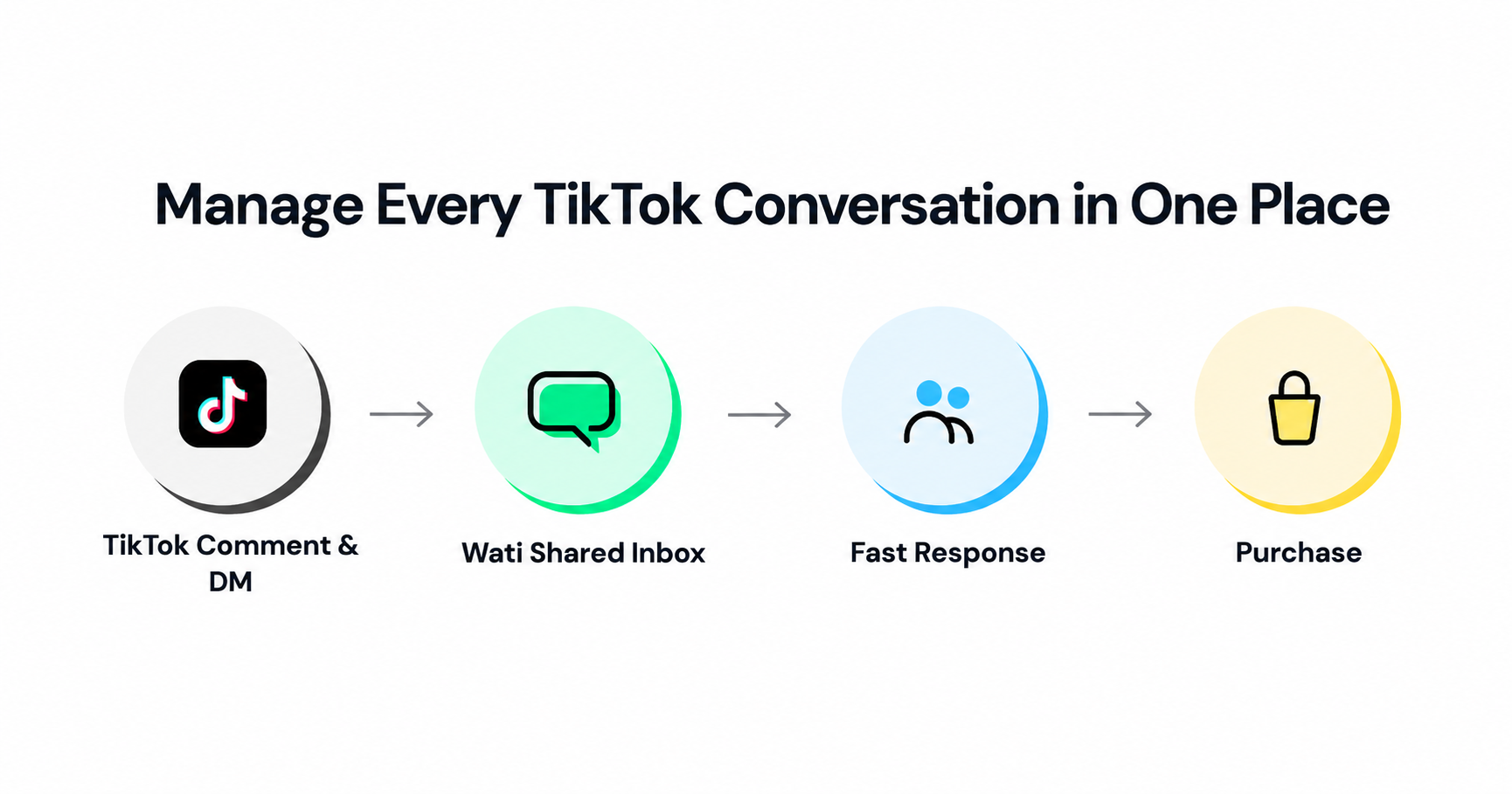
- Use a shared inbox as you scale: Centralize conversations so teams can respond faster, assign inquiries, and maintain consistent communication across channels.
8. Scale High-Performing Content with TikTok Ads
Once organic content starts generating consistent engagement, businesses can use TikTok Ads to expand their reach and support different campaign objectives. Different campaign objectives call for different ad formats.
The table below covers the ad formats most businesses use in TikTok Ads Manager.
Ad Format | Best For | Minimum Daily Budget* |
In-feed ads | Brand awareness, website traffic, and conversions | Around $20 per ad group, $50 per campaign |
Spark ads | Boosting high-performing organic posts | Around $20 per ad group, $50 per campaign |
Click-to-message ads | Lead generation and direct sales | Around $20 per ad group, $50 per campaign |
Rather than creating new ad creatives for every campaign, start with organic videos that have already performed well.
Note: Budget minimums and ad formats can change over time. Always check TikTok Ads Manager for the latest requirements before launching a campaign.
9. Sell Directly Through TikTok Shop
TikTok Shop allows businesses to sell products without directing customers to an external website. Products can be tagged in videos and livestreams, making it easier for viewers to purchase while they're already engaging with the content.
Discovery on the platform now rivals traditional channels: a 2026 GlobalData survey found 67% of consumers turn to TikTok Shop to discover new products and brands, ahead of Amazon (57%) and search engines (35%).
Livestreams are one of TikTok Shop's strongest commerce features. They give businesses an opportunity to demonstrate products, answer questions, and interact with potential customers in real time, helping reduce hesitation before purchase.
One example is Mavwicks Fragrances, which generated roughly $300,000 to $400,000 in annual sales before joining TikTok Shop. According to founder Megan Reep, the brand jumped to $32 million in sales in its first year on TikTok Shop.
10. Measure and Refine Your TikTok Performance
Review TikTok analytics regularly to understand which videos are generating the most reach, watch time, engagement, and conversions. These insights show what resonates with the audience and provide a stronger basis for planning future content.
Go beyond engagement metrics wherever possible. Track website visits, leads, purchases, and return on ad spend to understand whether TikTok is contributing to business goals. Connecting TikTok's Conversions API also helps attribute customer actions to specific campaigns, giving businesses a clearer view of what's driving results.
11. Repurpose TikTok Content Across Every Channel
A video that performs well on TikTok doesn't have to stay just there. Repurposing successful content helps businesses reach more people without starting from scratch every time.
Adjust the video to fit each platform instead of reposting the same version everywhere. A single TikTok video can often be adapted for:
- Instagram Reels
- YouTube Shorts
- WhatsApp Status
- Facebook Reels
Adjust the caption, video length, or call to action so the content fits each platform.
Common TikTok Marketing Mistakes to Avoid
Even businesses with strong social media strategies can struggle on TikTok if they apply the same approach across every platform. Avoiding these common mistakes helps build a more effective TikTok marketing strategy.
Boosting Content Before Testing It Organically
Not every video is worth promoting. Review organic performance first, then invest in videos that already generate strong engagement. This reduces the risk of spending budget on content that hasn't connected with the audience.
Ignoring Comments and Direct Messages
Comments and direct messages are opportunities to continue the conversation. Slow responses can mean missed questions, lost leads, and lower customer engagement.
Measuring Success Only by Views and Followers
Views and follower growth show how many people saw the content, but they don't measure business impact. Track engagement, watch time, clicks, leads, and conversions alongside reach to understand what's working.
Skipping Conversion Tracking
Without conversion tracking, it's difficult to measure campaign performance or attribute leads and sales. Connecting conversion events provides a clearer picture of which campaigns are delivering results.
Choosing the Wrong Account Type
A Personal Account doesn't include the same business tools as a TikTok Business Account, including access to TikTok Ads Manager, TikTok Shop, and business analytics. Before publishing content, compare a TikTok Business Account vs. Personal Account and choose the option that supports your marketing goals.
Prioritizing Promotion Over Value
Every video doesn't need to sell. Educational content, product demonstrations, customer stories, and behind-the-scenes videos often build more trust than constant promotional posts.
Best Tools to Support Your TikTok Marketing Strategy
The best TikTok marketing tools help teams manage content, campaigns, and customer conversations as the business grows.
TikTok Business Center: Manage ad accounts, TikTok Shop, business assets, and campaign access from a single dashboard. It's also the starting point for running and managing TikTok advertising.
TikTok Creative Center: Discover trending hashtags, keywords, ads, and creative insights to plan content around what people are already engaging with.
Analytics tools: As publishing volume increases, reporting tools can help track performance across campaigns, compare results over time, and share insights with the team.
Shared inbox: Managing TikTok, Instagram, and WhatsApp in separate apps can slow response times and make conversations harder to track. A shared inbox for TikTok, Instagram, and WhatsApp keeps customer messages in one place, helping teams collaborate and respond faster.
Put Your TikTok Marketing Strategy into Action with Wati
A successful TikTok marketing strategy doesn't end when someone comments on a post or sends a direct message. Responding quickly and managing conversations efficiently is just as important as creating great content.
With Wati, teams can manage TikTok, WhatsApp, and Instagram conversations from a single shared inbox, assign chats, collaborate with teammates, and keep customer conversations organized without switching between multiple apps.
Book a demo to see how Wati helps businesses turn TikTok engagement into customer conversations.
Frequently asked questions
What is a TikTok marketing strategy?
A TikTok marketing strategy is a plan for using TikTok to achieve business goals through content, advertising, customer engagement, and performance tracking.
Why is TikTok important for business marketing?
TikTok helps businesses reach new audiences, drive product discovery, generate leads, and increase sales through organic content, ads, and TikTok Shop.
How often should businesses post on TikTok?
Post consistently rather than frequently. Choose a schedule your team can maintain and refine it based on performance data.
Do I need a TikTok Business Account for marketing?
Yes. A TikTok Business Account provides access to analytics, TikTok Ads Manager, TikTok Shop, and other tools needed to run and measure marketing campaigns.
What should businesses measure on TikTok?
Track engagement, watch time, website traffic, leads, conversions, and return on ad spend instead of relying only on views and followers.
Can small businesses succeed on TikTok without a large following?
Yes. TikTok recommends content based on relevance and engagement, allowing smaller accounts to reach new audiences without a large follower base. Small businesses on TikTok Shop grew sales 66% in 2025, per TikTok Shop data.
Should I use TikTok Ads or organic content?
Use both. Organic content helps identify what resonates with your audience, while TikTok Ads help scale high-performing content.
How can businesses manage TikTok messages more efficiently?
A shared inbox lets teams manage TikTok, WhatsApp, and Instagram conversations from one place, so no separate tool is needed and response times improve.
Related posts
- Why Isn’t Instagram Engagement Converting Into Leads? (And How To Fix It)
learn what are the ways to optimize instagram engagement and how to turn public comments and private DMs into leads to improve your sales pipeline and conversions.
- The WhatsApp Marketing Calendar That Plans Your Week For You
Learn how to plan your WhatsApp marketing calendar with a 7-day weekly structure, content pillars, audience segmentation, and Wati’s AI-powered campaigns
- Instagram Comment Automation: Never Miss a Lead in Your Comments Again
Learn how Instagram comment automation works, the best use cases for teams, and how to set up comment-to-DM flows that capture leads and convert.
- 40 Indian Festival Templates for WhatsApp: Diwali, Holi, Eid, Christmas & More
Discover 40 ready-to-use Indian festival templates for WhatsApp. Customize and send festive wishes, sale announcements, and offers in minutes.