
Too Long? Read This First
- A WhatsApp marketing calendar is only as good as the weekly system behind it. Without a fixed rhythm, campaigns default to last-minute scrambles that hurt quality scores and audience trust
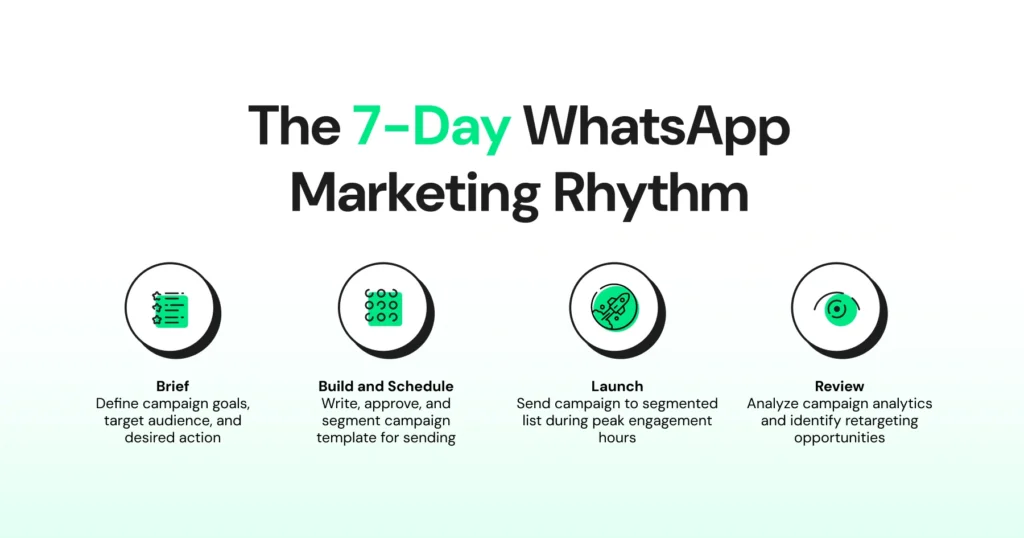
- The 7-day cadence of briefing on Monday, scheduling on Wednesday, launching on Thursday, and reviewing on Saturday makes consistent execution the default
- Sending on Tuesday to Thursday between 10 am and 12 pm and 4 pm and 6 pm consistently delivers the strongest engagement
- Content pillars, audience segmentation, and scheduled campaigns remove the guesswork from every weekly send
The businesses getting consistent results on WhatsApp are not sending better messages. They are sending planned ones.
Campaigns briefed on Monday. Scheduled by Wednesday. Live on Thursday. Reviewed on Saturday. Every week, without the scramble.
That rhythm is what a WhatsApp marketing calendar actually is.
This guide builds that cadence for you, covering everything from send windows and content pillars to audience segmentation, campaign scheduling, and how Wati’s AI-powered Campaign Calendar takes the guesswork out of deciding what to send next.
Why Most WhatsApp Marketing Feels Like a Last-Minute Rush
Every business starts WhatsApp marketing with good intentions.
The open rates are real, engagement numbers are convincing, and the channel clearly works. Yet, a few months in, most teams find themselves in the same place: inconsistent sends, chasing festivals at the last minute, and wondering why results are so unpredictable.
The process behind the campaign is where things fall apart.
- No planning buffer means no Meta approval time. Templates submitted the day before a broadcast campaign needs to go live have no room for rejection or revision. One bounce from Meta and the whole campaign collapses.
- No segmentation means the full list gets everything. When there is no time to filter, everyone gets the same message regardless of where they are in the customer journey. Relevance drops. Block rates climb.
- No review means the same mistakes repeat. Without a structured look back at what worked, each campaign starts from zero. There is no compounding improvement, just the same guesswork on a different date.
There is also a subtler issue worth paying attention to. WhatsApp is a permission-based channel. Send too infrequently, and subscribers forget who you are. Send reactively with generic messages, and they start ignoring you, or worse, blocking you.
A low quality score affects the deliverability of everything that follows.
A structured weekly calendar changes all of this by making consistent execution the default rather than the exception.
Bonus Read: 12 Best WhatsApp Marketing Software You Need to Know in 2026
The 7-Day WhatsApp Marketing Plan
Marketing teams getting consistent results on WhatsApp think in weeks. Rather than treating each campaign as a standalone event, they run the same planning rhythm every seven days.
The work stays manageable, the quality stays high, and nothing gets rushed out the door at the last minute.
Keep reading to see what that rhythm looks like in practice.
Monday: Brief
Monday is for decisions, not writing. Look at the coming week, identify the one or two campaigns worth sending, and define the goal for each.
- Who is this for?
- What action should it drive?
- Which segment of your contact list does it apply to?
Getting these answers down on Monday means everything that follows has a clear direction.
Wednesday: Build and Schedule
By Wednesday, your template should be written, approved, and ready to schedule. This is also when segmentation happens.
Rather than sending to your full list, use Wednesday to filter by purchase history, engagement level, location, or any other attribute that makes the message more relevant.
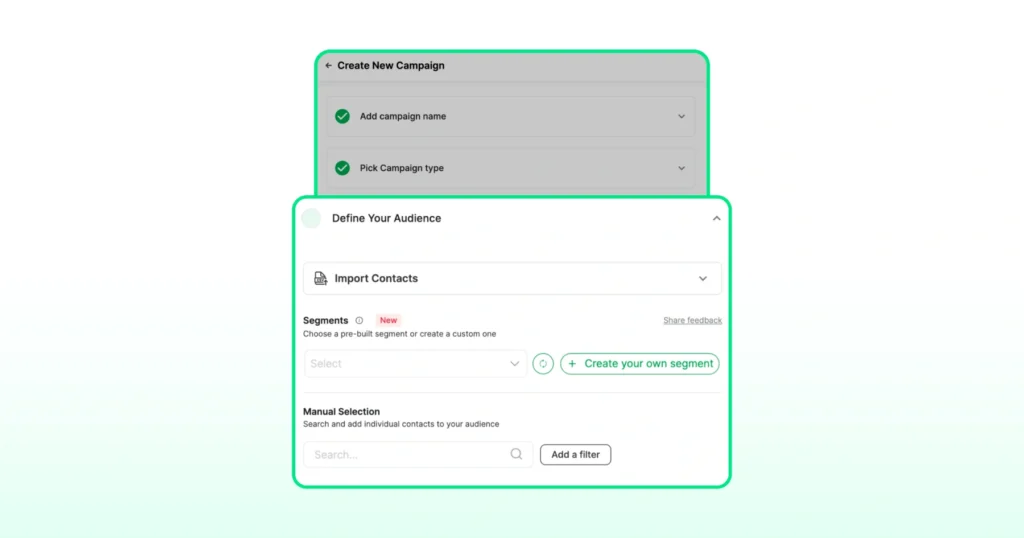
In Wati, you can apply predefined segments directly during campaign creation, which makes this step significantly faster than building lists from scratch each time.
Thursday: Launch
Thursday is consistently one of the highest engagement days for WhatsApp marketing, with send windows between 10 am and 12 pm and again between 4 pm and 6 pm showing the strongest open and response rates.
Campaigns scheduled on Wednesday go live on Thursday without any last-minute scramble.
Saturday: Review
Before the next week begins, spend thirty minutes in Wati’s Campaign Analytics. Look at delivery rates, read rates, replies, and any retargeting opportunities.
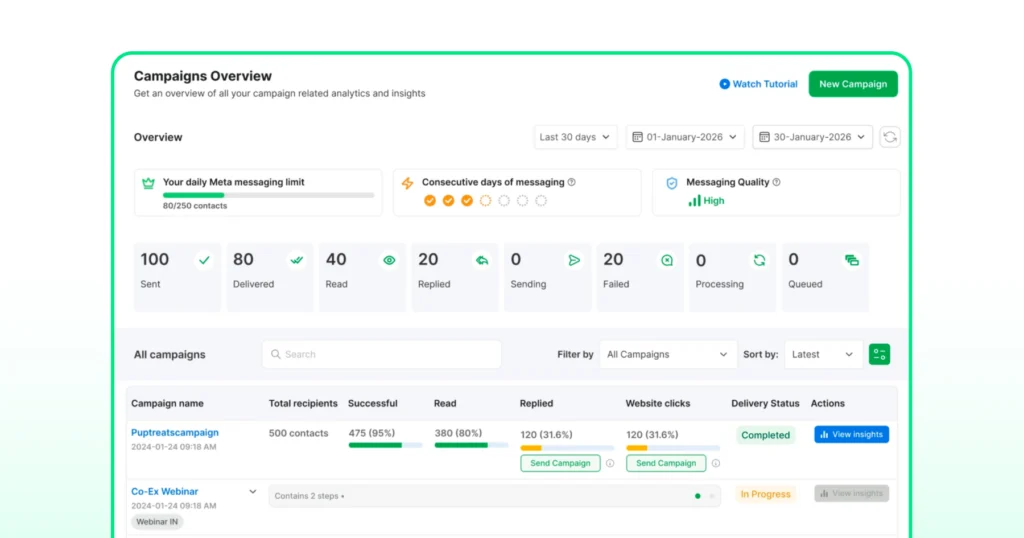
The contacts who read but did not respond are a warm audience for your next send. The ones who replied have already started a conversation worth continuing.
This four-step process takes less time than most teams spend reacting to a single missed campaign. As it repeats every week, the process gets faster, and the results get better with each cycle.
Added Resource: WhatsApp Broadcast vs Group – How are they Different for Businesses?
When Should You Actually Send WhatsApp Marketing Messages?
Timing on WhatsApp matters more than most marketers expect. Unlike email, where messages sit in an inbox waiting to be opened, WhatsApp notifications land on a lock screen.
Send at the wrong time, and you are competing with a commute, a meeting, or a late night when nobody wants to hear from a brand.
The good news is that the data on this is fairly consistent across markets.
- Tuesday, Wednesday, and Thursday are the strongest days for marketing sends.
- Mondays carry the mental weight of the week starting, and audiences are less receptive.
- Fridays see attention drift toward the weekend.
- Weekends can work for certain categories like food, retail, and entertainment, but for most businesses, the midweek window is the reliable choice.
Within those days, two send windows consistently outperform the rest.
- 10 am to 12 pm falls during a natural pause in people’s mornings. Work has started, the initial rush has settled, and attention is available for a well-timed message.
- 4 pm to 6 pm catches the wind-down before the end of the workday. People are wrapping up, checking their phones more frequently, and are more likely to act on an offer or reminder before the evening begins.
There is one more variable worth considering: your specific audience.
A D2C brand selling to homemakers in Southeast Asia will see different peaks than a B2B SaaS company targeting founders in Europe.
The windows above are a strong starting point, but after four to six weeks of sends, your Wati campaign analytics will show you exactly when your audience is most responsive. Let that data override any general recommendation, including this one.
What Should You Actually Send Each Week?
One of the most common reasons a WhatsApp marketing calendar falls apart after the first few weeks is content fatigue.
Teams run out of ideas, start repeating themselves, or default to sending a promotion every single time. Audiences notice. Unsubscribe rates go up, and engagement goes down.
The solution to this is content pillars. Rather than deciding what to send from scratch each week, you define three or four repeatable content categories in advance and rotate through them.
Your WhatsApp broadcast campaign planning becomes a matter of filling a known structure, not staring at a blank page every Monday.
This is a pillar framework that works across most business categories.
1. Promotional
Offers, discounts, limited-time deals, and product launches sit here. These are your direct revenue drivers, and they should make up no more than one in three sends.
WhatsApp audiences tolerate promotion when it is occasional and relevant. When it becomes the only thing they hear from you, block rates climb fast.
2. Educational
This pillar builds trust between purchase moments. How-to guides, product tips, industry updates, and behind-the-scenes content all belong here.
Educational content keeps your audience subscribed during the weeks when you have nothing to sell, and it makes your promotional sends more credible when you do.
3. Transactional and Triggered
These are the high-relevance sends tied to customer behavior. Restock alerts, appointment reminders, order updates, and re-engagement messages for contacts who have gone quiet.
Because the message matches exactly where the customer is in their journey, this pillar consistently delivers the highest open rates of any campaign type.
4. Seasonal and Event-Based
This is where your WhatsApp marketing calendar connects to the broader cultural and commercial calendar. Festivals, holidays, sporting events, and local moments your audience cares about. The key with this pillar is lead time.
A Diwali campaign briefed in September is a completely different execution from one briefed the night before. Planning this pillar at least three to four weeks ahead is what separates businesses that capitalize on seasonal moments from those that scramble through them.
With these four pillars mapped out, content batching becomes straightforward. On Monday, during your brief step, you are simply deciding which pillar the week’s send belongs to and what the specific angle is.
The creative work gets faster, the variety stays consistent, and your audience gets a feed that feels curated rather than random.
Who Should You Actually Be Sending To?
Sending the same message to every contact on your list is one of the most common mistakes in WhatsApp campaign planning. It feels efficient, but it works against you.
A customer who bought last week has completely different needs from someone who has not engaged in three months. Sending them the same promotional message not only underperforms; it actively damages the relationship with both of them.
Audience segmentation is what makes your WhatsApp marketing calendar precise rather than just consistent. Instead of blasting your full list every week, you match the right message to the right group of people at the right moment in their journey.
1. New Contacts
These are subscribers who have recently opted in but have not yet made a purchase or taken any meaningful action. The goal with this segment is not conversion; it is familiarity.
Educational content, brand story, and light product introductions work best here. Hitting a new contact with a hard discount in their first week sets the wrong expectation and attracts the wrong kind of customer.
2. Active Buyers
Customers who have purchased within the last 30 to 90 days are your most valuable segment. They already trust you enough to buy, and they are most likely to do so again. This group responds well to new arrivals, loyalty rewards, cross-sells relevant to their last purchase, and time-sensitive offers. Because their intent is already established, your promotional pillar performs best here.
3. Lapsed Customers
These are contacts who engaged or made a purchase at some point but have since gone quiet. Rather than sending them the same campaigns as your active buyers, this segment needs a re-engagement approach.
A well-timed message acknowledging the gap, paired with a genuinely valuable offer, can bring a significant portion of this group back into your active customer base.
In Wati, campaign retargeting lets you identify exactly who read your last message but did not respond, making this segment far more precise than guessing based on purchase dates alone.
4. Broadcast List Segments by Interest or Behavior
Beyond lifecycle stage, segmentation by product interest, location, language, or past campaign behavior makes every send more relevant.
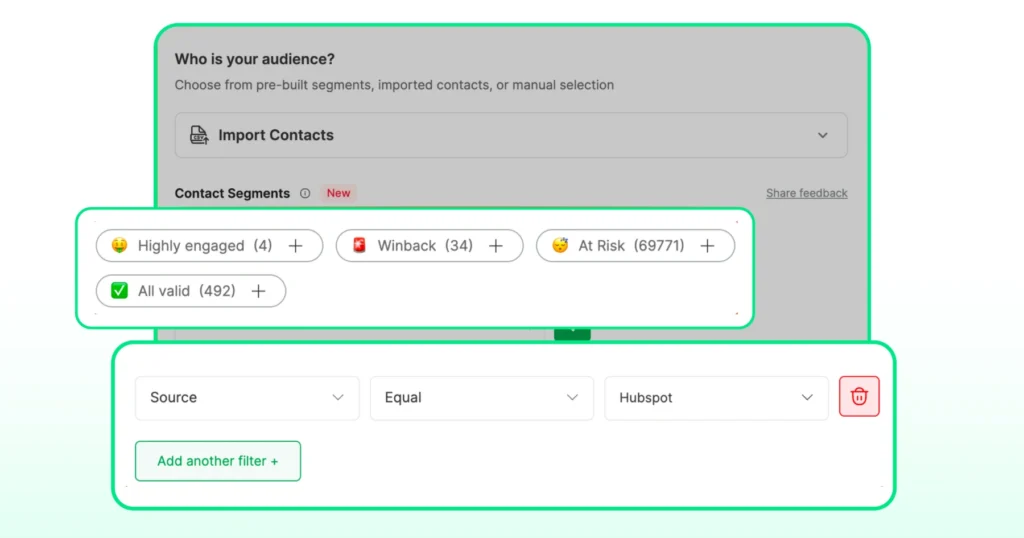
Wati’s predefined segments and custom segments let you filter your contact list during campaign creation without having to manually build new lists each time.
- A clothing brand can send a women’s collection campaign exclusively to contacts who have previously engaged with women’s product messages.
- A food business can filter by city for a location-specific offer.
The more specific the audience, the stronger the response.
The practical outcome of good segmentation is that your weekly cadence produces better results with fewer sends. You are not reaching more people. You are reaching the right people, which is a fundamentally different goal and a much more sustainable one for your WhatsApp quality score.
How do You Actually Schedule and Manage Campaigns in Wati?
Understanding the weekly cadence is one thing. Having the right tools to execute it without dropping the ball is another.
This is where Wati’s campaign feature does the heavy lifting inside your WhatsApp marketing calendar.
Here is how the core features fit together in practice.
Campaign Scheduling
When creating a campaign in Wati, you can choose to send it “immediately” or “schedule” it for a specific date and time. This is the foundation of the Wednesday build step in your weekly plan.
Rather than sitting at your desk on Thursday morning waiting to hit send, you set the time on Wednesday and walk away. The campaign goes out exactly when you planned it, whether that is Thursday at 10 am or three weeks from now for an upcoming festival.
All scheduled campaigns sit in the Scheduled Campaigns tab, where you can view, edit, or cancel them before they go live.
If a festival gets moved, a promotion changes, or you want to adjust the copy after a final review, everything is accessible in one place before the send happens.
Predefined and Custom Segments
Rather than uploading a new contact list for every campaign, Wati lets you filter your existing contacts directly during campaign creation.
On the Pro and Business plans, predefined segments based on customer attributes and behavior are available at the scheduling stage. This is what makes the segmentation work from the previous section actually executable within a Wednesday workflow rather than a separate hours-long task.
Campaign Analytics and Retargeting
After every send, Wati’s Campaign Analytics show you delivery rates, read rates, replies, and link clicks broken down by recipient.
This is the data that powers your Friday review step. From the analytics view, you can retarget contacts directly without manually building a new list. On all plans, you can follow up with contacts who read your message.
On Pro and Business plans, retargeting gets considerably more precise: you can target contacts who replied, who ignored the message entirely, who read it but did not respond, or who clicked a specific link but did not convert.
Auto-Retry
Available on Growth, Pro, and Business plans, auto-retry attempts to resend messages that fail due to Meta’s per-user messaging limits.
For high-volume sends, this feature quietly protects your reach without any manual intervention.
Together, these features turn the 7-day plan from a framework into an actual operating system. The planning happens once. The execution is largely automated, and the review loop feeds directly back into the following week’s brief.
How does Wati’s Campaign Calendar Take the Guesswork Out of WhatsApp Planning?
Every framework in this guide requires one thing: someone has to decide what to send next. That decision, repeated every week, is where most WhatsApp marketing calendars quietly break down.
Not because the system is wrong, but because the planning layer depends on the marketer having enough context and bandwidth to make a good call every Monday morning.
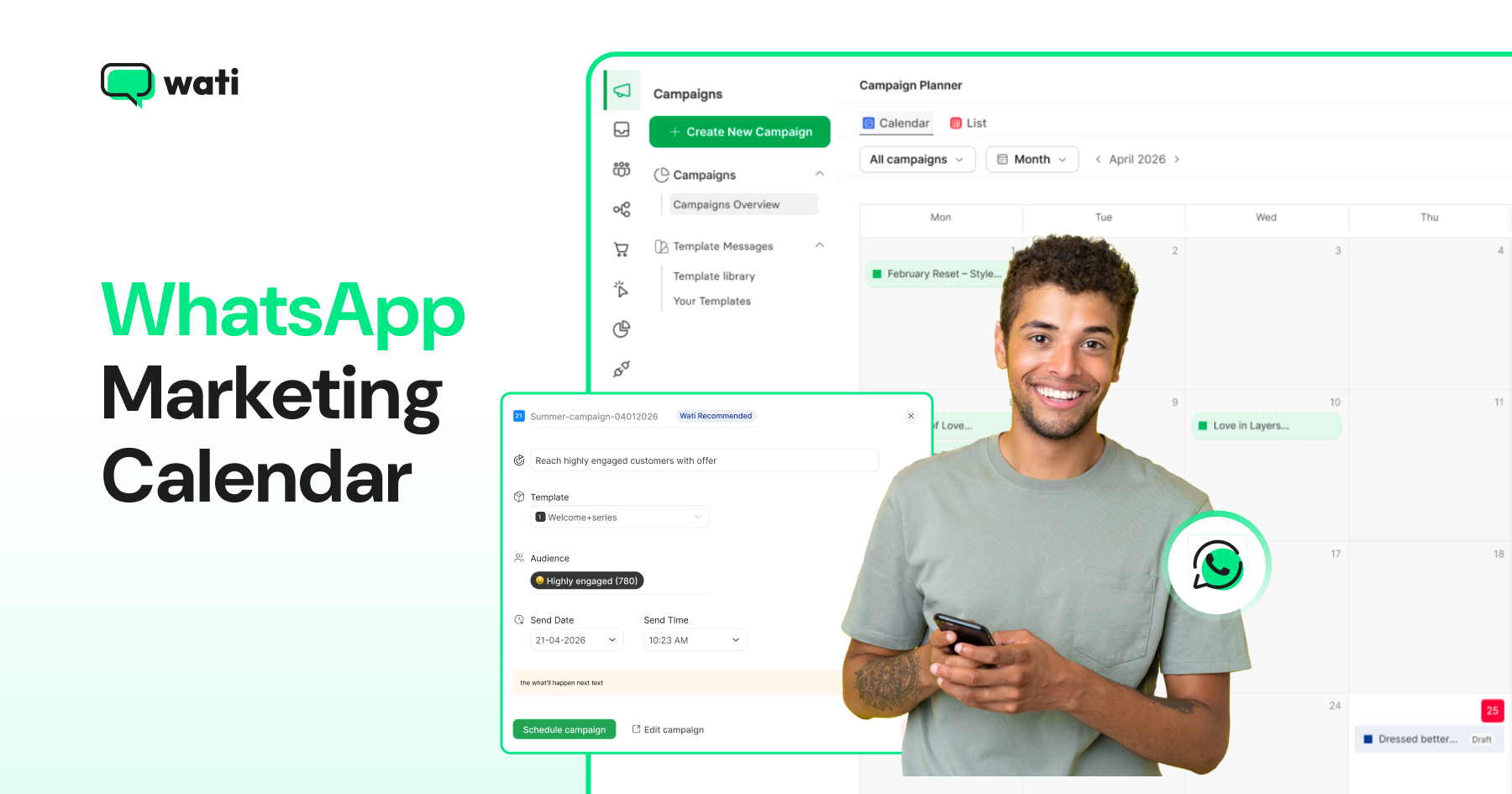
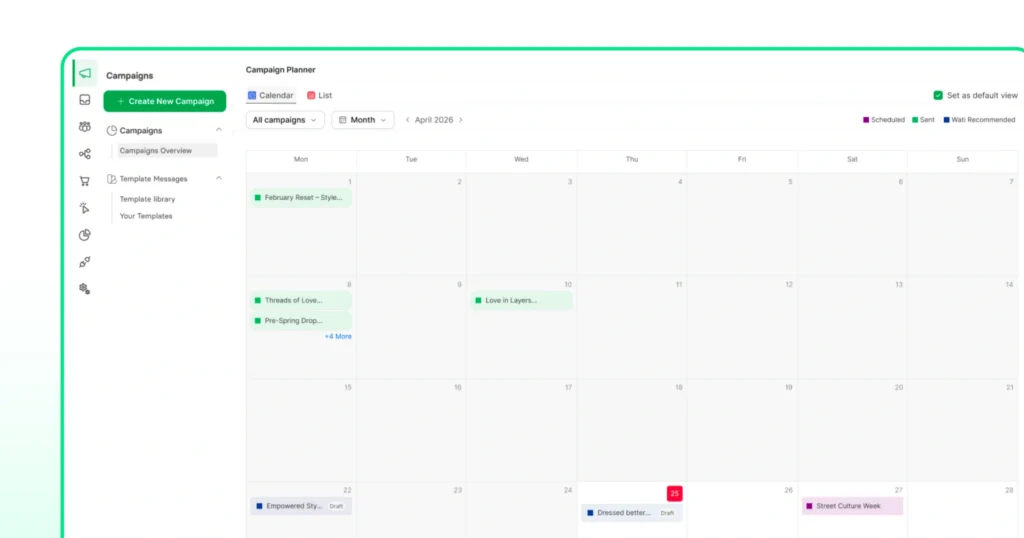
Wati’s Campaign Calendar, available on Pro and Business plans, is built to solve exactly this. It gives you a visual view of all upcoming scheduled campaigns in one place, so you can see what is going out, when, and where the gaps in your schedule are.
For teams managing multiple campaigns across different segments, this single view replaces the combination of spreadsheets, reminders, and mental overhead that most marketers have accepted as normal.
What makes it different from a basic scheduler is the AI layer built on top of it.
Wati Recommended Campaigns
Wati Recommended Campaigns analyzes your contact list, past campaign performance, and the broader marketing calendar to surface campaign suggestions directly inside your Campaign Calendar.
Upcoming festivals relevant to your audience. Re-engagement opportunities for contacts who have gone quiet. Promotional windows based on your historical send data. Each suggestion comes with a recommended audience and timing window, ready to act on or adapt.
Specifically for seasonal WhatsApp campaign planning, this solves a real problem.
Keeping track of which festivals and cultural moments matter for your audience across markets like India, Southeast Asia, and the Middle East is genuinely difficult to do manually.
Wati Recommended Campaigns surfaces the relevant ones ahead of time, with enough lead time to get templates approved and segments prepared before the moment arrives.
The weekly brief goes from a creative exercise to an editorial one. The ideas are already there. The judgement call on which ones to run remains yours.
Build Your WhatsApp Marketing Calendar Inside Wati
A repeatable weekly plan, the right send windows, a content pillar framework, precise segmentation, and an AI layer that surfaces what to send next. Put together, these elements turn WhatsApp from a reactive channel into a predictable revenue engine.
The businesses winning on WhatsApp are not sending more. They are sending smarter, on a system that compounds with every cycle.
If you are ready to stop planning campaigns at the last minute and start running a WhatsApp marketing calendar that practically manages itself, Wati gives you everything you need to get there.
Start your free trial or book a demo to see the recommended Campaigns in action.
Frequently asked questions
1. How often should I send WhatsApp marketing campaigns?
Most businesses see the best results sending one to two campaigns per week. Sending more frequently risks higher block rates and a declining quality score over time.
2. What is the best time to send a WhatsApp marketing message?
The strongest engagement windows are 10 am to 12 pm and 4 pm to 6 pm on Tuesday, Wednesday, and Thursday. That said, your own campaign analytics will give you a more accurate picture of your specific audience after a few weeks of sends.
3. Do I need Meta approval before sending a WhatsApp campaign?
Yes. All WhatsApp marketing messages must use a pre-approved template. Building your template approval into the Monday brief step of your weekly cadence ensures you always have enough buffer before your Thursday send.
4. Can I schedule WhatsApp campaigns in advance for festivals?
Yes. Wati lets you schedule campaigns for any future date and time directly during campaign creation. Wati Recommended Campaigns also surfaces upcoming festivals relevant to your audience in advance, so you are never caught planning at the last minute.
Related posts
- Instagram Comment Automation: How It Works and How to Set It Up in Wati
Instagram comment automation auto-replies to comments and DMs commenters within seconds via Meta's API. Covers strategy, use cases, and Wati setup.
- Shared Team Inbox for Instagram: A Buyer’s Checklist for 2026
Use this fastest checklist to evaluate any shared team inbox for Instagram, which covers DMs, comments, automation, and multi-channel support.
- How to Send Bulk Messages on WhatsApp Without Getting Blocked
Learn how to send bulk WhatsApp messages without getting blocked. Compare the WhatsApp Business app and API, messaging limits, costs, templates, and best practices for safe, compliant bulk messaging.
- How to Set Up a TikTok Business Account: Step-by-Step Guide
Set up a TikTok Business Account step by step: switch from personal, pick a category, add your profile, and unlock ads and analytics.