

-

-
-
Solutions
-
Soluções
-
Soluciones
-
解决方案
-
解決方案
-
الحلول
-
Product
-
Produto
-
Producto
-
产品
-
產品
-
المنتج
-

-
-


 Wati for Marketing
 Wati for Support
 Wati for Sales
 eLearning
 E-commerce
 Marketing Agencies
 Healthcare
 No Code Chatbots
 WhatsApp Business API
 Instagram and Facebook messenger
 Click to WhatsApp ads
 Campaigns
 Team Inbox
 WhatsApp Business Calling
 Wati AI
 Overview
 Library
 Agente de suporte de IA
Your Simple Guide to WhatsApp API Compliance in 2026
Written by:
 Rohan Chaturvedi
|
Last updated on:
February 16, 2026
|
Fact Checked by :
Rohan Chaturvedi
|
Last updated on:
February 16, 2026
|
Fact Checked by :
 Namitha Sudhakar
|
According to: Editorial Policies
Namitha Sudhakar
|
According to: Editorial Policies
 Table of Contents
Too Long? Read This First
- WhatsApp API compliance helps businesses communicate responsibly, protect customer data, and stay aligned with WhatsApp’s policies and applicable data protection regulations.
- Clear opt-ins, approved message templates, accurate business information, and strong data management practices form the foundation of compliant communication.
- Data protection laws such as GDPR and other regional regulations often require transparent consent, secure storage, controlled access, and careful handling of sensitive information.
- Common compliance challenges include unclear processes, evolving regulations, weak access control, poor record keeping, and misuse of third-party tools.
- Using an official WhatsApp Business API provider, such as Wati, can help teams support compliance at scale through access controls, logs, and template management.
WhatsApp regularly updates its policies and compliance. Businesses that use WhatsApp as a promotional and advertising channel need clarity on permissions and restrictions for messaging to target audiences and customers.
This helps them to stay on the right side of policy while delivering a great customer experience. Hence, compliance with the WhatsApp Business API is more than a checklist.
It’s how you build trust with every message you send.
In this guide, you’ll learn the core WhatsApp API compliance rules that matter in 2026, from opt-ins and templates to quality ratings and message practices.
What is WhatsApp API Compliance?
WhatsApp API compliance refers to the rules and standards businesses must follow when using the WhatsApp Business API for customer communication.
These rules protect users, keep customer data safe, and ensure that every message aligns with WhatsApp’s policies and global data protection laws.
At its core, compliance means getting clear opt-ins, using approved message templates, and respecting how customers want to interact with your business. It also includes secure data practices, proper data management, and following local laws and regulatory requirements in your region.
When you maintain compliance, you reduce the risk of account suspensions, message blocks, or damage to customer trust.
Instead, you create consistent, ethical communication that keeps your WhatsApp business account reliable as you grow.
Why WhatsApp API Compliance Matters
WhatsApp API compliance protects your business, your customers, and every conversation you manage on the platform. It helps ensure that your WhatsApp messages align with legal requirements, data protection laws, and WhatsApp’s own policies.
When you comply, you create a safe space for customer interactions and reduce risks tied to handling customer data.
Strong compliance practices also build customer trust. People want to know that their mobile phone numbers and sensitive information are handled with care.
Secure data practices, access control, and end-to-end encryption help you meet regulatory standards while keeping communication smooth.
On the other hand, non-compliance can lead to:
- Account suspension
- Message limits
- Blocked templates
Core WhatsApp Business API Compliance Requirements
To stay compliant on the WhatsApp Business API, your business must follow a few essential rules that protect customers, support secure data practices, and maintain a healthy WhatsApp account.
These requirements help you meet legal obligations, respect data protection laws, and ensure every message feels safe and transparent.
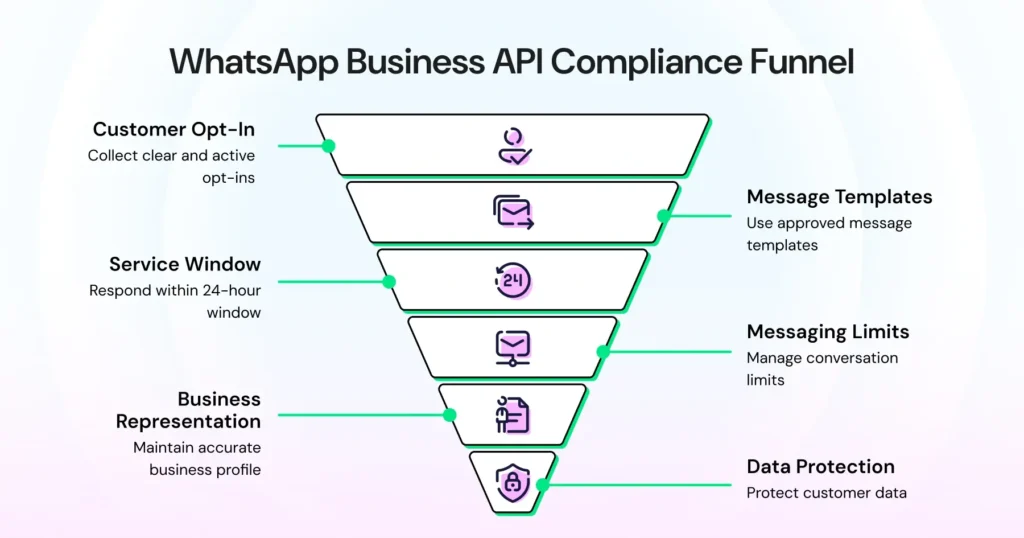
1. Valid Customer Opt-In
You must collect clear and active opt-ins before messaging users on WhatsApp.
Customers should know what type of messages they will receive, and they must willingly share their mobile phone number.
Opt-ins must comply with local laws, applicable data protection regulations, and, where relevant, frameworks such as the GDPR.
This step keeps customer interactions clean and builds customer trust from the start.
2. Use Approved Message Templates
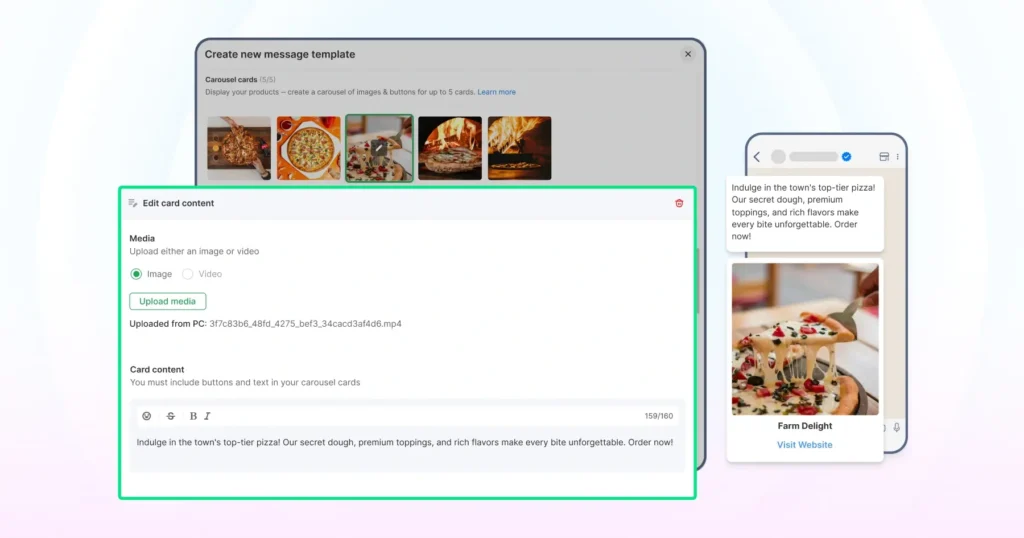
Any business-initiated conversations use approved message templates.
These templates need to follow WhatsApp’s content rules, avoid sensitive data, and stay relevant to the customer’s request.

Non-compliance can lead to account suspension, template rejections, reduced messaging limits, or other restrictions.
Also Check Out: 15 Must-Have WhatsApp Templates That Could Change Your Customer Game
3. Respect the 24-Hour Customer Service Window
You can freely respond to customer messages within 24 hours of their last interaction. After that, you must use a template.
This ensures timely support, helps prevent spam, and keeps customer interactions aligned with WhatsApp’s messaging policies.
4. Understand and Manage Messaging Limits
WhatsApp uses messaging limits to control how many business-initiated conversations you can start in a 24-hour period.
These limits are set at the business portfolio level and apply across all phone numbers within that portfolio.
When you add a new number, it typically begins with a limit of 250 conversations per day.
As your account maintains good performance and strong messaging quality, this limit can scale to higher tiers such as 2,000, 10,000, 100,000, and eventually unlimited conversations.
Related Read: WhatsApp API Rate Limits – What They Are & How to Avoid Blocking
5. Follow Accurate Business Representation
Your WhatsApp Business profile, business name, and description must reflect your real organization.
This creates transparency, supports ethical standards, and ensures customers know who they are communicating with.
6. Protect Customer Data
Data privacy is a core part of WhatsApp API compliance. You must handle customer data with care, follow secure data practices, and avoid sharing sensitive information in WhatsApp messages.
Access control, audit trails, and detailed logs help you manage internal processes responsibly and meet data protection requirements.
7. Comply With Local Laws and Industry Rules
Depending on your region or sector (such as healthcare or travel), additional regulatory requirements may apply.
Your processes should be regularly updated to stay informed about new regulations, especially in areas with strict data protection.
Data Protection & Privacy Standards You Must Follow
Protecting customer data is core to WhatsApp API compliance.
It’s about complying with global and local data protection regulations when handling personal data, such as customer phone numbers and message content.
This keeps your WhatsApp account safe, your messaging secure, and your brand trustworthy.

1. Follow Global Privacy Laws
Whether you operate in Europe, India, the US, or elsewhere, you must align with data protection laws like GDPR or local equivalents.
These rules require clear consent, transparent data use, and respect for customer rights.
2. Collect Consent and Respect Rights
Before you store or use customer data, you must obtain explicit opt-in consent. Make sure people understand what they’re agreeing to and how their data will be used.
Provide easy ways to opt out and honor those requests promptly because consent isn’t just a checkbox but a part of privacy compliance.
3. Secure Data With Encryption
WhatsApp API messages are protected by strong end-to-end encryption, keeping the content between you and the user private. But privacy goes beyond messaging.
Your infrastructure must also secure stored data and access points to prevent leaks and misuse.
4. Minimize and Control Data Access
Collect only what you need and manage it responsibly. Use access control to restrict who can view or manage WhatsApp customer data.
Then apply role-based access control (RBAC) to assign permissions based on job roles, such as admin, support agent, or manager.
This ensures employees only access the information they need, reducing data exposure and strengthening WhatsApp API compliance.
5. Stay Updated on Local Laws
Privacy laws vary by country. For example, India’s new digital data rules (DPDP) now require stricter handling of personal information and clearer consent, similar in spirit to GDPR.
Staying informed helps you align with regulatory requirements where your business operates.
6. Train Your Team
Your privacy posture depends on people as well. Hold regular training sessions so employees understand data privacy, secure data practices, and their role in maintaining compliance.
Training prevents mistakes that could lead to non-compliance and risks to customer trust.
Common Compliance Challenges (and How to Avoid Them)
Even with clear rules in place, many businesses encounter compliance issues when using the WhatsApp Business API.
These challenges often come from fast-changing regulations, team processes, or unclear data practices. Here are the most common problems and how your organization can avoid them.
1. Challenge: Keeping Up With Evolving Regulations
Laws change quickly, especially around data protection, privacy, and digital communication. Businesses often miss updates to local laws or WhatsApp’s own policies.
Solution:
Stay informed through official WhatsApp updates, regulatory news sources, and regular internal reviews. Assign one person or team to monitor changes so your processes remain compliant and consistently updated.
2. Challenge: Unclear Data Management Practices
Many organizations struggle with storing, accessing, or handling customer data responsibly. This increases the risk of non-compliance, especially in regulated industries.
Solution:
Create simple, documented processes for data management. Define how data is stored, who can access it, how long it’s kept, and when it’s deleted. This helps ensure compliance with data protection laws and reduces the risk of mishandling sensitive information.
3. Challenge: Improper Access Control
Teams often share logins or allow too many people to access customer conversations. This increases the risk of errors and unauthorized data use.
Solution:
Use role-based access control to give employees only the access they need. Review permissions regularly and maintain detailed logs to track activity. This keeps customer data safe and minimizes internal risks.
4. Challenge: Handling Opt-Out and Customer Preferences
When customers request to stop receiving messages, some businesses fail to process these requests quickly or consistently, creating compliance gaps.
Solution:
Implement a simple opt-out tracking process. Make sure requests are recorded instantly and synced across your systems so customers are not contacted again accidentally. This protects your WhatsApp account and strengthens customer trust.
5. Challenge: Inconsistent Record Keeping
Missing audit trails, incomplete logs, and unclear message histories can make it difficult to prove compliance if required.
Solution:
Keep detailed records of opt-ins, message templates, customer requests, and internal actions. Use tools that automatically generate audit trails and securely store these records. This makes compliance easier to maintain and verify.
6. Challenge: Using Non-Approved Tools or Automation
Some businesses rely on third-party tools that aren’t compliant with WhatsApp’s guidelines. This can lead to account suspension or messaging restrictions.
Solution:
Only use official WhatsApp Business API providers or approved platforms. These tools follow WhatsApp’s compliance standards, reduce risks, and help maintain a high-quality account experience.
7. Challenge: Managing Compliance Across Large Teams
As teams grow, it becomes harder to ensure everyone follows the same standards, especially in sectors like travel or healthcare.
Solution:
Create simple internal guidelines and run regular training sessions. Align teams on company policies, data privacy rules, and compliance processes. This prevents inconsistencies and keeps operations ethical and secure.
8. Challenge: Identifying Potential Violations Early
Businesses often discover policy violations only after WhatsApp flags an issue, which can affect quality ratings.
Solution:
Review customer interactions regularly. Flag unusual patterns, incorrect message formats, or irrelevant communication early. Small checks help you catch risks before they impact your account.
How Wati Helps You Maintain WhatsApp API Compliance
Wati is built on the official WhatsApp Business API, which means every feature is designed to support secure, compliant, and high-quality customer communication.
It helps you follow WhatsApp’s rules without adding extra complexity to day-to-day operations.
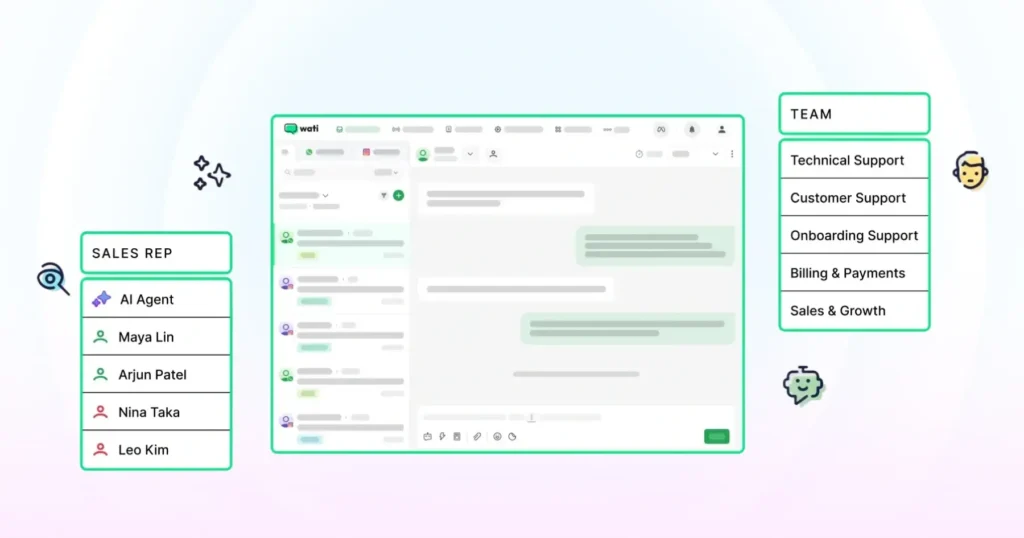
Clear Access Controls
Wati lets you manage permissions with ease. Teams get only the access they need, helping you protect customer data and follow internal compliance standards.
Approved Message Templates Made Simple
You can create, submit, and manage WhatsApp-approved templates directly inside Wati.
This reduces errors, keeps your communication consistent, and ensures every outreach follows WhatsApp’s messaging policies.
Structured Audit Trails and Logs
Wati automatically tracks activities across your workspace, giving you detailed records of who did what.
This supports internal reviews, helps identify potential compliance issues early, and strengthens accountability.
Reliable Opt-In and Opt-Out Handling
Wati helps businesses manage customer consent effortlessly.
Whether it’s collecting new opt-ins or respecting opt-out requests, this WhatsApp marketing software ensures your messaging stays compliant and customer-first.
Consistent Quality Monitoring
Wati provides insights into message delivery, quality ratings, and engagement patterns.
This helps businesses spot risks early and maintain strong performance, which is essential for scaling messaging limits.
Smooth Collaboration for Large Teams
Shared inboxes, assignments, and workflows help teams communicate responsibly with customers.
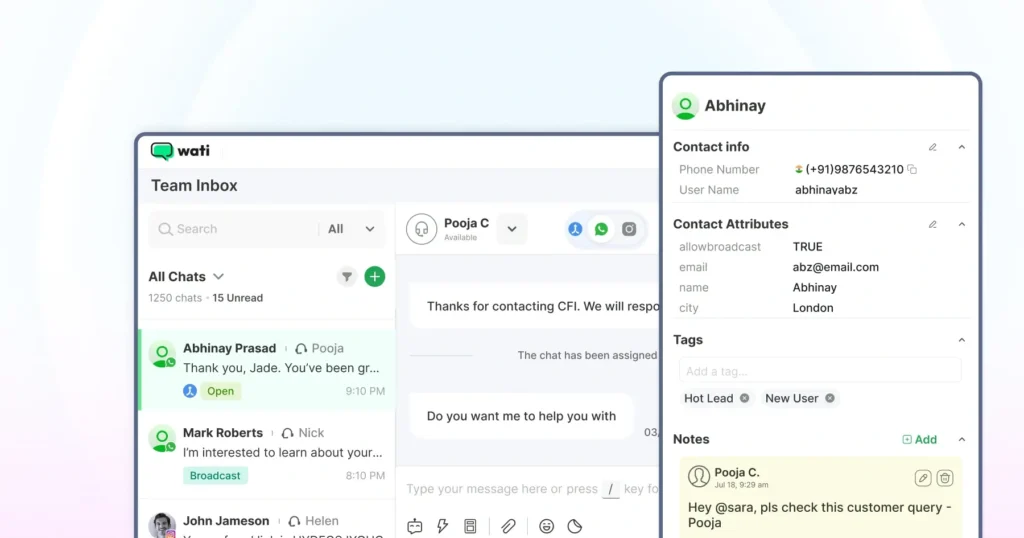
Everyone follows the same process, reducing compliance errors caused by manual or unstructured communication.
Strengthening Your Strategy With WhatsApp API Compliance
WhatsApp API compliance is not a one-time setup. It is an ongoing approach that helps your business communicate responsibly, protect customer data, and create meaningful interactions that customers can rely on.
As policies shift and expectations around privacy continue to rise, businesses that stay proactive gain a clear advantage.
They avoid unnecessary risks and build a foundation of trust that supports long-term growth.
Wati makes this easier by giving teams the structure and visibility they need to manage conversations safely and efficiently.
If you want a platform that supports compliant communication at scale, you can sign up for Wati and get started today.
FAQs
Non-compliance can lead to template rejections, reduced messaging limits, poor quality ratings, or even account suspension. WhatsApp monitors message relevance, user feedback, and data handling practices to identify violations.
You should avoid sending sensitive data unless absolutely necessary and allowed under local laws. Even though WhatsApp offers strong encryption, your organization must protect stored data and follow internal and regulatory requirements.
Maintain clear records such as opt-in logs, message templates, internal permissions, and audit trails. These documents help you provide evidence during reviews and show that your business follows proper compliance processes.
Yes. Customers must always have the ability to stop receiving messages from your business. Processing opt-out requests quickly helps maintain compliance, protects your quality rating, and ensures your communication respects user preferences.