

-

-
-
Solutions
-
Soluções
-
Soluciones
-
解决方案
-
解決方案
-
الحلول
-
Product
-
Produto
-
Producto
-
产品
-
產品
-
المنتج
-

-
-


 Wati for Marketing
 Wati for Support
 Wati for Sales
 eLearning
 E-commerce
 Marketing Agencies
 Healthcare
 No Code Chatbots
 AI Support Agent
 Instagram and Facebook messenger
 Click to WhatsApp ads
 Campaigns
 Team Inbox
 WhatsApp Business Calling
 Wati AI
 Overview
 Library
Recent blogs
-
Not Every Visitor Deserves the Same Attention: How AI Pre-Qualifies…
Most D2C sites treat every visitor the same, which hides buying intent and wastes attention on low-value interactions. Conversational AI fixes this by reading behavior and language in real time, separating casual browsers from serious buyers the moment they show intent. It adapts engagement on the spot, prioritizes high-value visitors, and routes them to the right path while keeping lower-intent shoppers in lighter flows. This creates faster decisions, clearer visibility, and stronger conversion outcomes without extra manual effort.
Read more -

Patient Pre-Qualification Made Simple: How AI Agents Streamline Healthcare Appointments
AI turns patient pre-qualification into one smooth conversation, replacing long forms, phone tag, and scattered intake steps. It guides patients through symptoms, triage, insurance checks, and scheduling in minutes, giving them clarity while reducing drop-offs for clinics. Staff get cleaner data, fewer admin tasks, and faster booking, and patients move from “I need help” to a confirmed appointment without friction.
Read more -
How Conversational AI Replaces Traditional Product Filters and Search?
Conversational AI removes the friction of traditional filters by letting shoppers describe what they want in natural language. Instead of typing keywords and adjusting endless settings, users get guidance that understands intent, remembers context, and adapts results in real time. This turns product discovery into a fluid, conversational experience that feels more like talking to a knowledgeable store associate and less like fighting a search bar.
Read more -
What is Conversational AI? (Complete Guide for Beginners)
Conversational AI gives people quick, natural answers without the frustration of phone menus or rigid bots. It understands intent, keeps context, and responds in plain language, making self-service dependable and support faster. This guide covers what conversational AI is, how it works, the core tech behind it, and the real benefits for support, sales, and internal teams. It also highlights common challenges and why more businesses now treat conversational AI as a practical fix for everyday bottlenecks.
Read more -
B2B Lead Generation Strategy Guide for 2025
Modern B2B teams don’t struggle because of a lack of leads. They struggle because most leads aren’t qualified, don’t match the ICP, or never had intent to buy. As buying cycles get longer and buyers do more research on their own, the old high-volume tactics stop working. This guide breaks down what B2B lead generation looks like today, how to attract the right companies across multiple channels, and the strategies that consistently produce sales-ready conversations instead of noise.
Read more -
What is an AI Chatbot? Complete Business Guide for 2026
AI chatbots give customers fast, accurate answers and help teams avoid repetitive work. Modern systems understand intent, learn from every interaction, and handle support, sales, and product queries in one smooth conversation. They reduce drop offs, qualify leads, automate routine tasks, and keep responses consistent at any hour. This guide explains how they work, where they add value, and what to look for when choosing a platform built for real business use.
Read more -

The Future of Website Interactions: Voice-First Web Experiences
Voice-first design shifts websites from click based navigation to natural conversation, letting people speak their intent and get instant, hands free responses. It cuts friction on mobile, improves accessibility, and meets rising expectations shaped by Siri, Alexa, and Google Assistant. As voice habits grow and speech recognition reaches near human accuracy, voice-first experiences become the next major upgrade to how users browse, decide, and act online.
Read more -
The End of Endless Scrolling: How AI Curates Perfect Product…
Endless scrolling hides good products behind too many choices. AI product curation fixes this by showing shoppers fewer but more relevant options, built from real-time intent, behavior, and context. Instead of forcing people to filter and compare on their own, AI assembles collections that feel tailored and intuitive. Discovery becomes faster, lighter, and more personal, leading to higher confidence and stronger conversions without adding complexity to the shopping experience.
Read more -
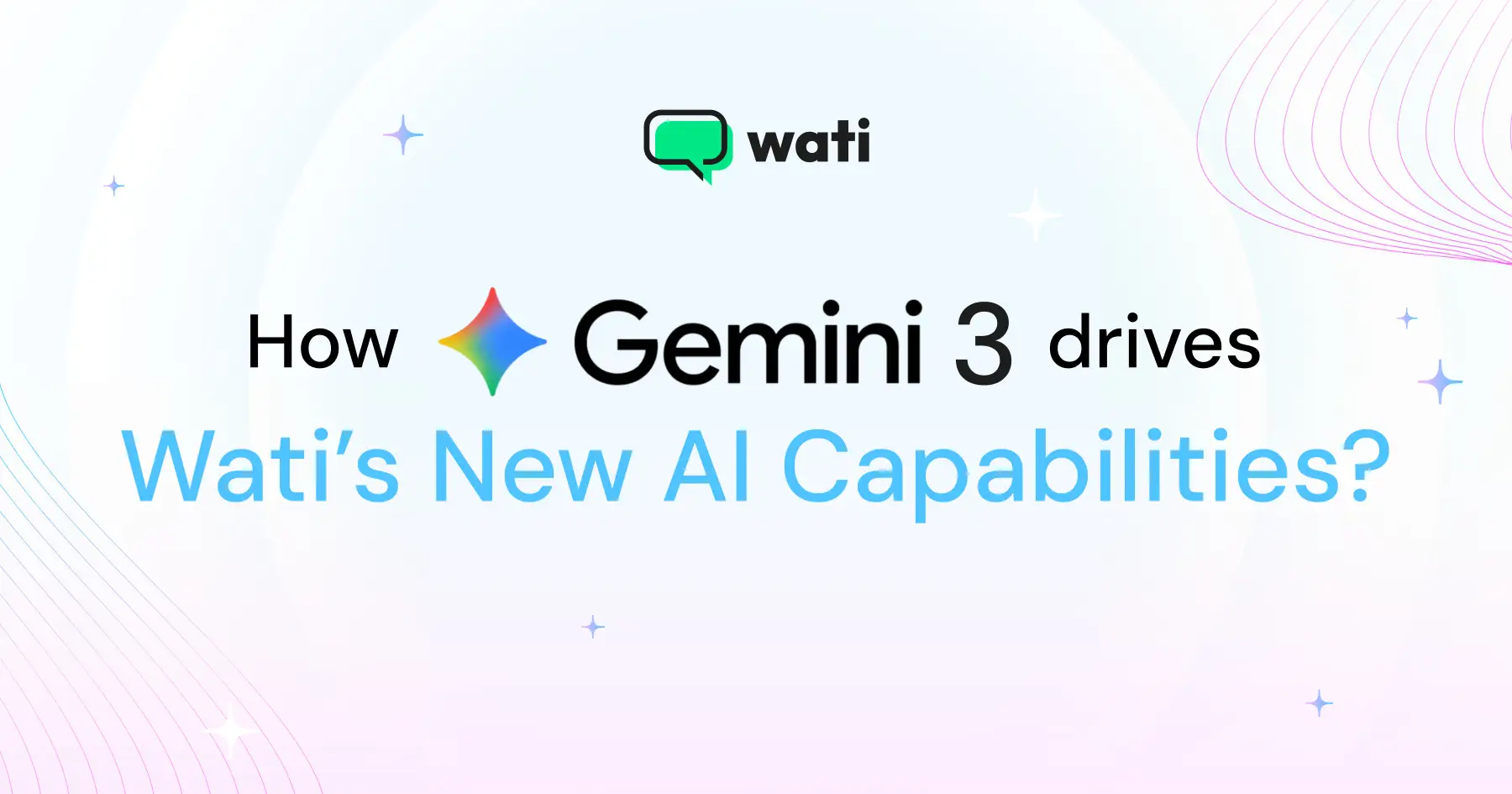
The Role of Gemini 3.0 in Wati’s New AI Capabilities
Wati uses Gemini 3 to deliver clearer translations, faster summaries, natural voice calls, and autonomous AI Agents on WhatsApp. The platform gives teams instant context and smarter automation across every chat and call.
Read more -

WhatsApp API For E-commerce: 18+ Applications That Drive Direct Sales
WhatsApp for e-commerce is transforming online shopping. Learn how brands use it to boost sales, recover carts, and offer faster customer support.
Read more -

Personalizing the Web Experience with Voice AI: The Future of…
Most websites personalize based on past clicks, not real intent, which is why online experiences still feel generic. Voice AI fixes this by listening, interpreting tone, and responding in real time. It understands what users mean, not only what they do, then reshapes pages, recommendations, and guidance instantly. This creates a more human, contextual experience that lifts engagement and drives stronger results across every industry.
Read more -
Voice AI Agents vs. Chatbots: Which Works Better for Customer…
Compare voice AI vs. chatbots for customer engagement. Discover which delivers better results for your business with use cases, ROI data, and decision criteria.
Read more -
Conversational Sales on WhatsApp for SaaS: How to Close Deals…
The average SaaS sales cycle takes 84 days. Your prospects wait 38 hours for email replies. And 67% of deals fall through because of slow follow-ups. What if you could cut that timeline in half while having real conversations with prospects who are actually ready to buy? That’s exactly what conversational sales on WhatsApp delivers. …
Read more -

B2C Lead Qualification at Scale: Handling 10,000+ Prospects with AI
Most sales teams lose leads to slow follow-ups and manual overload. When thousands of prospects arrive, only a few ever get a response before they go cold. AI qualification tools like Astra fix this by analyzing intent, behavior, and fit in real time, qualifying every lead instantly across chat, email, and social. The result is faster response times, higher accuracy, and more conversions without extra hiring.
Read more -

AI Pre-Sales Qualification: How D2C Brands Identify High-Value Customers in…
Most D2C brands treat every visitor the same, wasting ad spend on low-intent traffic and missing high-value buyers. AI pre-sales qualification changes this by analyzing behavior in real time to predict who’s most likely to convert, then tailoring the experience accordingly. It helps
Read more