

-

-
-
Solutions
-
Soluções
-
Soluciones
-
解决方案
-
解決方案
-
الحلول
-
Product
-
Produto
-
Producto
-
产品
-
產品
-
المنتج
-

-
-


 Wati for Marketing
 Wati for Support
 Wati for Sales
 eLearning
 E-commerce
 Marketing Agencies
 Healthcare
 No Code Chatbots
 AI Support Agent
 Instagram and Facebook messenger
 Click to WhatsApp ads
 Campaigns
 Team Inbox
 WhatsApp Business Calling
 Wati AI
 Overview
 Library
10 Best Marketing Tactics To Promote Your E-learning Courses in 2026
Written by:
 Shreya Mattoo
|
Last updated on:
March 5, 2026
|
Fact Checked by :
Shreya Mattoo
|
Last updated on:
March 5, 2026
|
Fact Checked by :
 Namitha Sudhakar
|
According to: Editorial Policies
Namitha Sudhakar
|
According to: Editorial Policies
 Table of Contents
Too Long? Read This First
- Use WhatsApp Business API (like Wati) for automated FAQs, drip campaigns, and instant support to achieve high read rates.
- Build credibility through founder-led stories, student success testimonials, and free high-value webinars.
- Expand your reach by collaborating with niche influencers and launching affiliate programs with tiered commissions. Drive immediate action using limited-time offers, early-bird discounts, and gamified student referral programs.
- Recover lost revenue by using tracking pixels and personalized WhatsApp messages to nudge students who abandoned their carts.
The key to building a successful online course is deploying live chat options, instant auto replies, and an efficient inbound contact center.
By leveraging WhatsApp marketing, you can assist prospects across multiple channels, consolidate data, and resolve recurring educational queries.
In this article, we’ll talk about 10 WhatsApp marketing tactics to promote your e-learning course, stand out from other e-learning providers, and create brand affinity.
By automating WhatsApp conversations with the WhatsApp marketing platform, you can amplify user experience and leverage a drip campaign for better conversion outcomes.
Here are the 10 best ways to promote your e-learning brand in today’s market.
1. Run WhatsApp Marketing Flows to Resolve FAQs
Compare WhatsApp to email marketing, where open rates often hover around 20-30%, and you can see why WhatsApp is a game-changer for e-learning marketing.
But that’s not the only reason why WhatsApp is ideal for e-learning businesses.
Here are some more.
- Instant Communication: WhatsApp enables real-time chatbot support, making it ideal for answering quick FAQs about courses or providing immediate support to students.
- Rich Media Sharing: Easily share images, videos, and documents, making it simple to give course previews or share study materials.
- Group Chats: Create WhatsApp communities and groups where students can collaborate and support each other.
- Voice and Video Calls: Offer one-on-one tutoring sessions or small group discussions directly with voice or video call integration.
- Global Reach: With almost 3 billion users worldwide, WhatsApp helps you connect with learners across different countries and time zones.
- Cost-Effective: WhatsApp is free to use, making it a budget-friendly option for marketing and communication.
- Mobile-First: As per a study, 71% of millennials prefer learning on mobile devices over desktops or traditional classrooms. WhatsApp’s mobile-friendly design enables users to learn things on the go.
- Personalization: Use WhatsApp to send personalized course recommendations or study tips based on a student’s interests or progress.
For e-learning businesses like you looking to scale their WhatsApp marketing efforts, the WhatsApp Business API offers even more powerful features.
Let’s have a look at them one by one.
1. Spreading Awareness with Broadcasts and Announcements
WhatsApp’s broadcast feature is a powerful tool for reaching audiences. Here’s how you can leverage it effectively:
1. Announcing New Courses:
- Share course outlines, learning outcomes, and instructor bios
- Include a short video teaser to spark interest
- Offer early-bird discounts for quick sign-ups
- Run CTWA ad, it opens a WhatsApp chat to capture contact details.
WhatsApp’s broadcast feature is a powerful tool for reaching audiences. Here’s how you can leverage it effectively:
Read more: How to create a WhatsApp broadcast list to promote your brand in 2026.
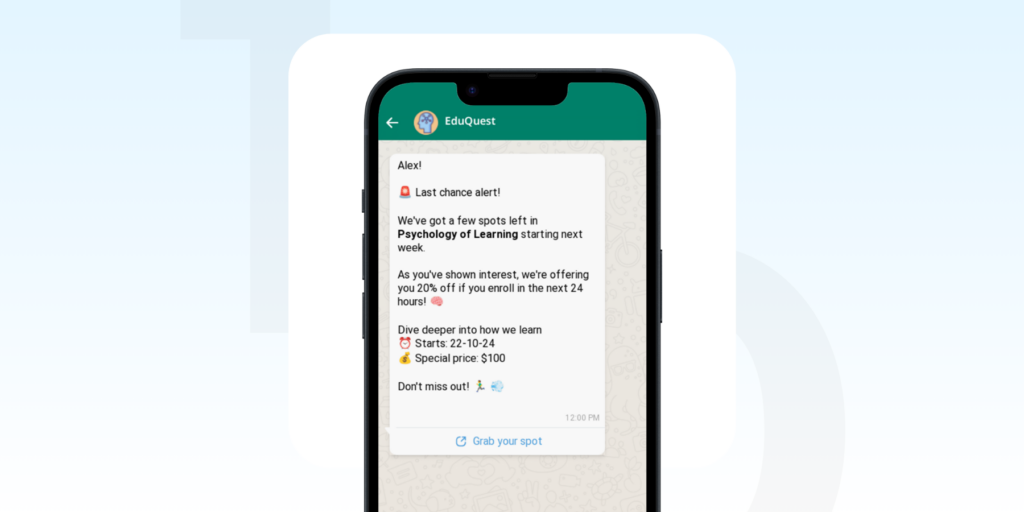
2. Running Limited-Time Offers:
- Offer bundled complementary courses for a limited time.
- Offer exclusive bonuses for WhatsApp subscribers for a short period.
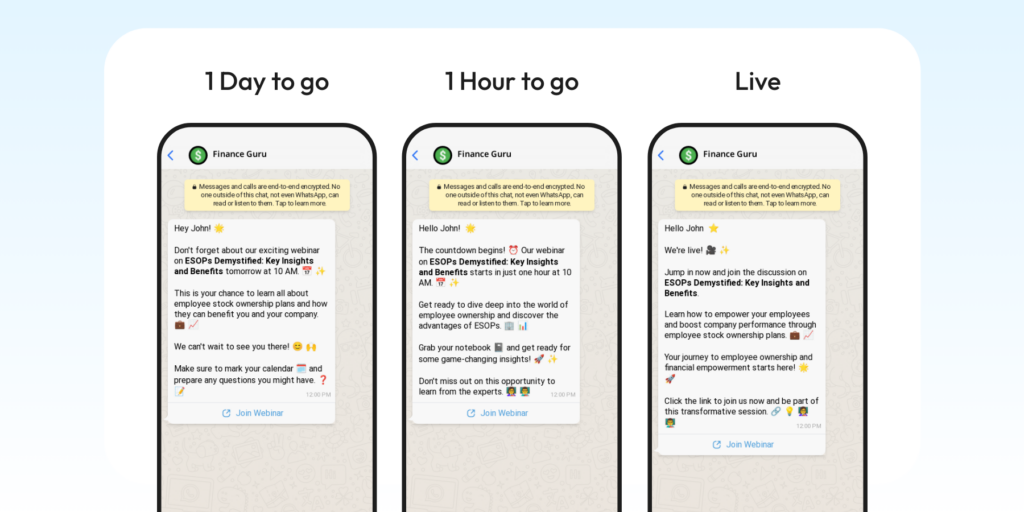
3. Gently Nudge with Webinar Reminders:
- Send a series of reminders (1 week, 1 day, 1 hour before).
- Include a brief agenda to build excitement.
- Encourage participants to prepare questions in advance
Check out the WhatsApp API for Edtech to design better student tech infrastructure and grow its footprint.
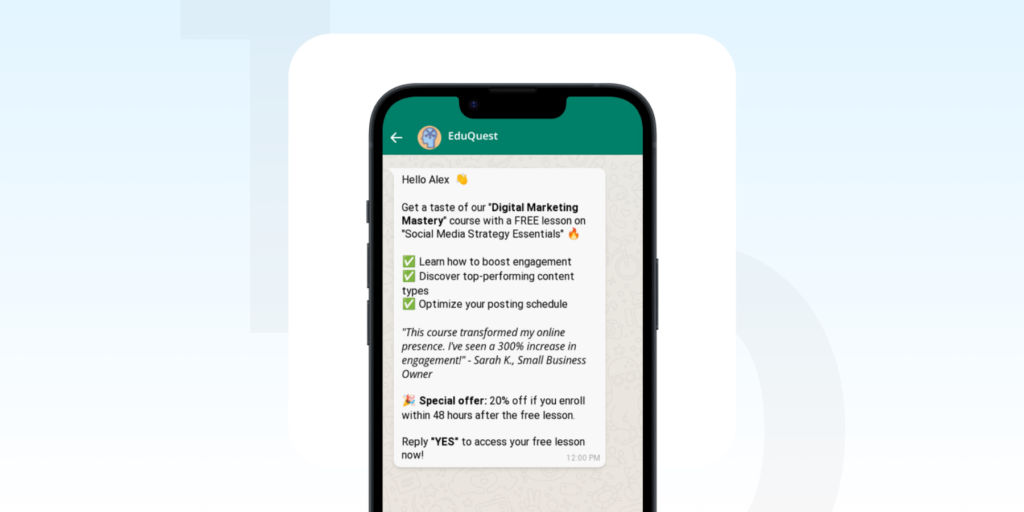
4. Offer Course Sneak Peeks:
- Share a free lesson or module from a paid course.
- Include student testimonials or success stories.
- Offer a limited-time discount for those who sign up after the sneak peek.
5. Be on track with industry News and Updates:
- Position your brand as a thought leader
- Relate news to your courses to show relevance
- Encourage discussion in your WhatsApp groups
6. Student Achievements:
- Celebrate student successes to motivate others
- Share case studies of how your courses have helped learners
- Encourage current students to invite friends (referral program)
Remember to segment your audience based on interests, course history, or learning goals to ensure your broadcasts remain relevant and engaging.
2. Set Up Free Webinars and Workshops to Offer Quality
Provide free webinars to empower and enlighten your candidates without expecting any action from them.

You can follow the steps below to ensure a successful free webinar:
- Craft compelling topics addressing audience pain points.
- Optimize landing pages with clear benefits and easy registration.
- Promote across multiple channels (email, social media, partnerships).
- Keep attendees engaged with polls and Q&A sessions.
- Offer valuable insights and special discounts on paid courses.
- Send thank-you emails with nurture sequences.
- Leverage WhatsApp marketing campaigns for higher engagement.
3. Utilize Influencer Marketing via Social Media to Expand Reach
You can tap into Influencer Networks by partnering with influencers who align with your e-learning niche.
Scope and shortlist influencers that can decently promote your products and services/ These people can be scholars, career-focused individuals, or subject matter experts.
To find these influencers, you can go to influencer marketplaces like Upfluence and Creator.co. These platforms offer a vast pool of potential collaborators across various industries and expertise levels.
When selecting influencers for your e-learning business:
- Focus on those whose audience matches your target learners.
- Look beyond follower count, prioritize engagement rates and content quality.
- Consider micro-influencers in your specific field.
- Seek out influencers with highly engaged audiences, passionate about your subject matter.
Once you’ve identified potential partners, develop a collaborative strategy:
- Have influencers create content about your courses.
- Host joint webinars to showcase expertise and course offerings.
- Offer exclusive discounts to the influencer’s followers.
- Ensure the partnership feels natural and valuable to the influencer’s audience.
- Prioritize authenticity over promotional pushes.
Remember, the goal is to create genuine connections that benefit both your e-learning business and the influencer’s audience.
Pro Tip: Implement a “Try Before You Buy” strategy with your influencer partnerships. Offer influencers free access to your course or a custom mini-course before they promote it. This approach serves two purposes:
It allows influencers to genuinely experience and understand your offering, leading to more authentic promotions.
If they share their learning journey on social media, it creates organic, engaging content that can spark interest among their followers.
4. Create Founder-Led Content to Establish Trust
As an e-learning business owner, you have a unique opportunity to leverage your expertise and personal brand. Founder-led content can be a powerful tool for building trust and attracting potential students. Here’s how to make it work:
- Share Your Journey: Tell the story of why you started your e-learning business. What challenges did you face? How did you overcome them?
- Offer Behind-the-Scenes Glimpses: Show your audience what goes into creating your courses. This transparency can build credibility and interest.
- Provide Expert Tips: Share quick, actionable advice related to your course topics. This demonstrates your knowledge and gives value to your audience.
- Go Live: Host regular live Q&A sessions on social media. This real-time interaction can help build a strong connection with your audience.
- Write Personal Blog Posts: Share your thoughts on industry trends or lessons you’ve learned. This can position you as a thought leader in your field.
Remember, authenticity is key. Let your personality shine through in your content to create a genuine connection with your audience.
Pro Tip: Create a “day in the life” QnA video series featuring your founder. Show them crafting course content, problem-solving, and interacting with students.
5. Implement Multi-Channel Digital Marketing for Lead Acquisition
To reach more potential students, e-learning businesses should use a range of digital marketing channels. Here’s how:
- Social Media: Share snippets of your courses on platforms like Instagram and LinkedIn. Post helpful tips, behind-the-scenes content, and student success stories to spark interest.
- Email Engagement: Build an email list and send regular newsletters with course updates, special offers, and valuable content. Use catchy subject lines to boost open rates.
- SEO for Visibility: Optimize your website and course descriptions with relevant keywords. Create blog posts and videos that answer common questions in your field to attract organic traffic.
- Paid Advertising: Run targeted ads on Google and social media platforms to reach people actively searching for online courses in your niche.
By combining these strategies, you’ll create a strong online presence and attract more learners to your e-learning platform.
6. Utilize Limited-Time Offers and Urgent Promotions for Course Enrollments
You can boost enrollments in your e-learning course by leveraging the power of urgency and scarcity.
- Create time-sensitive offers that compel potential students to take immediate action. For instance, offer an early-bird discount for the first 50 enrollments, or a 24-hour flash sale with a significant price reduction.
- Use countdown timers on your landing pages and in email campaigns to heighten the sense of urgency.
- Implement seasonal promotions tied to holidays or academic calendars to tap into natural buying cycles.
- Consider bundling courses or offering exclusive bonuses for a limited time to increase perceived value.
Use WhatsApp broadcasts to announce these promotions, ensuring high visibility with its 98% open rate.
Remember to clearly communicate the value proposition and deadline in all marketing materials. This strategy not only drives quick enrollments but also creates a buzz around your e-learning platform.
Pro Tip: Use Wati’s auto-reply features to set up automated WhatsApp reminders for your limited-time offers. Send messages 24 hours before the deadline to maximise engagement.
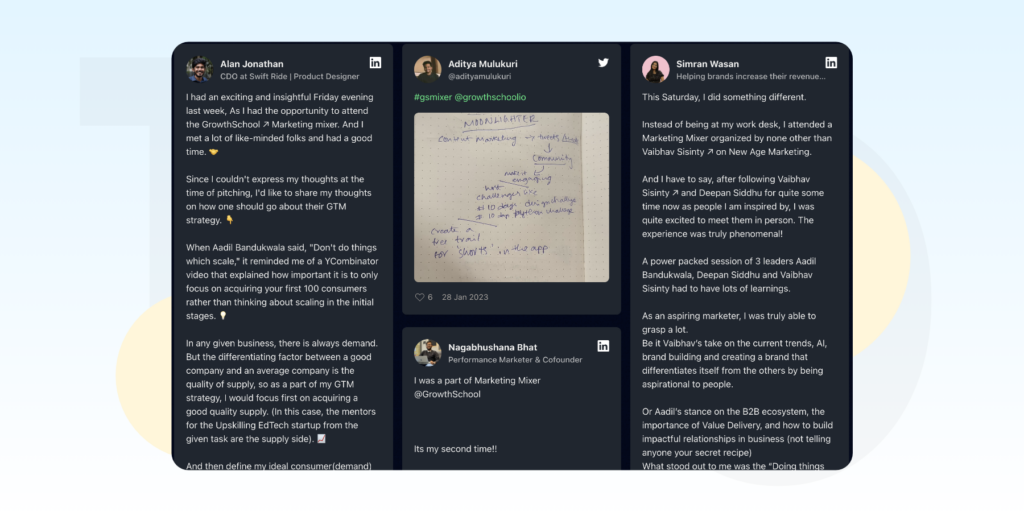
7. Showcase Student Success Stories and Course Testimonials
One of the best ways to attract new students is to showcase your current students’ wins. Think of it as bragging about your students’ awesome achievements!
- Share Success Stories
Pick out some of your best students and tell their stories.
Did someone land their dream job after taking your course? Or maybe they started a successful business? Share these exciting tales on your website and social media.
- Use Real Student Reviews
Ask your happy students to write about their experiences. Then, put these reviews where new students can easily see them.
You could add them to your course pages or create a special testimonials section on your website.
- Make It Visual
Don’t just stick to words. Use pictures of your successful students or even short videos where they talk about how your course helped them. This makes the stories feel more real and exciting to potential new students.
8. Implement Student Referral Programs to Increase Referral Sales
Boost your e-learning business by tapping into your students’ networks! A well-designed referral program can be a powerful tool for attracting new learners.
Here’s how to make it work:
- Offer Incentives: Give both the referrer and the new student a reward, like a discount on their next course or exclusive content.
- Make it Easy: Provide shareable links or codes that students can quickly send to friends.
- Track and Reward: Use your learning management system to monitor referrals and automatically apply rewards.
- Promote Success Stories: Share testimonials from students who’ve benefited from referrals to inspire others.
- Time it Right: Launch your referral program during peak enrollment periods for maximum impact.
Remember, word-of-mouth marketing is incredibly powerful in the e-learning industry. Happy students are your best ambassadors!
Pro Tip: Create a leaderboard to gamify your referral program. Offer special prizes or recognition to top referrers to turn the process into a fun competition among your students.
9. Use Retargeting Campaigns for Abandoned Course Signups
Step 1: Set Up Tracking
Before launching any retargeting campaigns, ensure you have proper tracking in place:
- Install tracking pixels:
- Facebook Pixel
- Google Ads remarketing tag
- LinkedIn Insight Tag
- Set up event tracking:
- Course page views
- Add to cart actions
- Initiated checkouts
- Abandoned carts
- Create custom audiences based on these events in each ad platform.
Also read: Check out abandoned cart recovery messages to students who didn’t sign up or buy a course and left the cart.
Step 2: Segment Your Audience
Try to segment your audience based on their behavior:
- Course viewers: Those who viewed the course details but didn’t add to the cart.
- Cart abandoners: Users who added a course to the cart but didn’t start checkout.
- Checkout abandoners: Those who began the checkout process but didn’t complete it
Step 3: Design Your Campaign Structure
Create a multi-channel approach:
- Social Media Retargeting:
- Facebook & Instagram Ads
- LinkedIn Ads (especially for professional courses).
- Display Retargeting:
- Google Display Network
- YouTube video ads
- Search Retargeting
- Google Search Ads with RLSA (Remarketing Lists for Search Ads)
- Email Retargeting
- Abandoned cart email sequences
- WhatsApp Retargeting:
- Personalized messages via WhatsApp Business API
Step 4: Craft Your Messaging
Tailor your ad content based on the audience segment and the time since abandonment:
- Course Viewers (1-3 days after viewing):
- Highlight key course benefits.
- Share student testimonials.
- Offer a free sample lesson.
- Cart Abandoners (1-5 days after abandonment):
- Remind them of the course in their cart
- Address common objections (e.g., “Not sure if this is right for you?”)
- Offer a limited-time discount.
- Checkout Abandoners (1-7 days after abandonment):
- Ask if they had any issues during checkout
- Provide easy links to resume registration
- Offer a bonus (e.g., “Complete your registration now and get an exclusive e-book!”)
Step 5: Implement WhatsApp Marketing
Leverage WhatsApp’s high engagement rates:
- Set up Click-to-WhatsApp ads on Facebook and Instagram.
- Create a WhatsApp chatbot to handle initial inquiries and guide users back to the registration process.
- Use WhatsApp broadcasts to send personalized reminders about abandoned courses.
- Offer live chat support via WhatsApp to address any concerns or questions.
Step 6: Optimize for Mobile
Ensure all your retargeting efforts are mobile-friendly:
- Create mobile-specific ad creatives
- Use mobile-friendly landing pages
- Implement one-click signup options where possible
- Use push notifications if you have a mobile app
How to Retarget Your Target Audience With Wati?
Use Wati’s WhatsApp Business API solution to supercharge your retargeting efforts. With Wati, you can:
- Set up automated reminder sequences on WhatsApp.
- Use broadcast messages for time-sensitive offers.
- Implement a chatbot to handle FAQs and guide users back to registration.
- Analyze message performance with detailed analytics.
By implementing this comprehensive strategy and leveraging the power of WhatsApp marketing with Wati, you can significantly boost your course signup completion rates and grow your e-learning business.
10. Create Affiliate Programs for Course Promotions
Affiliate programs help you reach new audiences, leverage the trust others have built with their followers, and only cost you money when they actually make a sale.
This makes them a low-risk, high-reward option for promoting your online courses.
Here’s how to set up an effective affiliate program:
- Choose your affiliates: Look for people who love your courses or have a following in your field.
- Set up rewards: Decide how much you’ll pay affiliates for new student referrals.
- Give them tools: Provide special links, banners, or discount codes for affiliates to share.
- Track performance: Use software to see which affiliates are bringing in the most students.
- Support your team: Help your affiliates succeed by providing them with tips and updates on your courses.
By implementing an affiliate program, you can expand your reach and grow your e-learning business faster, all while maintaining control over your marketing costs.
Pro Tip: Consider offering tiered commissions. Give higher rewards to affiliates who bring in more students. This can motivate them to work harder at promoting your courses.
Build Your E-learning Mission Today!
By building effective student outreach flows via WhatsApp, you are positioning your value in front of students.
By maintaining coherence in sales, running personalized campaigns, and offering conversational support, you are motivating a student, and not just adding to sales.
With WhatsApp Business platforms like Wati, you can launch an end-to-end e-commerce workflow to perfect pitch and scale revenue. We hope this guide helped you!
Book a free demo to start your first e-learning campaign with Wati.
Frequently Asked Questions
Avoid over-messaging, neglecting personalization, ignoring local regulations, and failing to segment your audience. Also, ensure you have a clear opt-in process and respect users’ privacy preferences.
Start with low-cost, high-impact strategies like WhatsApp marketing, content creation, and referral programs. As you grow, gradually incorporate paid advertising and influencer partnerships.
Yes, obtain written consent from students before using their testimonials. Ensure claims are truthful and substantiable. Be aware of privacy laws like GDPR when handling student data.
Track key metrics such as Cost Per Acquisition (CPA), conversion rates, and Lifetime Value (LTV) of students. Use unique tracking links or promo codes for each campaign to accurately attribute enrollments to specific marketing efforts.