

-

-
-
Solutions
-
Soluções
-
Soluciones
-
解决方案
-
解決方案
-
الحلول
-
Product
-
Produto
-
Producto
-
产品
-
產品
-
المنتج
-

-
-


 Wati for Marketing
 Wati for Support
 Wati for Sales
 eLearning
 E-commerce
 Marketing Agencies
 Healthcare
 No Code Chatbots
 WhatsApp Business API
 Instagram Automation
 Click to WhatsApp ads
 Campaigns
 Team Inbox
 WhatsApp Business Calling
 Wati AI
 Overview
 Library
 Agente de suporte de IA
Making the WhatsApp API for Edtech Work for Your Team in 2026
Written by:
 Rohan Chaturvedi
|
Last updated on:
February 17, 2026
|
Fact Checked by :
Rohan Chaturvedi
|
Last updated on:
February 17, 2026
|
Fact Checked by :
 Namitha Sudhakar
|
According to: Editorial Policies
Namitha Sudhakar
|
According to: Editorial Policies
 Table of Contents
Too Long? Read This First
- WhatsApp API for edtech helps institutions reach students instantly with reminders, study materials, updates, and critical notifications in a channel they use every day.
- Edtech teams use WhatsApp to support admissions, guide onboarding, improve class participation, manage fee communication, and share academic progress with ease.
- Automation plays a key role, allowing educational institutions to reduce manual effort with scheduled broadcasts, personalized messages, and smart workflows that keep students consistently informed.
- Getting started is straightforward with an official WhatsApp Business API provider, where teams can set up their WhatsApp number, verify their business, and activate messaging tools.
- Wati strengthens the entire communication journey with no-code chatbots, automated flows, segmentation, retargeting, a shared inbox, analytics, and real-time assistance tools built for scale.
Scaling student communication is tough for edtech teams.
Learners expect quick replies, timely reminders, and easy access to study material.
Email gets ignored, SMS feels cold, and support tickets slow everything down.
Your pedagogy must stand out on top your competitors.
That is where the WhatsApp API for edtech becomes useful. It gives education platforms a simple way to deliver updates, share notes, and guide students in real time.
In this WhatsApp business API for education guide, we will explore how edtech brands can use WhatsApp to improve engagement and provide a better support environment. If you’re new to this space, start with our main WhatsApp Business API explainer blog for a complete foundation.
Why Edtech needs WhatsApp Business API?
WhatsApp Business is a powerful communication tool that enables educational institutions to connect with students, parents, and staff in a seamless and effective way.
With its user-friendly interface and global reach, institutions can share important updates, provide real-time support, and foster a sense of community among students and parents.
This direct and accessible approach improves student satisfaction and enhances the overall educational experience by making information easy to access and respond to.
Whether it’s sending reminders, sharing learning materials, or answering questions, WhatsApp Business helps educational institutions create a more connected and engaged environment for everyone involved.
Marketing Challenges in Education Sector
The education sector faces unique challenges when it comes to communication, requiring solutions that are both timely and scalable.
Educational institutions need to keep students and parents informed with instant notifications, share learning materials efficiently, and manage communication processes without adding to administrative overhead.
WhatsApp Business API is designed to meet these needs by allowing institutions to send bulk messages, create dedicated WhatsApp groups, and deploy WhatsApp chatbots for automated responses to frequent queries.
How the WhatsApp API Solves Key Communication Challenges in Edtech
Edtech companies deal with constant communication gaps. Students miss emails, parents ignore SMS, and support teams struggle to handle repeated questions.
The WhatsApp Business API solves these challenges by giving educational institutions a reliable channel to send instant notifications and targeted messages at scale, allowing schools to improve communication and share information efficiently with students and parents.
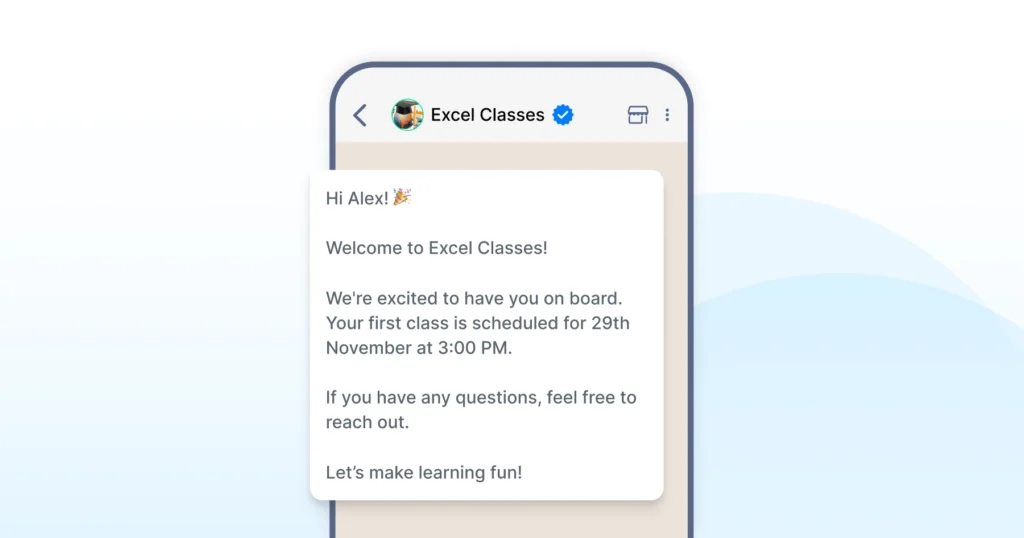
With WhatsApp for education, educational institutions can send updates, study materials, and exam schedules in a format students already prefer.
Automated messages cut manual effort and help teams save time while keeping learners informed. It also supports personalized communication, which strengthens student engagement and builds trust.
Because the platform supports opt-in-based broadcast messages, approved templates, smart automation, and WhatsApp chatbots, you can easily build on the WhatsApp Business API to deliver real-time assistance without relying on phone calls or long ticket queues.
The result is better communication across the entire education sector and a smoother experience for students.
Also Read: A Complete WhatsApp Marketing Guide for Businesses in 2026
9 Practical Use Cases of WhatsApp API for Edtech
The WhatsApp API opens up a wide range of real-world applications for edtech organizations. It helps teams engage students, automate routine tasks, and deliver instant updates with far less manual effort.
Read on to learn about the most common and effective use cases of WhatsApp Business API for education, all focused on better communication and smooth operational workflows.
1. Admissions and Lead Generation
Edtech platforms can use WhatsApp messages to capture leads, answer common questions, and guide learners through the admission process.
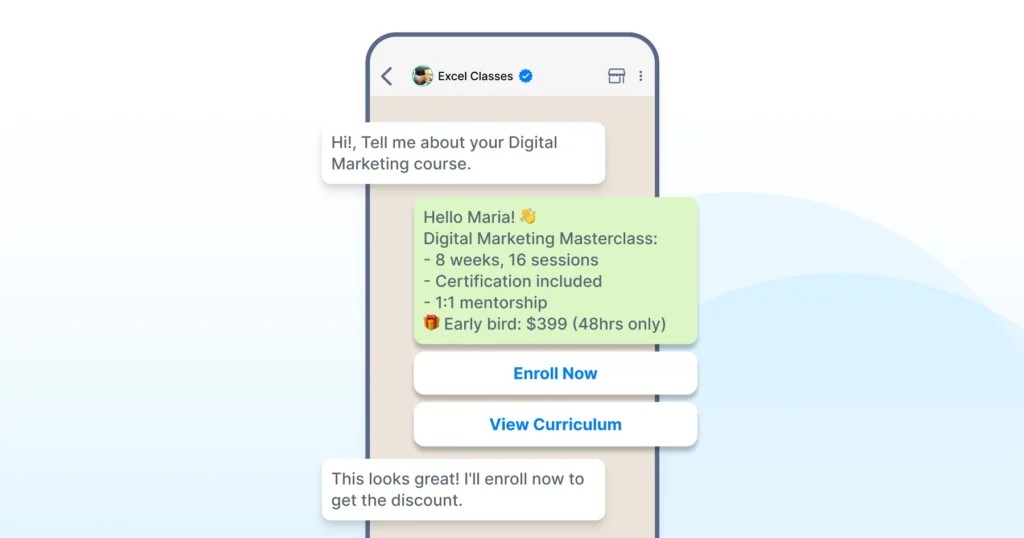
Automated messages share brochures, course details, and event invitations, helping educational institutions generate leads without long wait times. A WhatsApp chatbot can also handle document requests and collect basic information to qualify prospects faster.
2. Student Onboarding and Enrollment Updates
Once a student signs up, automated workflows deliver welcome messages, study tips, platform tutorials, and enrollment updates.

This creates a friendly onboarding experience and helps students navigate the platform with live assistance. It also reduces the number of support calls during peak seasons.
3. Class Reminders and Study Materials
Using WhatsApp Business API, schools and colleges can send class timings, learning resources, and study materials instantly.

Automated workflows ensure students never miss sessions. This keeps engagement high and makes WhatsApp a powerful tool for sharing educational content in a personal manner.
4. Fee Reminders and Payment Updates
Educational institutions send fee reminders, fee-payment reminders, and payment confirmations via automated messages.
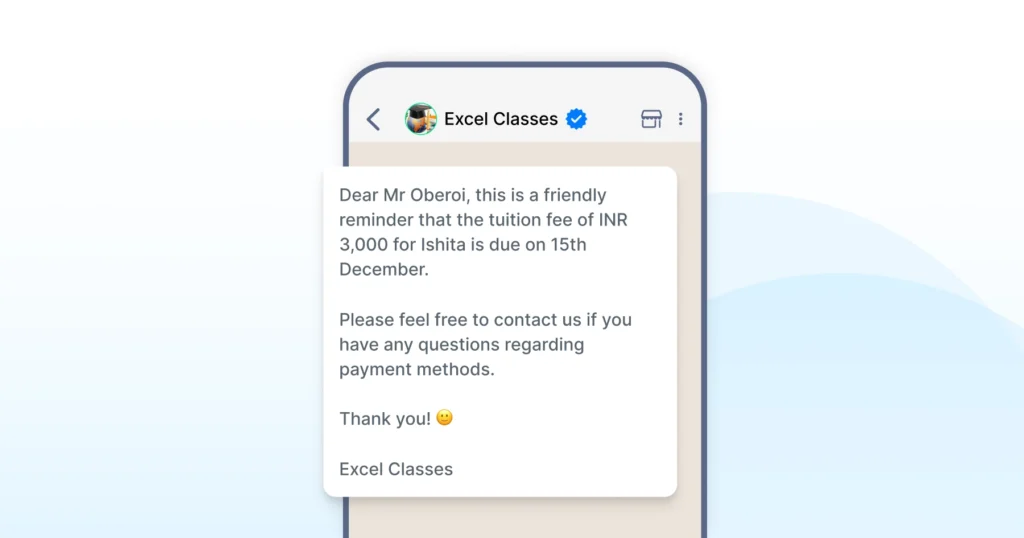
These timely nudges improve fee collection while reducing the need for follow-up calls. Bulk messages also help notify parents and students about upcoming deadlines with ease.
5. Attendance Alerts and Daily Updates
WhatsApp automation lets schools send attendance alerts to parents in real time. It keeps them informed and supports better communication between institutions and families.
This is a major improvement over SMS, which often goes unnoticed.
Also Read: SMS Marketing Tools vs WhatsApp Broadcasts: When to Use Each for Maximum Impact?
6. Exam Schedules and Urgent Notifications
Students receive exam schedules, timely exam notifications, hall ticket reminders, and urgent updates directly on their WhatsApp numbers.
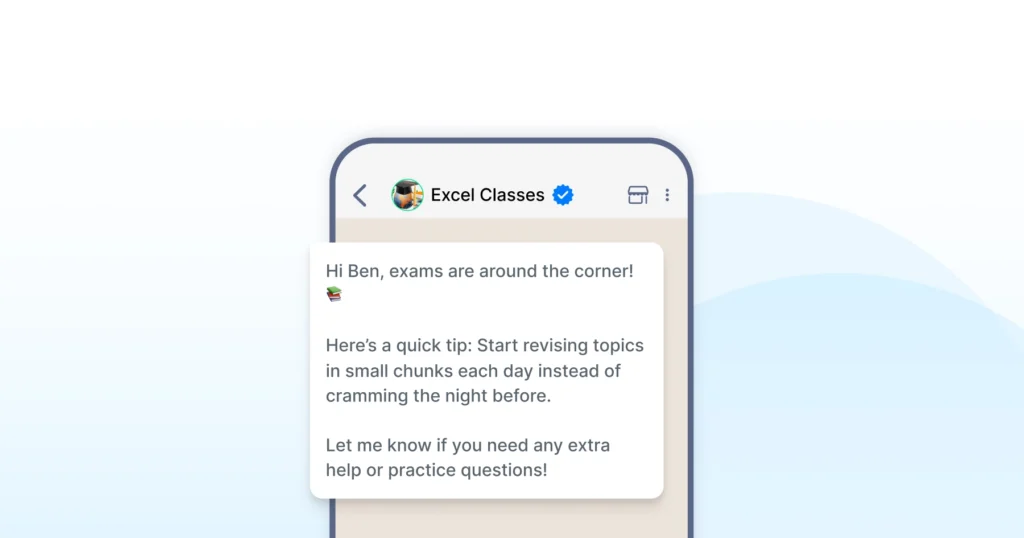
Instant notifications ensure nothing gets missed during exam periods, which helps students stay prepared and confident.
7. Academic Progress and Feedback
Edtech platforms share progress reports, quiz scores, and personalized messages based on student performance. They also collect feedback through quick surveys.
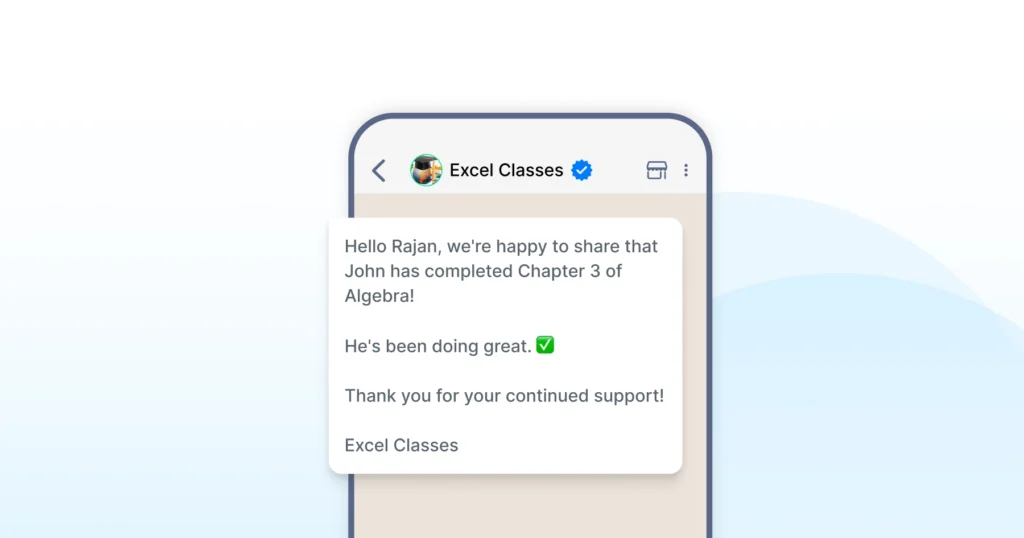
This creates two-way communication and helps students improve steadily.
8. Support, Queries, and Human Assistance
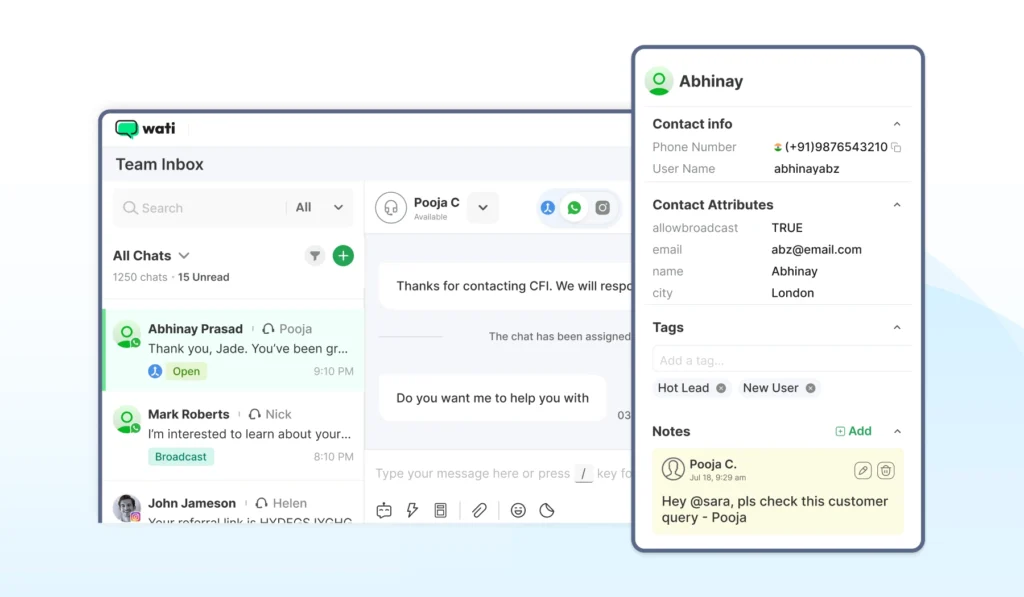
A mix of smart automation and human support helps students get instant responses to common questions.
When needed, a shared inbox routes messages to support agents for more complex cases. This improves response times and builds trust among learners.
9. Parental Engagement and Involvement
Parental engagement is a cornerstone of student success, and WhatsApp Business makes it easier than ever for educational institutions to keep parents involved in their child’s education.
By sending WhatsApp messages with homework assignments, exam dates, and important school updates, institutions ensure that parents are always in the loop. WhatsApp groups provide a space for parents, teachers, and students to communicate, ask questions, and share feedback, building a supportive school community.
WhatsApp Business API Features that Support Edtech Business
The WhatsApp Business API is packed with features designed to help educational institutions transform their communication processes, boost student engagement, and streamline administrative tasks.
By leveraging these capabilities, schools, universities, and edtech platforms can create a more connected, interactive, and supportive environment for students, parents, and staff.
Key Features for the Education Sector:
- WhatsApp Broadcast & Bulk Messages: Instantly reach your entire school community with important updates, class schedules, exam dates, and emergency alerts. WhatsApp broadcast and bulk messaging ensure that no student, parent, or staff member misses critical information, making communication both efficient and reliable.
- WhatsApp Chatbots: Automate responses to frequently asked questions, reducing administrative overhead and freeing up staff to focus on more complex support needs. Chatbots provide instant support to students and parents, improving satisfaction and ensuring timely assistance around the clock.
- Personalized Interactions: Send tailored messages to students, parents, and staff based on their needs and stage in the student journey. Whether it’s welcoming new students, sharing personalized learning materials, or providing feedback, personalized interactions foster a sense of belonging and drive student engagement.
- Digital Connectivity & User-Friendly Interface: WhatsApp offers a familiar, user-friendly interface that makes it easy for students, parents, and teachers to connect, share educational materials, and access important information. This digital connectivity supports a seamless educational experience across devices and locations.
- WhatsApp Groups: Create dedicated groups for classes, extracurricular activities, or school events. WhatsApp groups encourage collaboration, allow teachers to share homework assignments and learning materials, and help students stay organized and engaged in the classroom and beyond.
- Sharing Educational Materials: Teachers can easily distribute study notes, homework assignments, and resources directly through WhatsApp chats, making learning continuous and accessible. This feature supports interactive learning and helps keep students engaged outside traditional classroom hours.
- Contact Details & Support: Share contact details and support information with students and parents, ensuring everyone knows how to reach the right person for help. This transparency builds trust and strengthens the school community.
- Click-to-WhatsApp Ads: Attract prospective students with click-to-WhatsApp ads on social media platforms and digital channels. These ads allow potential students to start a conversation instantly, streamlining student recruitment and making it easier for institutions to connect with their target audience.
- Student Recruitment & Admissions: Use WhatsApp as a powerful tool to engage with potential students, share program information, and guide them through the admissions process. Automated workflows and instant notifications help keep prospective students informed and interested.
- Instant Notifications & Emergency Alerts: Send real-time notifications about class changes, exam dates, or urgent updates. In emergencies, WhatsApp ensures that critical information reaches students and parents immediately, supporting safety and peace of mind.
- Administrative Efficiency: Automate routine administrative tasks, such as attendance alerts, fee reminders, and event notifications. This reduces manual workload, improves communication, and allows staff to focus on enhancing the overall educational experience.
By harnessing these features, educational institutions can unlock the full potential of WhatsApp Business API. The result is improved communication, higher student satisfaction, and a more engaged school community.
Whether you’re welcoming new students, sharing learning materials, or supporting parents and students throughout the academic year, WhatsApp provides a powerful, user-friendly platform to elevate your institution’s communication and engagement strategy.
Why the WhatsApp API Makes Sense for Edtech Teams
There are many different classes and divisions in edtech institutions, handled by other teachers, and an ordinary person for administrative activities.
People communicating with the students individually can create repeated communications, missed alerts, and ineffective workflows.
When you have an API dashboard, things are clear in a single system. Make sure individual updates for classes, common updates about class schedules, fees, and material provision will be easier and tracked.
The shared team inbox allows edtech teams to respond to student messages and enquiries without delay. On top of all these, the advanced capabilities, such as automation tools, chatbots, and analytics, help to automate individual minor tasks that otherwise consume time.
Students Never Miss Alerts
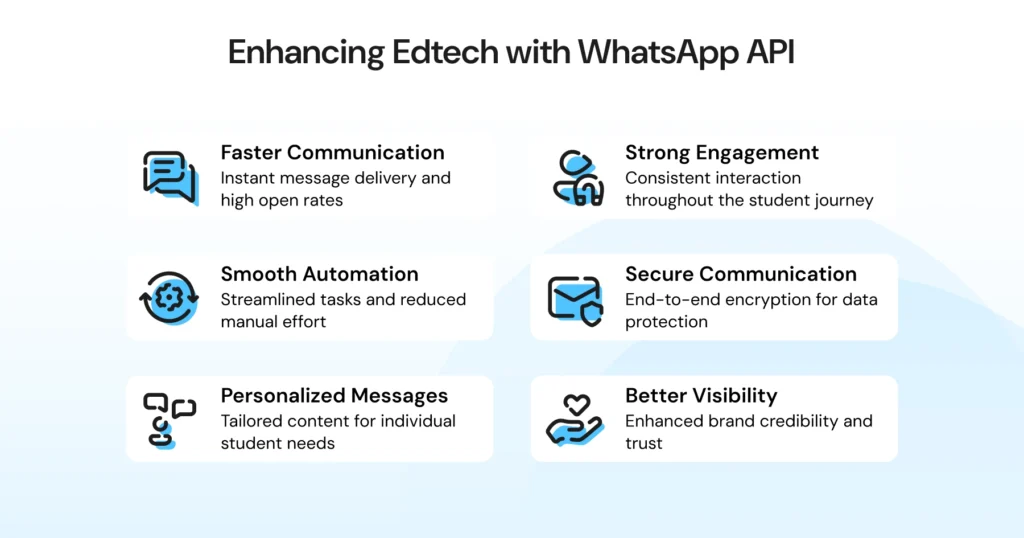
WhatsApp messages reach students instantly and have higher open rates than email or SMS. This helps schools send instant updates, urgent alerts, and timely reminders without worrying about missed communication.
Next time, students don’t complain they missed the exam alert; they haven’t been communicated about the exam dates beforehand, because your broadcasting or message system ensures the information is delivered to students’ inboxes without fail if they have WhatsApp and an internet connection.
You make sure the parents’ meeting and student progress information are received on parents’ mobiles so students can’t hide them.
Smooth Automation That Reduces Manual Effort
With automated messages, bulk messages, and powerful workflows, teams handle routine tasks without constant follow-ups.
Common information about class start times, parent meetings, fee payments, routine tasks, etc., can be communicated via bulk messages. It cuts operational load and allows staff to focus on human support where it truly matters.
Personalized Messages at Scale
The WhatsApp API supports targeted messages that feel personal.
Educational institutions share study materials, attendance alerts, and academic progress updates tailored to each student’s needs, thereby elevating the learning experience.
Materials, homework, exam updates, class changes, attendance data, and individual progress reports can be sent to students and their parents via personal messages, making it convenient and the right way for them to stay informed about their child’s progress.
Strong Engagement Across the Student Journey
From admissions to exams, WhatsApp helps edtech brands engage students through every stage.
You can create a checklist of activities and study timings, send and track timetables, create polls on subjects and class timings, and share study material files and videos.
Important files, documents, and information can be pinned, starred, and saved to your account, helping you track everything more easily.
The ease of this process helps students actively participate and learn according to your planned strategy, which, in turn, helps your pedagogy perform better than your competitors. It keeps learners informed, increases participation, and encourages consistent interaction on a familiar communication channel.
Secure and Trusted Communication
WhatsApp comes with end-to-end encryption, which protects messages and builds trust with students and parents.
For edtech companies handling sensitive academic data, this makes the platform a safe and reliable option.
Bonus Resource: WhatsApp Data Security Explained | End-to-End Encryption & API
Better Visibility for Your Brand
With tools like business profiles, eligibility for a verified blue badge, a business description, and a professional WhatsApp number, edtech platforms appear credible and trustworthy.
This helps to improve lead generation and builds confidence among learners.
How To Get Started With WhatsApp Business API for Edtech
Getting started with the WhatsApp Business API is simpler than most edtech teams expect. You do not use the WhatsApp Business App for this.
Instead, the API connects your platform to WhatsApp so you can send automated messages, broadcast messages, and personalized communication at scale.
To begin, educational institutions choose a trusted WhatsApp Business API provider. This partner helps you set up your WhatsApp number, verify your business, and follow Meta’s policies for the education sector.
Once approved, you can request the verification badge, set up basic workflows, and start sending messages through WhatsApp’s end-to-end encrypted messaging infrastructure, subject to Meta’s compliance policies.
Most edtech brands start small with fee reminders, enrollment updates, or urgent notifications, then expand into richer communication as they see results.
Dreamtime Learning’s WhatsApp Success With Wati
Dreamtime Learning is a strong example of how edtech brands can scale communication using the WhatsApp Business API.
With Wati, the team built automated journeys that guide parents and students through key stages such as onboarding, reminders, and daily interactions.
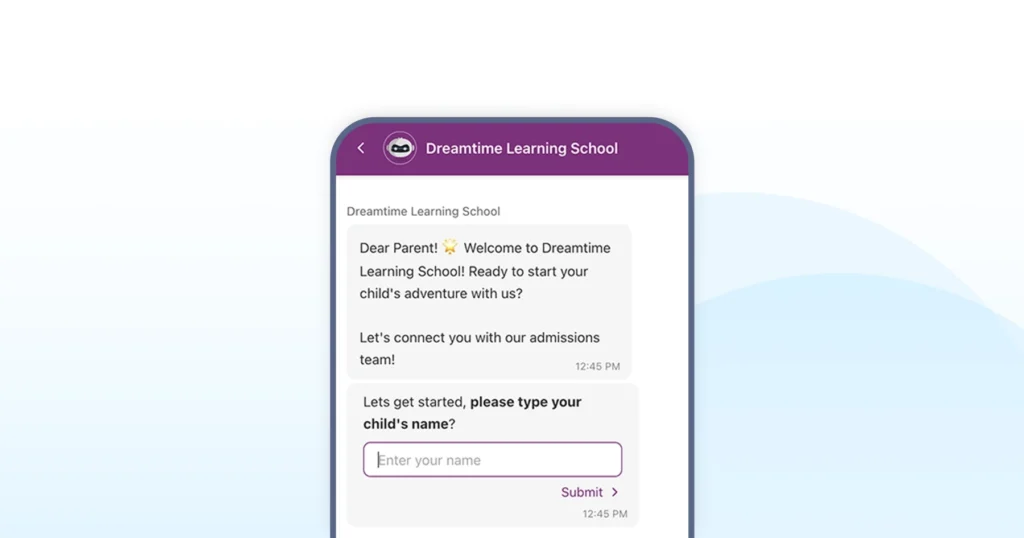
Key Outcomes:
- 30% of all leads now flow through a fully automated WhatsApp journey.
- 10,000+ leads have been generated directly via WhatsApp.
- Reduced manual effort with customizable chatbots and automated workflows.
- Cleaner lead quality after eliminating junk leads from previous service providers.
- Higher campaign delivery rates through Wati’s broadcast and routing tools.
Bonus Read: Virtual Number for WhatsApp: How to Choose the Right Number for Every Market
How Wati Supports the Full Edtech Communication Journey
Wati gives edtech platforms a complete WhatsApp communication system that supports every stage of the student lifecycle in a simple and scalable way.
- It starts with automated flows and a no-code chatbot builder that guides prospects through course discovery, answers admission questions, and shares brochures instantly.
- Once students enroll, Wati helps teams deliver onboarding messages, class reminders, study materials, and timely exam notifications through scheduled broadcasts and segmented targeting.
- Daily operations run smoother with automated workflows that handle fee reminders, payment updates, and attendance alerts without manual effort.
- Support teams work from a unified shared inbox where agents can reply faster with AI summaries, routing rules, and chatbot handovers.
This WhatsApp marketing software also offers secure delivery, verified sender options, and detailed analytics that help institutions understand student engagement and refine their communication strategy.
With segmentation, retargeting, powerful automation, and real-time assistance in one place, Wati becomes a dependable communication partner for growing edtech organizations.
You can sign up for a free trial to get started today.
Best Practices for Using WhatsApp API in Edtech
To get the most value from WhatsApp, edtech teams should keep communication simple, helpful, and student-focused. Here are a few best practices to guide your approach:
Send Relevant and Targeted Messages
Share updates that students actually need, such as study tips, attendance alerts, exam schedules, or fee reminders. Clear and concise messages work best.
Balance Automation With Human Support
Use automated messages for routine tasks, but keep real-time assistance available for questions that need a personal response.
Segment Your Audience
Send educational content to active learners, payment reminders only when required, and broadcast messages for urgent updates. This keeps communication meaningful.
Keep Each Message Clear and Actionable
Short prompts, simple language, and direct instructions help students respond quickly.
Protect Student Privacy
WhatsApp offers end-to-end encryption, but institutions should still handle data with care and send only essential information.
Measuring Success with WhatsApp API
To ensure that WhatsApp Business API is delivering real value, educational institutions should regularly measure key performance indicators such as student engagement, parental involvement, and communication efficiency.
Using analytics tools, institutions can track the number of WhatsApp messages sent and received, monitor response rates, and assess overall student satisfaction. Gathering feedback through surveys and direct messages also provides valuable insights into what’s working and where improvements can be made.
By analyzing these metrics, educational institutions can refine their communication strategies, make data-driven decisions, and continuously enhance the educational experience.
Leveraging the full potential of WhatsApp Business API as a communication tool helps institutions achieve their goals and deliver a more engaging, supportive environment for students and parents.
Bringing WhatsApp API for Edtech Into Your Growth Strategy
Using the WhatsApp API for edtech is ultimately about meeting students where they are and creating a communication flow that feels natural, timely, and supportive.
When messages reach learners instantly, institutions see stronger engagement, smoother operations, and a more connected learning experience. WhatsApp becomes a channel that simplifies updates, reduces manual effort, and gives students the clarity they need at every stage of their journey.
Wati helps edtech teams put this into action with automation, broadcasts, segmentation, and real-time support tools that scale as your student base grows. It offers a reliable way to manage conversations, share educational content, and keep communication consistent across your entire platform.
If you are ready to explore how WhatsApp can elevate your student experience, book a free demo with Wati and see how easily you can build a communication system that works for both your team and your learners.
FAQs
The WhatsApp API helps edtech teams send timely updates, reminders, and learning materials directly to students. Messages reach them instantly, which leads to better engagement and fewer missed notifications.
Yes. Edtech platforms can automate onboarding flows, class reminders, exam schedules, fee reminders, and more. Automation helps reduce manual effort and ensures students receive consistent information at the right time.
The WhatsApp Business App is designed for very small teams. Growing edtech platforms need the WhatsApp Business API, which supports automation, bulk messaging, segmentation, shared inboxes, and chatbot workflows.
Edtech organizations can access the API through an official WhatsApp Business API provider like Wati. The provider helps set up the WhatsApp number, verify the business, enable messaging tools, and support your communication workflows.