

-

-
-
Solutions
-
Soluções
-
Soluciones
-
解决方案
-
解決方案
-
الحلول
-
Product
-
Produto
-
Producto
-
产品
-
產品
-
المنتج
-

-
-


 Wati for Marketing
 Wati for Support
 Wati for Sales
 eLearning
 E-commerce
 Marketing Agencies
 Healthcare
 No Code Chatbots
 WhatsApp Business API
 Instagram Automation
 Click to WhatsApp ads
 Campaigns
 Team Inbox
 WhatsApp Business Calling
 Wati AI
 Overview
 Library
 Agente de suporte de IA

Smart Qualification Questions: How AI Discovers Customer Needs Without Being Pushy
Written by:
 Rohan Chaturvedi
|
Last updated on:
March 11, 2026
|
According to: Editorial Policies
Rohan Chaturvedi
|
Last updated on:
March 11, 2026
|
According to: Editorial Policies
 Table of Contents
Too Long? Read This First
- AI qualification questions feel natural, not intrusive, because the system gathers context from behavior, intent signals, and past interactions instead of relying on blunt “budget/timeline” interrogation.
- Behavioral lead scoring AI identifies real buying intent by analyzing actions like pricing-page visits, content consumption, and engagement patterns, helping reps reach out at the right moment.
- Conversational AI sales discovery improves call quality through real-time guidance, sentiment detection, and follow-up prompts that keep conversations consultative, not transactional.
- AI lead qualification without forms boosts completion and accuracy, using progressive disclosure and automated nurturing to qualify prospects quietly in the background.
- The best qualification flows combine AI intelligence with human empathy, ensuring reps enter conversations prepared, informed, and focused on solving problems.
Nobody likes feeling interrogated on a sales call. That rapid-fire questioning about budget, timeline, and authority creates resistance and not rapport.
Yet lead qualification remains essential. Sales teams need to identify serious buyers and understand their needs. The challenge has always been gathering this intelligence without making prospects feel like they’re being processed through a checklist.
AI is changing this dynamic entirely. By analyzing data signals, monitoring behavior, and guiding conversations intelligently, modern AI tools help sales teams understand customer needs before and during conversations. The result feels less like an interrogation and more like a consultative discussion.
Here’s how AI is transforming qualification into a genuinely helpful experience.
Why Do Traditional Qualification Questions Feel Pushy to Buyers?
Traditional qualification often fails because it prioritizes the seller’s needs over the buyer’s experience.
A rep jumps on a call and immediately starts asking: What’s your budget? Who else is involved in the decision? When are you looking to implement? These questions serve the sales process, but they don’t help the prospect.
The conversation becomes transactional rather than consultative. Prospects sense they’re being evaluated rather than helped. And when they feel like just another lead being processed, they disengage, or worse, provide misleading answers just to end the questioning.
According to HubSpot’s research, today’s buyers do extensive research before engaging with sales. They expect personalized experiences, not generic discovery scripts. When reps ask questions the prospect expects them to already know, it signals a lack of preparation and genuine interest.
What are Smart Qualification Questions?
Smart qualification questions help you understand a prospect’s needs without putting them on the spot. Instead of asking blunt, transactional questions about budget or timeline, these questions open space for prospects to share context, challenges, and goals in their own words.
They work because they shift qualification from interrogation to discovery. Rather than forcing prospects through a rigid checklist, smart qualification questions feel natural, relevant, and helpful.
AI enhances this process further. Modern AI systems guide reps toward open-ended prompts, surface context from behavioral data, and recommend follow-ups based on intent. This keeps the conversation fluid while still uncovering key qualification signals like urgency, decision criteria, constraints, and desired outcomes.
This is where AI elevates the process, helping reps know what to ask, when to ask it, and how to do it without pressure.
How Does AI Discover Customer Needs Without Direct Interrogation?
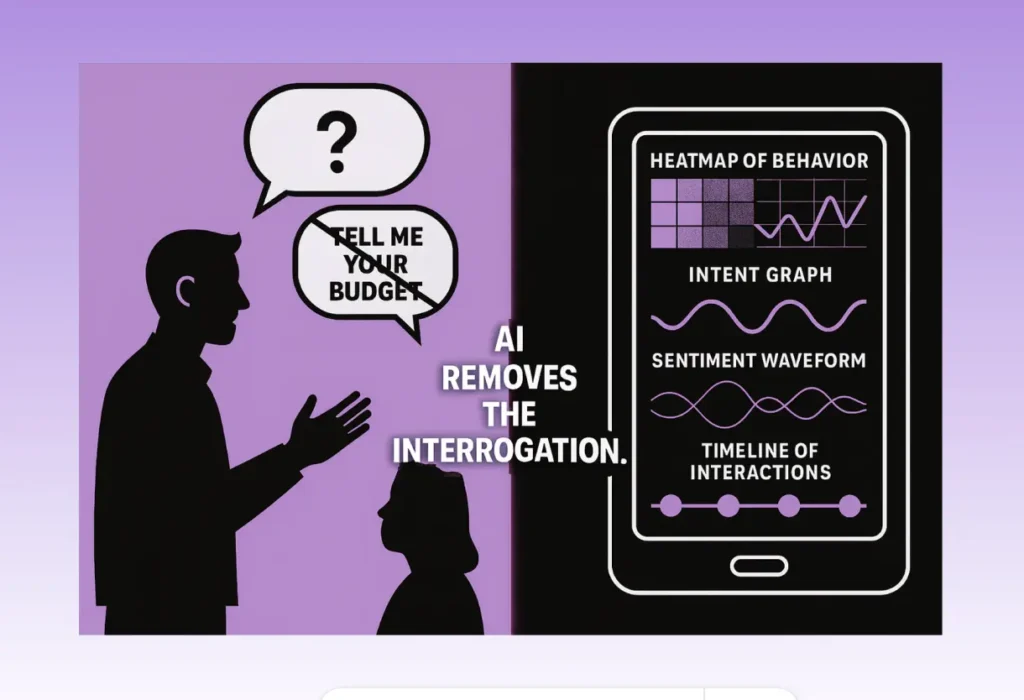
AI uncovers customer needs by observing behavior, interpreting intent, and guiding conversations, without forcing prospects to answer blunt qualification questions. Instead of asking, “What’s your budget?” or “Are you ready to buy?”, AI gathers context quietly and intelligently.
Here’s how it works:
Pre-Call Research Automation
The most effective way to avoid pushy questions? Already know the answers before the call starts.
AI systems automatically aggregate data from CRM records, social media profiles, public databases, and company information to build comprehensive prospect profiles. By the time a rep picks up the phone, they already understand the prospect’s industry, likely tech stack, company size, and potential pain points.
This transforms the conversation dynamic completely. Instead of asking “Tell me about your company,” a prepared rep can say “I noticed your team has been expanding rapidly, how has that affected your operations?”
One AI research platform reports reducing pre-call prep time from 20+ minutes to under 2 minutes while delivering richer insights. Reps using these tools approach conversations already informed about industry challenges, recent company news, and potential buying triggers.
The prospect notices this preparation. It demonstrates respect for their time and genuine interest in their situation, the opposite of a pushy sales approach.
Behavioral Analysis and Intent Signals
AI doesn’t need to ask whether a prospect is interested. It can observe their behavior and draw conclusions.
By monitoring website visits, content downloads, email engagement, and other digital touchpoints, AI identifies patterns that indicate purchase intent and specific needs. A prospect who repeatedly visits pricing pages, reads case studies in their industry, and downloads technical documentation is sending clear signals about their interests and buying stage.
Research from Lead411 found that prospects who visit a pricing page twice within a week are 40% more likely to convert. These behavioral patterns provide qualification intelligence that would otherwise require direct questioning.
Predictive lead scoring takes this further. Machine learning models analyze historical conversion data alongside real-time behavioral signals to predict which leads are genuinely sales-ready. According to a 2024 HubSpot study, companies using predictive analytics saw a 25% increase in lead-to-close rates.
This intelligence allows sales teams to time their outreach perfectly, reaching prospects when they’re actively evaluating solutions rather than cold-calling based on arbitrary schedules.
Context-Aware Conversation Guidance
During live conversations, AI provides real-time coaching that keeps discussions focused and valuable without following rigid scripts.
These systems analyze conversations as they happen, identifying keywords, sentiment shifts, and buying signals. When a prospect mentions a specific challenge, AI can suggest relevant follow-up questions. When the conversation drifts, it can prompt the rep back toward valuable territory.
For example, if a prospect mentions “budget concerns,” AI might suggest: “I understand where you’re coming from. Let’s discuss how this solution aligns with your financial goals.” This keeps the conversation consultative rather than defensive.
AI coaching tools analyze talk ratios to ensure reps are listening more than speaking, a hallmark of consultative selling. They identify moments when reps rush through discovery and prompt them to dig deeper with more open-ended questions.
Natural Language Processing for Understanding
Traditional chatbots follow rigid decision trees. Modern AI uses natural language processing to understand intent and emotion behind customer inquiries.
This allows AI-powered assistants to respond appropriately to natural language rather than requiring customers to navigate predetermined paths. When a prospect asks a question, NLP determines not just what they’re asking but why they might be asking it.
Sentiment analysis adds another layer. AI can detect frustration, enthusiasm, or hesitation in text and voice interactions, allowing both automated systems and human agents to respond with appropriate empathy. A prospect expressing urgency gets fast-tracked. Someone showing hesitation receives reassurance rather than pressure.
Smart Use of Open-Ended Questions
AI is particularly effective at promoting open-ended questioning techniques that transform qualification from interrogation into dialogue.
Open-ended questions beginning with “what,” “how,” or “why” invite prospects to share context, motivations, and challenges in their own words. According to RAIN Group’s research on effective sales questions, these prompts help reps connect with buyers personally, understand what’s important to them, and create better futures for them.
AI coaching systems are programmed to suggest open-ended, coaching-style questions like:
- “What’s the biggest challenge you’re facing right now?”
- “How have you tried to solve this problem in the past?”
- “What would success look like for your team?”
- “What happens if this challenge remains unaddressed?”
These questions accomplish qualification goals while making prospects feel heard and valued. They uncover budget constraints, decision-making processes, and timelines naturally, without direct interrogation.
The question “What happens if this challenge remains unaddressed?” is particularly powerful. It quantifies the cost of inaction and builds urgency without any pushy behavior from the rep.
Automated Nurturing Without Human Pressure
Not every lead is ready for a sales conversation. Traditional approaches often push these prospects into premature discussions, creating friction and wasted effort on both sides.
AI enables a different approach: automated, personalized nurturing that qualifies leads over time without human pressure.
Based on a lead’s specific interests and behaviors, AI delivers targeted content that moves them through the sales funnel naturally. Someone researching a particular feature receives case studies demonstrating that feature’s value. Someone comparing vendors receives competitive differentiation content.
This nurturing accomplishes two goals. First, it educates prospects and builds trust before any human interaction. Second, it generates additional behavioral data that further qualifies the lead.
By the time a nurtured lead requests human contact, they’re already informed about solutions, clear on their own needs, and receptive to conversation. The subsequent sales discussion becomes genuinely consultative because the foundational qualification happened organically.
How Do You Implement AI-Powered Qualification Flows?
Implementing AI-powered qualification requires more than just adding technology. It requires rethinking how qualification happens.
- Start with data integration. AI qualification tools need access to comprehensive data sources: CRM systems, marketing automation platforms, website analytics, and third-party intent providers. The more data available, the richer the prospect intelligence.
- Define behavioral signals. Work with sales and marketing to identify which behaviors indicate genuine buying intent versus casual browsing. Frequent visits to pricing pages might signal readiness. Technical documentation downloads might indicate the evaluation stage. These definitions become the foundation for predictive scoring.
- Train teams on consultative techniques. AI provides intelligence, but reps must use it effectively. Role-playing exercises help reps practice using pre-call research naturally, asking open-ended questions, and listening more than speaking.
- Establish handoff criteria. Not every lead needs immediate human attention. Define clear thresholds for when AI nurturing gives way to human engagement, typically based on scoring models that combine fit and behavioral intent.
- Iterate continuously. Predictive models improve with feedback. Track which AI-qualified leads actually convert and use that data to refine scoring algorithms and questioning techniques.
The Future of Smart Qualification
The line between AI-assisted and AI-led qualification continues to blur.
Advanced AI agents can now conduct entire qualification conversations autonomously, asking relevant questions, understanding natural language responses, and routing leads appropriately. Companies using these agents report handling far more inbound inquiries without proportional staff increases.
But the goal isn’t replacing human connection. It’s enhancing it. AI handles the mechanical aspects of qualification: data gathering, scoring, initial engagement, so human conversations can focus on genuine problem-solving.
The best qualification experiences combine AI intelligence with human empathy. Prospects interact with systems that understand their needs without pushy questioning, then connect with reps who are prepared to help rather than interrogate.
Make AI Smart Qualification Feel Helpful
Smart qualification isn’t about extracting information. It’s about understanding prospects well enough to genuinely help them.
AI enables this shift by gathering intelligence through observation rather than interrogation, guiding conversations toward valuable territory, and ensuring human interactions happen at the right time with the right context.
The result is qualification that feels less like a checkpoint and more like the beginning of a helpful relationship. Prospects share openly because they sense genuine interest. Reps sell effectively because they truly understand needs.
That’s the promise of smart qualification, discovering customer needs without ever being pushy.
Get started for free with Astra or book a demo to see how AI qualification questions uncover real buyer intent—without the pushy sales tactics.
FAQs
AI uses behavioral analysis, intent signals, and predictive scoring to understand prospect readiness. By monitoring website visits, content engagement, email interactions, and other digital touchpoints, AI identifies buying patterns and needs without requiring explicit questioning. This intelligence allows sales teams to approach conversations already informed.
AI coaching systems suggest questions that encourage prospects to elaborate on challenges and goals, such as “What’s the biggest obstacle you’re facing right now?” or “What would success look like for your team?” These consultative questions uncover qualification criteria naturally while making prospects feel heard and valued.
AI can handle initial qualification autonomously through chatbots and automated nurturing, but complex B2B sales typically benefit from human connection. The most effective approach combines AI intelligence—pre-call research, behavioral scoring, conversation guidance—with human empathy and problem-solving during direct interactions.