

-

-
-
Solutions
-
Soluções
-
Soluciones
-
解决方案
-
解決方案
-
الحلول
-
Product
-
Produto
-
Producto
-
产品
-
產品
-
المنتج
-

-
-


 Wati for Marketing
 Wati for Support
 Wati for Sales
 eLearning
 E-commerce
 Marketing Agencies
 Healthcare
 No Code Chatbots
 WhatsApp Business API
 Instagram and Facebook messenger
 Click to WhatsApp ads
 Campaigns
 Team Inbox
 WhatsApp Business Calling
 Wati AI
 Overview
 Library
 Agente de suporte de IA
Top 10 WhatsApp Marketing Mistakes Businesses Make and Mess Up Sales Strategy
Written by:
 Shreya Mattoo
|
Last updated on:
February 25, 2026
|
Fact Checked by :
Shreya Mattoo
|
Last updated on:
February 25, 2026
|
Fact Checked by :
 Namitha Sudhakar
|
According to: Editorial Policies
Namitha Sudhakar
|
According to: Editorial Policies
 Table of Contents
Too Long? Read This First
- The biggest WhatsApp marketing mistakes start with ignoring consent. WhatsApp is not for cold outreach, and clear opt-ins are essential to avoid bans.
- Blasting the same message to everyone hurts engagement. Smart segmentation based on intent and behaviour performs far better.
- Slow or robotic replies damage trust. AI Agents help teams respond faster while keeping conversations human.
- Plain text messages limit engagement. Rich media and interactive elements drive higher clicks and responses.
- Frequency capping and fallback channels protect deliverability and prevent message fatigue.
Oftentimes, brands that go heavy on WhatsApp marketing end up losing leads.
Marketers don’t even realise they might be committing minor or major WhatsApp marketing mistakes that even a trained eye can sometimes miss.
Running WhatsApp marketing campaigns is not easy, and sometimes sales teams can go overboard. Reforwarding repeated promotional messages, bombarding broadcasts, or sending messages to opt-out subscribers are common WhatsApp marketing mistakes.
Making silly WhatsApp marketing mistakes can cause concern among your prospects and customers. A brand that doesn’t know when to stop selling is considered low-quality.
To avoid this, businesses switch to WhatsApp marketing tools, which help them devise data-driven campaigns and defined segments to avoid mistakes and keep pushing forward.
In this guide, I will take you through some common WhatsApp marketing mistakes brands make and how to avoid them using Wati’s marketing stack.
Let’s get in!
Where WhatsApp Marketing Often Goes Wrong
Making blind mistakes can deal a heavy blow to sales ROI. Being mindless with campaign execution, bombarding promotional texts, or asking for follow-ups even after the lead is unresponsive leads to potential spam listing or blocking.
For online brands, the word of mouth travels fast. If you are an SMB or a solopreneur, you need to smarten your WhatsApp broadcast campaign approach and avoid pushy sales tactics to maintain consumer engagement.
In a nutshell, it is advisable to avoid WhatsApp marketing, as it might result in you losing a subscriber or receiving refund/exchange requests for a product business.
10 Most Common WhatsApp Marketing Mistakes Businesses Make That Affect Sales Revenue
Read on to learn about the 10 most common WhatsApp marketing mistakes that potentially hamper customer relationships, increase retention, and decrease brand loyalty.
1. Sending Messages Without Explicit Opt-Ins
Using WhatsApp as a cold email channel is extremely ineffective and doesn’t yield favorable outcomes.
If you keep sending unsolicited messages to your customers, your WhatsApp Business Account will be reported or flagged by Meta.
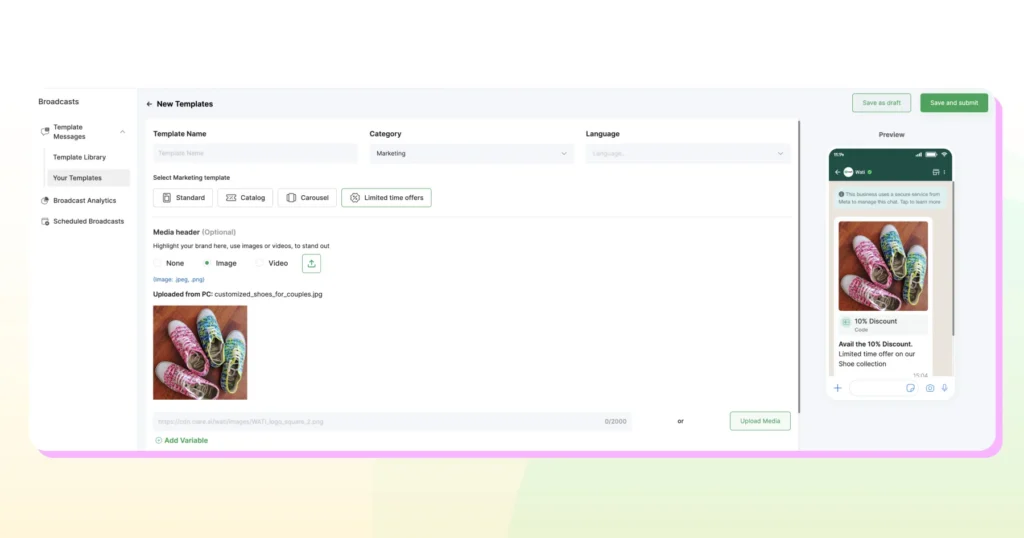
With WhatsApp Business API tools like Wati, you can trigger requests to seek opt-ins for both subscribers and non-subscribers.
Wati helps you secure explicit consumer opt-ins via web widgets or QR code logins. Only if a prospect opts in to the lead for potential broadcast campaigns.
Wati ensures that you message only those who want to hear from you, protecting your number’s quality rating.
2. Lack of Audience Segmentation
Blankly broadcasting the same message to prospects can also drive away the right people.
For example, if someone is interested in booking a virtual demo, and you send them a referral email or discount alert, they’d be taken aback and might even opt out.
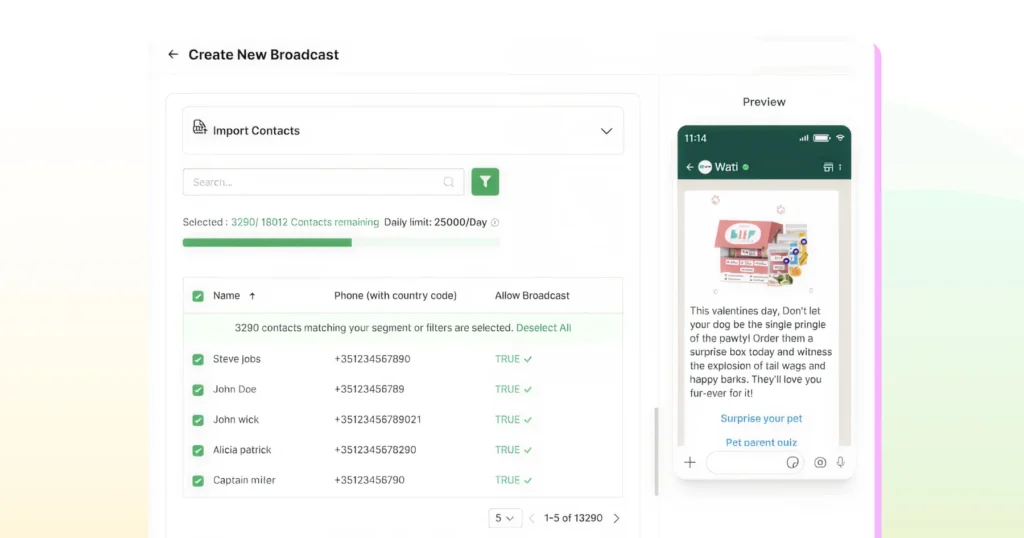
Blasting generic promotional messages to the entire database can result in mass spam listing and removal of your WhatsApp profile.
Wati’s API solution comes with a “Segments” feature that groups users based on their purchase history and intent.
With Wati, you can add advanced filters such as Winback, At Risk, Highly Engaged, or Invalid based on the customer’s most recent interaction.
Assuring you add these filters for customers based on their last activity prevents a spray-and-pray approach and allows you to tailor communication effectively.
Wati’s advanced filters let you target specific segments, ensuring high relevance and better CTR.
3. Ignoring the 24-hour Message Window
Once you forward a broadcast message in bulk, you cannot automate another campaign push without quantifying reciprocation.
Failing to respond to a customer query is more concerning than failing to launch another campaign. If you ignore the inquiries in the 24-hour message window, that lead will drop.
Eventually, not controlling campaign automation is a serious recipe for mass lead drop-off, which will carry a negative brand reputation in the market.
Once the window closes, you have to use a “paid template” to re-engage.
Wati’s shared team inbox allows multiple sales agents to track conversations, reply, and maintain the sales flow.
Other features like automated FAQ replies and no-code chatbot automation also help solve customer queries instantly, 24/7, thus keeping sessions active.
4. Sending “Naked” Links Without Setting Context
Attaching random links in WhatsApp messages also distracts customers’ attention.
For example, if a customer signs up and initiates a click to WhatsApp ad, and wants to browse for trousers under $3000, a delivery update link or an appointment booking link can be extremely “out of nowhere”.
Pasting a raw URL into the messages appears spammy and results in lower CTR, conversational efficiency, and, eventually, fewer revenue opportunities.
Wati allows you to format your links with rich media previews and clear call-to-action (CTA) buttons.
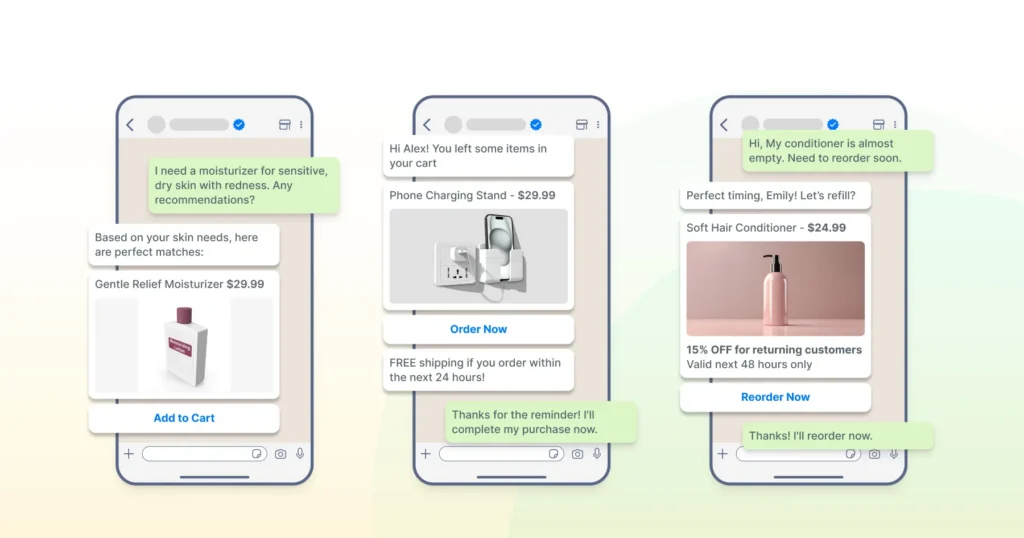
If a customer who purchased a product 3 weeks ago wants to buy again, the system automatically adds them to “Winback” in the backend and sends the right links on WhatsApp.
Messages with a thought-through call to action see significantly higher customer engagement and response rates than plain-text links. Well-placed clickable user links encourage consumers to take action.
5. Over-Frequency (Bombarding Broadcast)
Forgetting that WhatsApp is not a one-way but a two-way communication channel also counts as a mistake.
Sending multiple bulk messages to customers, day and night, without knowing where to stop, leads to immediate opt-outs or, worse, spam listings.
Wati helps you personalize the sales journey for leads in the backend, allowing you to wait a couple of days before adding them to a second broadcast.
Wati also provides “campaign analytics” to monitor your “block rate” and “unsubscribe” trends. If engagement drops, you can instantly adjust broadcast frequency.
While you target prospects actively with brand broadcasts, throwing a multitude of promotional or discount offers at them will eventually make them feel unheard.
6. Sending Robotic, Non-Personalized Emails
Sometimes, brands might automate the right response for customer queries, but forget to personalize the message.
Sending something like “Hi Customer, your inquiry has been received. A support agent will get back to you soon” is way unprofessional and robotic. It might reduce future sales or repeat-purchase opportunities.
Along with ensuring prompt response, keep in mind not forward cold and automated messages.
Wati allows personalization tags to pull data out from your CRM and contextualize messages.
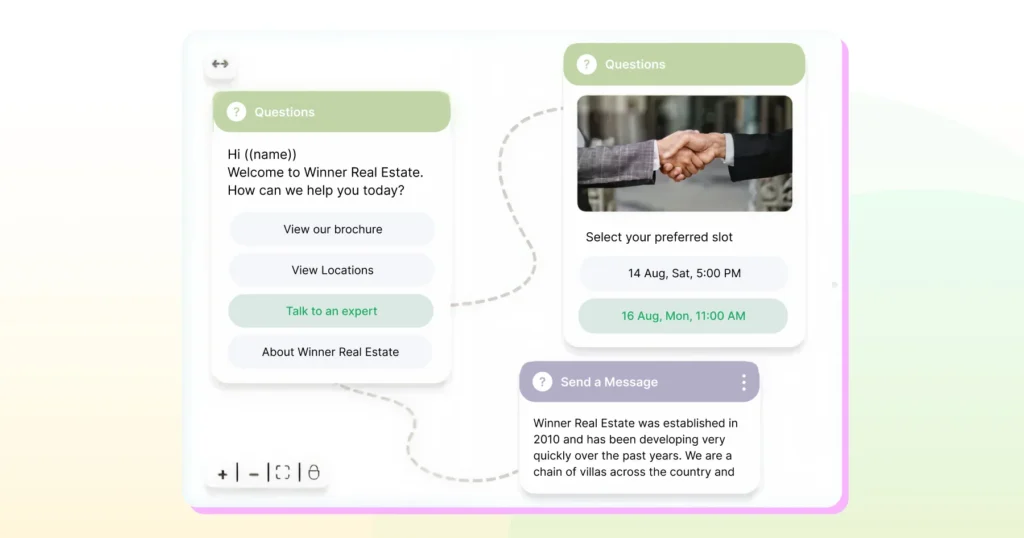
Wati’s WhatsApp CRM integration lets you address customers by name and mention their last-ordered item to make conversations more humane and empathetic.
By using personalization at scale across the entire lead database, you amplify the customer experience and assure customers that they are important and valuable.
7. No Clear “Opt out” Option
If your messages do not include a clear opt-out option, customers have no easy way to unsubscribe.
When people keep receiving messages they do not want, they are more likely to block you or mark your messages as spam.
If a customer chooses to stop hearing from you, your messaging strategy should respect that choice and make opting out simple and frictionless.
With BSP providers like Wati, you can attach a CTA to “unsubscribe” or “stop quick reply button” in your broadcasts. Wati can then automatically tag these users to exclude them from future campaigns.
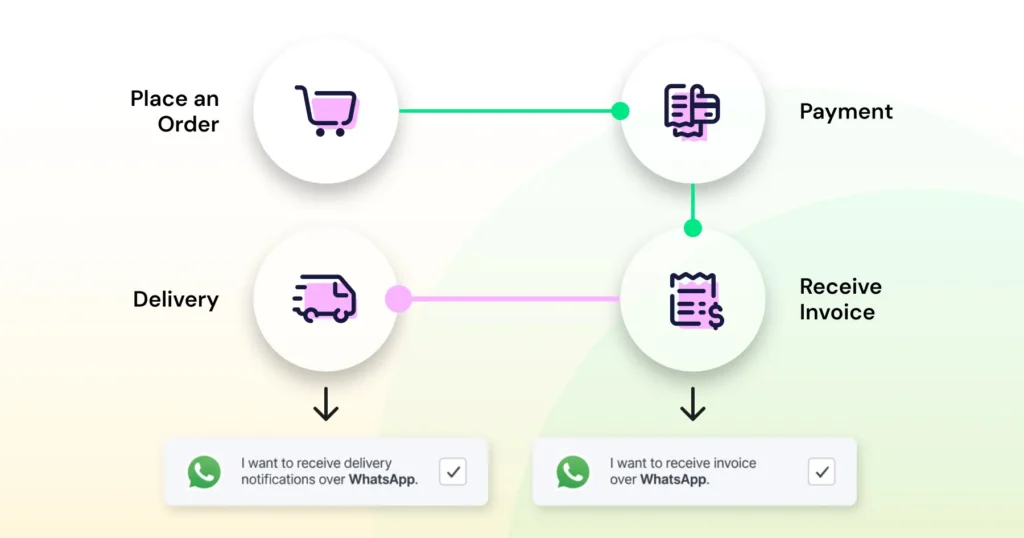
If customers sign up for opt-ins via text or an inbound call, Wati prioritizes them for future marketing campaigns.
8. Treating WhatsApp as a One-Way Channel
Many brands send festive offers or flyer advertisements as broadcast, but don’t monitor replies.
A study reveals that over 73% users say that a slow response on WhatsApp will convince them not to buy.
Assuming the client is interested and blindly anticipating their next steps, i.e., cart shopping, checking catalogs, or wanting specialist assistance, would immediately frustrate them and make them drop off.
With Wati, you can deploy intelligent AI agents (powered with Gemini 3.0) to handle the first layer of customer responses, quantifying or verifying leads, and asking questions as human agents focus on closing deals.
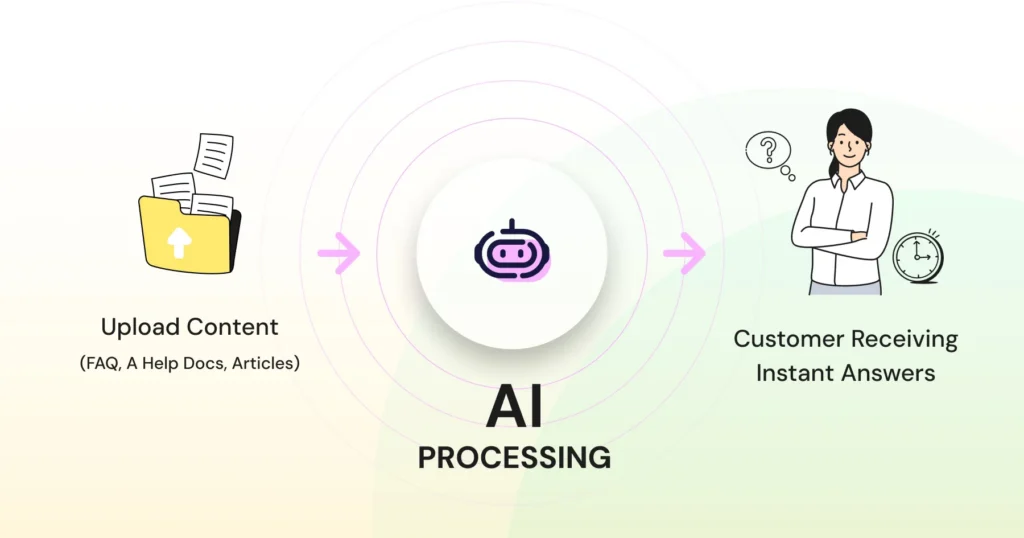
Wati takes over the MQL verification process and offers chatbot automation for intelligent conversational intelligence, which sets the stage for future sales calls.
9. Failing to Use Rich Media
Untargeted, text-heavy messages won’t spark the kind of attention you need from leads and will be ignored in the long run.
As customers vouch for “consumer-first brands”, structuring an appealing and intelligent text message should be on top of your agenda.
With Wati, you can leverage interactive WhatsApp video messages to improve the consumer sentiment and provide white-glove assistance.
Showing a 30-second video demo or a clickable product card within the chats satisfies search intent significantly and improves conversion rates.
10. Manual Lead Management (The Single Device Trap)
If you are serious about growing your business, using a single-device WhatsApp Business account isn’t going to cut it.
Trying to run a business via the standard WhatsApp Business App on one phone leads to missed chats and slow service.
Switching to a WhatsApp Business API solution like Wati allows for multi-agent access, ensuring your sales pipeline is always following up.
How Does Wati Help Rectify WhatsApp Marketing Mistakes To Ensure a Steady Pipeline?
WhatsApp Marketing mistakes often occur when sales teams rely on manual processes and data silos across platforms.
Wati’s 2026 feature set is specifically designed to act as a “safety net” for marketers, ensuring that even if a campaign hits a roadblock, your overall sales cycle is not affected and deals keep flowing.
- Wati’s Smart Segments: Wati’s Advanced Segments allow you to filter your audience based on 120+ attributes, including purchase history from Shopify or lead stage from HubSpot. This ensures that a customer who just bought a product doesn’t receive a “Buy Now” discount for the same item an hour later.
- Multi-channel engagement with SMS Fallback: If your WhatsApp broadcast fails (e.g., due to a temporary ban or the recipient not being on WhatsApp), Wati automatically triggers an SMS Fallback. Your critical message, like an OTP or a limited-time flash sale, reaches the customer no matter what.
- RCS (Rich Communication Services) for influential impact: If a user is on Android and has high engagement there, Wati can prioritize RCS for a rich, interactive experience.
- Click-to-WhatsApp (CTWA) Ads & Tracking: Wati integrates directly with CTWA Ads, allowing you to automate the greeting and lead qualification instantly. More importantly, Wati’s Conversion Tracking helps you see exactly which ad drove each sale, preventing “blind” spending.
- In-app business calling for quick action: Wati now supports Native WhatsApp Voice Calling. Agents can switch from a text chat to a voice call within the same thread. This ensures a high-touch experience for VIP clients or complex troubleshooting without ever losing the conversation history.
- Astra AI agents for 24×7 availability: Powered by Astra (Wati’s Orchestration Layer) and Gemini 3.0, our AI Voice Agents handle inbound queries with near-human intent and local accents. They can qualify leads, book appointments, and provide instant call summaries for your team.
Avoid Misses, Double Revenue!
In the peer pressure of converting leads, ensure you don’t hit a wall or make serious mistakes that can destroy brand image permanently.
By avoiding these common WhatsApp marketing mistakes, you can turn WhatsApp into your highest converting sales channel and multiply revenue smartly.
A brand that knows what it is doing and focuses on consumer demand becomes much more attractive in the market than vague companies doing generic marketing.
If you are new to WhatsApp marketing strategy and want to fuel SMB growth, check out Wati’s WhatsApp Business API stack for your sales and marketing teams.
Sign up now for a free demo of Wati to know more!
Frequently Asked Questions: WhatsApp Marketing Mistakes
To avoid Meta bans, ensure you only message users who have provided explicit opt-in. Additionally, monitor your “Block Rate” in Wati’s analytics; if it spikes, reduce your broadcast frequency and improve the relevance of your content through segmentation.
Technical glitches or Meta restrictions can occasionally block delivery. Wati solves this with SMS Fallback, which automatically sends your critical message (like an OTP or time-sensitive offer) via SMS if the WhatsApp message fails, ensuring your pipeline stays active.
Low CTR usually stems from “naked” links or a lack of context. Instead of raw URLs, use Wati to create interactive CTA buttons and rich media previews. Also, ensure you aren’t over-messaging your audience, as “notification fatigue” causes users to ignore even relevant links.
For growing businesses, a single device is a “lead trap.” Switching to Wati’s WhatsApp Business API allows for multi-agent access, meaning your entire team can handle inquiries from a shared inbox simultaneously, ensuring no customer is left waiting.
WhatsApp requires businesses to respond to user-initiated messages within 24 hours. If you miss this window, you must use a pre-approved Paid Template to re-open the conversation. Wati’s AI Agents help by providing 24/7 instant replies, keeping the window active and saving costs on templates.