

-

-
-
Solutions
-
Soluções
-
Soluciones
-
解决方案
-
解決方案
-
الحلول
-
Product
-
Produto
-
Producto
-
产品
-
產品
-
المنتج
-

-
-


 Wati for Marketing
 Wati for Support
 Wati for Sales
 eLearning
 E-commerce
 Marketing Agencies
 Healthcare
 No Code Chatbots
 WhatsApp Business API
 Instagram Automation
 Click to WhatsApp ads
 Campaigns
 Team Inbox
 WhatsApp Business Calling
 Wati AI
 Overview
 Library
 Agente de suporte de IA
WhatsApp for HR Communication: When and How HR Teams Use It
Written by:
 Rohan Chaturvedi
|
Last updated on:
February 16, 2026
|
Fact Checked by :
Rohan Chaturvedi
|
Last updated on:
February 16, 2026
|
Fact Checked by :
 Namitha Sudhakar
|
According to: Editorial Policies
Namitha Sudhakar
|
According to: Editorial Policies
 Table of Contents
Too Long? Read This First
- WhatsApp for HR communications is gaining traction because it is fast, familiar, and easy for employees and candidates to engage with.
- HR teams can use WhatsApp for internal updates, recruitment, screening, feedback collection, alerts, and employee onboarding.
- Automation and chatbots help streamline repetitive HR tasks, improve response times, and keep communication consistent.
- WhatsApp simplifies hiring workflows through QR codes, click-to-WhatsApp ads, automated screening, and onboarding messages.
- Using WhatsApp for HR communications helps HR teams improve engagement while reducing manual effort and operational delays.
- Wati enables HR teams to use WhatsApp for HR communications at scale with automation, templates, and shared inboxes.
HR teams today rely on multiple tools to communicate with employees and candidates.
But managing conversations across emails, portals, and internal systems often slows things down. That is why many HR teams are starting to look at WhatsApp differently.
At first, WhatsApp may feel too informal for HR communication. It is commonly seen as a personal messaging app.
But in practice, it offers speed, familiarity, and reach that traditional channels often lack.
With WhatsApp automation, HR teams can go beyond one-to-one messaging. WhatsApp API makes it possible to send automated updates, streamline employee onboarding, conduct screening conversations, and manage routine HR touchpoints at scale.
In this blog, we explore seven practical ways HR teams can use WhatsApp to improve communication and operations. Before that, let’s look at why WhatsApp makes sense for HR in the first place.
Top 4 Reasons to Consider WhatsApp in HR Communication
HR communication has changed. Long emails and slow portals no longer match how people prefer to communicate.
Employees and candidates expect faster responses and simpler interactions.
This is where WhatsApp starts to make sense for HR teams. Read on to learn why more HR teams are choosing WhatsApp as a practical, everyday communication channel.
1. Accessibility
With more than 3 billion users, there isn’t a messaging app that is more accessible than WhatsApp.
To give you a perspective, WhatsApp’s user base is almost 30% of the world’s population. This massive accessibility means:
- Seamless Communication
- High familiarity and reduced learning curve for HRs, employees, and potential candidates
- Reach a broader audience effortlessly
2. Cost-effectiveness
WhatsApp Business is free for small companies, and the WhatsApp Business API also offers a generous free conversation limit to get started.
This makes it an affordable option for HR teams, regardless of company size.
Compared to many other workplace communication tools, WhatsApp Business API offers a simpler and more cost-effective way to handle everyday HR communication without adding extra overhead.
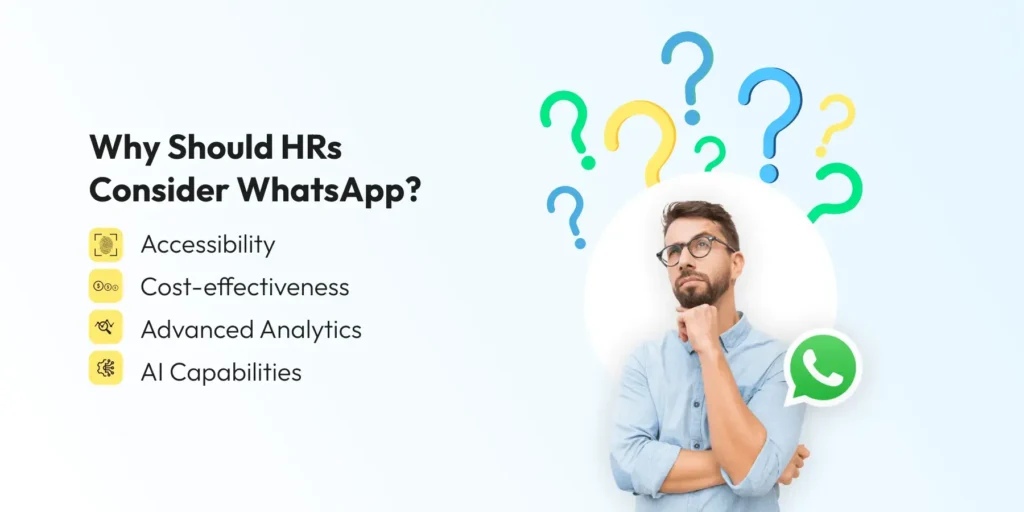
3. Advanced Analytics
With the WhatsApp API, HR teams get clear visibility into how their messages perform. They can track engagement, response patterns, and overall interaction trends across conversations.
These insights help HR teams understand what works, what does not, and where communication can improve.
For example, they can review response rates, message opens, and feedback to fine-tune messaging and make HR communication more effective.
4. AI Capabilities
AI-powered WhatsApp chatbots help HR teams automate everyday tasks and respond to employees instantly.
They can handle common requests like leave applications, policy questions, or expense submissions, reducing the manual workload for HR teams. Over time, these chatbots can also offer more personalised support.
Based on employee profiles and interactions, they can share relevant training resources, recommend learning paths, or highlight career development opportunities, allowing HR teams to focus on more strategic work.
Also Read: WhatsApp Chatbot in 2026: Features, Applications And Benefits
4 Ways to Use WhatsApp for Internal HR Communication
Internal HR communication does not have to feel heavy or formal. Employees prefer quick updates and simple interactions over long emails that often get ignored.
That is why WhatsApp works so well for internal communication. It feels familiar, easy to use, and fits naturally into everyday work life.
Keep reading to see a few practical ways HR teams can use WhatsApp to stay connected with employees.
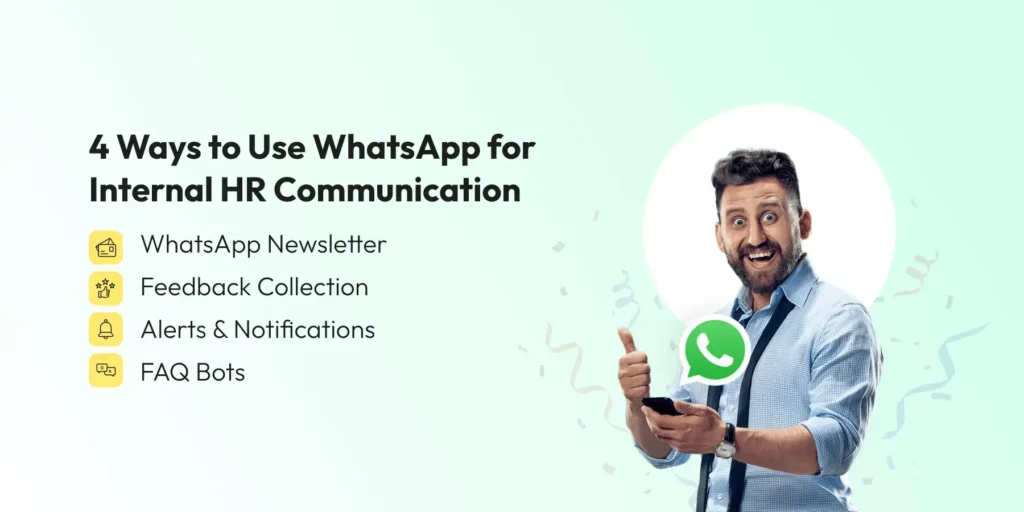
1. Send a WhatsApp Newsletter
Newsletters are a simple way for HR teams to share company updates and announcements without overwhelming employees. When it comes to reaching people quickly, few channels work as well as WhatsApp.
With its high open and click rates, WhatsApp newsletters help HR teams keep employees informed, engaged, and connected, without messages getting lost or ignored.
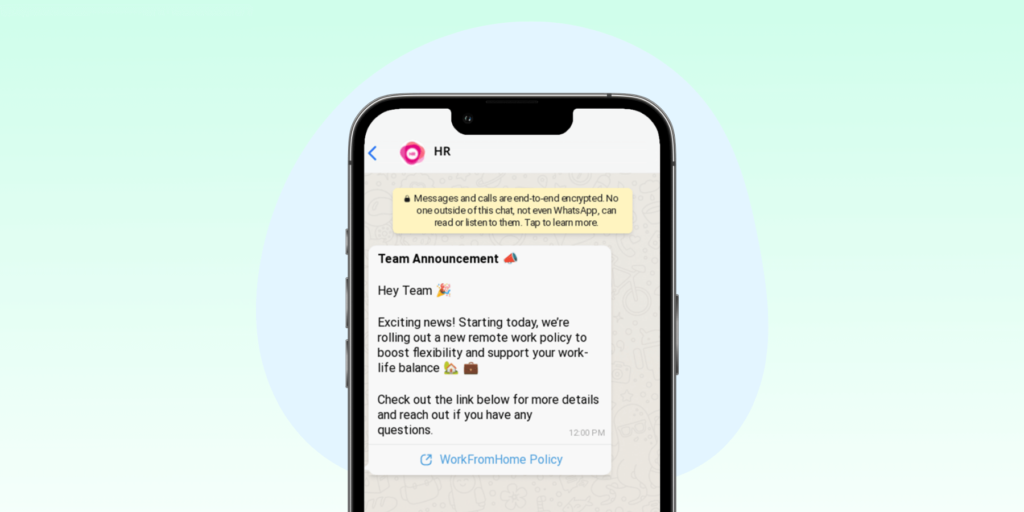
By creating a dedicated broadcast list, HR can ensure that important information, such as:
1. Company Announcements
2. Event Invitations
3. Employee Recognition
4. HR Policies
5. Wellness Tips
6. Training Materials
7. Feedback Surveys
8. Emergency Alerts
9. Industry News
10. Employee Spotlights
WhatsApp’s multimedia capabilities allow HR to include rich content such as images, videos, and documents, making the newsletters visually appealing and informative.
2. Collect Feedback
WhatsApp enables HR to collect feedback efficiently by providing a familiar and accessible platform for employees to share their thoughts.
Through polls, surveys, or direct messaging, HR can gather insights on various aspects of the workplace, such as job satisfaction, training needs, or organisational culture.
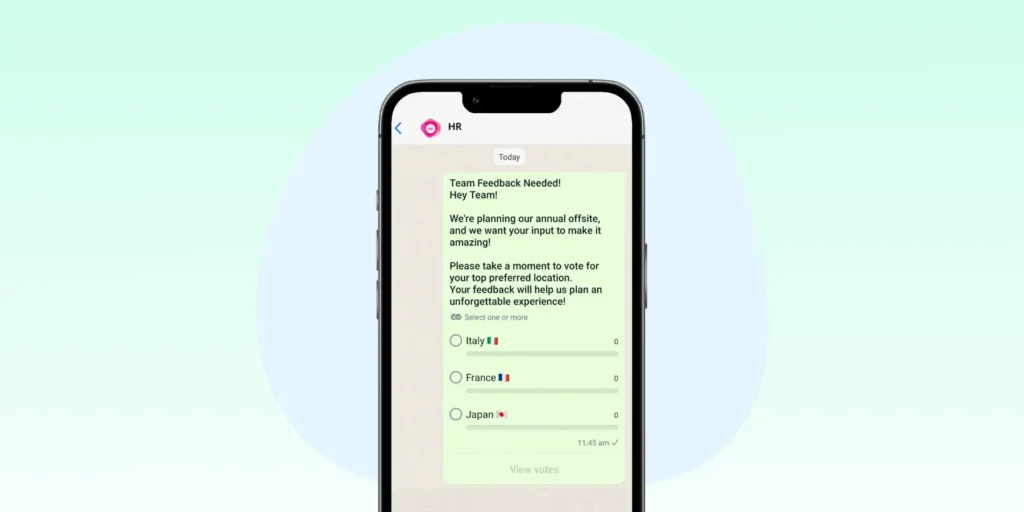
With WhatsApp chatbots, HRs can even automate the entire feedback collection process.
3. Alerts & Notifications
For alerts and notifications, speed and reach matter the most. The channel needs to be easy to access, deliver messages instantly, and actually get noticed.
Care to take a guess as to which platform has it all? WhatsApp.
Using WhatsApp for HR communication, teams can send alerts and notifications through broadcast lists or groups, ensuring important updates reach employees right away.
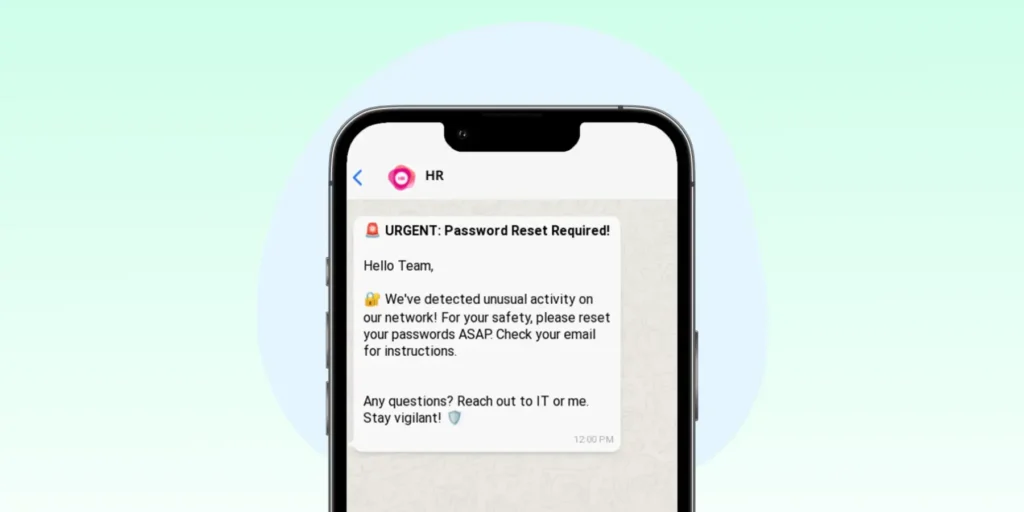
HRs can also customise messages with relevant information, such as urgent announcements, policy updates, or event reminders.
WhatsApp’s multimedia capabilities enable HR to include images, documents, or links to enhance communication.
HRs can even leverage features like read receipts to track message delivery and engagement. WhatsApp’s encryption ensures data security and confidentiality.
4. FAQ Bots
FAQ chatbots can take a lot of repetitive HR communication off your plate.
Instant Query Resolution
The chatbot handles common HR questions about policies, benefits, and procedures right away, saving time and ensuring consistent answers.
Employees no longer have to wait for HR personnel to be available, leading to increased efficiency across the organisation.
Automates Processes
One of the biggest advantages of using a WhatsApp chatbot is automation.
It can handle routine HR tasks like leave requests, expense submissions, and onboarding questions, freeing up HR teams to focus on more strategic work.
Resource Accessibility and Updates
Beyond answering questions, the chatbot acts as a single place where employees can easily access important resources, updates, and information.
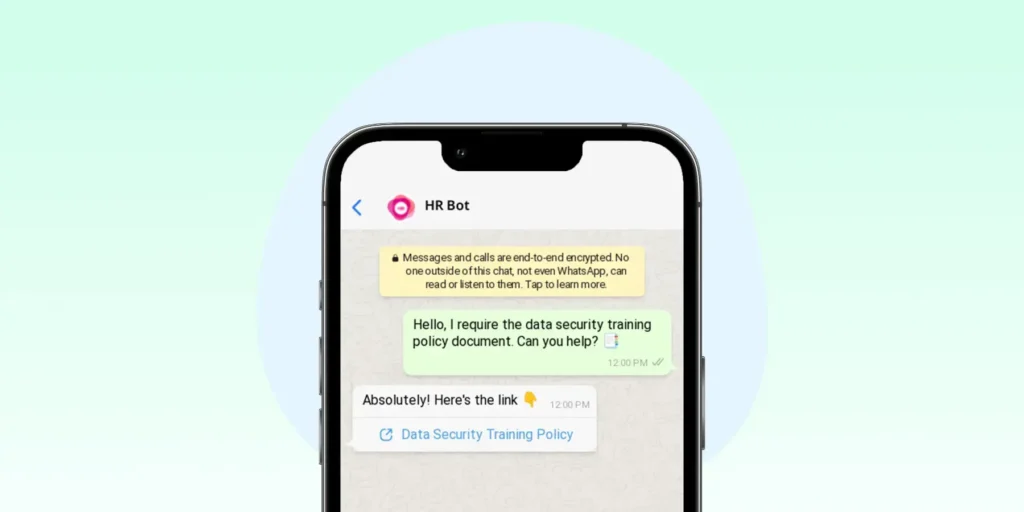
From company policies and training materials to upcoming events, the chatbot makes sure employees can easily find the information they need, when they need it.
3 Ways to Use WhatsApp for HR Operations
HR operations often involve repetitive tasks that take up time and slow down hiring and onboarding.
WhatsApp helps simplify these processes by bringing everything into one familiar channel.
From attracting candidates to screening and onboarding them, HR teams can use WhatsApp to move faster without adding complexity.
1. Job Advertisement
HRs can use WhatsApp not only for broadcasting job advertisements but also to receive responses from interested candidates within WhatsApp.
QR Codes
Companies can generate WhatsApp QR codes and place them on their job advertisements, whether online or in print.
Applicants can then scan the QR code, which directs them to a private chat where they can present their credentials directly to the HR team.
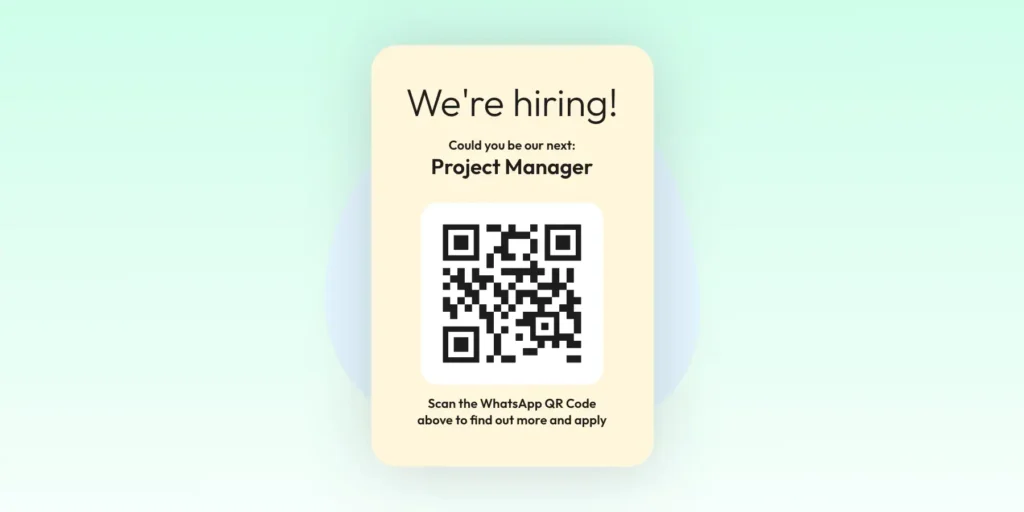
This method streamlines the application process and allows for direct interaction between the applicant and the hiring team.
Click-to-WhatsApp Ads (CTWA)
HRs can also use CTWA (click-to-WhatsApp Ads).
Here, a button embedded in their online job advertisements leads directly to a WhatsApp chat, allowing applicants to initiate conversations with the HR team instantly.
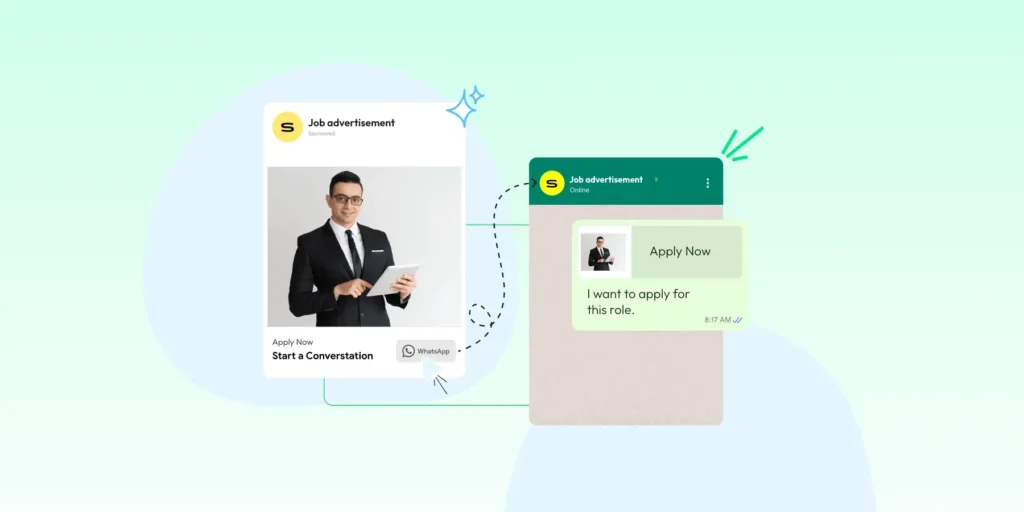
This method is particularly effective for online job postings where users are more accustomed to clicking on interactive elements.
To know more about CTWA, watch our YouTube playlist here.
WhatsApp Broadcast Lists
HRs can utilize WhatsApp broadcast lists to send job notifications to a large audience while maintaining individual privacy.
HRs can also start a WhatsApp newsletter that sends new job openings directly to subscribers’ WhatsApp inboxes, making it easy to access job opportunities.
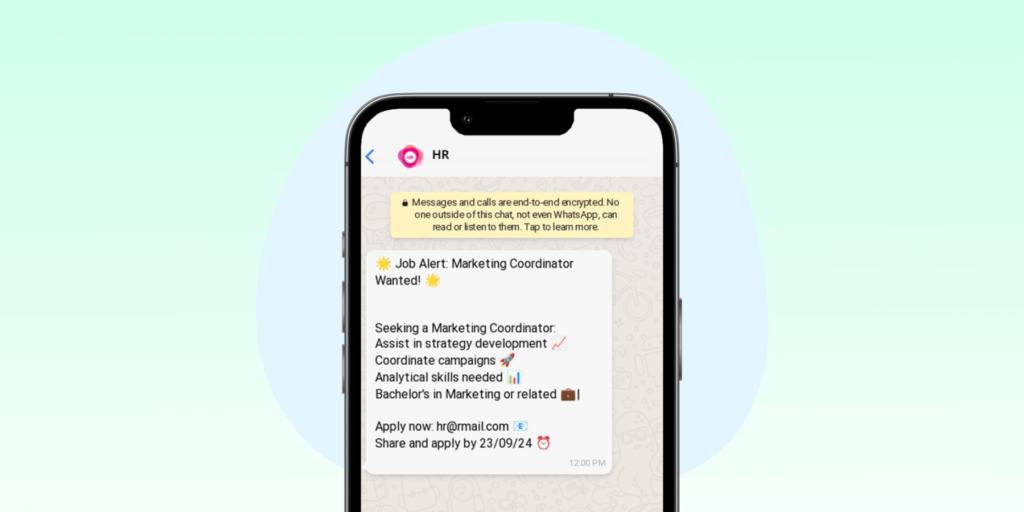
This method ensures that job advertisements reach a wide audience while still providing a personalized experience for each recipient.
2. Candidate Screening
HRs have dozens of screening calls where they ask basic questions to candidates. Each call may take up to 15 minutes.
With WhatsApp chatbots, HRs can automate this process, saving time and effort.
Not only that, but they can also scale up this process significantly, as WhatsApp chatbots can conduct hundreds of such interviews within a day.
The chatbot engages candidates in a conversational manner by asking screening questions.
It then scores candidates based on their responses, efficiently filtering out qualified candidates for further rounds.
By automating this critical stage, recruiters save valuable time and effort, which can be redirected to more strategic tasks.
To understand this better, let’s look at one of Wati’s customer stories.
Our customer, Emerald Jewel Industry India Limited, a leading jewelry manufacturer in Asia, faced a significant challenge in its HR department due to the high resource consumption required for physical assessment tests during recruitment.
To address this, the company introduced the Wati Chatbot for online assessment tests, streamlining the pre-interview process and qualifying candidates remotely.
This innovation allowed Emerald to achieve:
- 20 interviews daily, doubling their initial goal
- 40% reduction in HR workload
- 30% increase in qualified candidates
- 40% boost in candidate processing efficiency
Marketing Manager Vivin Raj Kumar stated that Wati Chatbots have greatly simplified the recruitment process, automating online tests, which is crucial as the company grows.
This transformation demonstrates how the right technology can enhance business operations, particularly in recruitment, leading to improved efficiency and higher-quality candidate selection.
3. Employee Onboarding
Employee engagement begins during onboarding, where traditional methods are cumbersome.
WhatsApp automation revolutionises HR processes, fostering real-time communication, streamlining paperwork, and personalising experiences.
Real-time Communication
Automated WhatsApp messages facilitate instant dialogue, providing essential information directly to new hires and prompting quick clarifications.
Efficient Onboarding
WhatsApp automation simplifies document sharing and signing, reducing time and paperwork. HR can focus on strategic tasks like employee development.
Personalised Experiences
Tailored messages create a sense of belonging and commitment. Personalised schedules and introductions foster quicker integration and higher productivity.
How Wati Integration for Employee Onboarding Works
Wati’s integration streamlines employee onboarding by combining automation with real-time communication.
When a new hire joins, you can instantly send automated WhatsApp messages, delivering welcome notes, important documents, and onboarding schedules via Wati.
Through WhatsApp automation, HR quickly shares vital details, bypassing the delays you’d find with older methods like email.
But Wati does more than just initial messages. It’s set up to send automated WhatsApp reminders for important events like training, benefits sign-ups, and review sessions.
This HR automation keeps everyone, new and old, informed and engaged. Employees can also connect with HR directly through Wati, addressing concerns more quickly and reducing HR’s administrative workload.
The platform even allows for real-time feedback collection from new hires at various stages of the onboarding process.
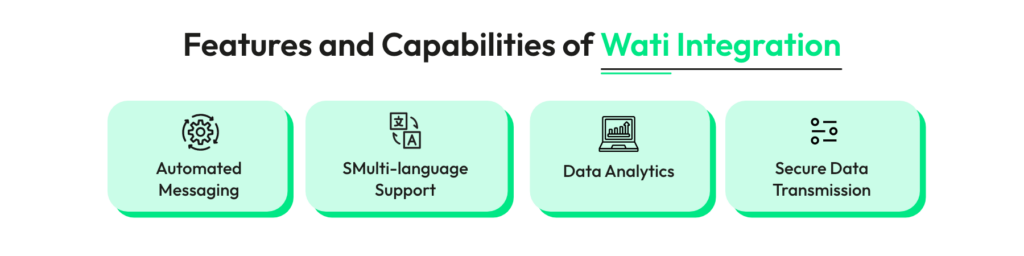
Features and Capabilities of Wati Integration
With Wati, onboarding becomes easier to manage and more consistent.
HR teams can automate routine communication, stay organised, and keep new hires informed without extra follow-ups. These capabilities show how Wati supports a smoother onboarding experience.
Automated Messaging
Automated messaging helps HR teams stay consistent and timely without extra manual effort. By sending WhatsApp messages at key stages of onboarding, HR can keep new hires informed, engaged, and supported from day one.
Multi-language Support
Workforces today are diverse, and communication should reflect that. Wati supports multiple languages, allowing HR teams to share onboarding information in a language new hires are comfortable with. This makes the experience more inclusive and easier to follow.
Data Analytics
Wati also gives HR teams visibility into how employees engage with onboarding messages. By tracking responses and interactions, HR can understand what works, make improvements, and create more effective onboarding journeys over time.
WhatsApp Messaging Templates for Automating Employee Onboarding Examples
Onboarding often involves sharing the same information repeatedly with every new hire. WhatsApp messaging templates help HR teams automate these updates while keeping communication clear and consistent.
With the right templates in place, onboarding becomes faster, more organised, and easier to scale.
1. Welcome and Introduction Template
Purpose: To greet the new hires and introduce them to the company culture.
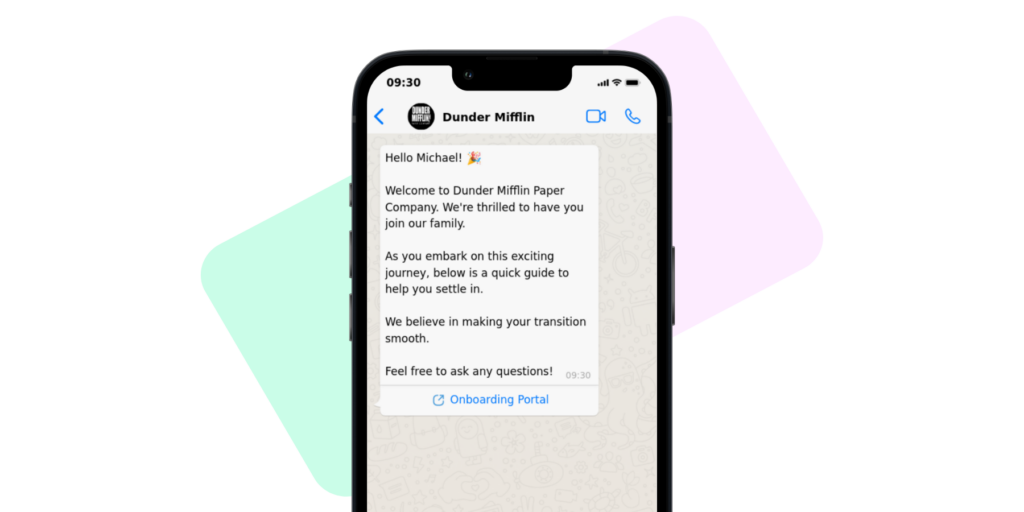
Hello [Employee Name]! 🎉
Welcome to [Company Name].
We're thrilled to have you join our family.
As you embark on this exciting journey, here's a quick guide to help you settle in: [Link to Onboarding Portal].
We believe in making your transition smooth.
Feel free to ask any questions!"
2. Logistics and First-Day Agenda Template
Purpose: To inform the new employee about their first day’s schedule and any logistical details they should know.
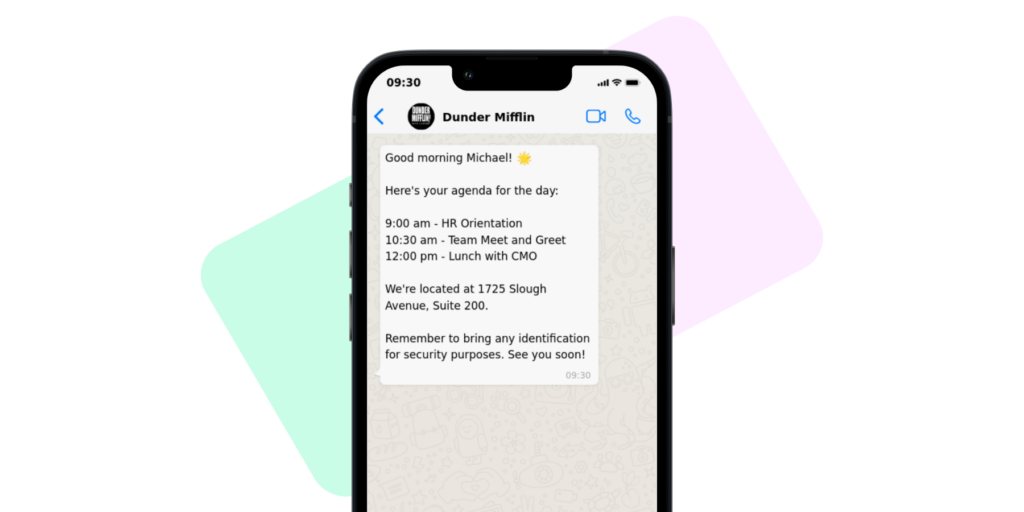
Good morning [Employee Name]! 🌟
Here's your agenda for the day:
9:00 am - HR Orientation
10:30 am - Team Meet and Greet
12:00 pm - Lunch with your Buddy
We're located at [Office Address].
Remember to bring any identification for security purposes. See you soon!
3. Training and Resources Template
Purpose: To provide the new employee with necessary training modules, resources, or any platform logins they might need.
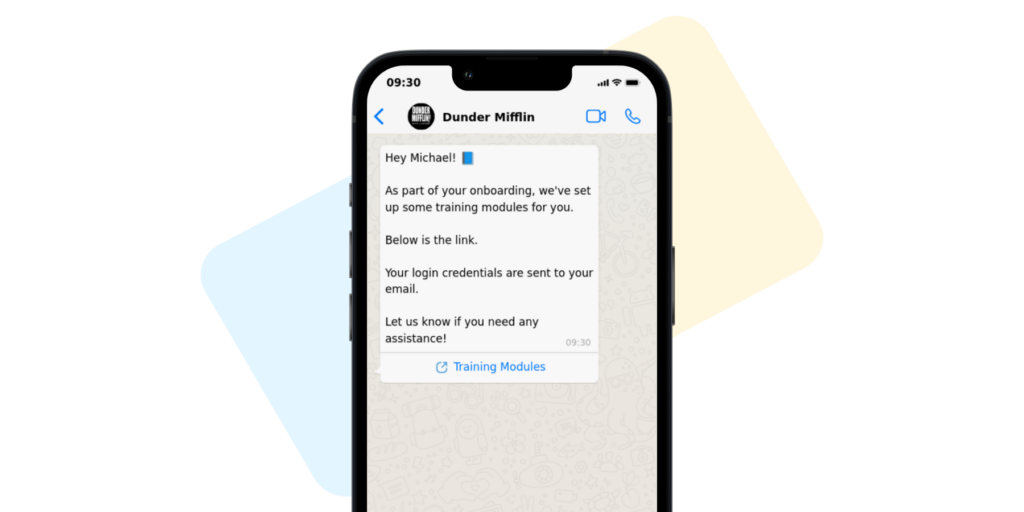
Hey [Employee Name]! 📘
As part of your onboarding, we've set up some training modules for you.
Below is the link.
Your login credentials are sent to your email.
Let us know if you need any assistance!These templates standardize the onboarding process and add a touch of warmth and personal connection, essential for a new employee’s first impressions.
Automating Pre-Onboarding Communication through WhatsApp Automation
Wati helps HR teams streamline onboarding by automating communication on WhatsApp.
From sharing documents to sending onboarding schedules and updates, everything happens on a channel new hires already use.
This reduces manual effort and missed steps, while making onboarding feel simple and familiar.
Traditional methods, on the other hand, rely on lengthy email processes where candidates must download, sign, scan, and resend documents, adding unnecessary friction.
1. Initial Offer Notification Template
Purpose: To notify a candidate that an offer is coming and to create anticipation.
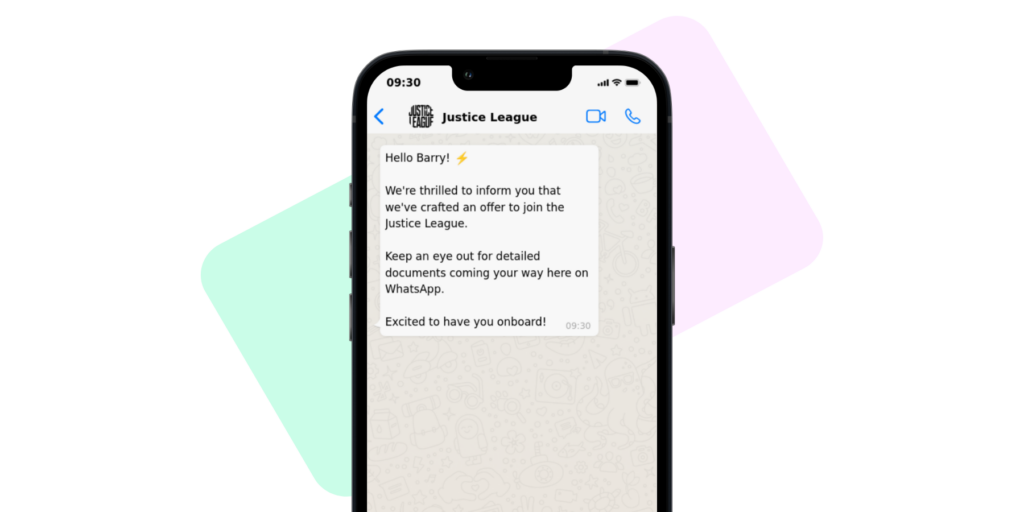
Hello [Candidate Name]! 🌟
We're thrilled to inform you that we've crafted an offer for you at [Company Name].
Keep an eye out for detailed documents coming your way here on WhatsApp.
Excited to have you onboard!"2. Offer Letter Link Template
Purpose: To provide the candidate with a direct link to their digital offer letter.
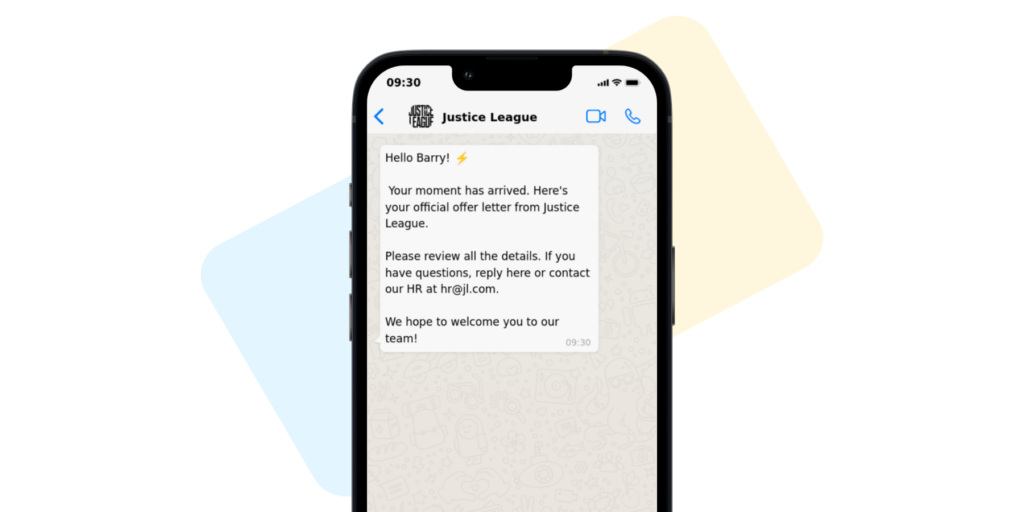
Greetings [Candidate Name]! 🎉
Your moment has arrived. Here's your official offer letter from [Company Name]: [Link to Offer Letter].
Please review all the details. If you have questions, reply here or contact our HR at [HR's Phone Number].
We hope to welcome you to our team!3. Contract Details and Acceptance Template
Purpose: To give a candidate an overview of their contract’s main terms and the method to accept the offer.
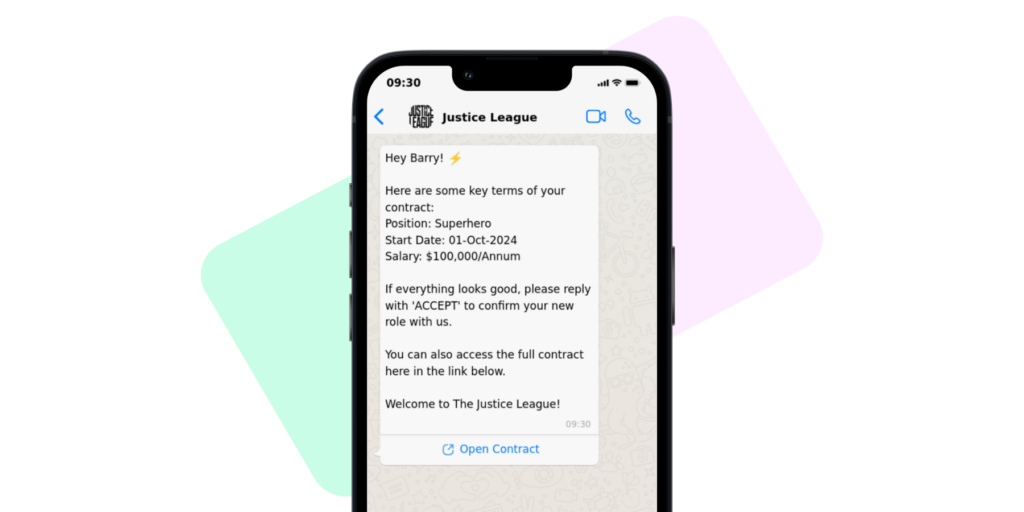
Hey [Candidate Name]! 📝
Here are some key terms of your contract:
Position: [Job Title]
Start Date: [Date]
Salary: [Amount]
If everything looks good, please reply with 'ACCEPT' to confirm your new role with us.
You can also access the full contract here: [Link to Contract].Getting Started With WhatsApp for HR Communication
From internal communication to hiring and onboarding, WhatsApp supports multiple HR use cases in a simple and accessible way. Its familiarity and speed make it an effective channel for everyday HR interactions.
To use WhatsApp at scale, HR teams need the right platform. As a WhatsApp BSP, Wati helps teams automate workflows, personalize communication, and manage conversations in one place. This makes HR processes easier to run and easier for employees to engage with.
Adopting WhatsApp for HR is not just about keeping up with communication trends. It is about creating smoother processes and better employee experiences from the start.
If you’re ready to simplify HR communication and operations, you can explore Wati with a free trial or book a demo to see how it works in practice.
FAQs
WhatsApp uses end-to-end encryption, which means messages are scrambled and only accessible to the sender and recipient. While this provides a level of security, HR should still exercise caution when sharing sensitive information and consider additional security measures like two-factor authentication for added protection.
Yes, HR professionals need to consider data protection regulations like GDPR (General Data Protection Regulation) and ensure compliance with local laws regarding employee privacy and data security. It’s essential to have clear policies in place regarding data handling and consent when using WhatsApp for HR communications.
Yes, WhatsApp’s accessibility and real-time communication features make it an effective tool for remote workforce management, including tasks like team collaboration, performance monitoring, and employee engagement initiatives.
HR can measure effectiveness through metrics like message open rates, response rates, engagement levels, and feedback from employees. Analytics tools provided by WhatsApp Business API or third-party platforms can help track and analyze these metrics.