

-

-
-
Solutions
-
Soluções
-
Soluciones
-
解决方案
-
解決方案
-
الحلول
-
Product
-
Produto
-
Producto
-
产品
-
產品
-
المنتج
-

-
-


 Wati for Marketing
 Wati for Support
 Wati for Sales
 eLearning
 E-commerce
 Marketing Agencies
 Healthcare
 No Code Chatbots
 WhatsApp Business API
 Instagram Automation
 Click to WhatsApp ads
 Campaigns
 Team Inbox
 WhatsApp Business Calling
 Wati AI
 Overview
 Library
 Agente de suporte de IA
How SkillBytes Brought
Learning to Whatsapp
& Built a Category Reaching
6 Lakh Students
Learning to Whatsapp
& Built a Category Reaching
6 Lakh Students
Company Overview
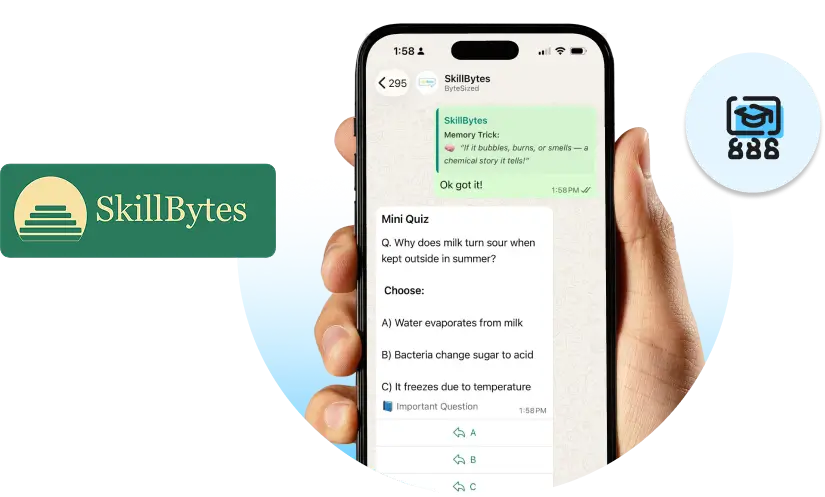
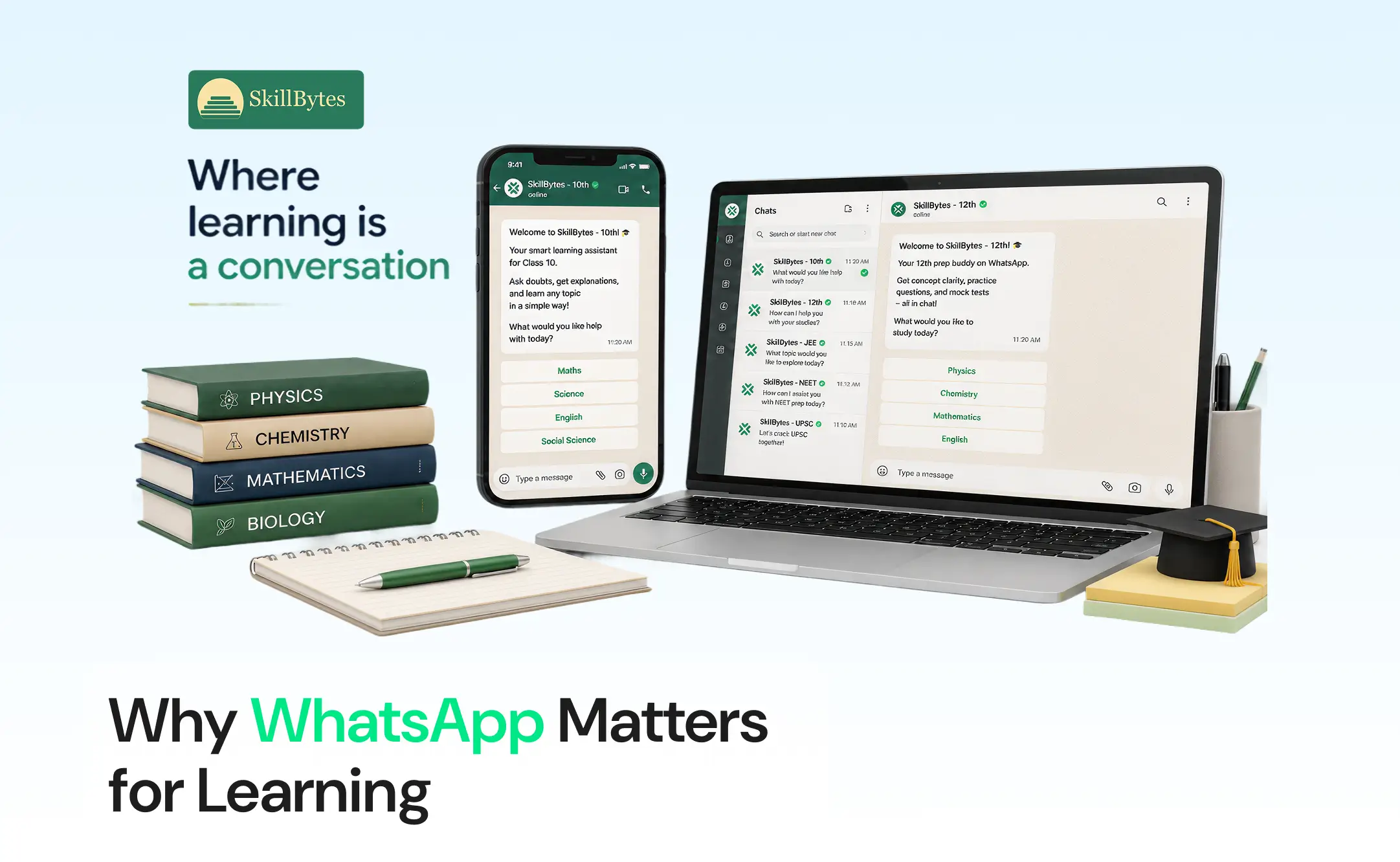
SkillBytes is an adaptive micro-learning platform built natively for WhatsApp. The product is designed for school students preparing for 10th and 12th board exams, with content built on top of NCERT material and delivered through short, conversational learning sessions. Incubated at MUTBI, the Manipal Universities Technology Business Incubator at Manipal Academy of Higher Education, SkillBytes operates on a thesis that has, until recently, gone untested at scale: that learning belongs inside the medium where students already spend their time, not behind another app download.
In just over eight months, the platform has grown to 6 lakh students and served more than 2 crore learning interactions, making it, by available measure, the largest WhatsApp-native learning platform of its kind in India. The platform runs on Wati's WhatsApp Business API infrastructure, which handles delivery, automation, and the conversational logic behind every lesson, quiz, and follow-up.
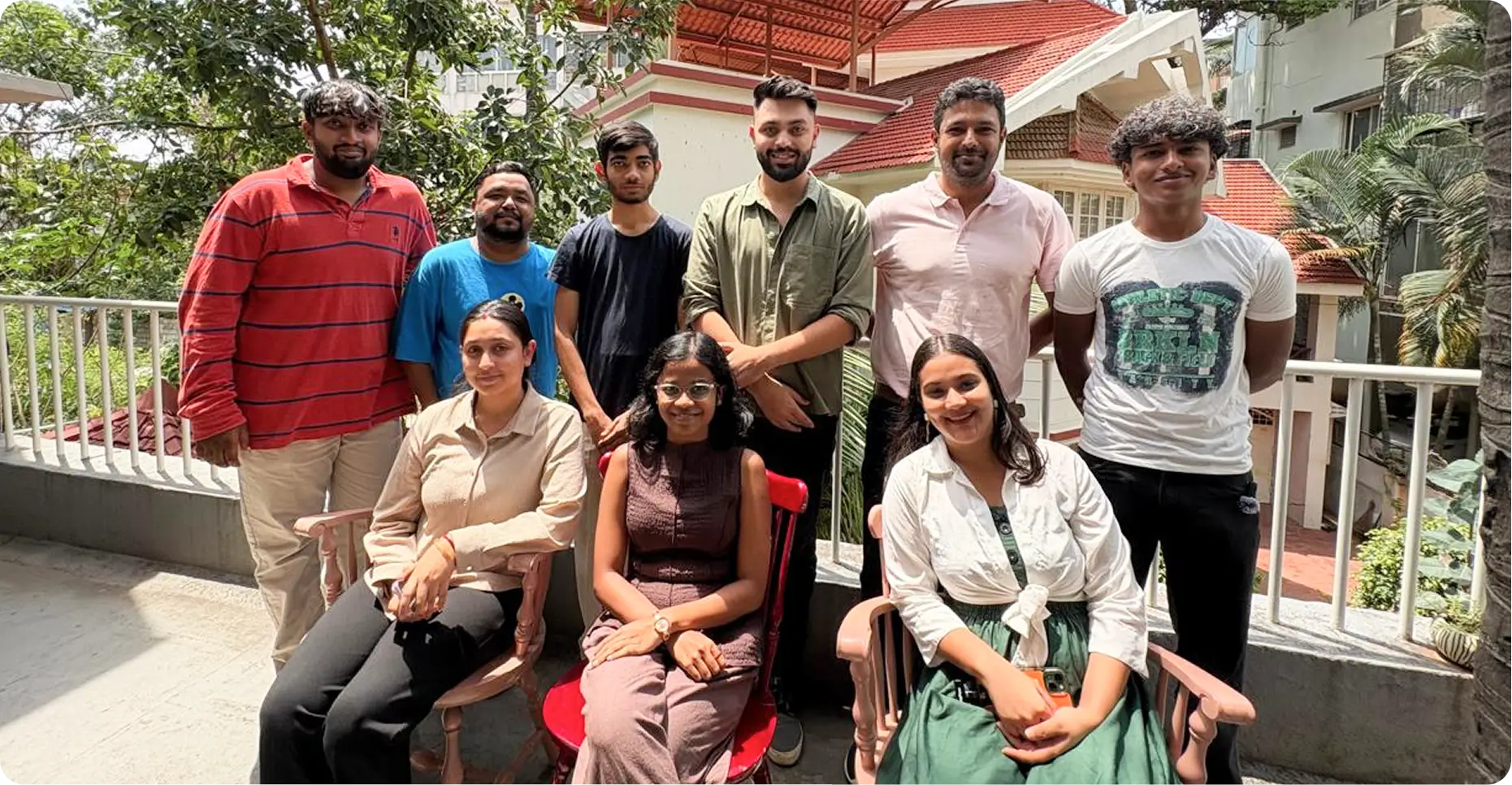
We sat down with Prempreet and Ami from SkillBytes to discuss how they turned WhatsApp into a structured learning environment, how they are building to reach the next billion users, and how Wati became the infrastructure backbone that made it possible.
The Wati Transformation at a Glance

The Challenge
Students dropping off learning apps after the download-signup-habit cycle, with completion rates stuck under 15%.
No structured way to deliver bite-sized lessons at scale to students who don't have time for long-form video.
Content creation team blocked on engineering for every new flow or update.
Operational complexity of stitching together onboarding, delivery, reminders, and re-engagement across multiple tools.
Unknown engagement patterns and no visibility into how students actually use the product.

The Results
Zero friction onboarding through WhatsApp — students start learning from the first message, no app or login required.
Five-minute conversational sessions delivered natively on WhatsApp, with quizzes and follow-ups built into the flow.
Subject experts ship content directly on Wati's no-code chatbot builder, roughly doubling content velocity.
Onboarding, daily delivery, reminders, and re-engagement sequences all built and managed inside Wati.
Visibility into 2 crore interactions — including Sunday homework spikes and pre-board exam surges.
In education, communication isn't just about delivering content, it's about meeting students where their attention actually lives. Content exists everywhere. A student preparing for boards can find videos on YouTube, summaries on Instagram, and notes through any number of apps. The problem is no longer access. The problem is friction.
Two realities run in parallel. The first is that students have more learning content available to them than any generation before. The second is that attention spans have collapsed to the point where committing to a 40-minute video feels like a chore. Most online learning platforms have responded by building bigger products — more features, more content, more reminders to come back. SkillBytes started from the opposite premise.
If a student already opens WhatsApp 50 times a day, the question isn't how to get them to download another app. The question is how to put the lesson inside the messages they're already reading. That single shift removes the four hardest steps in any learning product: finding the app, downloading it, creating an account, and building a new daily habit. Each of those steps loses people. By the time a typical platform looks at its active users, it is really just looking at the survivors of four sequential filters.
The Breaking Point:
When Dedicated
Apps Hit Their Limit
The micro-learning thesis was clear from day one. The harder question was how to deliver it. Building a standalone app would have meant repeating the same drop-off pattern every other ed-tech platform was already losing to. Even before SkillBytes wrote a line of code, the team knew the format had to live somewhere students already were. That meant WhatsApp. But running a structured learning product on WhatsApp at scale is a different problem from sending a few automated messages.
To deliver short, sequential, interactive lessons to lakhs of students every day, SkillBytes needed infrastructure that could do several things at once: handle high-volume delivery, support branching conversational flows, allow non-engineers to build and edit content, and stay stable as message volume grew exponentially.
When evaluating WhatsApp Business API providers, most options either lacked the flexibility SkillBytes needed in conversational flow logic, were prohibitively expensive at the per-message economics that lakhs of daily interactions demand, or required heavy engineering involvement for changes that should have been content team decisions.
Why SkillBytes Chose Wati
As an official Meta Business Solution Provider, Wati also gave SkillBytes the enterprise-grade deliverability and compliance posture needed to run a high-volume learning product inside the WhatsApp ecosystem.
Wati emerged as the clear fit on four counts that mattered most for running a learning product at scale.

When the product serves lakhs of students every day, the per-message and per-conversation economics decide whether the product is viable. Wati was meaningfully more affordable than the alternatives evaluated, without compromise on deliverability or features. That margin compounds as the platform grows.

A large part of the SkillBytes content team are educators first and operators second. They needed to build, edit, and publish lesson flows without waiting on engineering. Wati's no-code chatbot builder made that possible — and the result was roughly double the content velocity the team would have had otherwise.

Onboarding sequences, daily delivery schedules, reminders, re-engagement nudges, and content branching logic all set up inside Wati. For a startup, this was the difference between actually shipping and getting stuck in setup.

Routing logic, broadcast handling, segmentation, and engagement analytics all come built in. SkillBytes didn't have to stitch together five different tools to run one platform — which means fewer integrations, fewer things to break, and a single source of truth for how students are engaging.
Measurable Impact Across the Platform
- 6 lakh students on the platform within eight months.
- Roughly 100,000 new students onboarding every month.
- Zero friction onboarding — every student starts learning from the first message.
- 2 crore total learning interactions to date.
- Average of 30 to 33 messages per active student session.
- Engagement depth that is structurally higher than any comparable learning app.
spontaneous
- Sunday spikes driven by homework patterns — students choosing to interact rather than scroll.
- Two-minute learning bursts fitting into the gaps in students' actual days.
- Interaction volume spikes to roughly 2.5 to 3 lakh messages in a single day in the run-up to board exam dates.
- Students returning specifically because the format makes last-minute revision easy.
- Delivery infrastructure handles peak volume without degrading the experience.
“What surprised us most wasn't the user count. It was the depth. Thirty messages per session, students online at 4:30 AM, traffic spiking the day before board exams — that tells you the product is doing real work, not just collecting accounts.” — Prempreet Singh | Founder, SkillBytes
How SkillBytes Uses Wati to
Power Chat-Native Learning
Wati isn't a messaging tool sitting on the side of the SkillBytes product — it is the delivery infrastructure the product runs on. Every interaction, every quiz, every reminder, and every onboarding sequence flows through Wati.
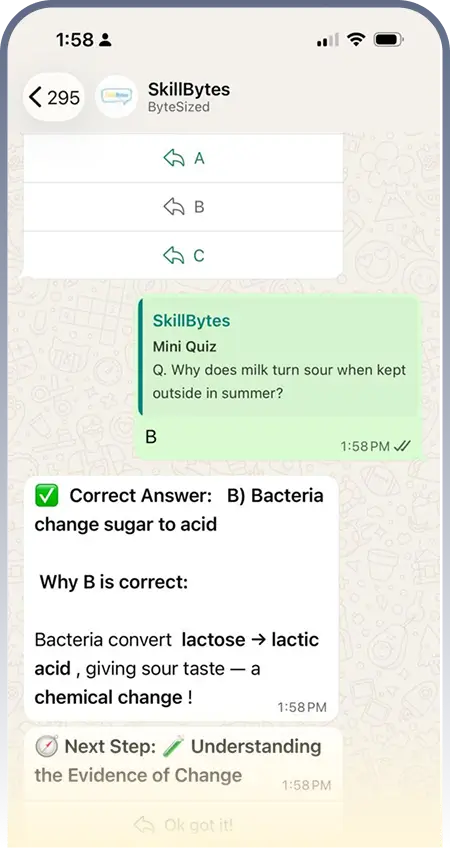

Sequential message flows that walk students through a concept in two to three minutes — the core SkillBytes experience.
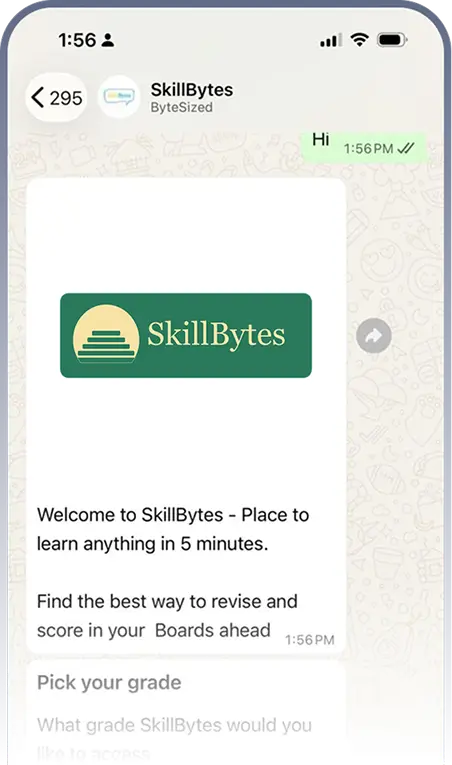
First-message onboarding flow that routes students into the right learning track for 10th or 12th, by subject.
Quiz formats built into the conversational flow, with structured response handling and immediate feedback.
NCERT material converted into chat-native lesson format through SkillBytes' AI layer, then delivered through Wati.
Automated nudges and high-volume delivery in the days before board exams, when student demand peaks.
Beyond core academics — competitive exam prep and upskilling tracks all running on the same Wati infrastructure.
“We push the content into Wati, the governance sits on Wati, and the delivery happens through WhatsApp. That stack is what lets us focus on building the learning experience instead of building messaging plumbing.” — Prempreet Singh | Founder, SkillBytes
Spotlight: The Pre-Board Exam Surge
Of all the engagement patterns SkillBytes has surfaced, one stands out as a clear validation of the chat-native thesis. In the days leading up to each major board exam — across English, Maths, Science, and Social Studies for 10th, and the core NCERT subjects for 12th — daily interaction volume on the platform spikes dramatically. Students choose to revise on SkillBytes over scrolling Instagram, opening another app, or sitting down with a video.
The reason is structural. In the final 48 hours before an exam, a student doesn't want a 40-minute video. They want a quick, focused revision — a concept restated, a question reattempted, a formula rechecked. The chat format is built for exactly that. The infrastructure has to keep up.
 The Solution
The Results
The Solution
The Results
The Road Ahead: WhatsApp as the Default Place to Learn
SkillBytes is operating on a thesis that goes well beyond a single product. WhatsApp is no longer a messaging app — for the next billion learners, it is the default interface for almost everything they do online. Learning has always followed the medium where attention lives. Books, when reading was dominant. Television, when broadcast was dominant. The web, when the laptop was dominant. WhatsApp is the medium of this generation, and the companies that build for it first will define the next phase of education technology.
From here, SkillBytes plans to deepen the product across several fronts:

— Prempreet Singh | Founder, SkillBytes