
Too Long? Read This First
- Eliminate Admin Burnout: Automate scheduling, intake, and routine tasks, reserving valuable staff time for critical patient care and complex cases.
- Guarantee Critical Delivery: Use Omnichannel Fallback to ensure every urgent message (results, reminders) reaches the patient immediately, achieving near 100% compliance.
- Deploy AI Triage: Leverage Astra AI to instantly evaluate symptoms and route patients to the correct specialist, optimizing physician time and diagnostic speed.
- Simplify End-to-End Care: Unify patient chat data with your CRM/EMR to streamline secure document sharing, online payments, and medicine delivery in one platform.
The healthcare industry often struggles with staff shortages, physician burnout, limited facilities, and high upfront equipment costs due to the growing number of patients.
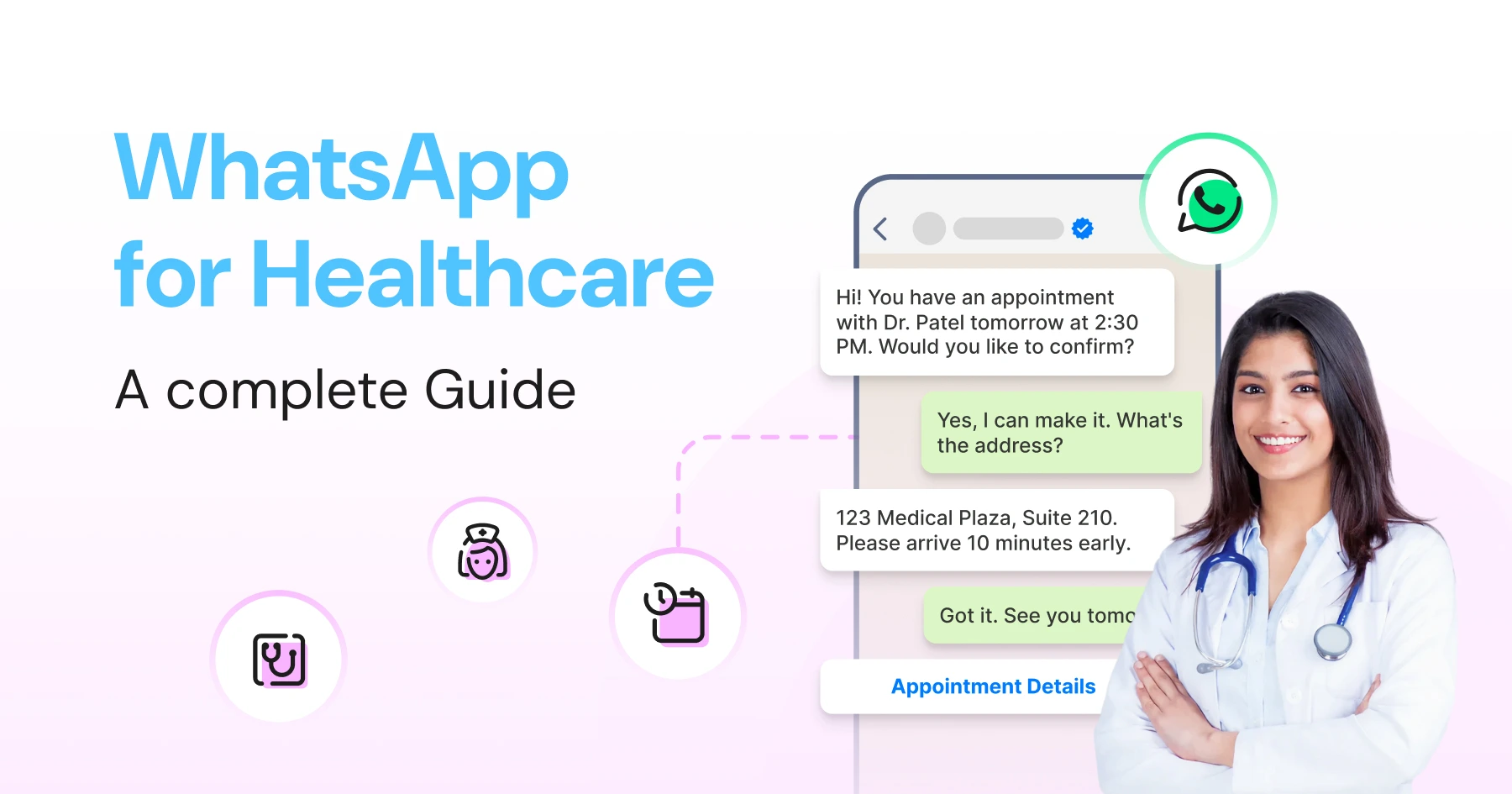
In this reality, most healthcare and medtech brands rely on WhatsApp conversational platforms to automate patient communication, continue care, and track patient adherence to improve treatment quality.
Switching to telemedicine alternatives, such as the WhatsApp Business API, allows you to automate inbound patient inquiries, personalize conversations, and schedule appointments, helping prevent consultation delays and optimizing overall administrative costs.
However, if you work in the healthcare sector, you would want to know the A to Z of WhatsApp Business API features that work for your sector.
In this article, we will cover how you can leverage the WhatsApp API for healthcare to deliver online consultations and provide quality care and treatment to patients.
Why WhatsApp is Critical for Healthcare? The Crisis
Healthcare workers deal with a multitude of tasks, such as overseeing patient records, registering appointments, reassigning doctors, sharing lab test reports, and medication data, among others.
The overwhelming workload and lack of immediate response can delay critical patient care, create communication hurdles, and increase fatalities. Choosing WhatsApp Business for healthcare can eliminate these to a large extent.
According to a study, 97% of clients were satisfied with WhatsApp across 3 major domains: appointment scheduling, doctor consultations, and post-consultation services.
WhatsApp API automates messaging, improves appointment scheduling, and eliminates repetitive tasks for healthcare professionals.
Below are the issues faced by healthcare organizations that demand a system redesign.
1. Global Staffing Shortage
The World Health Organization (WHO) projects a global shortage of 10-11 million healthcare workers by 2030, leaving 60% of patients stranded and unable to access healthcare. This creates a widespread healthcare emergency that will degrade the quality of patient services.
Also read: Learn how Wati’s Chatbot Builder can automate patient communication and deliver fast, critical updates to reduce admin load.
2. Global Doctor Burnout
Inability to treat patients with stability and accuracy has led to severe healthcare burnout.
A study by US News confirms that this burnout has cost the US healthcare system billions of dollars. Healthcare organizations have lost around $9 billion in employees.
3. Delayed Treatment Risk
Staff shortage and doctor unavailability are challenging to deal with. The patients requiring critical care or dealing with chronic illnesses can fall prey to malignant diseases. Ultimately, a lack of intensive care can lead to unprecedented and tragic outcomes, like death.
Also read: How to improve patient healthcare with Wati to monitor patient cases and secure end-to-end privacy
4. Mitigating Admin Tasks
As healthcare workers have to supervise patient operations, OPD cases, surgeries, medical equipment, lab test report delivery, and appointments, they are prone to burnout. Deploying a chatbot builder with Wati’s WhatsApp Business API to send automated messages can help mitigate these tasks.
With WhatsApp API automation, hospitals can better manage patient documents, enhance quality care, and keep track of medication in a strategic way with broadcasts.
What is the Role of WhatsApp in Healthcare?
In the healthcare industry, WhatsApp can be leveraged for multiple tasks, from online patient record-keeping to prescription management to critical care and proactive medical consultations.
With a high open rate of 98% and a high click rate of 45-60%, WhatsApp allows healthcare professionals to assign medical experts, share lab tests and diagnoses, and track patients’ drug dosages, while reducing administrative workload and medical spending.
Below are the reasons why patients and healthcare workers both prefer WhatsApp for healthcare operations and rely on online consultation and treatment delivery.
1. Real-Time Patient Engagement
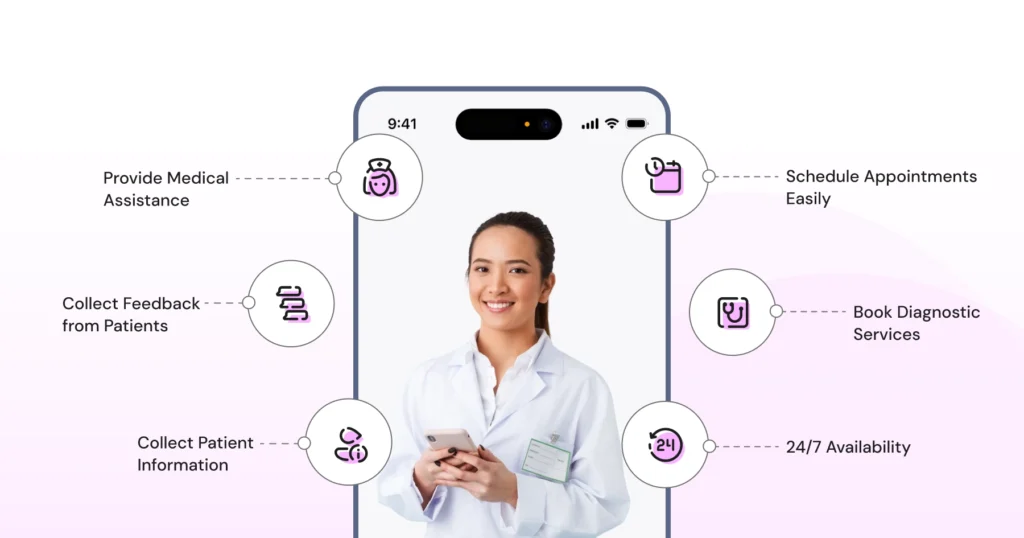
As everyone opens WhatsApp messages, medical staff can send critical health updates, schedule appointments, automate token grants, share appointment reminders, and track pharmaceutical processes, leading to better compliance and doctor productivity.
Also read: Learn how to maximize open rates with WhatsApp to deliver service and optimize ROI in 2026.
2. Remote Consultation and Triage
Enabling quick, asynchronous online communication builds better patient continuity workflow, reduces offline walk-ins, and regulates appointment scheduling or hospital visits for only crucial cases.
Enabling personalized WhatsApp broadcasts for patients to send prescriptions, lab reports, diet charts, hospital invoices, and a list of required medicines can streamline major operations to a large extent.
Also read: WhatsApp broadcast vs WhatsApp Group
3. Secure Document Sharing
WhatsApp uses end-to-end encryption. HIPAA/GDPR compliance depends on implementation, contractual safeguards, and local law. So, you can consult legal/compliance teams before using WhatsApp for protected health information.
It facilitates safe transactions, prescription sharing, delivery of lab results, and sharing of diagnostic images within a protected channel, without any risk of data theft.
With WhatsApp for healthcare, you can share the latest information and news, help in identifying symptoms, and list precautionary steps for your patients to build greater recovery mechanisms.
According to a research article published by the Israel Journal of Health Policy Research, the requirement for in-person appointments at least once a week has decreased due to WhatsApp, according to 95.7 per cent of medical specialists and 60.7% of Physical Care Physicians.
Also read: Top Benefits of WhatsApp API in Healthcare Operations to Know to build effective patient monitoring workflows.
4. Drug Adherence Tracking
Not being able to track when a patient takes their medicine is a common concern of doctors. Missed dosages can lead to sudden relapses and prolonged sicknesses, which can ultimately raise more implications for patients and disturb the status quo.
Setting up automated reminders can help patients adhere to complex medication schedules, directly improving delivery rates.
Also read: How to set up bulk messaging on WhatsApp to improve your telemedicine and drug delivery procedures.
Top 8 Use Cases of WhatsApp API in Telemedicine With Wati
From reducing visitor wait times to generating hassle-free online consultations and delivering the necessary information for routine checkups and medication advice, WhatsApp Business API is one of the most widely used channels for healthcare tech today.
The challenges of staff burnout and workflow inefficiency demand a solution that automates routine tasks while enabling deep, personalized patient care.
Wati delivers this through a suite of integrated, AI-powered tools that directly address the operational bottlenecks faced by healthcare professionals.
1. Streamline Booking and Reminders With No-Code Chatbot
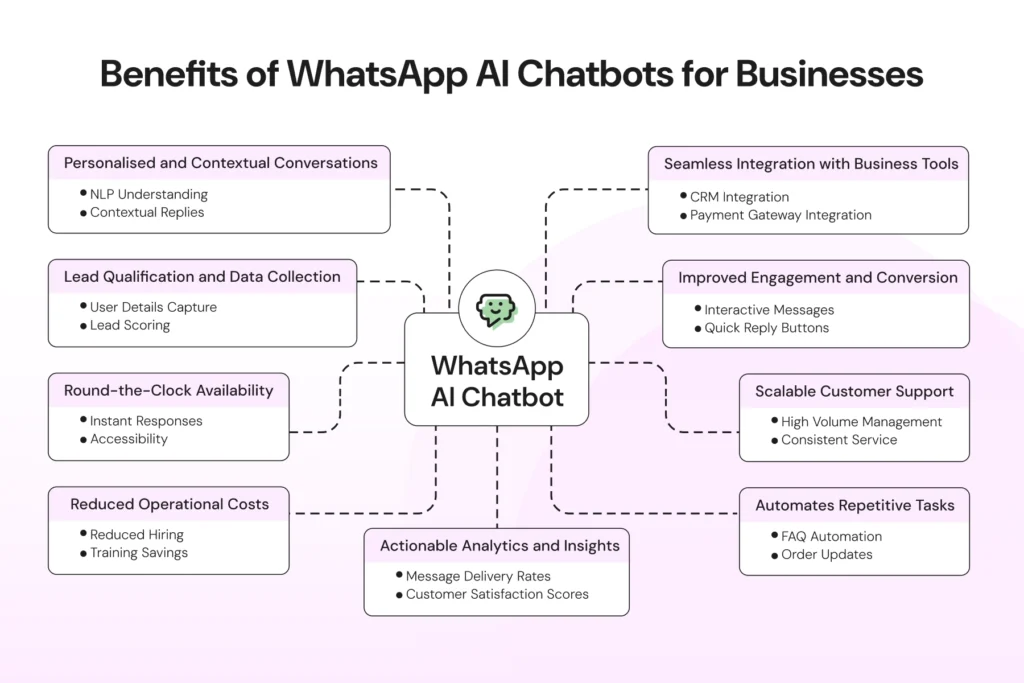
Wati’s No-Code Chatbot Builder helps you build 24/7 assistance to automate patient question-answering and appointment-scheduling lifecycle fully. The chatbot manages bookings, reschedules, and checks on doctor availability without human intervention.
By deploying a Wati No-Code Chatbot Builder, you can instantly answer 80% of routine FAQs about visiting hours, documentation, or facility locations, freeing up human agents for critical cases.
Also read: How to increase webinar attendance rates with WhatsApp marketing to keep patients updated on the latest medical practices.
2. Ensuring Patient Engagement with Omnichannel Automation
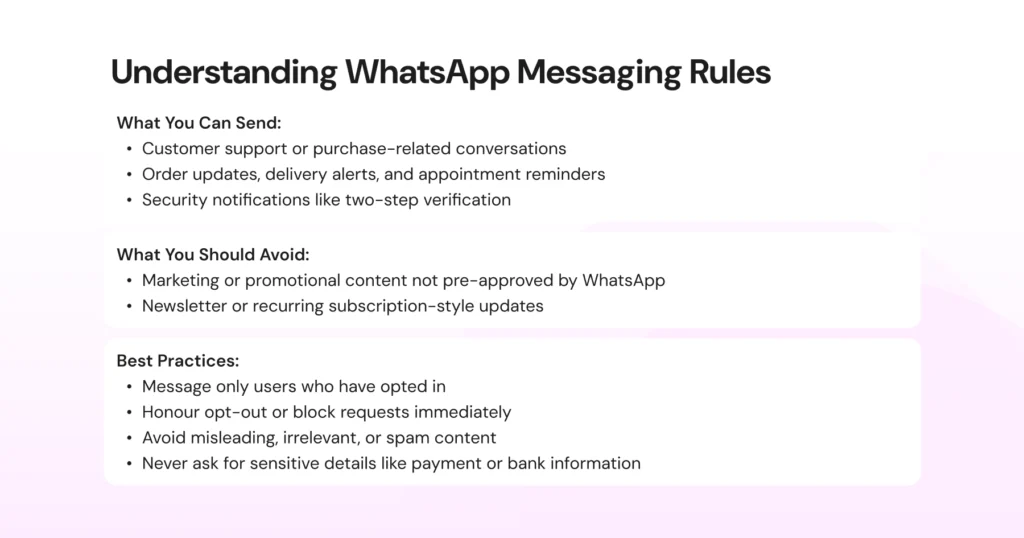
Healthcare companies can use the most active WhatsApp strategy to engage with patients via multiple channels with maximum compliance. Reaching out via multiple platforms to spark WhatsApp conversations can reduce response rates, enable quick action, route queries dynamically, and improve the management of patient cases for healthcare admin workers.
With Wati’s multichannel engagement and SMS marketing, you can deliver critical medical updates across geographically dispersed sites.
If a vital WhatsApp message (like a lab result alert or emergency OTP) fails to deliver, the system automatically sends it via SMS, ensuring guaranteed message delivery.
Also read: How to build a winning omnichannel strategy for healthtech to optimize patient record keeping in 2026. Bonus read: How to blend SMS marketing with WhatsApp broadcast for improving message delivery and reaching out faster in 2026.
3. Building Pre-Consultation Data Acquisition with Predefined Segments
By shifting patient records to an automated solution, such as a CRM connected to the WhatsApp Business API, you can reduce paperwork and monitor inquiries more effectively.
With third-party WhatsApp CRM integrations, you can collect comprehensive data, including symptoms, medical history, and consent, via a guided chat flow before the patient’s arrival.
Wati employs a Prebuilt Audience Segmentation to target returning patients or specific groups with tailored intake forms. The data collected is used to initiate conversations via WhatsApp team inbox, prepare agents for incoming inquiries, and reduce clinic wait times.
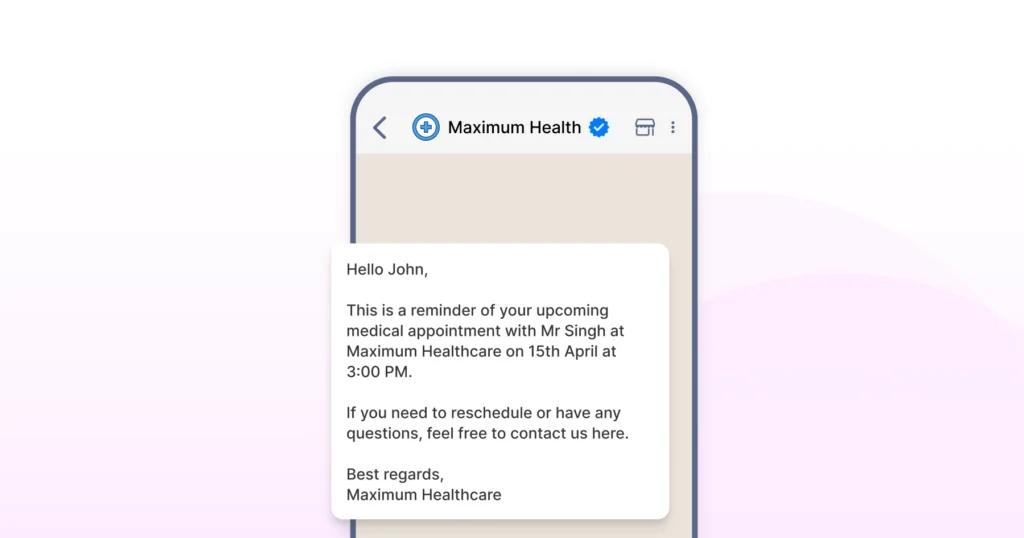
4. Focusing on Physician Referral With Dynamic AI Support Agents
Healthcare staff spend significant time directing patients to the correct specialist. Wati’s advanced AI functionality handles this triage quickly and accurately, freeing physician time for critical cases.
If a patient inquires or reserves a slot directly on WhatsApp, an AI support agent will guide them, send recommendations, and book the most suitable physician slot.
Wati’s new feature update combines AI Agents with Gemini to provide dynamic AI conversational support. It acts as an intelligent first responder, handling initial triage and automated routing.
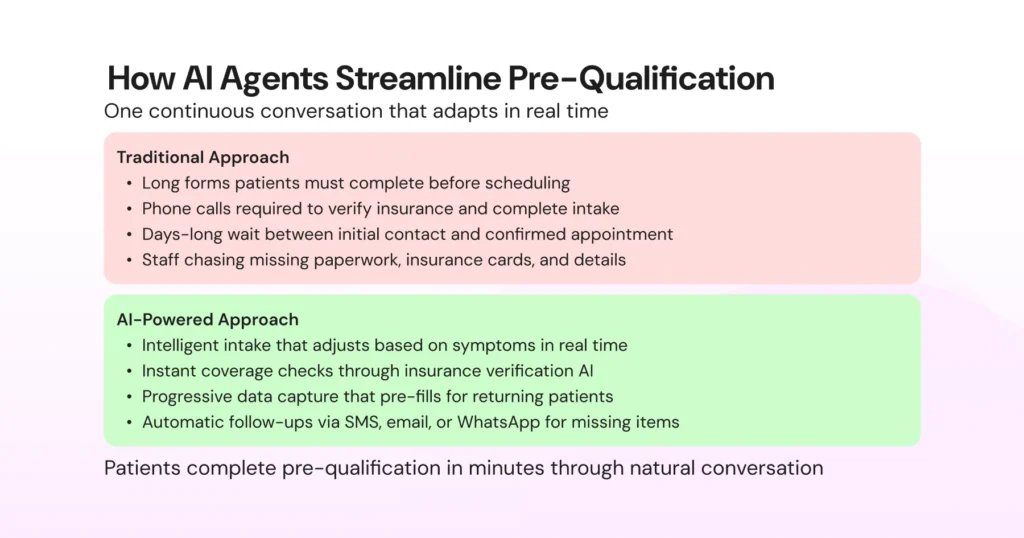
While basic AI pre-qualification tools exist, Wati’s Astra delivers something fundamentally different: complete patient engagement journeys orchestrated through empathetic conversation.
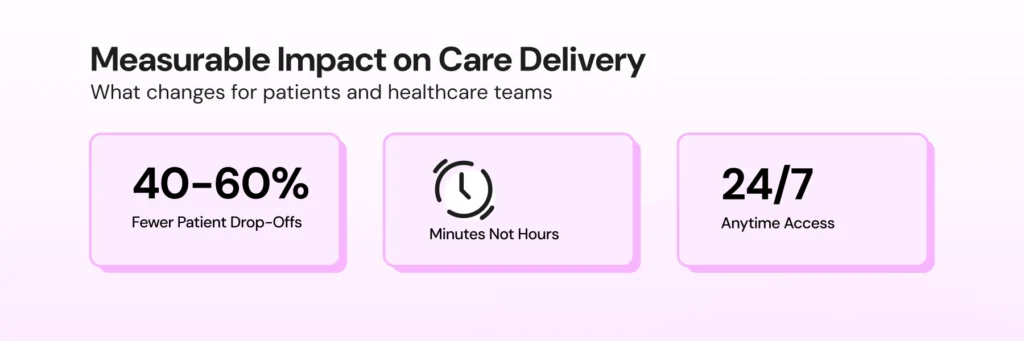
Also read: How AI agents segment, qualify, and assign patients for specific cases with increased accuracy and precision.
5. Securing Digital Record Maintenance with CRM Integration
Wati automatically synchronizes all patient communication, consent, and scheduling history from the WhatsApp conversation directly into the hospital’s Electronic Medical Record (EMR) or Customer Relationship Management (CRM) system.
With HubSpot bi-directional sync, it ensures that every doctor or nurse accessing the CRM has immediate access to previous patient conversations, doctor diagnoses, and the care journey, without having to start from scratch and spend more time upfront.
6. Proactive Health Communication and Result Sharing With Third-Party Analytics
Wati enables rich communication sharing (RCS) to interact with patients via text, audio, images, and video, and makes the overall process more efficient.
Further, it tracks diagnosis accuracy, resource investment, consultation fee delivery, pharmacy store budget, and other investments via third-party analytics to reduce accounting workload.
Health workers can also automate the compliant sharing of diagnostic reports, post-discharge instructions, and targeted health tips.
They can also use data from external analytics tools for campaign optimization and onboard new patients with ease.
With Wati, you can use automated business templates to send mass health alerts to a segmented list, drastically building your reputation as a wellness-focused brand and improving patient satisfaction.
7. Immediate Tele-Counselling and Crisis Support With In-App Business Calling
For complex consultations or urgent mental health needs, a seamless transition from chat to voice is crucial for effective patient care.
With Wati’s in-built voice calling integration, you can handle inbound inquiries or toll-free calls automatically without assigning manual agents to deliver assistance.
This provides a secure, private communication environment where patients can receive counselling or crisis support, easily transitioning from text-based conversation to real-time voice interaction.
WhatsApp Business calling enables agents to initiate calls directly from the shared inbox interface, ensuring continuity of care and avoiding reliance on external telephone operators.
8. Quick Medicine Delivery and Feedback With E-Commerce Automation
With WhatsApp for E-commerce, you can automate online medical services, medicine purchase, and payment transactions all from your website without causing any further inconvenience to patients.
You can also set up abandoned cart recovery broadcast campaigns for patients who have been browsing for prescribed drugs and run discounts, offer quick delivery, and proper approved billing to scale your ROI.
9. Integrated Payment Processing and Health Insurance Claim Guidance
The payment disbursements at clinics are often a conflicted issue because the patient claims access to government insurance to waive the fee.
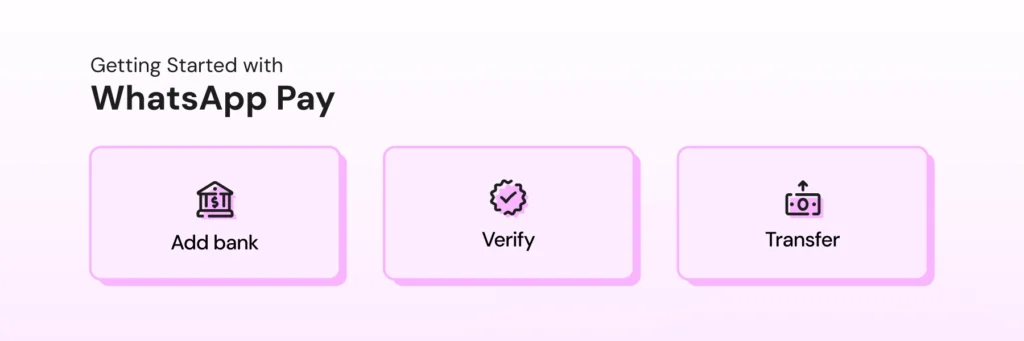
With WhatsApp Business API, you can attach direct WhatsApp Payment links within the chat interface, enabling patients to pay instantly for uncovered services without any further conflict.
By integrating an AI chatbot, you can answer common insurance FAQs, thus reducing the workload on the finance and billing teams.
10. Running WhatsApp Flows For Screening and HR Recruitment
With WhatsApp Flows, you can deploy automated workflows to screen the right applicants for nursing and support roles, thus hiring qualified candidates and reducing attrition rates.
By setting recruitment processes, you can swiftly address the critical staffing shortage, hire better and longer retaining workers, and ensure you don’t hire an unqualified worker.
Also read: 7 ways to use WhatsApp for HR communication and operations.
Simplifying Patient Care with WhatsApp Business API
With WhatsApp API for healthcare, you can not only help patients access faster treatments and eliminate worries, but also optimize the overall operational processes for your hospital or clinic.
The ultimate aim of telemedicine via WhatsApp is to build effective communication bridges with patients, provide immediate medical aid, and set patient filing with minimal workload and staffing energy.
Book a free demo of Wati to see WhatsApp API for healthcare in action and how it can help advance your healthcare journey.
Frequently asked questions
How does WhatsApp API help reduce staff burnout in hospitals?
By automating routine, high-volume tasks like appointment booking, patient triage, prescription refill reminders, and document sharing, the API significantly reduces the administrative workload, freeing up doctors and nurses to focus on direct patient care and mitigating burnout factors.
What role does AI play in Wati’s WhatsApp solution for healthcare?
Wati uses Astra AI Agents combined with Gemini to act as a dynamic first responder. This AI handles symptom-based triage, routes patients to the appropriate specialist with high accuracy, summarizes complex chat histories, and assists agents with real-time translations.
How can we ensure patients receive critical messages if they are offline?
Wati uses Omnichannel Automation with SMS Fallback. If a vital WhatsApp message (e.g., an emergency OTP or urgent result) fails to deliver, the system automatically switches the channel and sends the message via SMS, guaranteeing receipt.
Related posts
- WhatsApp vs Email Marketing: Choosing the Best Channel for Growth in 2026
Learn the key differences between WhatsApp vs email marketing in 2026 and find out which performs better for ROI and customer engagement.
- WhatsApp Multi Agent: Setup for Sales Agents On One Platform
This guide explains how a multi-agent WhatsApp setup works across agents, teams, and countries, and how the right structure prevents delays, confusion, and broken handovers as usage grows.
- WhatsApp API for Enterprise: Designing Intelligent End-to-End Workflows for 2026
Build scalable workflows using the WhatsApp API for enterprise. Connect CRM, ERP, ticketing, and RPA tools to automate enterprise sales operations.
- How to Take Your Brand Global With WhatsApp Business API
Learn how WhatsApp API handles sales and marketing communication, customer calling, data security, and automation globally and expand the market.