

-

-
-
Solutions
-
Soluções
-
Soluciones
-
解决方案
-
解決方案
-
الحلول
-
Product
-
Produto
-
Producto
-
产品
-
產品
-
المنتج
-

-
-


 Wati for Marketing
 Wati for Support
 Wati for Sales
 eLearning
 E-commerce
 Marketing Agencies
 Healthcare
 No Code Chatbots
 AI Support Agent
 Instagram and Facebook messenger
 Click to WhatsApp ads
 Campaigns
 Team Inbox
 WhatsApp Business Calling
 Wati AI
 Overview
 Library
Click To WhatsApp Ad: How To Optimize Campaigns And Manage Budget in 2026
Written by:
 Ashwin
|
Last updated on:
March 14, 2026
|
Fact Checked by :
Ashwin
|
Last updated on:
March 14, 2026
|
Fact Checked by :
 Namitha
|
According to: Editorial Policies
Namitha
|
According to: Editorial Policies
 Table of Contents
Too Long? Read This First
- Replace high-drop-off landing pages with instant WhatsApp chats to capture verified leads faster.
- Leverage Meta’s free 72-hour messaging window to follow up and close deals without extra costs.
- Boost ROAS by bridging the "trust gap" through real-time, encrypted 1:1 consultations for high-value purchases.
- Use WhatsApp API bots to filter leads and share documents instantly, cutting manual support overhead.
- Minimize lead leakage by providing immediate replies that convert interest into sales before the customer's attention shifts.
Brands rely on sign-up forms or widgets generally to capture leads and initiate conversations. Customers signing up continuously breaks the user experience and adds to frustration.
With click to WhatsApp ad integration, prospects can simply initiate conversations via dynamic call to actions, leading to a warm lead pipeline, better campaigns, and faster conversions.
Click to WhatsApp ads can be set on social media platforms like Facebook and Instagram to give a direct chat bridge, improve campaign outcomes, and assist prospects in the best way.
Brands can also scale click to WhatsApp ad integration for multiple audience segments via WhatsApp Business API tools to improve inbound marketing, cut response times, and provide excellent customer service.
Let’s break down how it works, how to set it up, and how to get the most out of it.
What are Click-To-WhatsApp Ads?
Click to WhatsApp Ads are a type of ad on Facebook and Instagram that opens a WhatsApp chat when clicked. Instead of sending users to a website or form, they start a direct conversation with your business.
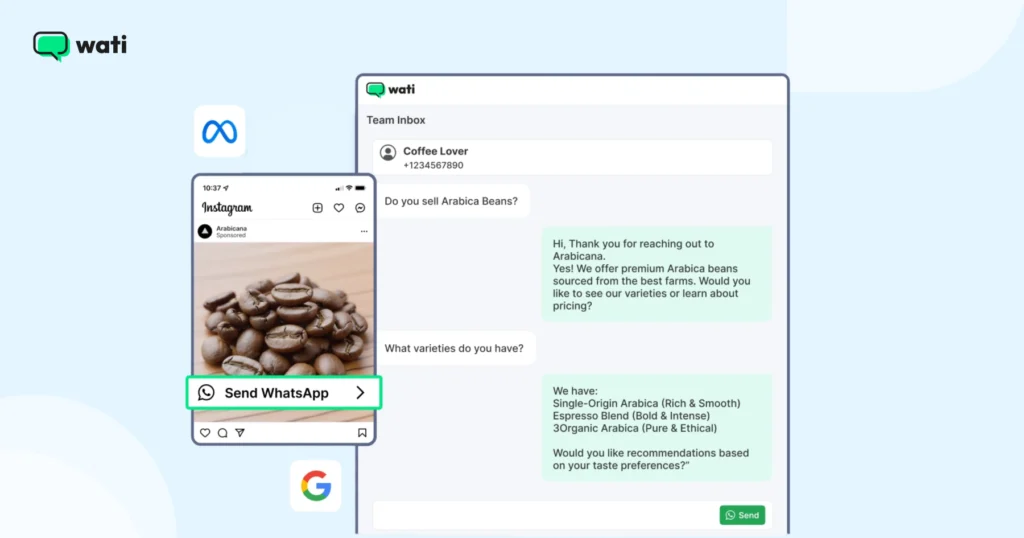
These ads make it easier for people to ask questions, request quotes, or place orders without leaving the app. You can customize your ad copy, visuals, and call-to-action to guide users straight into a chat that feels personal and instant.
Ads that are clicked for WhatsApp can be placed across Facebook and Instagram, including the News Feed, Stories, and Marketplace. They support a wide range of business goals, from lead generation to sales and ongoing marketing engagement.
Meta isn’t the only one using this format. Google has already made ads that click to WhatsApp, signaling that conversational ads are becoming a standard way for brands to engage customers.
Why Try Click-to-WhatsApp-Ads?
Customers, nowadays, are switching to modern forms of marketing. Instead of outbound calls, registrations, or emails, now they engage via messaging platforms to shop or buy.
Research indicates that more than 55% of individuals feel a stronger bond with brands that communicate via messaging apps.
Your customers prefer messaging. They often wish to chat with businesses before deciding to buy. In fact, after a positive chat experience, 38% of them tend to make a purchase. Consumers who chat tend to spend 60% more than those who don’t.
Engaging in conversations with your clientele fosters loyalty. Retaining a customer can be up to 25 times more cost-effective than acquiring a new one. The balance is that you must engage both new and existing customers through WhatsApp to build lasting relationships and drive conversions.
A typical user checks their WhatsApp approximately 23-25 times a day. Imagine the potential engagement.
Note: By integrating CTWA into your sales and marketing strategy, you can trigger chatbots to qualify leads, collect relevant data, and even route them to the right sales reps based on their responses or intent.
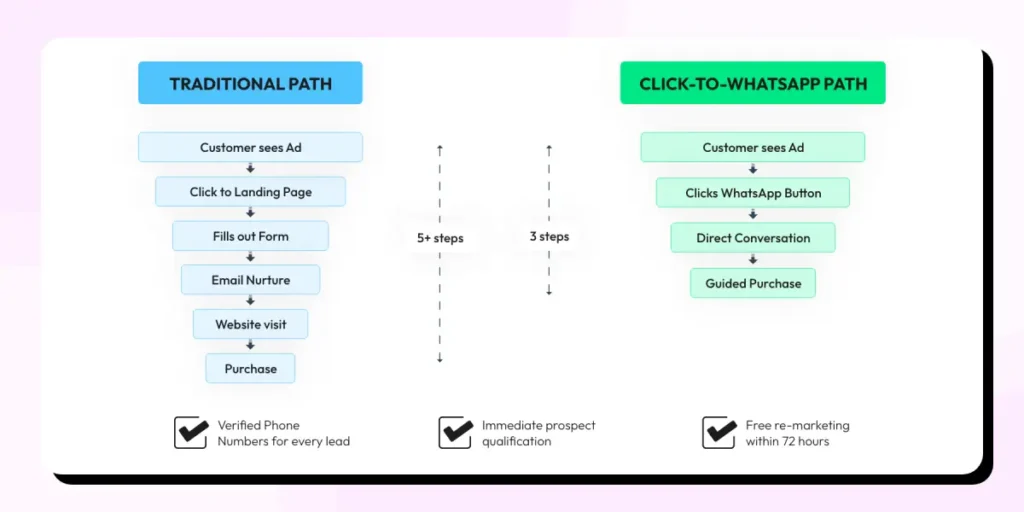
CTWA vs. Traditional Ad Formats: What Actually Changes
The primary difference isn’t where the user lands, but how many details they are asked to enter before they can get in touch. This really adds a lot of friction.
Traditional ad formats mean switching from one platform to another, while CTWA keeps everything in a familiar interface.
| Feature | Traditional Ads (Lead Forms/LP) | Click-to-WhatsApp Ads (CTWA) |
| User Flow | Ads->Browser->Form->” Wait for call or email.” | Ad->WhatsApp->Instant Chats |
| Response Time | Hours or days (delayed follow-up) | Real-time (Live agent or AI bot) |
| Data Capture | Static fields (prone to fake info) | Verified phone number (automatic) |
| Environment | External website (unfamiliar) | WhatsApp (daily habit) |
| Retargeting | Dependent on cookies/pixels | Free entry point window of 72-hours, with a 24-hour customer service window for free messages. |
The Real Value of CTWA: Four Key Benefits
What makes WhatsApp ads or WhatsApp advertising special? Let’s look at some of the benefits.
1. Faster Engagement and Higher Conversions
WhatsApp is already a familiar space. When customers can talk to your team directly, they stay engaged and move faster through the buying process.
Example: A boutique skincare brand runs an Instagram ad. A customer taps “Send WhatsApp Message” and asks, “Will this moisturiser suit oily skin?” The team replies instantly with a quick recommendation and a before-and-after photo. Within three minutes, the customer says, “Okay, send me the link. I’ll order now.”
No forms. No waiting. Just a conversation that converts.
2. Better Customer Support and Actionable Insights
Real-time chats help you provide customer support by answering FAQs, resolving issues, and collecting feedback quickly. WhatsApp also gives you data on delivery and engagement, so you can track performance and improve future campaigns.
Example: A customer messages an electronics store: “The earbuds I bought yesterday keep disconnecting.” The support team sends a quick troubleshooting video. Issue resolved. Later, reviewing WhatsApp analytics reveals that support queries spike after every product launch, an insight that leads the team to create a proactive pre-launch broadcast, cutting support tickets significantly.
3. Campaign Flexibility Across Goals
CTWA isn’t a one-trick channel. You can use it for product launches, seasonal promotions, post-purchase follow-ups, and customer feedback, all within the same platform.
Meta’s 72-hour free entry point (FEP) window means that once a customer initiates a chat, you can follow up multiple times within that window without incurring extra messaging costs. This makes it especially powerful for re-engaging warm leads and running time-sensitive offers.
Example: A fashion retailer runs a WhatsApp ad that opens with: “Want early access to our new year collection?” Customers reply “Yes” and instantly receive a personalised lookbook, a 10% early-bird discount code, and a tap-to-pay checkout link. The same brand uses the same channel the following month to collect NPS scores. Same platform, completely different goal – both equally effective.
4. Clearer Reporting
Using tools like the Meta Pixel, Conversions API, or Offline Conversions, you can see how chats move toward leads or purchases. It gives you a better view of how your WhatsApp conversations impact results.
Here is an explanation of how analytics works
If a D2C coffee brand sets up Meta Pixel + Conversions API.
They run a WhatsApp ad saying: “Find your perfect coffee in 30 seconds. Chat with us.”
Here’s what reporting reveals:
- 1,200 people clicked
- 800 opened WhatsApp
- 430 completed the recommendation and 200 made a purchase
Suddenly, the marketing team can answer the CEO’s favourite question: “Which campaign actually made us money?
What Do You Need To Set Click To WhatsApp Ads?
If you wish to run WhatsApp campaigns using the Facebook Ads Manager, here are the things that you need to set up, as per Meta.
1. Get a WhatsApp Business Account
WhatsApp advertising is not supported on personal WhatsApp numbers. You need aWhatsApp Business account linked through the WhatsApp Business Platform (API). Make sure your WhatsApp business account, Facebook page, and Meta Business Manager are connected
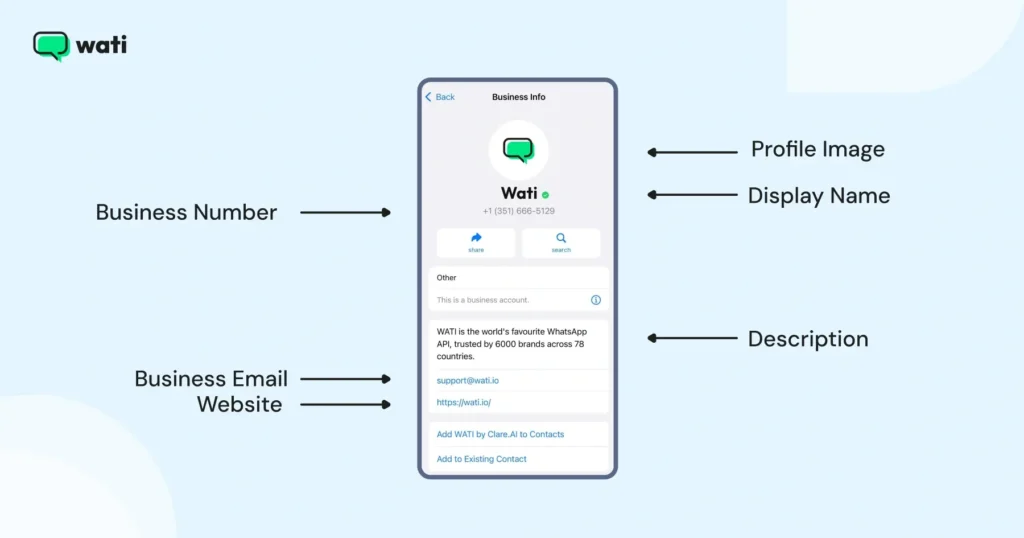
Note: When integrating your WhatsApp Business account, consider connecting multiple platforms like Facebook, Instagram, and WhatsApp to organize your advertising workflow and manage your campaigns more smoothly.
WhatsApp Business API comes with features like:
- Chat automation & WhatsApp chatbot.
- Product catalog to showcase products and services on WhatsApp.
- Integration with CRMs
- Bulk messaging options for promotions and marketing
Let’s assume that now you’ve set up your WhatsApp Business account.
2. Add WhatsApp Business Number to Your Facebook Page
You need to connect your WhatsApp business account with your Facebook page. This is a mandatory step and can be done from your Facebook Business page settings:
- Navigate to your Facebook business Page.
- Click ‘Settings‘.
- In the column on the left-hand side, click ‘WhatsApp‘.
- Choose your country code.
- Enter your WhatsApp number and click ‘Send code‘.
- Input the OTP code and click ‘Confirm‘.
Once this is done, you can start creating your first Click-to-WhatsApp ad.
After following these steps, remember to set a start and end date for your campaigns.
How to Create Click-to-WhatsApp Ads in Facebook Ads Manager?
To create a Click to WhatsApp Ad, you’ll start by setting up a new campaign in Meta Ads Manager, choosing ‘Engagement’ as your objective, and selecting ‘Messaging apps’ as your conversion location.
Connect your WhatsApp Business number, define your audience, add your creatives, and publish the ad once everything looks right.For a complete, step-by-step guide, refer to the support article.
How to Run Click to WhatsApp Ads Across Facebook and Instagram?
WhatsApp click to ads let you show up where people already spend their time. You can reach new audiences, re-engage existing ones, and move them into WhatsApp conversations that feel direct and helpful.
- Reach Out To Right Leads
Meta’s targeting tools help you find the right prospects instead of casting a wide net.
- Target by location
- Filter by age and gender
- Build custom or lookalike audiences based on your existing customers
- Engage With User-friendly Carousels
Use formats that match the way people browse on Facebook and Instagram.
1. Carousel ads to showcase different products
2. Video ads to explain or demonstrate.
3. Image ads for clean, straightforward communication
- Develop an instant conversational engine
Once users start a chat, you can guide them toward the next step in a more personal way.
1. Multi-product messages or quick reply buttons
2. Conversations tailored to what they are looking for
3. Offers or loyalty updates that keep them coming back
This gives you a simple path from reach to engagement to meaningful conversations on WhatsApp.
Why Should You Track CTWA Conversions More Closely?
Tracking conversions from Click to WhatsApp Ads helps you see which campaigns are actually driving meaningful conversations and sales. It gives you clarity on what is performing well, where your budget is going, and how users move through your funnel.
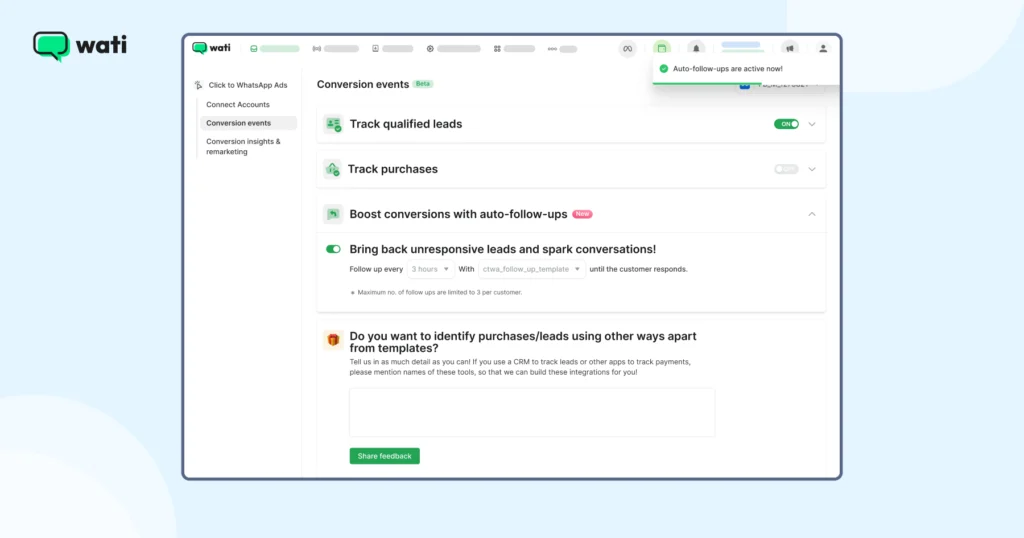
WhatsApp Business API tools make this easier by highlighting CTWA leads in the team inbox, letting you filter them quickly, and showing you attributes like source_id and source_url so you know exactly which ad brought in each contact.
You can compare multiple campaigns, review engagement insights, and track purchases to understand how many chats turn into paying customers.
Note: This step requires expertise in Facebook Advertising. We expect that you have knowledge of Facebook ads and understand that they involve money.
How to Analyze Your Click-To-WhatsApp Campaign Outcomes?
To track click-to-WhatsApp ads, you’d first need to connect your Meta account with the WhatsApp API.
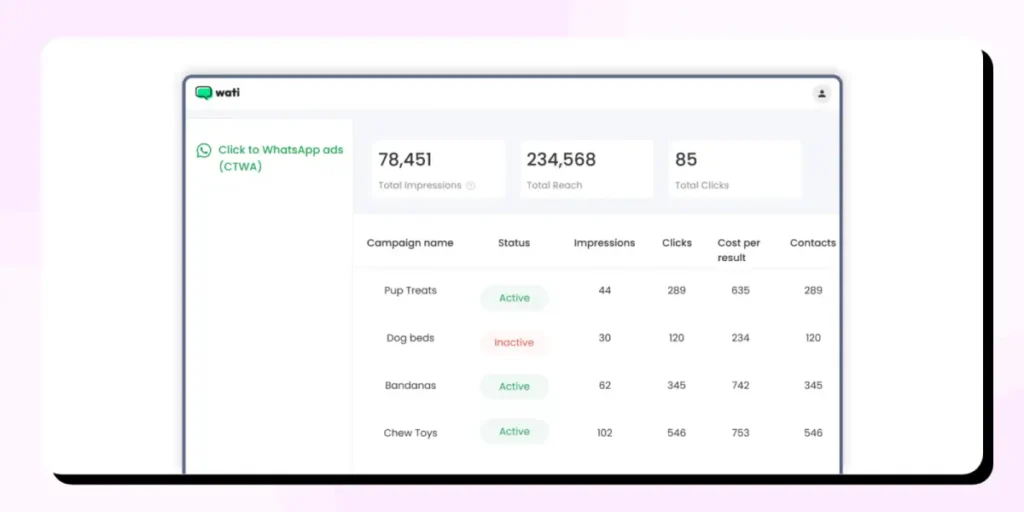
Once the connection is set in place, you can check analytics to identify which conversions came from your ad and map them to events like purchases.
You can track sales qualified leads, verified leads, or purchases through approved templates for each metric used in the WhatsApp flow.
Once your ads start generating conversations, review key metrics like cost per conversation, cost per lead, and cost per purchase to see which campaigns are performing well. Meta Ads Manager also gives you data on ad spend, clicks, impressions, reach, and engagement to compare results.
Important Note: You can now activate 72 hours of free messaging for Click to WhatsApp Ads by replying to any incoming customer message. This extends the conversation window beyond the standard 24 hours without using paid templates.
Best Practices For High-Impact Click to WhatsApp Ad Campaigns
Studies show that 74% of consumers prefer ads that fit the content they’re viewing. When your message matches their interests, engagement naturally increases.
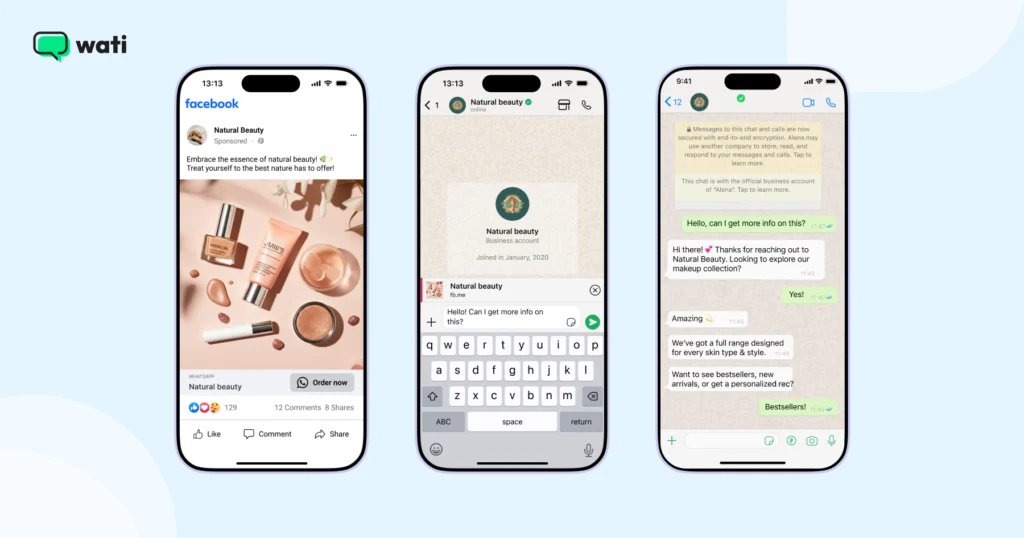
Strong messaging also grabs attention and encourages users to start a chat with your business. Here’s how to write content that delivers results.
- Write Copy That Connects
Great ad copy doesn’t feel like an ad. It feels like a message meant for the person reading it. When your words sound real and relevant, people pay attention and take action.
- Keep Your Call to Action Simple
Your call to action should tell people what happens next. Use short phrases like “Send a message,” “Find out more,” or “Book now.” Avoid overcomplicating it. Test a few options and stick with what brings in the most engagement.
- Know Your Audience
Before writing, think about who you’re talking to and what they care about. Address their needs and use language they’d use themselves.
Key Mistakes That Can Hurt Your CTWA Campaign
A few small WhatsApp marketing mistakes can hurt the performance of your Click to WhatsApp campaigns. Here are some mistakes to watch out for.
| Using Generic Templates and Replies | Conversations will fall flat when every message looks automated. Keep some templates for speed, but balance them with replies that feel more genuine. |
| Long Customer Response Times After Engagement | Customers will expect faster replies on WhatsApp. Late replies can lead to missed opportunities when someone is ready to make a decision. |
| Missing the 72-Hour Follow-Up Window | For CTWA, you have a limited window to follow up without extra costs. If you don’t use that time frame, high-intent leads can slip away. |
Make a habit of reviewing the above details before and after each campaign. It can save your budget and help you convert more of your conversations.
Which Are The Best Industries for Click to WhatsApp Ads?
CTWA ad processes work well in sectors where customers prefer quick answers and guidance before making a decision.
Here are some examples of how certain industries can use CTWA to drive sales and bring in more leads.
- E-Commerce & D2C Brands
Online shoppers would have questions about a product’s size, delivery timeline, and more. A CTWA ad will let them connect with your support and get their query answered instead of abandoning their cart.
Example: A skincare brand can run a CTWA ad for a newly launched product. Users can click the ad to ask about the ingredients, and the brand shares the answers directly in the chat.
- Real Estate
These industries are made up of high-value decision makers. Their customers want many details and photos before scheduling a visit.
Example: A real estate company can run CTWA ads to promote bookings for their new property. Interested people can click on the ad to request a PDF with all the details about the property before planning or scheduling their site visit.
- Education and Edtech
In Ed-tech, CTWA can eliminate multiple sign-up hassles by helping prospects inquire faster about courses on WhatsApp.
Instead of a long landing page form, the “Send Message” button triggers a chat where a bot or counselor provides a syllabus PDF and answers FAQs in real-time.
It reduces the friction of lead generation by replacing boring forms with a familiar chat interface.
- Healthcare and Wellness
Healthcare brands can cater to immediate inquiries, send details regarding a 1:1 consultation, or offer solutions via CTWA.
Since privacy and immediacy are vital for healthcare brands, using WhatsApp offers end-to-end encryption and data compliance.
A direct chat with a healthcare professional feels more confidential and supportive than a public comment section or a cold website.
- Travel and Hospitality
Travel agencies can forward customized booking details or travel itineraries to a customer who engages with a country-specific travel campaign.
For example, if a travel agency promotes a holiday package to the Maldives. Interested travelers click the ad to get a customized itinerary based on their budget and travel dates.
It allows for consultative selling. You aren’t just selling a hotel room; you’re planning an experience through a dialogue.
Famous Click-to-WhatsApp Ad Campaigns That Delivered Results
Below are the famous CTWA campaigns that delivered immediate results:
- Habuild
Habuild used Click to WhatsApp Ads to fix a major gap in their lead generation, losing potential users to incorrect phone numbers and form drop-offs.
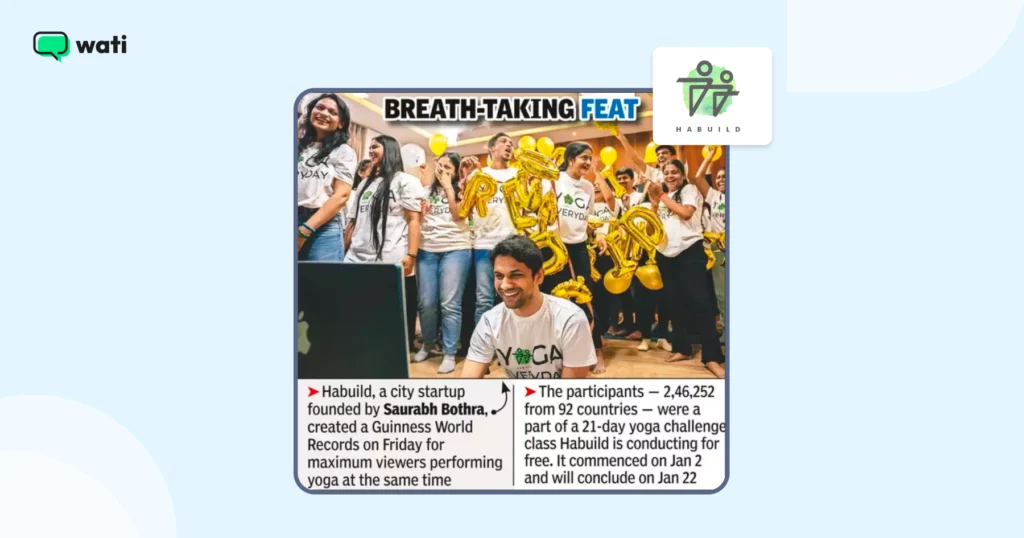
instantly verified phone numbers, removed extra steps, and made lead collection faster and more reliable.
Want to see how they scaled their customer base from 400 to over 3 lakh using Wati? Read the full case study.
- Bowaba
Bowaba used Click to WhatsApp Ads to transform how brands in the GCC connect with customers.
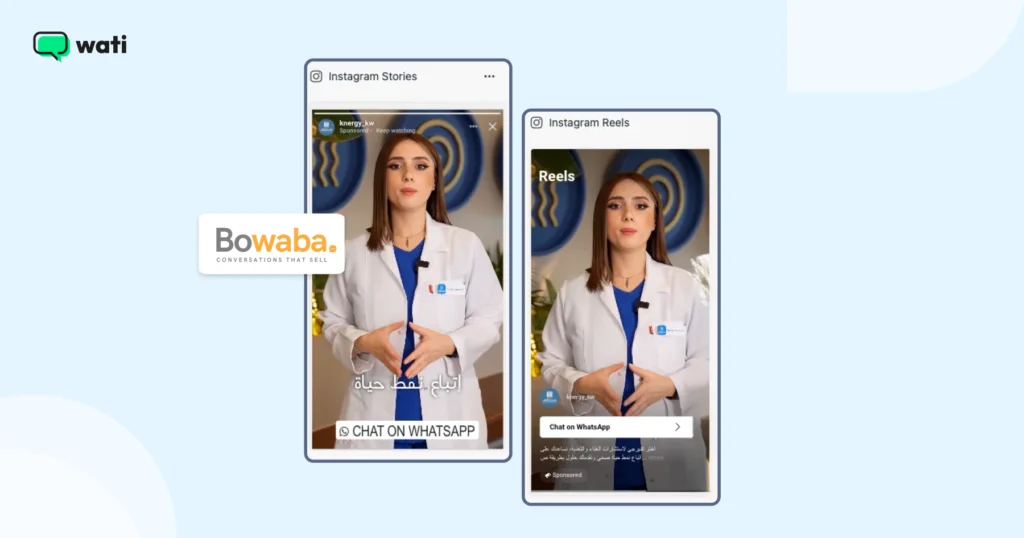
With Wati, Bowaba built WhatsApp-first funnels where users could chat directly with a business instead of filling out forms. This shift reduced drop-offs, improved lead quality, and made tracking much easier.
By integrating WhatsApp with CRM tools and using real-time remarketing within WhatsApp’s 72-hour window, Bowaba’s clients achieved up to 11x ROAS, higher conversion rates, and stronger customer relationships.
Want to see how they achieved it? Read the full case study.
- Blacklyf
Blacklyf turned skeptical online shoppers into paying customers using Click to WhatsApp Ads.
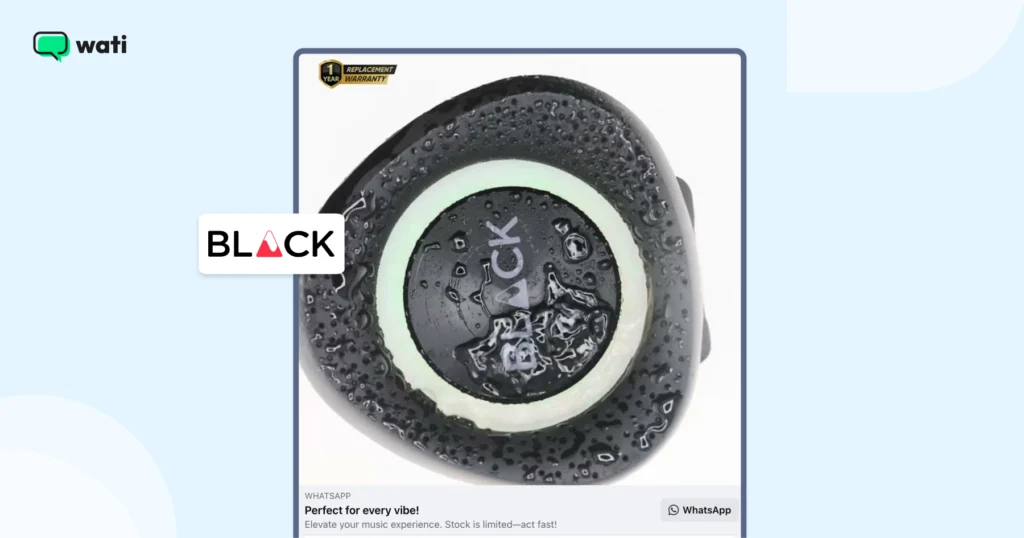
In Uganda, where most people distrust e-commerce websites, driving traffic to a landing page wasn’t working. By switching to WhatsApp-first campaigns, Blacklyf made it easy for potential buyers to chat directly with their team instead of clicking “Buy” on a website they didn’t trust.
Smart retargeting within WhatsApp’s 72-hour window helped recover lost leads and convert hesitant buyers through quick follow-ups and time-sensitive offers.
The results spoke for themselves: 60% lower acquisition costs, a 3x higher conversion rate, and a growing base of verified customers ready for remarketing.
Want the full story? Read the complete case study.
Ready to Turn Clicks Into Conversations?
If you really want to make it big, you need to improve reachability for customers.
Click to WhatsApp Ads enable you to converse instantly, thus reducing customer confusion and initiating high-quality conversations.
With the right setup and tracking, you can see exactly what’s working and improve every campaign outcome drastically.
Book a demo with Wati and see how WhatsApp conversations can turn ad clicks into real customers.
Frequently Asked Questions: Click To WhatsApp Ads
Have more questions? Refer Below!
Click to WhatsApp Ads are ads that open a WhatsApp chat when clicked. Instead of leading users to a website or form, they start a direct conversation with your business.
When someone clicks the ad, they’re taken straight to a chat with your business on WhatsApp. You can use this space to answer questions, share product details, or guide them toward a purchase.
You’ll need a WhatsApp Business Account, a linked Facebook Page, and access to Meta Ads Manager. A verified WhatsApp number must also be connected to your Page.
No. You must use a WhatsApp Business Account or WhatsApp Business API account to run Click to WhatsApp Ads.
You can connect Wati to your Facebook Ads Account to track conversations, purchases, and qualified leads directly from your campaigns.
When a customer messages you from a Click to WhatsApp Ad, you can reply within 72 hours without using paid templates.
Focus on clear ad copy, a simple call to action, and quick replies. Review metrics like cost per conversation and cost per lead to refine your campaigns.
Yes. Platforms like Wati let you set up chatbots, automated replies, and workflows to manage leads, share product details, and follow up with customers.