

-

-
-
Solutions
-
Soluções
-
Soluciones
-
解决方案
-
解決方案
-
الحلول
-
Product
-
Produto
-
Producto
-
产品
-
產品
-
المنتج
-

-
-


 Wati for Marketing
 Wati for Support
 Wati for Sales
 eLearning
 E-commerce
 Marketing Agencies
 Healthcare
 No Code Chatbots
 WhatsApp Business API
 Instagram and Facebook messenger
 Click to WhatsApp ads
 Campaigns
 Team Inbox
 WhatsApp Business Calling
 Wati AI
 Overview
 Library
 Agente de suporte de IA
How To Scale WhatsApp For Travel For Your Travel Business in 2026
Written by: Bhavyadeep Sinh Rathod | Last updated on: March 11, 2026 | According to: Editorial Policies
 Table of Contents
If you are planning to run a travel business, you need to prioritize customer time and respond faster with a better alternative than email.
By integrating WhatsApp for travel, you upgrade your broken communication with a full-stack engagement platform.
From instantaneous booking confirmations to automated itinerary updates to AI-driven local recommendations, WhatsApp API optimizes customer journeys and increases trust.
In this article, we will learn how brands can leverage WhatsApp for travel purposes and embrace frictionless engagement, while maintaining proper vendor schedules and avoiding transportation hassles.
Let’s get in!
How to Use WhatsApp for Your Travel Business?
Setting up WhatsApp is easy, but using it professionally requires a strategic approach. Here is the step-by-step framework used by top-tier agencies:
1. Choose Your Level (WhatsApp vs WhatsApp API)
- The App (For Solopreneurs): Best for small agents. Use it to set business hours, create a Product Catalog of your top tour packages, and use Labels to tag chats as “New Inquiry,” “Payment Pending,” or “On-Trip.”
- The API (For Growing Agencies): Necessary for teams. It allows you to integrate with your CRM (like Zoho or Salesforce), use AI chatbots for 24/7 support, and send bulk “Broadcast” updates without getting banned for spam
2. Complete Your Business Profile
- Set up display name and business description: Complete your Business Profile with a professional logo, your physical office address, and a verified website link.
- Aim for blue tick verification: If you use an API, you need to have a Facebook Business Manager account first and register for blue tick verification. Post that, you can migrate the number and set a profile.
Also read: Top WhatsApp API Prerequisites to know to scale WhatsApp infrastructure for integrated operations.
3. Move the Journey to the Chat
- Lead Capture: Replace clunky website forms with a “Click-to-WhatsApp” button. Start the conversation immediately by embedding the WhatsApp link directly for travellers to get instant help
- Document Vault: Use the “Star” feature to encourage travelers to save their PDFs (tickets, insurance, visas) within the chat thread for easy offline access during their flight.
- Automated Check-ins: Set up a greeting message to send a “Welcome to [Destination]!” message the moment their flight lands, including a Google Maps pin for their hotel or the driver’s contact details.
4 Key Benefits of WhatsApp Business For Travellers
Earlier, if a customer booked a package, they had to constantly call or message event organizers for pickup updates, ask what was included, and assess value for money.
With WhatsApp, brands can automate their sales support to answer customers’ questions. Here are the key benefits:
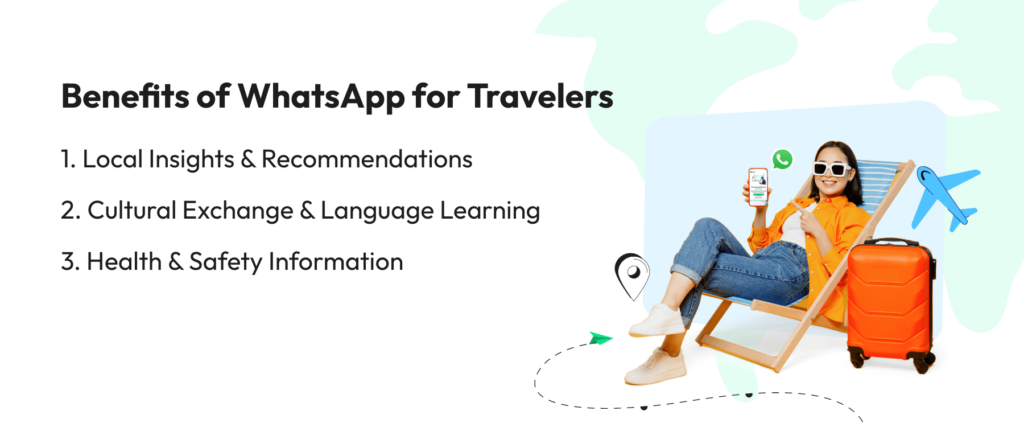
1. Local Insights & Recommendations
WhatsApp gives travelers a direct line to the “boots on the ground.” By connecting with local experts or joining destination-specific community groups, travelers can bypass tourist traps.
Whether it’s finding a hidden trattoria in Rome or a quiet surf spot in Bali, this direct peer-to-peer communication offers a level of authenticity that guidebooks simply can’t match.
2. Cultural Exchange & Language Learning
The app is a powerful tool for breaking language barriers. Travelers often use WhatsApp to practice basic phrases with local hosts or join language exchange groups before they even land.
It’s more than just a chat app; it’s a gateway to understanding local customs, traditions, and etiquette in real-time.
3. Proactive Health & Safety Information
Safety is the top priority for the modern traveler. WhatsApp allows users to subscribe to official government or health channels for instant alerts on vaccination requirements, weather warnings, or travel advisories.
Having this information delivered to the same app they use to text home ensures they never miss a critical update.
What are the 4 Key Benefits of WhatsApp for Travel Agencies?
Travel agencies can connect with future travellers, broadcast upcoming trips, personalize itineraries or retarget prospects who showed intent with intelligent automation.
Here are some of the key benefits of WhatsApp for travel agencies.
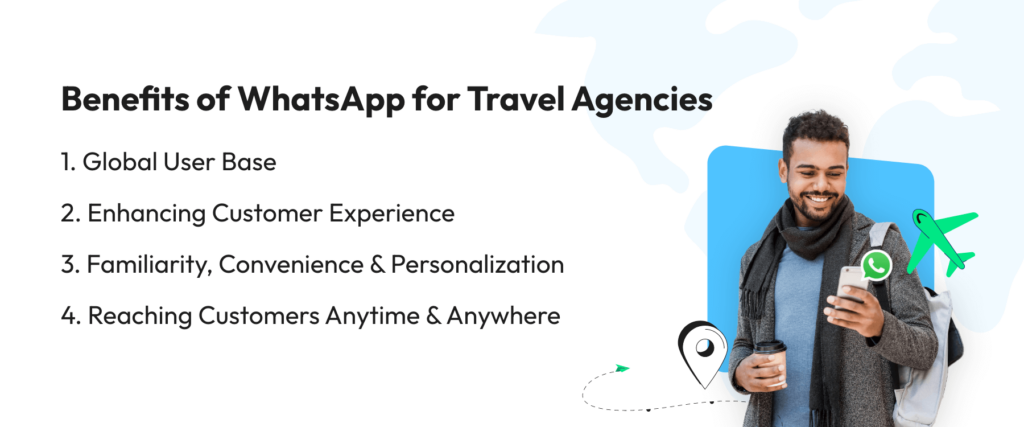
1. Reaching Customers Anytime and Anywhere
One of the key benefits of using the WhatsApp Business API is the ability to reach customers anytime, anywhere. With the widespread use of smartphones and the popularity of WhatsApp, travel companies can easily connect with their customers on a platform they already use.
Whether it’s sending booking confirmations, providing real-time updates, or offering customer support, WhatsApp enables businesses to communicate with their customers in a timely and efficient manner.
2. Familiarity, Convenience, and Personalization
WhatsApp’s large user base and end-to-end encryption for secure communication make it a trusted platform for users around the world. Additionally, WhatsApp offers automation capabilities through chatbots, allowing travel companies to personalize interactions with their customers.
From recommending personalized travel itineraries to answering frequently asked questions, WhatsApp enables businesses to provide a convenient and personalized experience for their customers.
3. Utilizing WhatsApp’s Global User Base
With over 2.8 billion users worldwide, WhatsApp provides travel companies with a vast potential customer base. Online Travel Agencies (OTAs) can leverage WhatsApp to offer travel alerts, seamless payments, personalized recommendations, and concierge services.
By utilizing WhatsApp’s global reach, travel companies can tap into new markets and expand their customer base.
4. Enhancing Customer Experience
By using WhatsApp Business API, travel companies can enhance the overall customer experience and build trust and loyalty. Real-time communication, personalized interactions, and convenient services offered through WhatsApp create a positive experience for travelers.
Whether it’s sharing boarding passes, handling complaints and refunds, or collecting feedback, WhatsApp enables businesses to provide efficient and effective customer service. This, in turn, fosters trust and loyalty among customers.
WhatsApp for Travel: 4 Key Use Cases for Travelers
Here are the top 4 use cases of WhatsApp for travellers, which help get top-of-the-line service and faster and more efficient bookings:
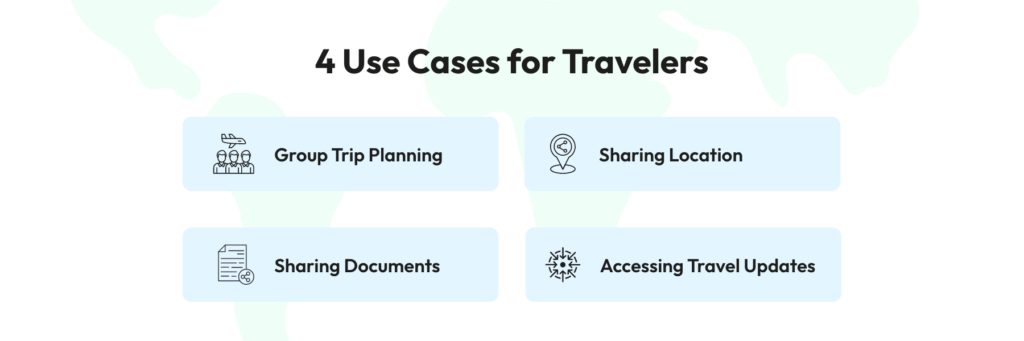
1. Group Trip Planning and Coordination
Group travel often involves a lot of planning and coordination among travelers. WhatsApp makes it easy by providing a platform for seamless communication and collaboration.
Through WhatsApp, travelers can create dedicated group chats for discussing itineraries, accommodation, transportation, budgeting, and expenses.
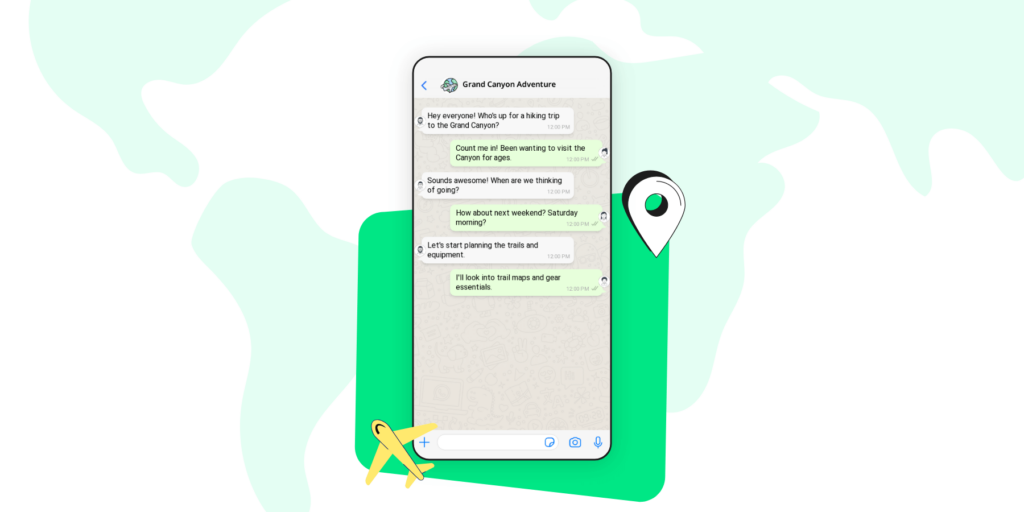
For example, let’s consider a group of friends organizing a hiking trip to the Grand Canyon.
Through a WhatsApp group chat, they share trail maps, discuss equipment requirements, and finalize meeting points, ensuring everyone is on the same page and maximizing the enjoyment of their adventure.
2. Sharing Location and Meeting Points
Navigating through unfamiliar streets and landmarks during travel can be challenging,
WhatsApp’s location-sharing feature lets you share your location in real time to keep everyone updated on your whereabouts and to safely get out of unknown places.
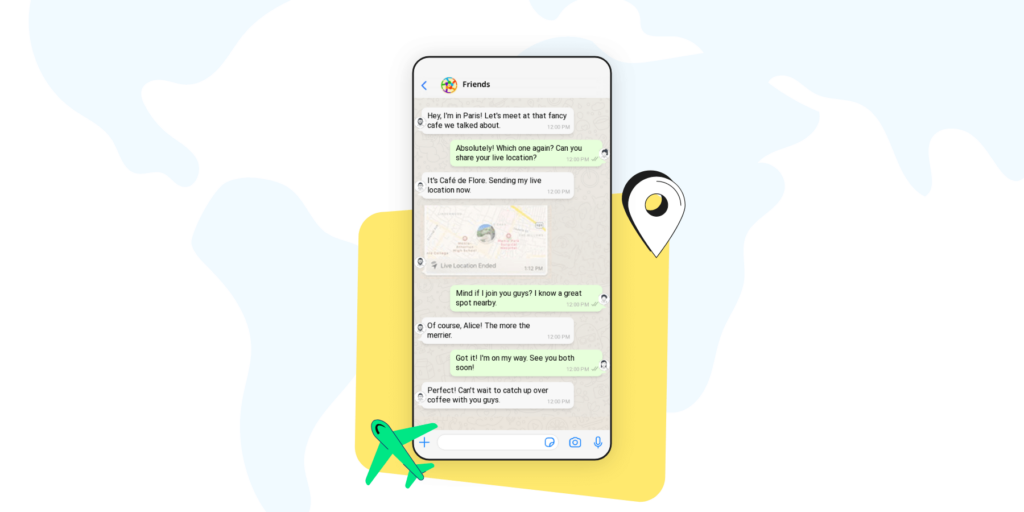
Picture this: you are in Paris, eager to meet your friend at a fancy cafe.
With just a few taps on your phone, you share your live location via WhatsApp. Meanwhile, your friend, armed with this precise information, effortlessly weaves through the vibrant streets and bustling crowds to reach that cafe.
3. Accessing Travel Updates & Alerts
Staying informed about travel-related updates and alerts is crucial for a smooth and hassle-free journey.
WhatsApp offers a convenient platform for travelers to subscribe to relevant channels or newsletters that provide timely information such as flight delays, weather forecasts, or local advisories.
This real-time access to updates ensures travelers can adapt their plans accordingly and mitigate potential disruptions.
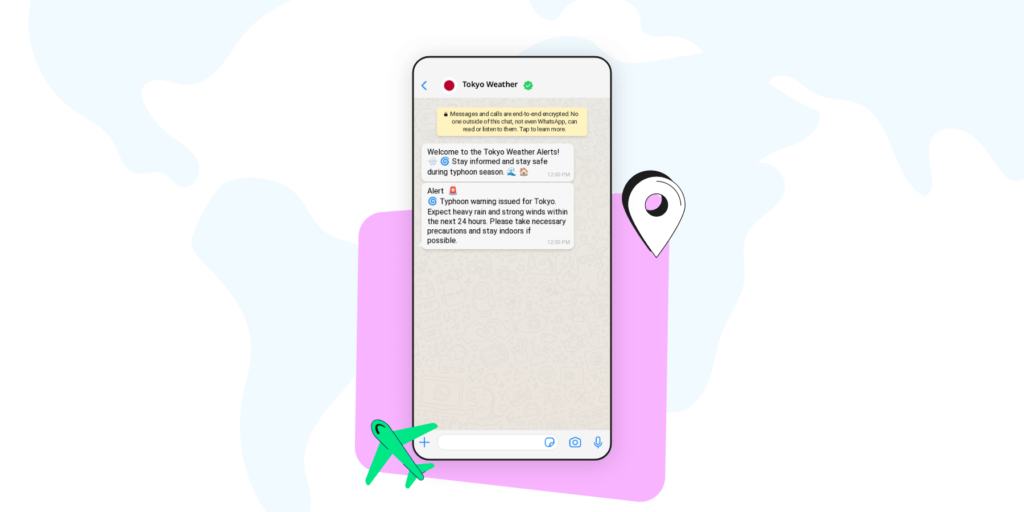
Let’s understand this with an example. Take the case of Jack, who is on a business trip in Tokyo during typhoon season.
By subscribing to a WhatsApp newsletter for weather alerts, he receives instant notifications about an approaching storm, allowing him to reschedule his meetings and make necessary preparations to ensure his safety.
4. Sharing Travel & Itinerary Documents
Keeping track of travel itineraries, booking confirmations, and important documents can be difficult while on the go.
WhatsApp simplifies this process by allowing travelers to share documents directly within chats, eliminating the need for separate emails or messaging apps and providing a centralized platform for all travel-related information.
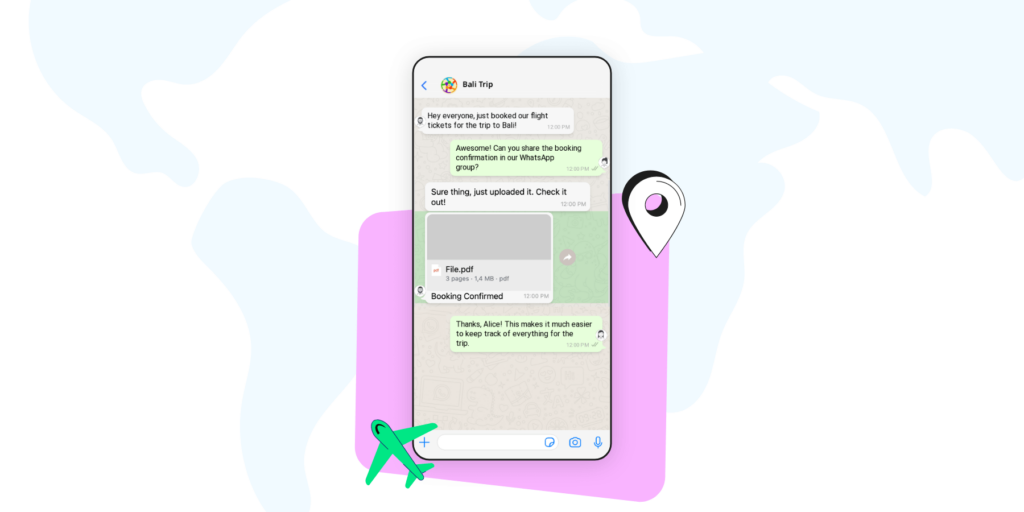
This feature streamlines the travel planning process, enhances communication among travel companions, and ensures that everyone remains well-informed and prepared throughout their journey.
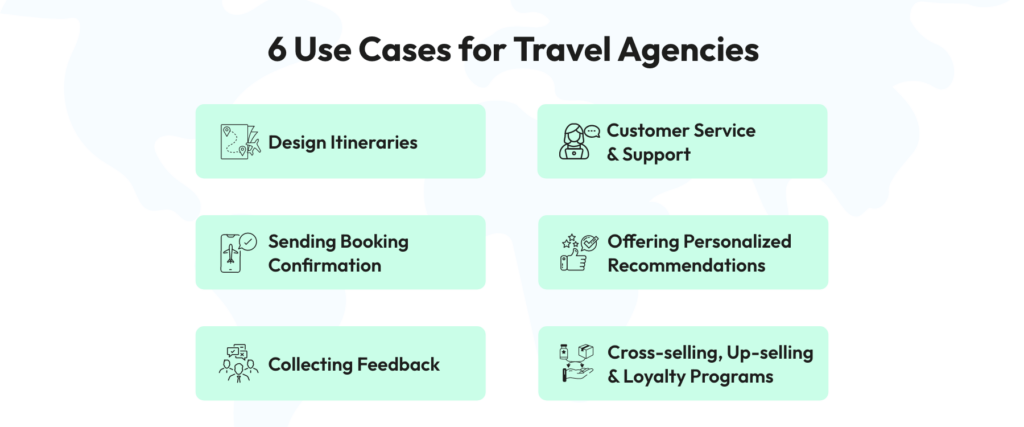
WhatsApp for Travel: 6 Use Cases for Travel Agencies
Here are the 6 use cases of WhatsApp Business for travel agencies that make the entire tourism experience smooth
1. Design Itineraries With WhatsApp Chatbots
WhatsApp chatbots can be programmed to interact with travelers and gather information about their preferences, budgets, travel dates, and destination interests.
Based on this data, the chatbot can suggest personalized itineraries, recommend activities, attractions, and accommodations, and even make bookings or reservations directly within the chat.
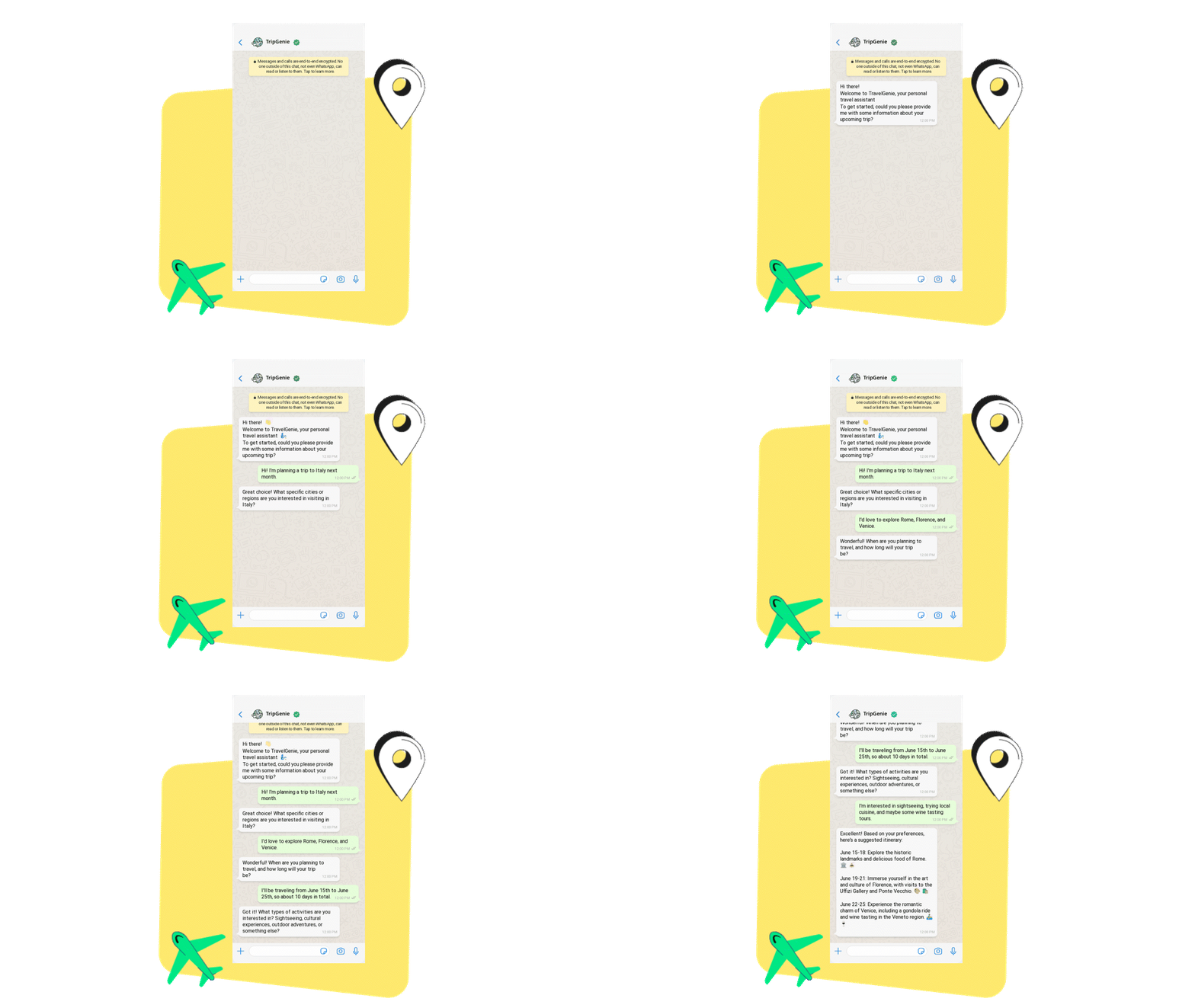
Let’s see how exactly a WhatsApp chatbot achieves this:
1. Information Gathering
The chatbot starts by asking the traveler a series of questions to understand their preferences, such as preferred destinations, travel dates, activities of interest, and budget constraints.
2. Customized Recommendations
Using the information gathered, the chatbot generates personalized itinerary suggestions. It suggests places to visit, activities to partake in, and accommodations to stay at, tailored to the traveler’s preferences and constraints.
3. Iterative Refinement
Based on the traveler’s feedback on the initial recommendations, the chatbot refines the itinerary further. It may suggest alternative options or adjust existing recommendations to better align with the traveler’s preferences.
4. Real-time Assistance
Throughout the itinerary design process, the chatbot provides real-time assistance by answering questions, offering additional information, and making adjustments to the itinerary as requested by the traveler.
5. Finalization
Once the traveler is satisfied with the itinerary, the chatbot can provide a finalized version for their reference. It may also include additional details such as maps, contact information, and booking instructions.
2. Customer Service & Support
Travel agencies can use WhatsApp for holistic customer service and support. The customer support team can use WhatsApp to engage with clients, offering:
- Real-time assistance
- Itinerary updates
- Personalized recommendations
They can also promptly address inquiries, manage bookings, and resolve issues directly through text, voice messages, or file sharing.
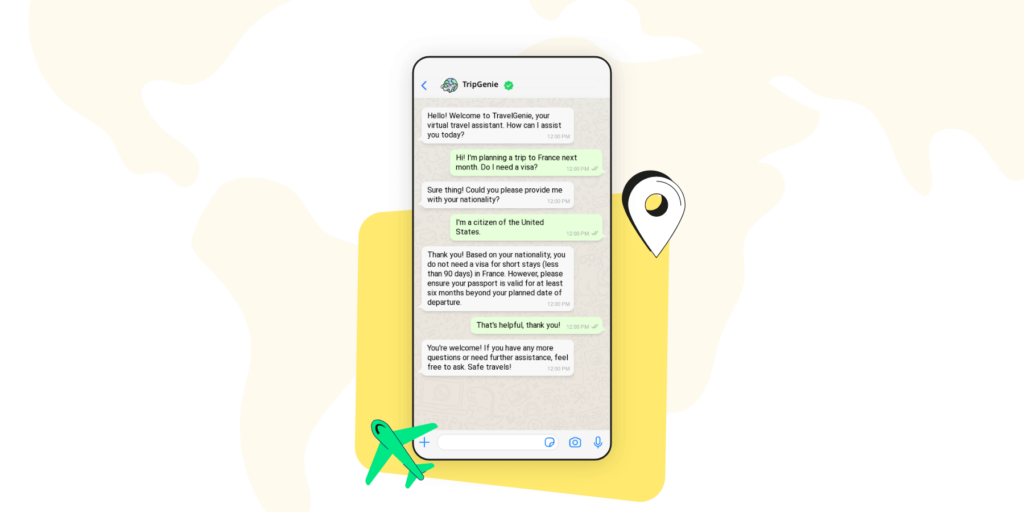
Although that’s not the only way a travel agency can use WhatsApp for customer support.
They can also integrate a WhatsApp chatbot that can handle common FAQs for booking procedures, visa mandates, support, and updated government travel policies.
These chatbots instantly provide relevant information around the clock, relieving the support team of repetitive tasks.
3. Sending Booking Confirmations & Reminders
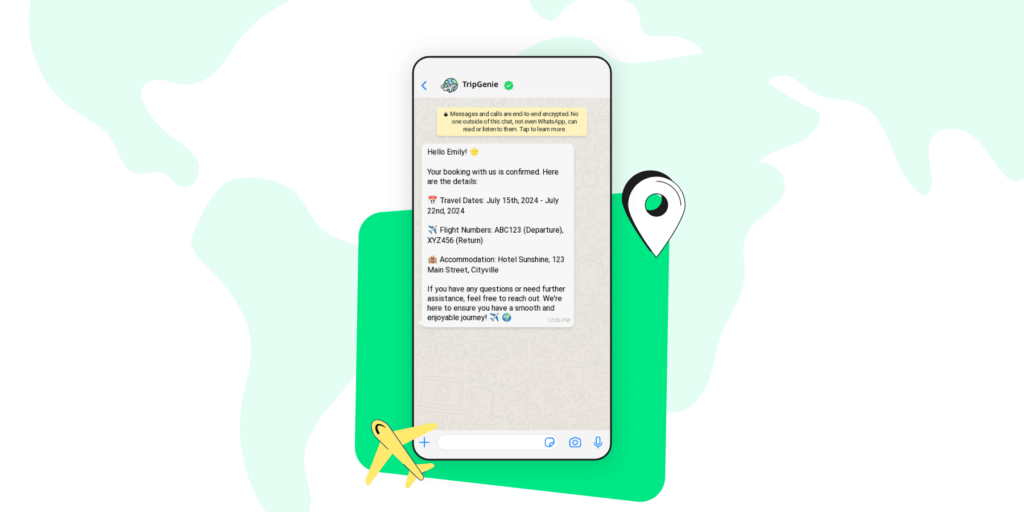
Travel agencies can use WhatsApp to send booking confirmations and reminders efficiently.
After a booking is made, agents can instantly send a confirmation message via WhatsApp, including details like travel dates, flight details, accommodation location, and payment invoice.
This ensures that customers have immediate access to their booking details and reduces the risk of miscommunication.
Additionally, agencies can schedule automated reminders closer to the travel dates, prompting customers to prepare for their trip, complete any pending tasks like visa applications, or check in online.
Also Read: Guide to WhatsApp API for Hospitality Sector (2025)
4. Offering Personalized Recommendations & Deals
Travel agencies can use customer data to offer personalized recommendations and deals via WhatsApp. Let’s see how.
1. Gathering Customer Information
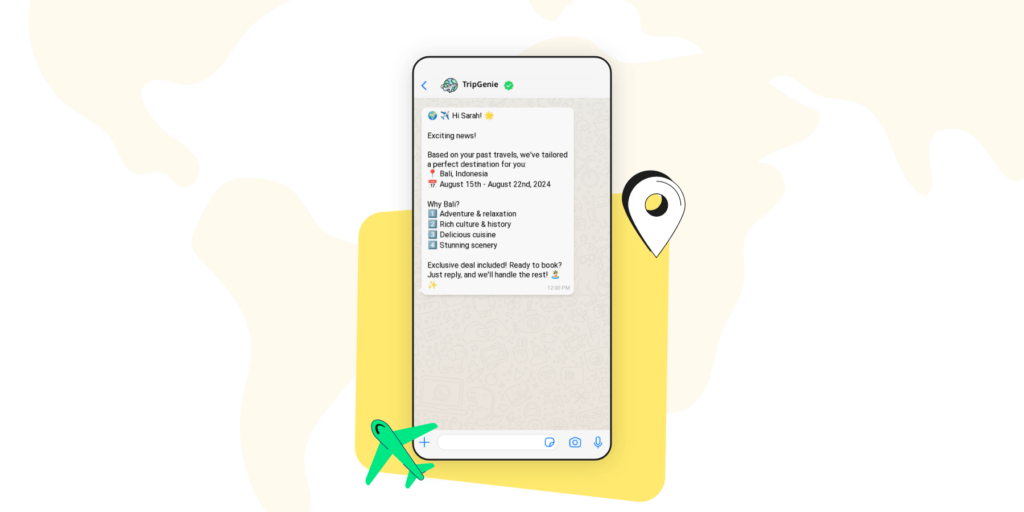
Firstly, they can gather information about customers’ travel preferences, past bookings, and interests. This data enables them to tailor recommendations to suit individual preferences, suggesting destinations, accommodations, activities, and tours that align with the customer’s travel style.
2. Personalized Recommendations via WhatsApp
Secondly, agents can use WhatsApp to engage in one-on-one conversations with customers to understand their specific needs and preferences better.
They can then send personalized recommendations directly to the customer’s WhatsApp inbox, along with exclusive deals, discounts, and promotions based on their profile and previous interactions.
3. Targeted Engagement Through Broadcast
Travel agencies can use WhatsApp’s broadcast feature to send targeted messages to specific customer segments, such as frequent travelers or those interested in specific destinations.
By delivering relevant content and offers directly to customers’ smartphones, agencies can enhance engagement, foster customer loyalty, and increase sales.
This personalized approach through WhatsApp creates a more tailored and engaging experience for customers, driving customer satisfaction and loyalty.
5. Collecting Feedback and Reviews
Travel agencies can leverage WhatsApp to collect feedback and reviews from customers in a convenient and interactive manner. After the completion of a trip or service, agencies can initiate a conversation with customers on WhatsApp, thanking them for choosing their services and asking for feedback.
They can provide a simple feedback form or questionnaire within the WhatsApp chat, allowing customers to rate their experience and provide comments directly.
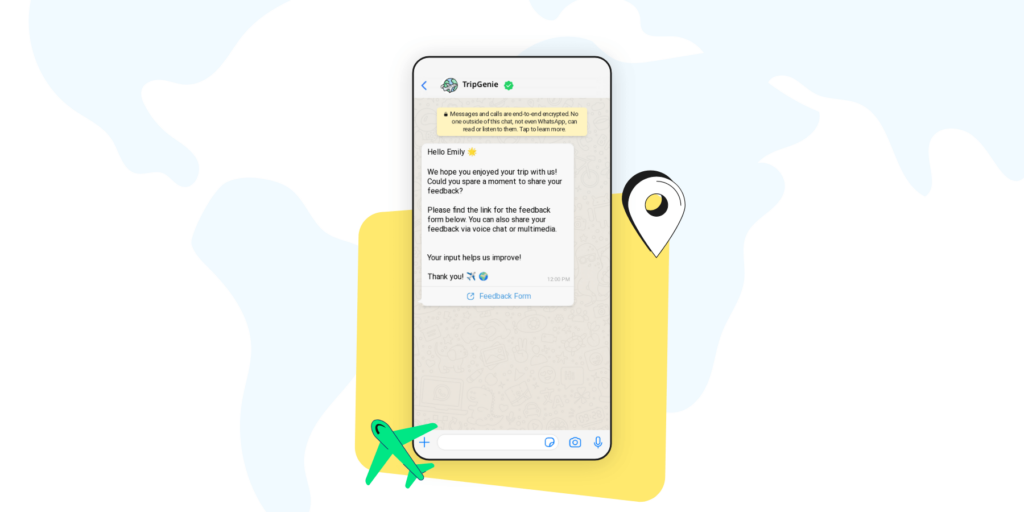
Additionally, agencies can encourage customers to share their feedback through voice messages or multimedia, facilitating more detailed and expressive responses. To incentivize participation, agencies can offer discounts or special offers for completing the feedback process.
Agencies can also use WhatsApp’s broadcast feature to send periodic requests for reviews to their customer base, ensuring continuous feedback collection.
6. Cross-selling, Upselling, and Loyalty Programs
WhatsApp offers opportunities for cross-selling, up-selling, and implementing loyalty programs in the travel industry.
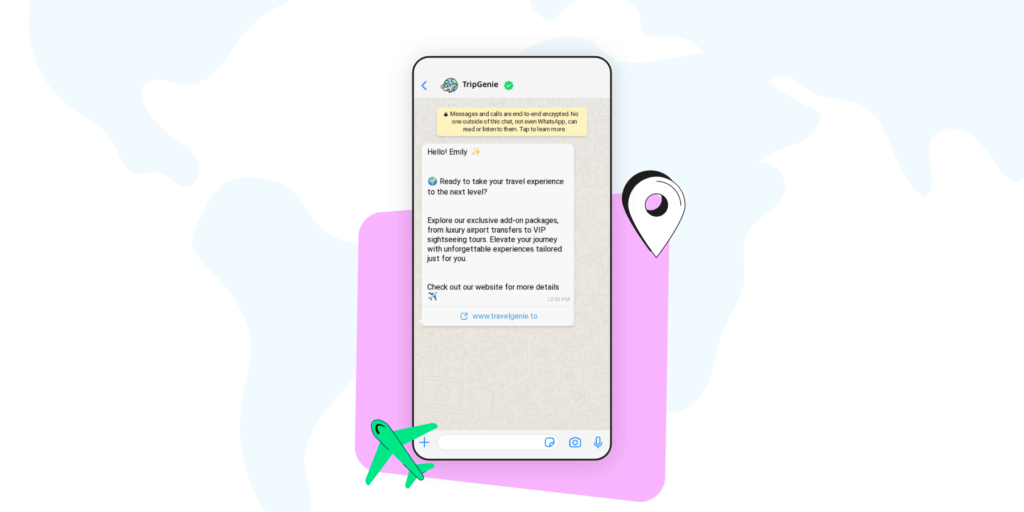
Travel businesses can promote additional services or upgrades to enhance the travel experience. By engaging customers through WhatsApp, companies can build stronger relationships, increase customer loyalty, and encourage repeat bookings.
How To Use Wati’s Whatsapp API To Scale Travel Bookings?
If done right, travel agencies can leverage WhatsApp effectively. Although to make the most of it, they need to choose a robust WhatsApp Business service provider. And when it comes to that, you don’t need to look further than Wati.
Below, we have mentioned some features that make Wati a must-have for all travel agencies.
- WhatsApp Chatbot: – Travel agencies can automate customer interactions, provide personalized recommendations, handle FAQs, and assist with bookings.
- Broadcast Messages: – Travel agencies can send targeted broadcast messages to specific customer segments, promoting special offers, updates, and promotions.
- Shared Team Inbox: Travel agencies can ensure seamless collaboration among team members, enabling them to manage customer inquiries, bookings, and support requests efficiently through Wati’s Shared Team Inbox.
- Custom Notifications: – Travel agencies can keep customers informed throughout their journey, providing timely updates on booking confirmations, itinerary changes, and travel alerts.
- Click-to-WhatsApp Ads: Wati helps you run ads that send prospects directly into a WhatsApp chat. This feature enhances customer engagement, conversion rates, and ultimately, business growth by facilitating direct interactions with potential customers.
Plan the Unplanned With WhatsApp Business API
By switching to the WhatsApp Business API, teams can better track upcoming travel inquiries, last-minute bookings, and cancellations, and provide catalogs or PDFs with ease.
By meeting your customers on WhatsApp, you aren’t just adopting a new tool; you are removing friction and elevating their dream travel experience.
Whether it is the peace of mind customers feel with instant updates or the happiness they get with travel deals, the WhatsApp API helps synchronize everything in one place.
For travel agencies, it is about time to employ intelligent automation and real-time connectivity to get the desired customer engagement and repeat rates.
Book a free Wati demo to learn more about intelligent travel automation.
Frequently Asked Questions: WhatsApp For Travel
Have more questions? Refer below
Yes. WhatsApp uses end-to-end encryption, meaning only the sender and the recipient can read the messages. For travel agencies, using the WhatsApp API via a verified provider like Wati adds an extra layer of professional security and data compliance compared to using personal accounts.
The App is free and designed for small, one-person operations. The API is built for scaling; it allows multiple team members to log in at once, integrates with your booking software (CRM), and enables high-volume automated messaging without the risk of being flagged as spam.
Absolutely. Using Custom Notifications, you can sync your booking system with WhatsApp to automatically trigger alerts for flight delays, gate changes, or weather warnings, ensuring your travelers stay informed in real time.
Chatbots serve as 24/7 digital consultants. They can ask travelers specific questions (e.g., “What is your budget?” or “Do you prefer adventure or relaxation?”) and instantly suggest tailored destinations, hotels, and activities based on those inputs.
The key is to use opt-in marketing. Only send messages to customers who have explicitly agreed to receive updates from you. Additionally, using the API ensures you follow Meta’s quality guidelines, keeping your “Business Health” rating high and your account safe
Yes! By “Starring” a message containing a PDF ticket or hotel voucher, travelers can easily find their essential documents within the chat, even if they have a spotty internet connection at an airport or remote destination.