

-

-
-
Solutions
-
Soluções
-
Soluciones
-
解决方案
-
解決方案
-
الحلول
-
Product
-
Produto
-
Producto
-
产品
-
產品
-
المنتج
-

-
-


 Wati for Marketing
 Wati for Support
 Wati for Sales
 eLearning
 E-commerce
 Marketing Agencies
 Healthcare
 No Code Chatbots
 WhatsApp Business API
 Instagram Automation
 Click to WhatsApp ads
 Campaigns
 Team Inbox
 WhatsApp Business Calling
 Wati AI
 Overview
 Library
 Agente de suporte de IA

Best Lead Generation Software in 2026
Written by:
 Rohan Chaturvedi
|
Last updated on:
March 11, 2026
|
According to: Editorial Policies
Rohan Chaturvedi
|
Last updated on:
March 11, 2026
|
According to: Editorial Policies

Too Long? Read This First
- The right lead generation software depends on your motion—inbound, outbound, paid, or ABM.
- All-in-one CRMs help when you need unified reporting, while specialized tools work better when you’re solving a specific bottleneck.
- Lead capture tools matter when traffic is high but conversions are low; prospecting tools matter when pipeline volume is the gap.
- Marketing automation becomes essential when follow-up is inconsistent or too manual to scale.
- Most teams rely on a stack: CRM + capture + prospecting + automation, rather than one platform trying to do everything.
- WhatsApp often supports stronger follow-up after high-intent actions when email alone doesn’t maintain engagement.
Choosing lead generation software in 2026 comes down to a good fit, not the volume of features. Teams operate across different motions- content-driven inbound, targeted outbound, paid performance, and account-based programs. Each motion needs specific capabilities, and no single tool covers them all with the same depth.
The pressure to choose well is real. HubSpot’s 2025 State of Marketing Report shows that 50% of marketers list lead generation as their top priority. With so many overlapping platforms promising automation and scale, the evaluation process becomes harder, not easier.
Some tools offer strong CRM alignment. Others focus on conversion, enrichment, or high-volume outreach. Several require technical support to implement. Others work out of the box but hit limits as you grow. Without a clear framework, it’s easy to over-invest in tools that don’t match your workflow.
This guide breaks down the core categories of lead generation software, where each one performs best, and how to map them to your goals, so you can build a stack that supports growth without adding complexity you don’t need.
All-In-One CRM Platforms
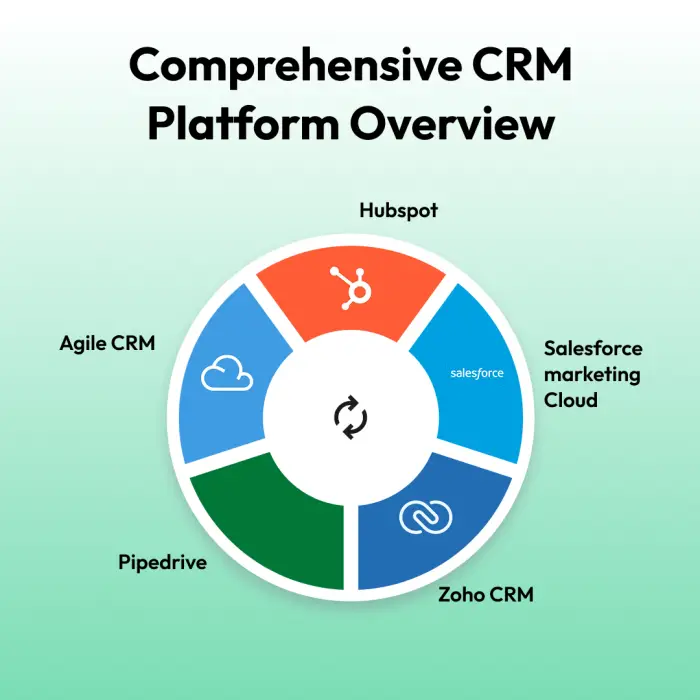
Caption: The core CRM platforms most companies compare when choosing an all-in-one system for lead generation.
All-in-one lead generation softwares helps teams simplify their stack. They bring lead capture, nurturing, scoring, and pipeline management into one system, which reduces data gaps between marketing and sales. They work well for teams that want unified reporting and prefer a single source of truth instead of juggling multiple tools.
Use HubSpot To Unify Inbound Marketing and CRM
HubSpot is built around inbound programs. Its core advantage is how tightly its marketing tools connect to the free CRM. Forms, landing pages, email automation, and scoring all operate inside the same environment, which makes handoffs to sales smoother. It’s a strong fit for content-led teams, but pricing increases quickly as contacts and add-ons grow.
Adopt Salesforce Marketing Cloud For Cross-Channel Enterprise Campaigns
Salesforce Marketing Cloud supports complex, multi-channel programs at scale. The customization is extensive, and integration with Salesforce CRM is the closest you’ll get to a native experience. The trade-off is the setup overhead. Most teams need an admin or partner to run it well, and the cost reflects its enterprise positioning.
Leverage Zoho CRM For Affordable Automation
Zoho CRM offers solid workflow automation and customization without enterprise pricing. It integrates cleanly across the wider Zoho suite, which helps if you want to keep most operations inside one ecosystem. The interface is more functional than polished, but it delivers strong value for teams focused on cost-efficiency.
Improve Sales Execution With Pipedrive’s Visual Pipelines
Pipedrive centers on pipeline visibility. Sales teams pick it up quickly because the interface is clean and visual. It doesn’t offer deep marketing automation, but it’s effective for teams whose primary challenge is managing deals, rather than generating large volumes of leads.
Start Small With AgileCRM’s Simple Workflows
AgileCRM is built for small businesses moving beyond spreadsheets. It includes basic automation, contact management, and email campaigns. The toolset is straightforward and won’t meet enterprise needs, but it removes early operational friction for small teams that want structure without complexity.
Lead Capture Tools
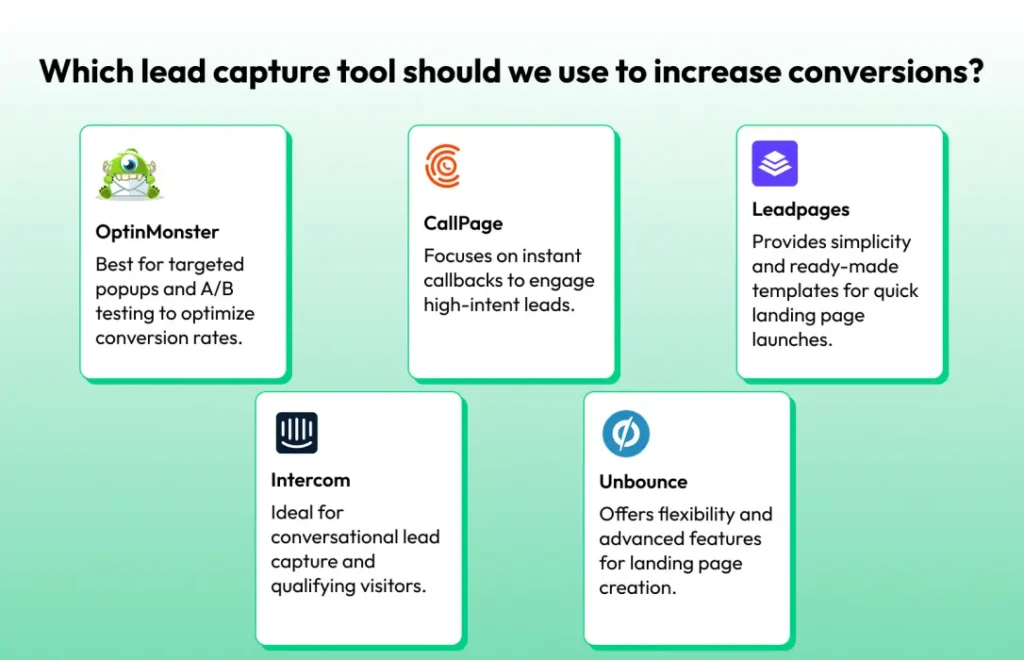
Turning traffic into leads depends on timing, context, and the type of interaction you offer. Lead capture tools help you surface the right prompt at the right moment, so visitors don’t leave without taking a meaningful step. These platforms focus on improving your on-site conversion rate with targeted triggers, conversational interfaces, or fast-response actions.
Increase Conversions Using OptinMonster Popups
OptinMonster is designed for conversion lifts. You can set up targeted popups, slide-ins, and banners that appear based on user behavior such as exit intent, time on page, or scroll depth. It works well when you already have steady traffic but aren’t converting enough of it. The strength lies in detailed targeting and quick A/B testing, which helps you figure out what resonates without a long experimentation cycle.
Qualify Visitors Instantly With Intercom Chatbots
Intercom introduced the idea of conversational lead capture long before it became mainstream. Its chatbots ask relevant questions, qualify visitors, and route conversations to the right team. SaaS companies rely on it when their product needs guidance before a user commits. Pricing changes have pushed smaller teams toward alternatives, but the qualification engine remains one of the strongest in this category.
Capture High-intent Leads Using CallPage Callbacks
CallPage focuses on users who prefer a quick call instead of filling out a form. Visitors can request an instant callback, which is especially useful for businesses where consultation is a natural part of the buying process. It shortens the response time dramatically and helps teams engage leads while intent is still high.
Build Optimized Landing Pages With Unbounce or Leadpages
Unbounce and Leadpages both help marketers launch landing pages without developer involvement.
- Unbounce gives you more flexibility and advanced features like dynamic text replacement.
- Leadpages offers a simpler experience with more ready-made templates.
Both work well when you need to test new offers, run paid campaigns, or validate messaging quickly. The choice depends on whether you prefer control (Unbounce) or speed (Leadpages).
Tools For Outbound Prospecting
Outbound programs depend on two things: accurate data and consistent outreach. The tools in this category help teams find the right contacts, verify information before a sequence goes out, and run outreach at a volume that’s manageable and trackable. Each tool supports a different part of the workflow, from list building to messaging to deliverability.
Automate List Building Using LeadFuze
LeadFuze removes most of the manual work involved in building prospect lists. You define your ideal customer profile, and it keeps finding matching contacts with verified emails. It’s useful when you need a predictable stream of new prospects, but it’s still smart to double-check data quality before large-scale campaigns.
Extract Verified Contacts From AeroLeads
AeroLeads pulls contact details from LinkedIn and other business directories. It works well when you’re targeting specific roles inside specific companies. The Chrome extension is the main advantage—teams can build lists directly while browsing profiles or company sites.
Find Decision-Makers With LinkedIn Sales Navigator
Sales Navigator remains the most effective tool for B2B prospecting on LinkedIn. Its filters help you pinpoint the right decision-makers based on industry, company size, seniority, and more. InMail access helps you reach people outside your network. For teams that treat LinkedIn as a primary channel, the value shows up quickly.
Access Enterprise Buyer Data From ZoomInfo
ZoomInfo offers detailed firmographic and technographic data across large B2B databases. It’s designed for teams that need precision—finding companies using specific tools, operating in certain regions, or matching tight ICP criteria. The pricing is high, but it aligns with companies that already have dedicated SDR or outbound functions.
Find and Verify Emails Quickly Using Hunter
Hunter focuses on discovering email addresses tied to a domain and identifying patterns used by that company. It’s simple, fast, and reliable for smaller teams that need targeted outreach without paying for enterprise databases. Its verification tool helps reduce bounce rates, which keeps deliverability healthier.
Run Cold Outreach With Saleshandy Campaigns
Saleshandy supports the outreach side of outbound. It automates follow-ups, tracks opens and replies, and manages inbox rotation for better deliverability. It works well for teams running structured, multi-step cold email sequences and need visibility across multiple accounts without relying on basic email tools.
Marketing Automation Tools
Automation keeps leads moving. It handles repetitive tasks, ties together different parts of your tech stack, and ensures every new contact gets the right follow-up. These tools support teams that want consistent communication without adding manual workload.
Personalize Nurture Flows in ActiveCampaign
ActiveCampaign blends email marketing, automation, and CRM features in a way that suits growing teams. Its visual builder helps you set up behavior-based sequences without code, and segmentation tools make personalization straightforward. Deliverability is strong, which matters when your nurture depends on reliable inbox placement. It’s a practical choice for teams that need more depth than basic email tools but don’t want enterprise complexity.
Streamline Follow-ups Using Keap Automation
Keap focuses on automating the sales journey. It works well for small businesses with longer sales cycles, where consistent follow-up makes a measurable difference. The interface has improved over the years, but the platform still assumes you’re prepared to build structured workflows. Teams that invest time in setup get predictable, repeatable processes in return.
Sync Ad Leads Instantly With LeadsBridge
LeadsBridge solves a problem most teams underestimate: getting paid leads into the CRM quickly. When someone fills a Facebook, Instagram, or LinkedIn Lead Ad, the platform pushes that data into your CRM in real time. Faster handoff leads to faster response, which improves conversion rates. It removes the need for manual exports and keeps pipeline creation more predictable.
Automate Cross-tool Workflows Using Zapier
Zapier isn’t a lead generation tool, but it’s essential for teams running multiple platforms. It connects apps without code and triggers actions across your stack, adding new leads to your CRM, sending alerts to Slack, or updating tasks in project tools. Small teams use it to build automation without developer support, and larger teams use it to keep data consistent across systems.
Specialized Tools That Support Advanced Lead Generation Strategies
Some lead generation tactics need tools designed for a specific job. These platforms support programs that depend on targeted advertising, referral momentum, organic search, or long-form education. Each one fits a distinct strategy and helps teams capture leads that don’t usually convert through generic forms or email sequences.
Target High-value Accounts Via RollWorks Or Dealfront
RollWorks and Dealfront focus on account-based marketing. They help you target a defined set of companies with personalized advertising and track account-level engagement. This is effective when your market is narrow and high value, and broad targeting doesn’t deliver meaningful conversations.
Launch Referral Programs Using Extole
Extole powers structured referral programs. It manages tracking, attribution, and reward fulfillment so customers can share offers easily. Referral leads often convert faster and stay longer, which makes this a strong channel for companies with a loyal user base.
Drive Organic Leads Using Ahrefs For Seo
Ahrefs supports inbound teams by revealing what prospects search for, how competitors rank, and which topics can generate qualified traffic. It’s a cornerstone tool for companies relying on content-led growth.
Generate Webinar-driven Leads Using Demio Or Zoom
Demio and Zoom Webinar both help teams host educational sessions that produce high-intent leads.
- Demio focuses on marketing-specific webinar features and automation.
- Zoom Webinar extends the familiar Zoom interface with registration and reporting capabilities.
Use WhatsApp to follow-up in specialized lead generation flows
Making Your Decision
The right lead generation software depends on several factors:
Company size and budget determine which platforms are accessible. Enterprise solutions like Salesforce and ZoomInfo require significant investment, while tools like Hunter and Agile CRM serve smaller teams.
Primary strategy shapes your needs. Inbound-focused companies benefit from HubSpot or content tools like Ahrefs. Outbound teams need prospecting platforms like LinkedIn Sales Navigator and outreach tools like Saleshandy. ABM practitioners require specialized platforms like Dealfront.
Technical resources matter for implementation and ongoing management. Some platforms require dedicated administrators or developers, while others work out of the box.
Existing tech stack influences integration requirements. Companies deep in the Salesforce ecosystem benefit from staying within it. Those using simpler tools might prefer HubSpot’s integrated approach or connecting best-of-breed tools through Zapier.
Most businesses need multiple tools working together rather than a single platform doing everything adequately. A common pattern combines a CRM platform (HubSpot, Salesforce, or Zoho) with specialized tools for prospecting, conversion optimization, and automation.
Start by identifying your biggest lead generation challenge.
- If you are not converting enough website traffic, focus on capture tools like OptinMonster.
- If you need more at-bats, invest in prospecting tools like LinkedIn Sales Navigator.
- If leads are falling through cracks, prioritize automation through ActiveCampaign or Keap.
The best lead generation software is the one you’ll actually use consistently, that integrates with your existing workflow, and that addresses your specific bottlenecks. Choose based on your current needs while ensuring the platform can grow with you.
Explore WhatsApp-first Follow-up With Astra
If you want a cleaner way to follow up with high-intent leads across ABM, SEO, webinars, and referral flows, Astra helps teams add WhatsApp as a structured engagement channel.
Book a demo to see how it fits into your lead generation stack.
FAQs
Lead generation software automates finding and capturing potential customers. It handles contact discovery (finding email addresses and company details), website conversion (forms, popups, chatbots), outreach automation (email campaigns and follow-ups), and lead scoring (prioritizing prospects).
Common tools include ZoomInfo for finding contacts, OptinMonster for website conversions, and HubSpot for managing the entire process. Most businesses see 40-60% less time spent on manual prospecting and 2-3x more qualified leads.
All-in-one platforms (HubSpot, Salesforce, Zoho) combine CRM, marketing automation, and lead capture in one system. They’re easier to manage but more expensive. You get unified reporting and no integration headaches.
Specialized tools (OptinMonster, LinkedIn Sales Navigator, LeadFuze) excel at specific tasks like conversion or prospecting. They’re more affordable individually but require connecting multiple tools.
Most companies use a CRM as the foundation plus 2-3 specialized tools for specific needs.
Pricing breaks down into three tiers:
Budget ($0-50/month): Hunter, Agile CRM, basic Leadpages plans. Good for startups.
Mid-market ($50-500/month): HubSpot Starter ($50-800), ActiveCampaign ($29-149), LinkedIn Sales Navigator ($99/user). Best for small to mid-sized businesses.
Enterprise ($500-5,000+/month): Salesforce Marketing Cloud, ZoomInfo ($15,000-30,000/year), HubSpot Enterprise. For large companies with complex needs.
Pricing varies by number of users, contacts, and features. Most offer free trials—test before buying.