
Too Long? Read This First
- What it is: WhatsApp shopping turns e-commerce into a personal conversation, allowing customers to browse catalogs, ask questions, and buy directly within the chat app they use daily.
- How to succeed: Build a standout shop with a professional profile, an irresistible product catalog, and 24/7 automated support using chatbots for common questions.
- How to scale: Use the WhatsApp Business API (with a platform like Wati) to manage high chat volumes, send personalized updates, and integrate with your e-commerce systems.
- The result: This conversational approach drives brand growth by boosting customer engagement, building loyalty, and increasing conversion rates through a seamless, convenient experience.
Being an avid shopper, sometimes I struggle to shop through online e-commerce websites as the entire process feels siloed and vague.
For shoppers like me, shifting to WhatsApp shopping is a better way out than the traditional option. For one simple reason. WhatsApp gives a “conversational interface” that lets you interact with your favorite e-commerce brand, check sleek catalogues, and make a much wiser decision.
In this article, I will talk all about WhatsApp shopping and the convenience it gives to customers and brands alike.
We will discuss the benefits, how to build a WhatsApp shop, and the advantages of using WhatsApp Business API for your online store.Share use cases and touch upon consumer sentiments for you to get a complete picture of modern shopping. Let’s get into it!
What is WhatsApp Shopping?
WhatsApp shopping is a convenient way for e-commerce brands to sell their products directly to customers online. It is a way to promote your products and services via WhatsApp, through a blend of conversational commerce and brand marketing.
WhatsApp shopping enables your brand to expand and attract customers through instant messaging.
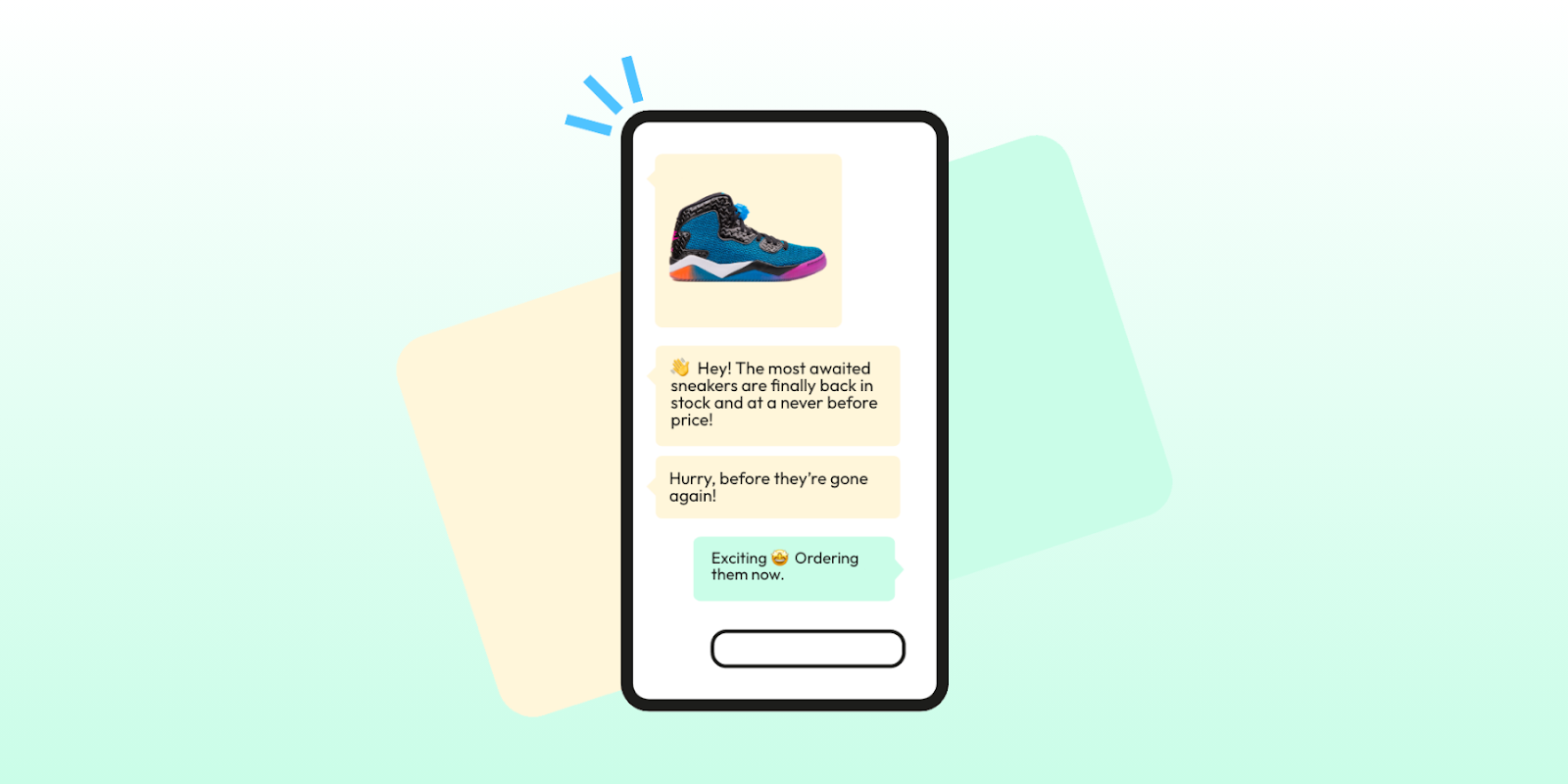
When your business outgrows, you may feel like the WhatsApp business app is not enough, and you have to shift to an advanced option like WhatsApp Business API tools with providers such as Wati. With the API, you can do more; you can route customer questions, personalize broadcasts, and enhance the entire shopping experience for your customers on WhatsApp.
However, WhatsApp Shopping is a powerful form of “interactive marketing”, allowing customers to check out product catalogues, ask questions, browse options and categories, and make purchases directly from WhatsApp.
Let’s delve into the details to understand how you can make the shopping experience easy for customers, so they will repeat purchasing from your brand.

Components of WhatsApp Shopping to Improve the Shopping Experience
At its core, WhatsApp shopping leverages WhatsApp Business features including:
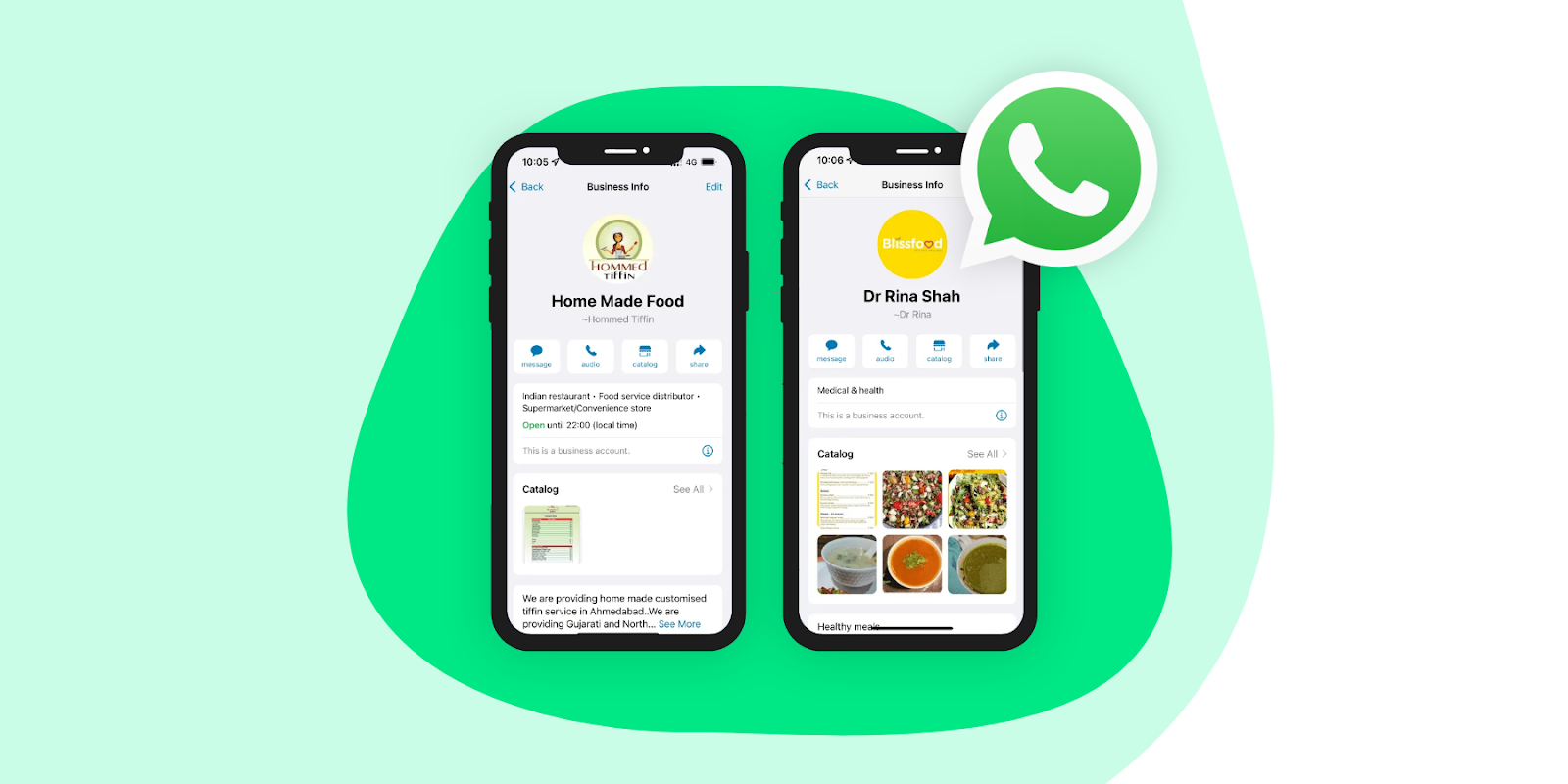
Product Catalogues for Easy Skimming
A product catalog lets businesses showcase their products or services directly within the app. It encompasses A to Z details of products, including features, pricing, warranty, images, or size, and can be represented in the form of a carousel for customers.
Make the catalog attractive with high-quality images, unique sizes, and clear, unblurred images. Ensure that you have showcased the product effectively, and include multiple images if necessary.
For every product listed, include basic information, price, size, and any other important details as needed, based on the product category. People have to get a basic understanding of the image from the listing.
In-Chat Product Recommendation for Better Suggestions
WhatsApp shopping also allows you to personalize product recommendations for your consumers.
Based on past purchase history, you can plug next products under “you may also like” or reiterate discounts offers for customers.
By looking at new recommendations, customers can revise their purchase decisions and add more products to their cart. More shopping in turn helps in higher customer retention and lead generation.
Long story short 💡: WhatsApp Shopping transforms the app from a simple communication platform into a dynamic, customer-focused shopping channel. It’s personal, interactive, and incredibly convenient- perfect for today’s mobile-first shoppers.
Add Product To Cart To Make Journies Seamless and Fun
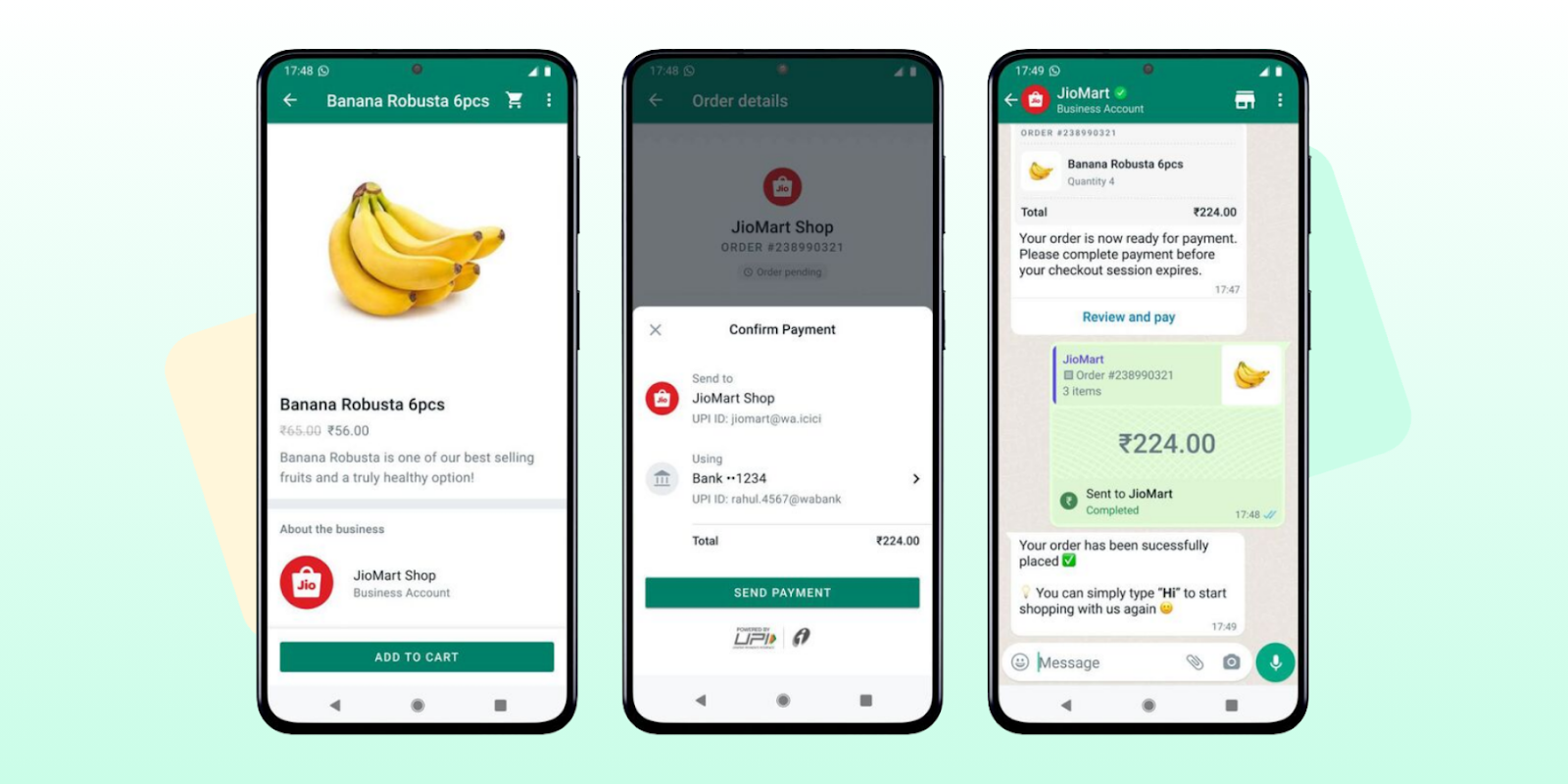
With WhatsApp shopping, teams can fuel full customer marketing funnels. In addition to displaying product catalogs, it also provides an option to add products to the cart.
Providing this option makes WhatsApp shopping as seamless as any other third party shopping platform. If the customer can add products to cart, they make a good image of the brand.
With WhatsApp shopping, you can allow customers to build online shopping bags and streamline the invoicing calculation and checkout process.
Customer Support Chat To Solve Consumer Worries Easily
By integrating your WhatsApp to an API like Wati, you can automate customer service. In case of any escalation or customer query like refund/return, agents can directly interact via WhatsApp.
Using WhatsApp as a customer support channel helps brands solve issues faster, reduce turnarounds and provide instant suggestions.
By providing timely customer resolution, you stabilize your shop floor operations and monitor sales more effectively. Apart from that, this also aids to a great customer experience.
Also read: How to use WhatsApp for customer service in 2026
Quick Replies Automation for Faster, Smarter Support
Quick replies eliminate unnecessary delays, making the checkout process faster.
Teams can set up a WhatsApp chatbot for general customer queries. It is an easy process, businesses can set“quick replies” to provide instant answers, reduce response times, solve inquiries, share product details, or guide customers.
This enables customers to get instant responses for their crucial queries, reduce response time, and accelerate the purchase journey and product checkouts.
WhatsApp Payments to Support Transactions With Agility
In certain regions, customers can even complete transactions via WhatsApp Payments without leaving the app, making the whole experience holistic and seamless.
By creating and sharing a WhatsApp Pay link, you elevate consumer experience and satisfaction.
Long story short, WhatsApp shopping is based on combining “conversational” experiences with centralization and personalisation to upscale the shopping experience for the user.
Why Does WhatsApp Shopping Win Everytime?
WhatsApp shopping isn’t just a trend, but it is an innovative approach to come into customers’ good books and create brand recall.
WhatsApp API platforms like Wati allow you to both fuel sales conversations and the shopping experience with smart automation. Having a WhatsApp strategy in place makes you a consumer-focused brand in the market.
Here’s how WhatsApp Shopping can transform the way businesses interact with their customers.
1. Instant Engagement
WhatsApp’s one-click to chat interface aids instant customer engagement. WhatsApp shopping allows you to share product catalogs, initiate video calls, share product clips, and even disburse payments all from a centralized platform.
2. Personalized Shopping Experiences
With WhatsApp click-to-ad, businesses can store customer data and retarget the right products to their audience. This personalizes the retail experience, reduces drop-offs, and completes the cart directly via WhatsApp.
3. Higher Conversion Rates
WhatsApp shopping to deploy quick replies, optimize live shopping experience, and be at the customer’s beck and call for faster conversions. The result is that more customers complete transactions and check out successfully.
4. Mobile-First Convenience
With more than 3 billion WhatsApp users across 180+ countries, customers rely on mobile shopping and shop on the go. While online e-commerce sites juggle multiple interfaces, WhatsApp streamlines the entire shopping journey with a single interface.
5. Enhanced Customer Support
With WhatsApp calls, customers can get directly in touch with store representatives or managers to verify product quality further. WhatsApp combines retail marketing with top-notch customer support which empowers consumers and helps stay ahead in the market.
6. Cost-Effective Marketing
WhatsApp broadcasts and catalogs let businesses reach their consumers without spending heavily on traditional ads. It is a direct and effective way to promote products and discounts.
With WhatsApp catalogues, you can build visual quotes for each product and provide A to Z information for consumers to create that brand look and feel.
Additional read: Learn about the top 5 WhatsApp Broadcasts in 2025 for smarter messaging
How to Build a WhatsApp Shop That Stands Out
To build a WhatsApp shop that stands out, brands have to build an efficient conversational storefront right inside the app consumers use and love.
It’s about crafting an experience that feels less like a transaction and more like getting personalized advice from a helpful expert. Here’s how to build a shop that feels seamless, memorable, and truly stands out.
1. Set Up a Whatsapp Business Account
Start by downloading the WhatsApp Business app and creating a business profile. Add essential details like your business name, logo, contact information, and a short, engaging brand description.
This is the first point of contact for customers, so make it professional and inviting.

This is the first touchpoint for customers, so make it professional and inviting.
Also Read: 12 Definitive Advantages of a WhatsApp Business Account
2. Create a Smart and Automated Product Catalog
Go beyond basic photos; use high-resolution, crisp catalogues that clearly showcase the features of your products. Write compelling descriptions covering basic consumer inquiries around pricing, material, warranty, sizing, or ingredients.
Segregate your catalogue into buckets like “new arrivals”, “selling fast”, “last few left”, or “best sellers” to make shopping easy and convenient for customers.
3. Scale Consumer Experience With Quick Replies and Automation
Set “quick replies” for basic consumer questions like “is this product available in a different color”, “what is the return policy”, “can I try the product” to reduce customer worries and assist effectively.
You can also utilize WhatsApp automation or AI-powered chatbots to provide 24/7 customer assistance, ensuring that no query goes unanswered.
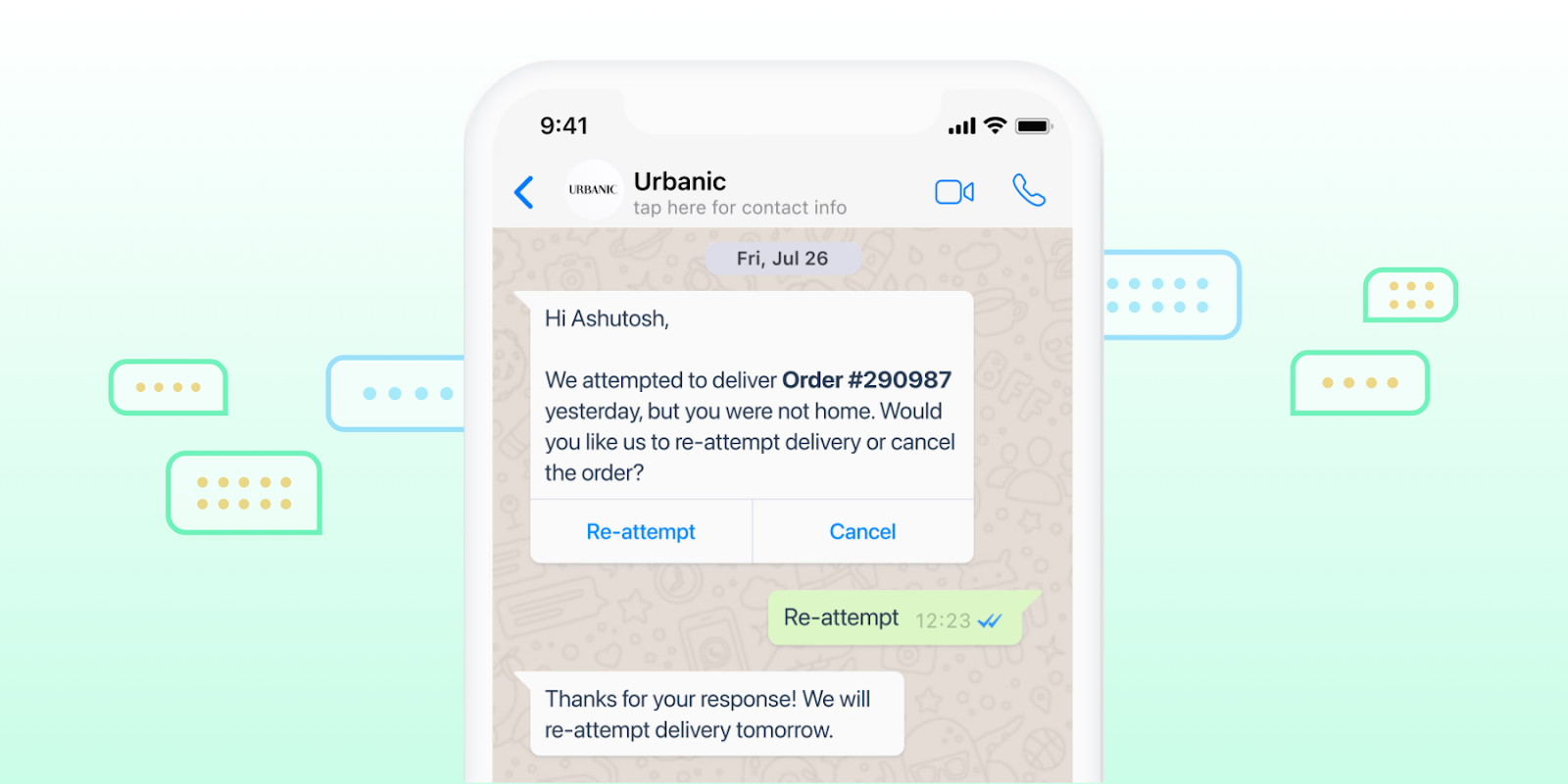
Bonus Resource : Automating Order Confirmations and Shipping Updates with WhatsApp
4. Remove Friction With WhatsApp Payments
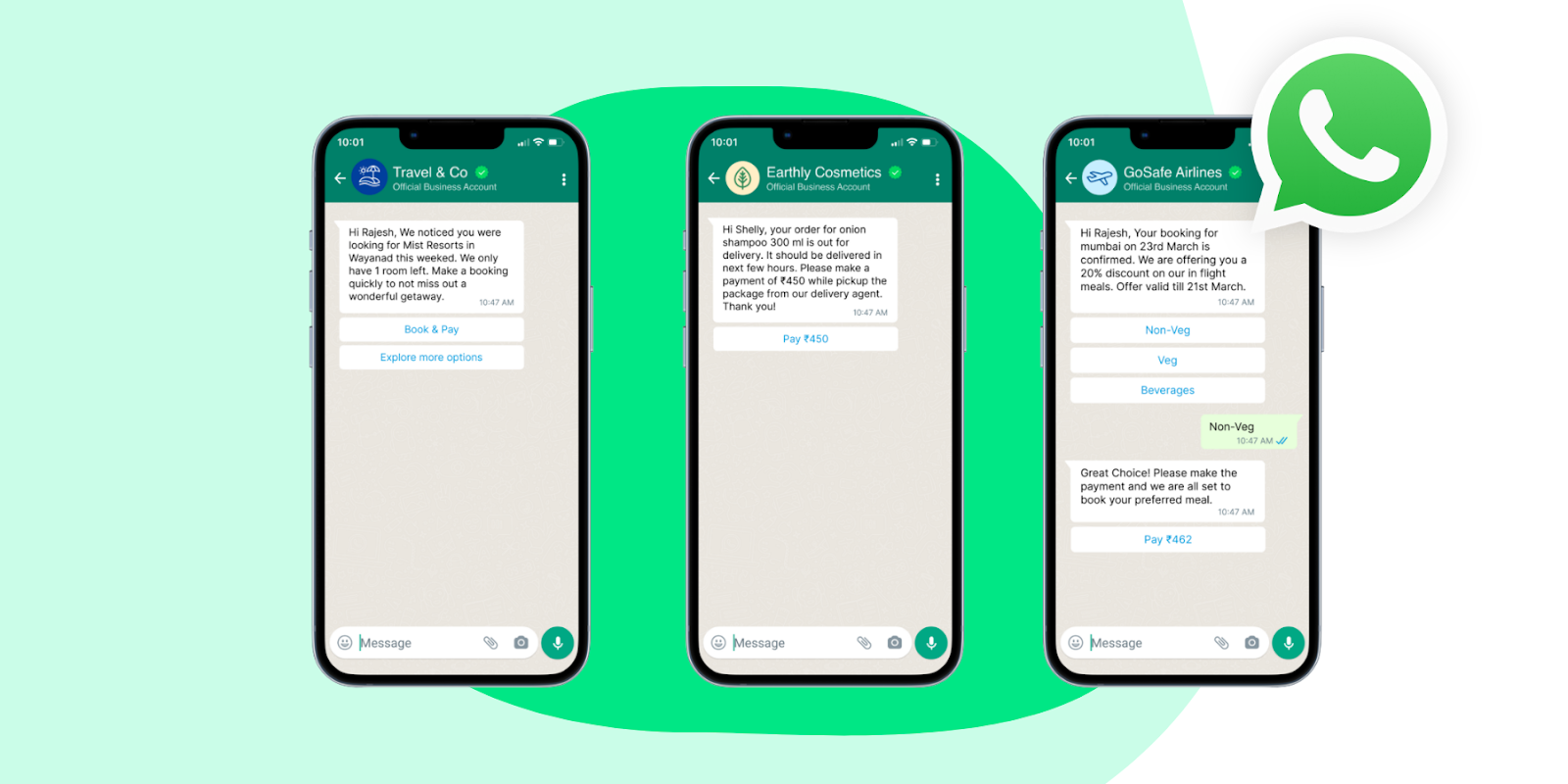
In regions where WhatsApp Payments is available, brands should provide it as a payment convenience to customers.
The ability to chat, choose, and pay all within one single conversation window is the definition of a seamless experience. It can dramatically reduce abandoned carts.In regions where WhatsApp Payments is available, brands should provide it as a payment convenience to customers.
The ability to chat, choose, and pay all within one single conversation window is the definition of a seamless experience. It can dramatically reduce abandoned carts.
5. Promote Your WhatsApp Shop
Use other content distribution channels like website, newsletter, emails, blogs, and social media to promote your WhatsApp shop that offers a one-of-a-kind experience to spread the word.
Share your WhatsApp Business number (or virtual number for WhatsApp Business) or QR code to make it easy for customers to connect.
Bonus Read: WhatsApp Marketing Messages Examples
6. Engage With Personalization
Use the customer’s record in the CRM and refine your future interactions based on past history.
Look at their past purchase history to offer relevant recommendations. Send a personalized “thank you” message after a customer makes a purchase. This small touch of personalization feels worlds apart from a faceless e-commerce site.
7. Track and Optimize Marketing Metrics
Monitor your performance metrics at all times for active WhatsApp campaigns. Build personalized reports to track each campaign and map the ROI in real-time.
Learn which product gets the most views, engagement, or bounce rates via analytics to make changes in your approach.
These insights aren’t just data; they are your customers telling you exactly what they want. Listen to them and optimize.
Also check out: Set up your WhatsApp Shop in minutes with our ready-to-use Google Sheets template.
How to Increase Customer Interactions Using WhatsApp Business API
The WhatsApp Business App is perfect for a small business. What happens when you have thousands of customers? You can’t manually reply to everyone.
With WhatsApp Business API, you can accommodate multiple WhatsApp campaigns on a unified platform. It lets you automate, manage, and scale conversations without missing out on important prospects or fearing sales fatigue.
Here is how to use it effectively.
1. Go Beyond “Your Order Has Shipped”
Send timely reminders to update your consumers on the status of their delivery. Automate shipping status in response to shipment number to help consumers stay on track.
You can also send helpful appointment reminders or delight them with personalized promotions, such as special birthday vouchers or personal invites. Extra layer of personalization always delights the customer.
2. Make It Easy to Say Yes With Interactive Messages
The API’s interactive messages remove friction. Instead of forcing users to type out answers, use Quick Reply Buttons (like “New Collection” or “Women’s Top Choices” or List Messages) to let them “Track an Order” or “Book an Appointment”).
This is faster for the customer, eliminates typos, and makes it simple for your automation to understand and act on their request instantly.
3. Set Up Automated Responses
By integrating an AI-powered chatbot, you can provide instant reassurance and support.
When a customer messages you at 2 AM asking, “Where is my order?”, an instant, accurate reply builds massive trust and loyalty. This frees your human team to handle complex, high-value conversations.
4. Engage with Conversational Marketing
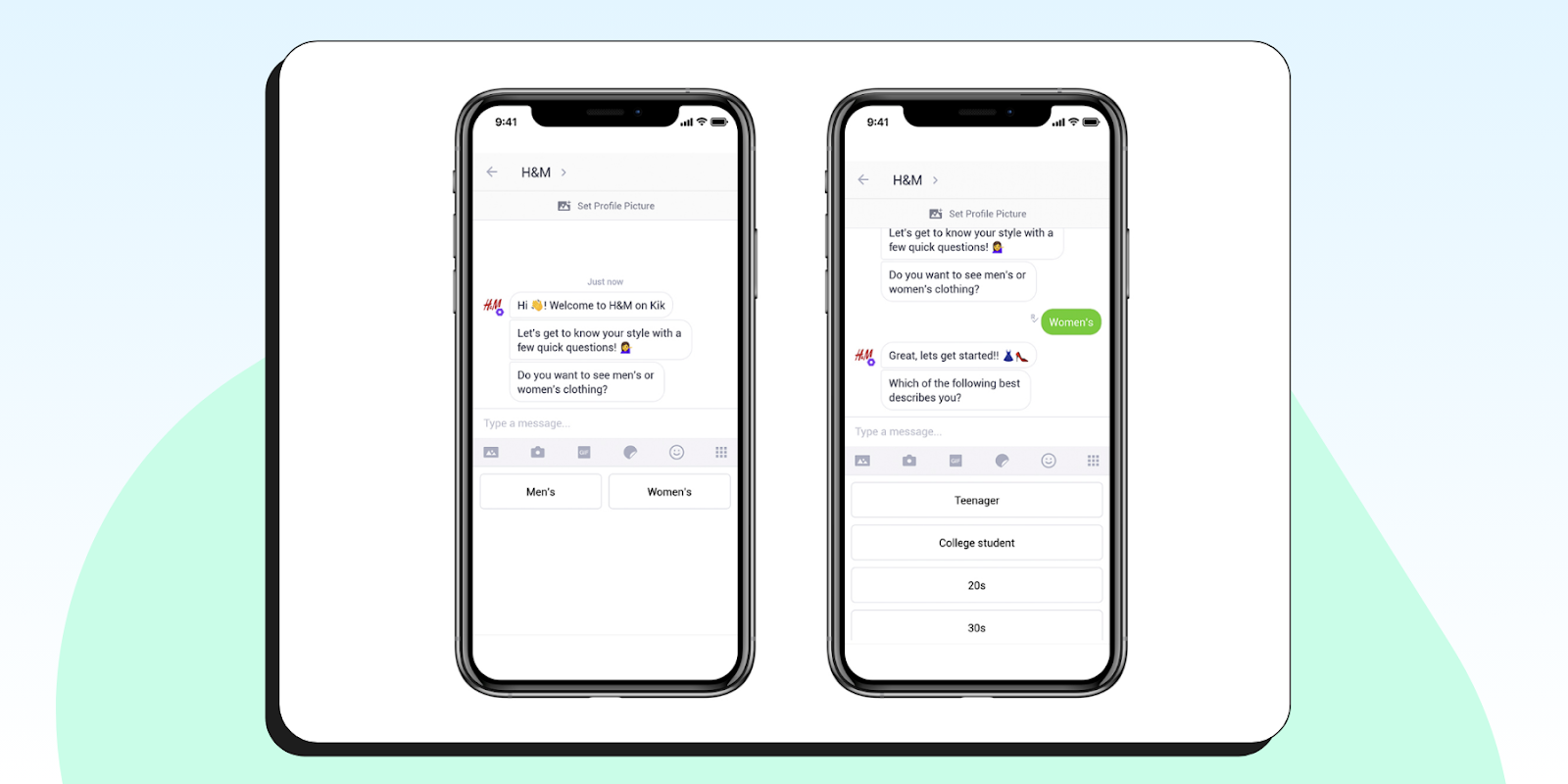
Use the API to run an interactive quiz, helping customers find their ideal product. You can also proactively ask for feedback on a recent purchase with a simple tap-to-rate message.
You can even co-create your next product line by asking your community to vote on their favorite design or slogan. This makes customers feel like valued members of a community, not just a marketing number.
The 5 Pitfalls of WhatsApp Shopping (And How to Dodge Them)
Setting up your WhatsApp shop is the first step, but avoiding common traps is what ensures your long-term success.
Many businesses stumble by treating WhatsApp just like email or another social media feed. Here are the five biggest pitfalls and how you can leapfrog over them.
1. Do Not Encourage “Spamming”
The fastest way to get blocked and lose a customer forever is to bombard them with constant, generic, and irrelevant promotional messages.
Refrain from bombarding customers with irrelevant promotional messages, offers, or discounts if they have not asked for them.
Treat every message as a one-on-one conversation. Use segmentation to send relevant offers to customers who have shown interest, and ensure that your messages always provide genuine value, not just noise.
2. Do Not Ghost the Customer
Ensure that you do not let the customer wait beyond a certain time frame. If you touch base late, it will kill the consumer’s purchase intent.
Use a chatbot (like Wati’s) to provide instant, 24/7 answers to common questions (such as “Are you open?” or “Where is my order?”). This gives customers immediate help and frees your team to handle the more complex sales conversations.
3. Do Not Go for a Dead End Conversation
If you are redirecting customers to more browsing or manual form-filling, you are breaking the consumer experience.
Keep the journey inside the chat. Use the built-in catalog to send product options directly. If possible, use WhatsApp Payments or send a direct payment link to let them check out right there in the conversation. Never make them leave the app.
4. Do Not Overdo Automation
Automation is good, but relying on it entirely can make your brand feel cold and impersonal, especially when a customer has a complex problem or is ready to make a big purchase.
Use a hybrid approach. Let bots handle the simple, repetitive tasks, but ensure you have a clear and easy path for a customer to say “Talk to a sales agent.” This seamless chatbot-to-agent handover is the secret to scaling intimacy.
5. Promote Your WhatsApp Shop via Content
Do not just beautify your account; use personalized campaign workflows. Customers aren’t psychic; they don’t know your new WhatsApp shop exists.
You must proactively promote your new channel everywhere. Add your “Chat on WhatsApp” link to your email signature, your social media bios, and your website. Run “Click-to-WhatsApp” ads. Put your WhatsApp QR code on your product packaging and in-store displays.
Optimize Shopping With Wati’s Shop Smart Assistant
Running a thriving WhatsApp shop is a lot of work. You are the marketer, the salesperson, the catalog manager, and the entire support team, all inside a single chat app.
What if you had a smart assistant to handle the heavy lifting? That’s Wati.
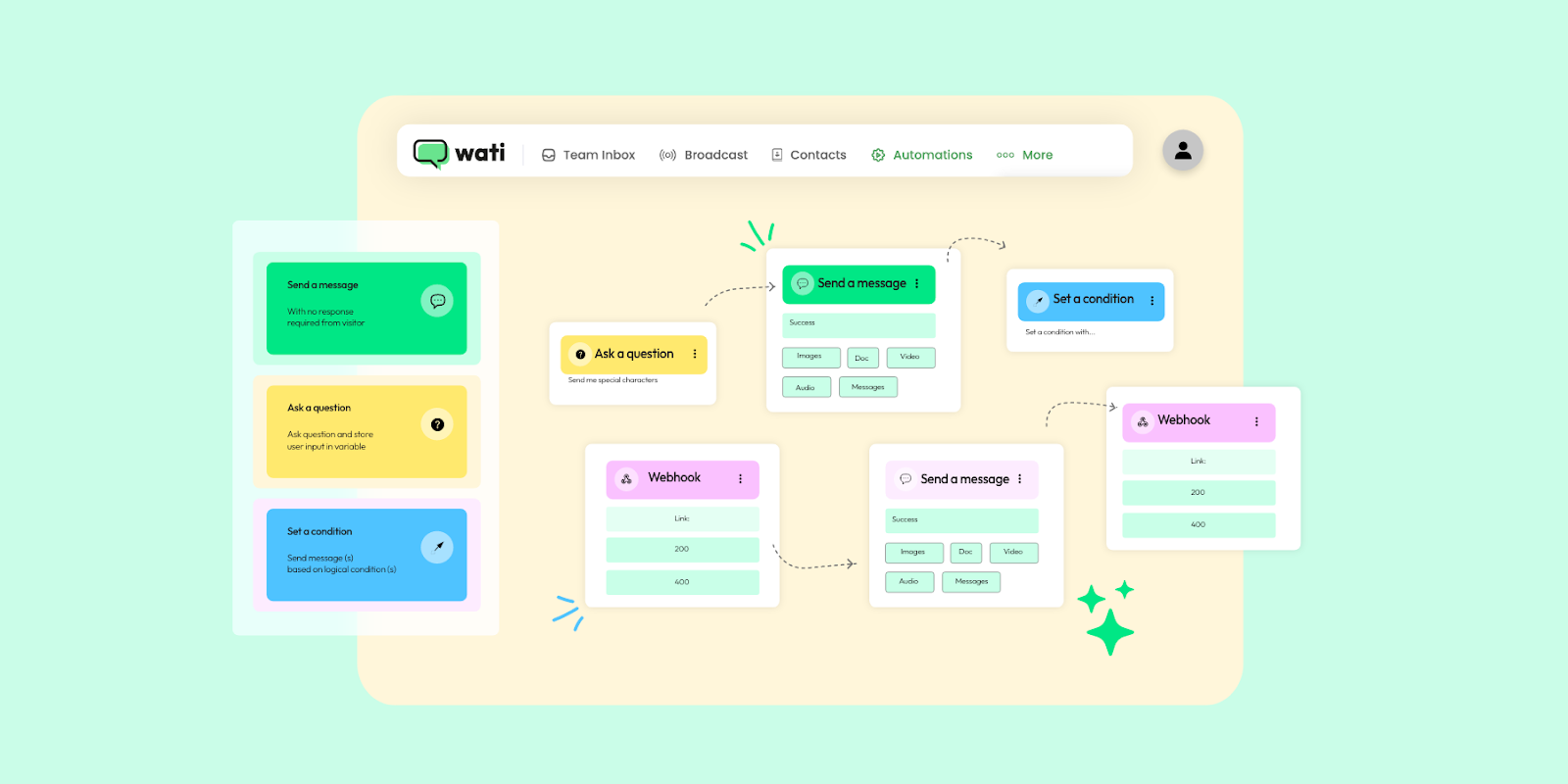
Wati is a platform built on the WhatsApp Business API that transforms your WhatsApp into a powerful, automated sales and support machine. Here’s how it makes shopping simple for your customers and easier for you.
1. Easy Catalog Management to Manage Product Links
With Wati, you can segregate and categorize product catalogs to organize shop links and make them look appealing to consumers.
With Wati, you can quickly upload and share your entire product range with customers. A clear and well-organized catalog makes it simple for customers to browse and find what they’re looking for.
Also read: Guide to setup your complete WhatsApp catalogue for better consumer engagement in 2026.
2. 24/7 Customer Support to Handle Consumer Queries
Wati’s AI-powered chatbot is your 24/7 front-line employee to tackle every recurring consumer question.
It handles 80% of repetitive queries, like FAQs, order status, and product questions, instantly. This gives customers the immediate help they crave and frees up your human team to focus on the 20% of complex sales or support issues that truly need a human touch.
With a WhatsApp chatbot, you can drive automated customer journeys with standard, generic and quick replies.
Also read: How to build a WhatsApp chatbot for your business in 2026.
3. Track Order Progress with Real-Time Updates
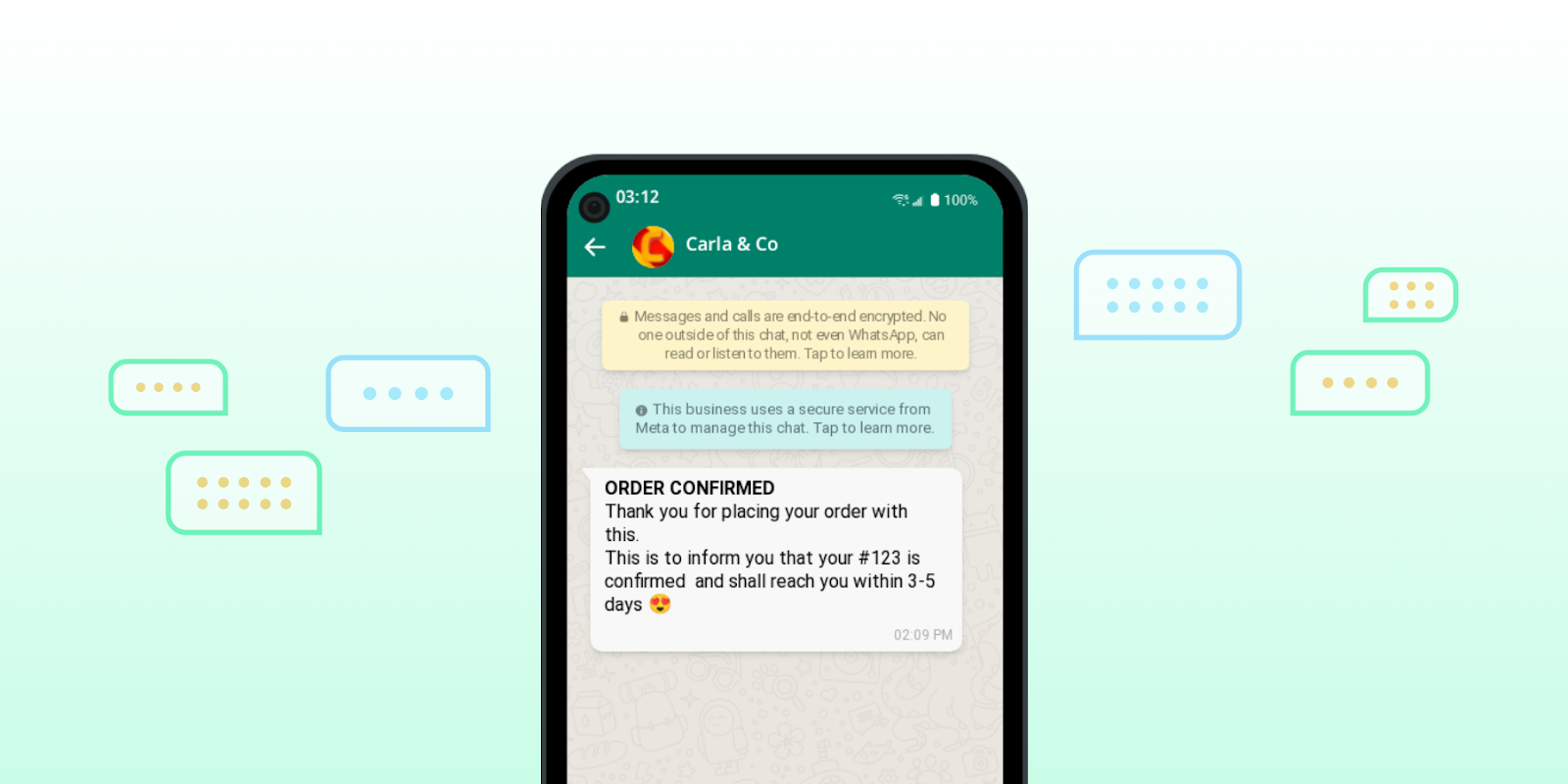
Wati can integrate with your backend systems (like Shopify or HubSpot) to send automated, real-time order updates.
Customers are kept informed from “Order Confirmed” to “Shipped” to “Out for Delivery,” which builds trust and significantly reduces support tickets.
4. Personalized Recommendations to Amp up Shopping Experience
Wati’s smart automation can do more than just answer questions. Based on a customer’s query or past behavior, the chatbot can make tailored recommendations.
If they buy a dress, the bot can suggest matching shoes. This personal touch not only feels special but also effectively increases your average order value.

Vedantu simplified their student lifecycle management with Wati, using powerful automations and chatbots to enhance efficiency on WhatsApp.
How Businesses Are Using WhatsApp Shopping in Real Life
WhatsApp shopping is transforming the way businesses connect with customers, making shopping faster, easier, and more personal.
Companies across industries are using WhatsApp to create seamless shopping experiences, and here are some examples of how businesses are leveraging this feature.
Fashion Retail Brands
Many fashion brands are using WhatsApp to share catalogs, showcase new collections, and help customers choose the perfect outfit.
Through WhatsApp, customers can browse through product images, get style suggestions, and complete purchases directly, all without leaving the chat.
Also read: 10 Ways to Use WhatsApp Business in the Fashion Industry
Small Businesses & Local Shops
Small local businesses are finding great success by connecting directly with their communities via WhatsApp.
For example, local grocery stores share daily or weekly product lists with their customers through WhatsApp broadcasts, making it easier for customers to order and plan their shopping.
Electronics & Tech Companies
Electronics brands are using WhatsApp to share promotions, product launches, and special offers.
Customers can reach out to ask questions about features, availability, or pricing, and complete purchases with simple links sent via WhatsApp. This interactive approach builds trust and convenience.
Beauty & Personal Care Brands
Beauty brands are engaging customers through WhatsApp by sending personalized product recommendations, how-to videos, and consultations.
Customers can share their preferences and receive tailored advice on products, making shopping personalized and intuitive.
Food & Beverage Businesses
Restaurants and food delivery services are integrating WhatsApp to make ordering simple and direct.
Customers can view menus, place orders, and track delivery updates—all with a few taps. This leads to faster service and increased convenience for busy customers.
Travel Agencies
Travel companies are using WhatsApp to share trip options, travel packages, and last-minute deals with customers.
Personalized conversations and quick responses make customers feel supported while planning their next trip, encouraging bookings directly through the chat.
Explore This Too: WhatsApp for Travel: Benefits & Use Cases
Drive Meaningful WhatsApp Conversations for Growth!
With WhatsApp shopping, you’re not forcing your audience to go to a new, unfamiliar website or download another app. Instead, you are meeting them right where they are, in a space where they already feel comfortable and relaxed.
By building a beautiful and appealing shop window, you amplify that homely feel and improve customer convenience drastically. Further, API and automation help you scale the effort.
But you don’t have to build this entire engine by yourself. Tools like Wati are designed to bring it all together, managing your catalog, automating your support with chatbots, and integrating with your e-commerce platform.
Book a free demo now to see how Wati can help you automate the shopping experience on WhatsApp!
WhatsApp Shopping: Frequently Asked Questions
What
’
s the difference between the WhatsApp Business App and the API?
Start with the free WhatsApp Business App if you’re a small business managing a low volume of chats yourself. You’ll need the WhatsApp Business API (used through a platform like Wati) when you’re ready to scale, use AI chatbots, handle thousands of conversations, and integrate with your e-commerce systems.
Can I send promotions and marketing messages on WhatsApp?
Yes, but you must get your customers’ permission (an “opt-in”) first. Avoid spamming. The best approach is to send valuable, personalized content like order updates, back-in-stock alerts, or exclusive deals that are relevant to their interests.
Can my customers pay directly inside the chat?
In many regions, WhatsApp Payments is enabled, allowing customers to pay without ever leaving the conversation. In other areas, the best practice is to confirm the order in the chat and then send a direct link to a secure payment page.
Do I really need a chatbot for my WhatsApp shop?
While not mandatory, a chatbot is crucial for scaling. It works 24/7 to provide instant answers to common questions (“Where is my order?”, “What are your hours?”), preventing you from losing customers who expect a fast reply. This frees up your human team to handle complex sales and support issues.
Frequently asked questions
What's the difference between the WhatsApp Business App and the API?
Start with the free WhatsApp Business App if you're a small business managing a low volume of chats yourself. You'll need the WhatsApp Business API (used through a platform like Wati) when you're ready to scale, use AI chatbots, handle thousands of conversations, and integrate with your e-commerce systems.
Can I send promotions and marketing messages on WhatsApp?
Yes, but you must get your customers' permission (an "opt-in") first. Avoid spamming. The best approach is to send valuable, personalized content like order updates, back-in-stock alerts, or exclusive deals that are relevant to their interests.
Can my customers pay directly inside the chat?
In many regions, WhatsApp Payments is enabled, allowing customers to pay without ever leaving the conversation. In other areas, the best practice is to confirm the order in the chat and then send a direct link to a secure payment page.
Do I really need a chatbot for my WhatsApp shop?
While not mandatory, a chatbot is crucial for scaling. It works 24/7 to provide instant answers to common questions ("Where is my order?", "What are your hours?"), preventing you from losing customers who expect a fast reply. This frees up your human team to handle complex sales and support issues.
Related posts
- WhatsApp Wonder: Master Personal Branding in the Digital Age!
Leverage WhatsApp for Personal Branding: Build your online presence, connect with your audience, and shine in the digital world! 🚀💬
- WhatsApp Automation Templates for Shopify: 5 Templates You Can Launch Today
Effortlessly streamline your messaging process with WhatsApp Automation Message Templates. Enhance your communication and save time today.
- Stay Connected and Productive with WeChat Web and Desktop
Learn how to log in, set up, and use WeChat Web and Desktop to streamline communication and boost team collaboration in 2025.
- Top 10 Ramadan WhatsApp Templates To Set Your Business Apart
Check out our easy-to-use WhatsApp templates that are great for sending festive greetings, special offers, and updates to your customers during Ramadan. They’re designed to help your business stand out and connect better with your audience on WhatsApp.