
Too Long? Read This First
- Patients ask their real questions privately, so treatment ads should start Messenger conversations.
- Meta's rules ban ad copy that implies a viewer's health condition. Before-and-after rules changed in July 2026, so check the current policy.
- Move health questions out of public comments with a neutral DM.
- Automate prices, timings, and booking requests. Send anything medical to a clinician.
- Confirm appointments and send reminders on WhatsApp, with consent.
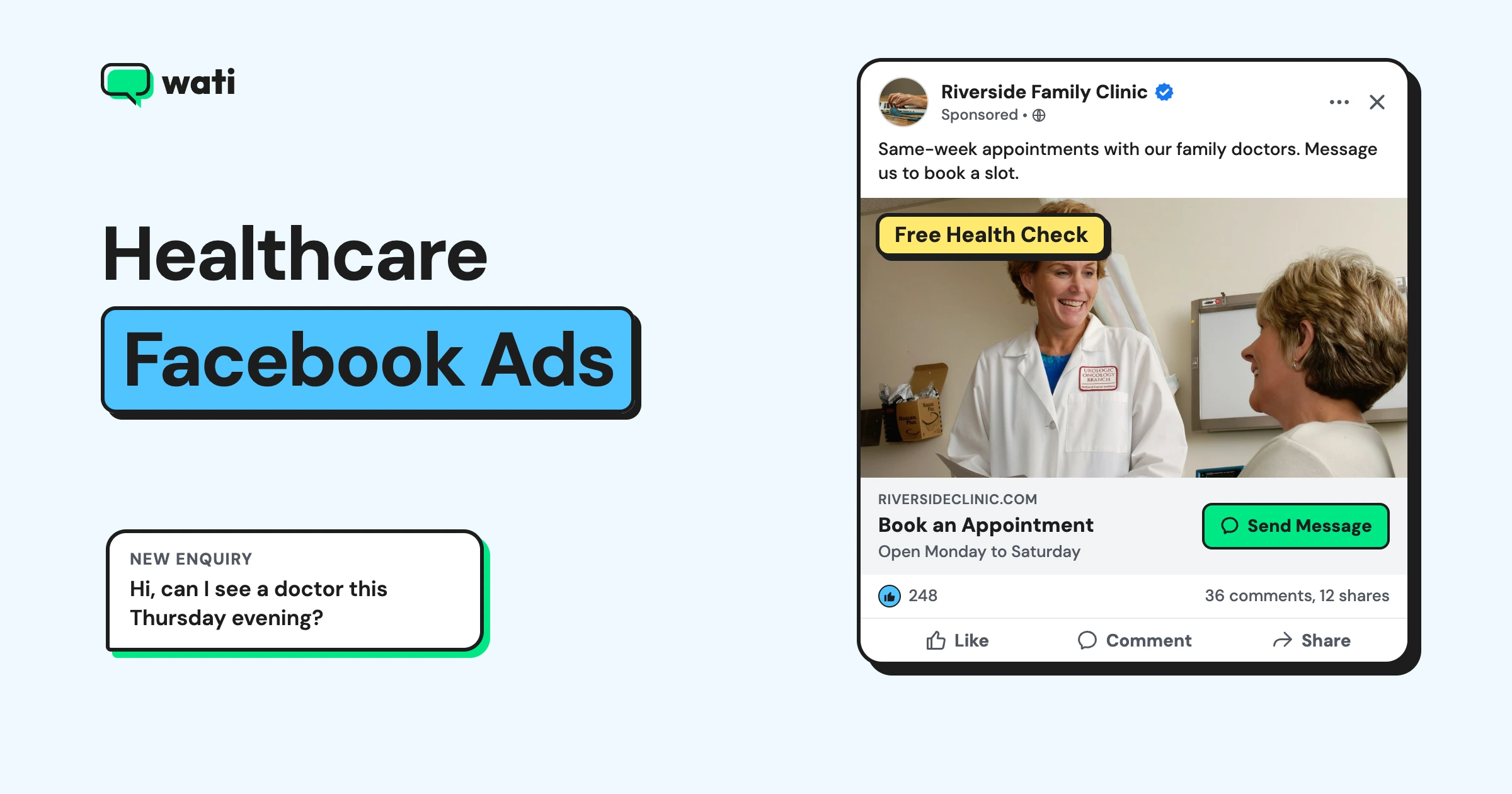
Healthcare Facebook ads work when the questions they spark move into private Messenger chats and end in a booked appointment.
Under a laser hair removal ad, someone comments "Price?" Five minutes later, the same person sends a private message: "Is it painful? I have sensitive skin and a wedding in six weeks."
The second message is the one that books. It should never be answered in public. With Wati's omnichannel inbox, clinics and salons answer both in one place. This guide covers Meta's ad rules, the questions patients ask, what to automate, and what a bot should never say.
Why Do Patients Message Clinics Instead of Commenting?
Health questions are personal. Most people won't type "Will this work on my acne scars?" under a public post.
So they comment something short, like "Price?" or "Info," and then send the real question privately. They want to know about pain, downtime, results, and whether the treatment suits them.
Salon and spa clients behave the same way. A bride-to-be might comment "Bridal?" and then message about trial dates, skin type, and the wedding schedule.
Timing matters too. Many of these messages arrive in the evening, after the clinic has closed.
What patients want from that first reply is simple:
- Speed: an answer within minutes, not the next afternoon
- A straight answer: a starting price or a clear "it depends on your consultation"
- Privacy: no one else reading their question
- A next step: an easy way to book or speak to someone
Clinics that get these four right win the booking, even when they aren't the cheapest option. Our guide to healthcare marketing on Instagram shows the same pattern on Instagram.
What Do Meta's Rules Mean for Healthcare Facebook Ads?
Meta's rules shape what your ads can say, so check them before you write a single line.
No personal attributes. Meta's personal attributes policy bans ads that assert or imply a viewer's health condition. "Do you suffer from back pain?" breaks the rule because it suggests you know something about the person reading it.
No health-based targeting. You can't target people based on medical conditions or treatments. Use location, age, and broad interests instead.
Before-and-after images. Meta updated its Health and Wellness advertising standards in July 2026, and the rules on before-and-after images changed. Older guides may be out of date. Check Meta's current policy page before you use them.
The easiest fix is to describe the treatment, not the person:
Rejected style | Compliant rewrite |
|---|---|
"Do you suffer from acne?" | "Clear-skin treatments at our Dubai clinic" |
"Tired of your yellow teeth?" | "Professional teeth whitening, from [price]." |
"Struggling to get pregnant?" | "Fertility consultations with our specialists" |
These rules apply to every Meta ad, so they matter for clinics in Dubai, Riyadh, and Mumbai alike.
Local rules sit on top of Meta's. In many markets, health authorities regulate how clinics advertise treatments, and some require approval before medical ads run. Check what your local health authority requires before launching a campaign.
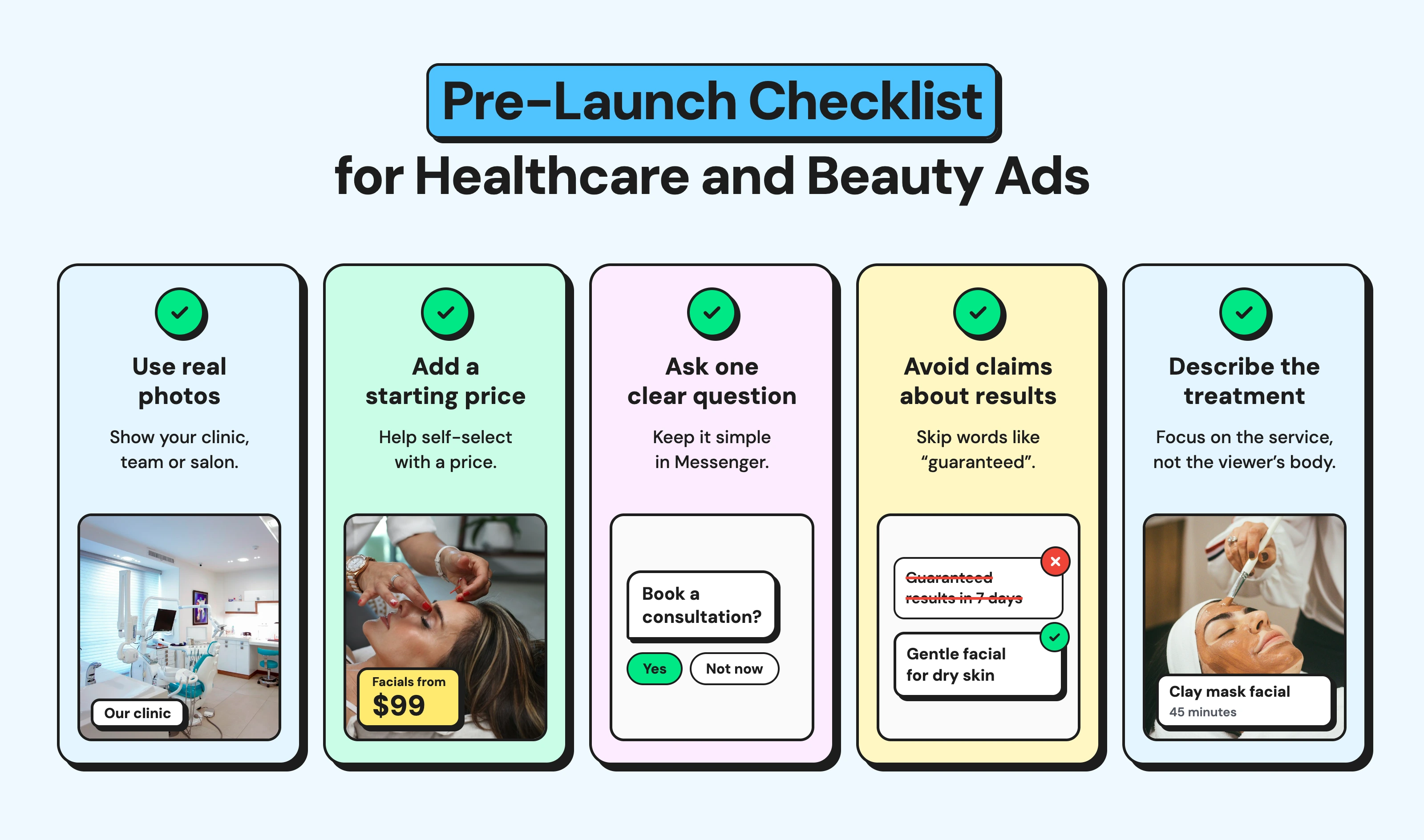
Before an ad goes live, run through a quick checklist:
- Real photos of your clinic, team, or salon, not stock images
- A starting price, so people who can't afford the treatment self-select out
- One clear question to ask in Messenger
- No claims about results, such as "guaranteed" or "permanent"
- Copy that describes the treatment, never the viewer's body or health
Answer every patient message from one inbox. Wati's Team Inbox keeps Messenger, Instagram, and WhatsApp chats together, with notes, tags, and assignment for your front desk. Explore Wati's Team Inbox
How Should Facebook Ads for Dentists and Clinics Start Conversations?
The best healthcare Facebook ads give people an easy way to ask a question privately.
Click-to-Messenger ads do exactly that. When someone taps the ad, a Messenger chat opens with your clinic. They can ask about the treatment without filling in a form.
Give each ad one clear question to ask. For example, a dental clinic might run "Message us for the whitening price." Facebook ads for dentists work best when the first question is simple and the answer is ready.
In the ad, you can add suggested questions that people tap to start the chat. Match each one to a keyword rule in Wati, so every tap gets an instant answer:
- "How much is whitening?" → starting price and what's included
- "Does it hurt?" → a short, honest answer and an offer to speak with the dentist
- "Can I book this week?" → the booking menu
What Do Clinic and Salon Customers Ask?
The questions change by business type, but the split is always the same: logistics for the bot, medicine for people.
Business | Questions a bot can answer | Questions for staff |
|---|---|---|
Dental | Starting prices, timings, insurance accepted, location | "Do I need a root canal?" |
Aesthetic and dermatology | Sessions, downtime, starting prices | "Is this safe for my skin condition?" |
Fertility | Consultation fees, first-visit steps, timings | Anything about a personal case |
Salons | Prices, stylist availability, bridal packages | Colour corrections, allergies |
Spas | Treatment menu, opening hours, gift vouchers | Pregnancy or health conditions |
Use this table to plan your first keyword rules. Start with the questions in the middle column.
How Do You Move Health Questions Out of Public Comments?
When someone asks a health question in public, reply privately.
A Wati comment rule can send each commenter a Messenger DM. The rule can also post a public reply, but that reply repeats the DM text word for word. So write a neutral DM that reads well in both places:
"We've sent you the details privately. Please check your messages."
Meta allows one private reply per comment, sent within 7 days of the comment. After that, you can't message again until the person replies. So end the DM with a question:
"Thanks for your interest! Which treatment are you looking at? Reply here, and we'll share prices and available days."
Never discuss someone's health details in the comment thread, even if they share them first.
Which Conversations Can You Automate?
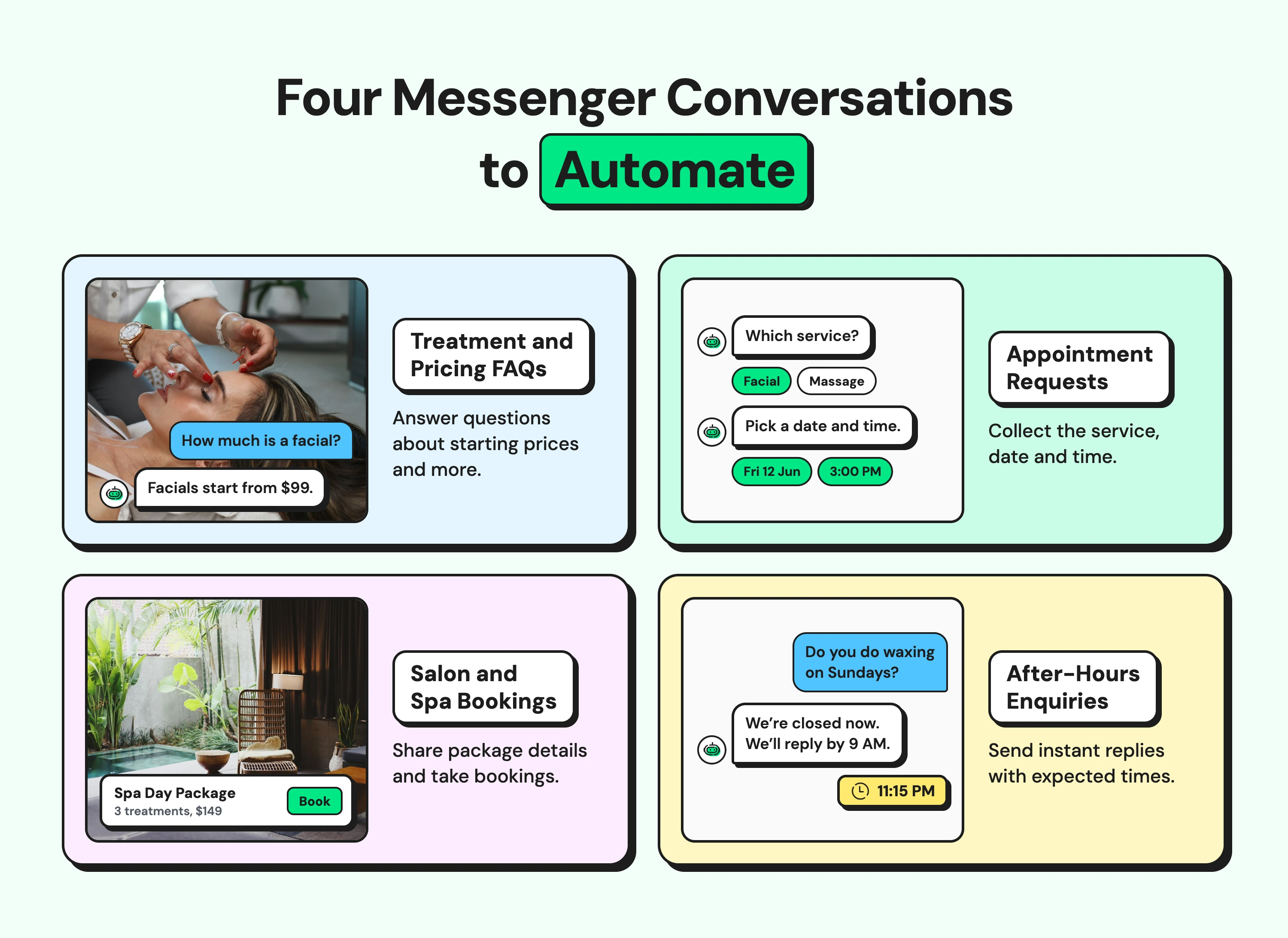
Four types of conversations take up most of a clinic's or salon's Messenger time.
Treatment and Price Questions
Keyword rules can answer the questions with fixed answers: starting prices, number of sessions, downtime, and opening hours. Always say "starting from," since final prices depend on the consultation. This clinic FAQ automation on Instagram blog includes a full question bank.
Appointment Requests
Messenger chatbots in Wati don't support buttons, so use a numbered menu:
"Which service would you like? Reply 1 for a check-up, 2 for cleaning, or 3 for whitening."
The bot then asks for a preferred day, time, and name. Messenger doesn't connect to your calendar, so the front desk confirms the slot. Our guide to clinic appointment booking on Instagram walks through the same flow step by step.
Salon and Spa Bookings
Salons get the same questions every day. A bride-to-be might ask about bridal makeup:
"Our bridal package starts from [price] and includes a trial session. Reply BOOK to request a trial date."
Keyword rules handle prices and packages. A short chatbot collects the date, time, and preferred stylist.
After-Hours and International Enquiries
Wati creates an Out of office rule when you connect your Facebook Page, but it stays off until you switch it on. Set it to promise a reply time. Patients abroad often message at hours that suit their time zone. This medical tourism in Dubai piece covers international enquiries in detail.
How Should Clinics Handle Patient Privacy in Messenger?
Privacy is part of the service. Patients notice when a clinic handles their questions carefully.
Collect only what you need. At the enquiry stage, a name, the treatment of interest, and a preferred day are usually enough. Don't ask for medical history in a chat.
Limit who sees health conversations. Assign medical questions to the clinician or coordinator who needs them, rather than leaving them open to the whole team.
Get written consent for testimonials. Never share a patient's photos, results, or messages in an ad or post without their clear, written agreement.
Keep replies factual. Prices, timings, and steps are fine. Opinions about someone's health belong in a consultation, not a chat.
When Should a Chat Move to WhatsApp?
Messenger is great for the first conversation. It's weaker for anything that comes later.
Once the reply window closes, you can't message the patient on Messenger until they write again. Messenger in Wati also can't send templates or reminders. In Wati, automation can reply for 24 hours after a patient's last message, and your team can reply for up to 7 days.
WhatsApp fills that gap, with permission. Ask for a WhatsApp number when the patient needs something later:
- An appointment confirmation
- A reminder the day before
- Pre-visit instructions, such as "avoid sun exposure for 48 hours"
Give a clear reason: "Share your WhatsApp number, and we'll send your confirmation and a reminder there." Only message patients about what they agreed to.
What Should a Clinic or Salon Bot Never Answer?
A bot is great at logistics. It should never give medical advice.
A clinic or salon bot should never:
- Diagnose a condition or suggest a treatment for one
- Say whether a treatment is right for a specific person
- Promise results
- Reply to messages about pain, bleeding, reactions, or pregnancy with a standard answer
When these come up, the bot should hand over straight away:
"Thank you for letting us know. One of our clinicians will reply to you personally as soon as possible."
On Wati's Pro and Business plans, the chatbot can tag these chats and assign them to a clinician. Add red-flag words, like "pain," "bleeding," and "pregnant," to a keyword rule that routes them first.
Which Mistakes Cost Clinics Appointments on Facebook?
Answering health questions in public. It exposes the patient and makes others hesitate to ask. Move the conversation to a DM.
Ad copy that implies a condition. "Are you losing hair?" can get your ad rejected. Describe the treatment instead.
No reply cover when ads launch. Ads bring evening messages. Switch on the Out of office rule before they go live.
Exact prices that change. Fixed prices in automated replies cause disputes. Use "starting from."
No route to a person. Every menu needs a "talk to our team" option.
How Do You Know Your Facebook Ads Are Bringing Patients?
Likes and comments don't pay the bills. Track the steps between the ad and the visit instead:
- Cost per conversation: what each Messenger chat from an ad costs
- Booking-request rate: how many chats end with a requested appointment
- Show-up rate: how many confirmed appointments actually happen
- Cost per booked patient: ad spend divided by appointments completed
If chats are high but bookings are low, read the conversations. The answer is often an unclear price reply or a slow handoff to the front desk.
How Does Wati Help Clinics and Salons Book More Appointments?
Wati is an agentic customer engagement platform that turns conversations into revenue growth across marketing, sales, and support. Here's what that looks like for three different businesses using one inbox:
A dental clinic in Riyadh. Whitening ads open Messenger chats. Keyword rules share starting prices, and the booking menu collects preferred days for the front desk.
An aesthetic clinic in Dubai. Comments on a laser ad get a private DM. Questions about skin conditions go straight to a clinician, tagged and assigned.
A salon in Mumbai. Bridal enquiries get the package price and a trial request. The salon confirms the trial on WhatsApp after the bride shares her number.
Each business answers faster, keeps health details private, and sends staff only the conversations that need them. Explore more ways to support patients with Wati for healthcare.
Keep the Ad Public and the Answers Private
Healthcare Facebook ads bring the questions. Private, fast, and careful replies bring the bookings. Answer logistics instantly, send medical questions to clinicians, and confirm every appointment where patients will see it.
Ready to turn treatment ads into appointments? Start your free Wati trial.
Frequently asked questions
Do Facebook ads work for clinics?
Yes, especially when they start a private conversation. Patients can ask about prices, pain, and downtime in Messenger, which makes it easier to book an appointment.
Can healthcare ads use before-and-after photos on Facebook?
Meta updated its Health and Wellness advertising standards in July 2026, and the rules depend on the treatment and the claims made. Check Meta's current policy page before using before-and-after images.
How should clinics reply to health questions in Facebook comments?
Reply privately. Send the commenter a Messenger message, keep any public reply neutral, and never discuss health details in the comment thread.
Can a Messenger bot book appointments?
A bot can collect the service, preferred day, time, and name. Staff then confirm the slot, since Messenger doesn't connect to a calendar.
What should a clinic chatbot not answer?
It shouldn't diagnose, recommend treatments for a condition, promise results, or answer messages about pain, bleeding, reactions, or pregnancy. Those go to a clinician.
Related posts
- How to Send Bulk Messages on WhatsApp Without Getting Blocked
Learn how to send bulk WhatsApp messages without getting blocked. Compare the WhatsApp Business app and API, messaging limits, costs, templates, and best practices for safe, compliant bulk messaging.
- Instagram Comment Automation: How It Works and How to Set It Up in Wati
Instagram comment automation auto-replies to comments and DMs commenters within seconds via Meta's API. Covers strategy, use cases, and Wati setup.
- Shared Team Inbox for Instagram: A Buyer’s Checklist for 2026
Use this fastest checklist to evaluate any shared team inbox for Instagram, which covers DMs, comments, automation, and multi-channel support.
- How to Set Up a TikTok Business Account: Step-by-Step Guide
Set up a TikTok Business Account step by step: switch from personal, pick a category, add your profile, and unlock ads and analytics.