
Too Long? Read This First
- Omnichannel sales for e-commerce is about plugging the leaks between touchpoints,
- E-commerce revenue comes from four levers: traffic, conversion rate, average order value, and purchase frequency.
- Small improvements in each lever compound, so fixing several leaks at once can grow revenue faster than chasing more traffic.
- Fast answers to pre-sale questions, easy checkout wherever shoppers buy, and timely upsells are the quickest wins for most stores.
- Consumer AI agents like ChatGPT are a new touchpoint, so product data, prices, and policies need to be clear enough for an AI to recommend you.
- AI sales agents can handle routine questions instantly, while human sales reps should focus on high-value and complex purchases.
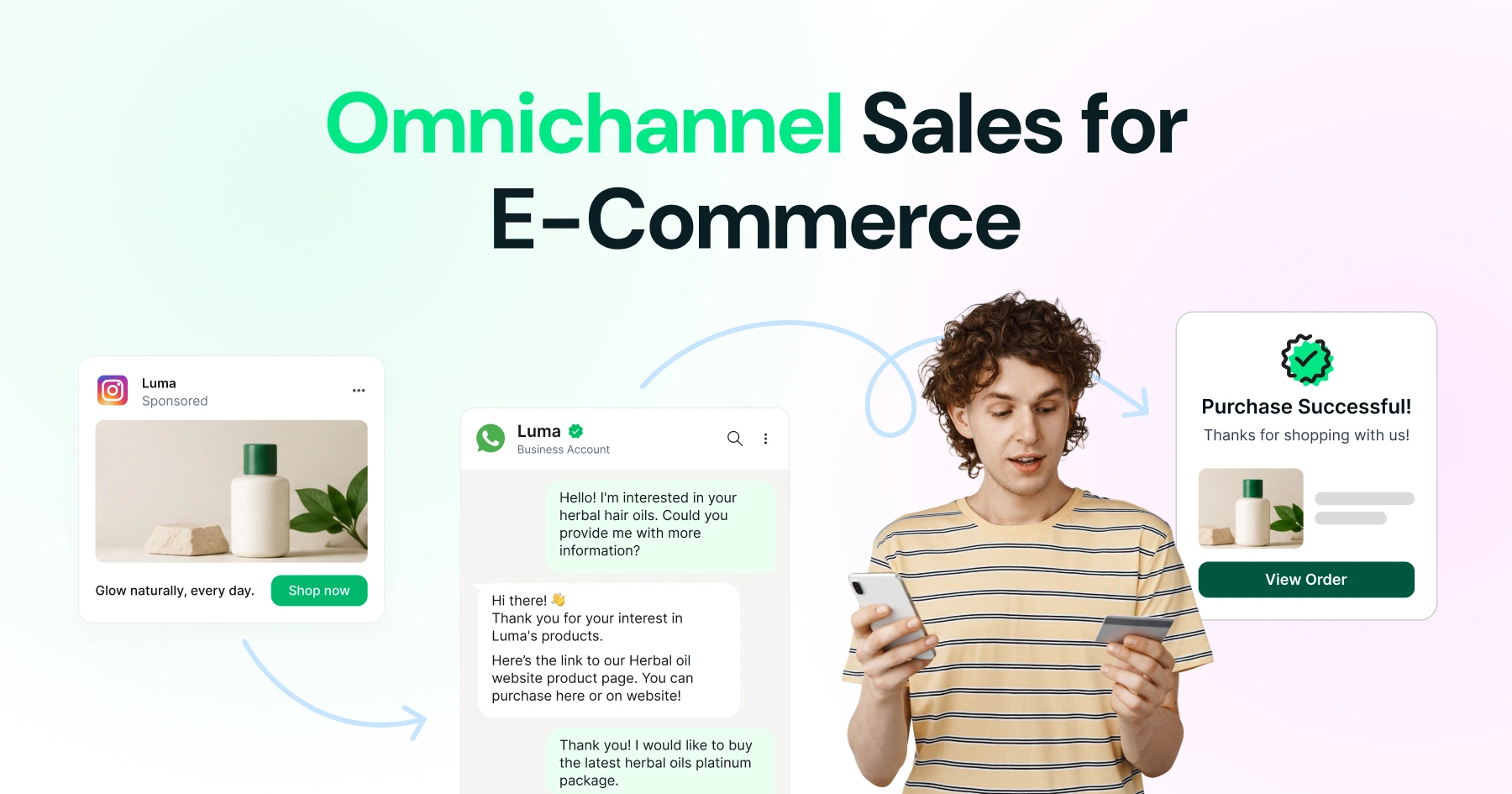
Omnichannel sales for e-commerce is the practice of capturing, converting, and growing every sale across the channels shoppers use, from Instagram and WhatsApp to your website, marketplaces, and stores.
It focuses on the moments where sales slip away: a question nobody answers, a cart nobody follows up on, or an order that could have included one more item.
Most e-commerce brands do not have a traffic problem. They have a leak problem. Shoppers arrive, show interest, and then drop off between one touchpoint and the next.
This guide shows you where those leaks happen and how to fix them. You'll see how the e-commerce sales funnel works as a simple revenue formula, and how to lift conversion rates and order value across channels.
We also cover when to use assisted selling and AI sales agents, and what an e-commerce sales dashboard should track.
What is Omnichannel Sales for E-Commerce?
Omnichannel sales for e-commerce is a sales operations approach in which every channel can answer questions, recommend products, and close the sale, using the same customer and order data.
It is different from simply selling on many channels. A brand can have a website, a marketplace store, an Instagram shop, and a WhatsApp number, and still lose sales if each one runs on its own.
Omnichannel sales connects them, so each channel helps move a shopper toward a purchase.
Wati, an agentic customer engagement platform built on the WhatsApp Business API, helps e-commerce brands plug these leaks across WhatsApp, Instagram, and other messaging channels.
How Does the E-Commerce Sales Funnel Work in an Omnichannel World?
The e-commerce sales funnel can be expressed in two simple steps:
Customers acquired = Traffic × Conversion rate
Revenue = Customers acquired × Average order value × Orders per customer (per year)
Every sales leak reduces one of these four levers. Unanswered questions and checkout friction cut conversion rate. Missed upsells cut average order value. Weak follow-up cuts purchase frequency.
The formula also shows why fixing leaks frequently beats chasing more traffic. Here is an illustrative example of the annual revenue from one month's visitors, for a store with 10,000 visitors that month:
Lever | Before | After a 10% Improvement |
|---|---|---|
Traffic | 10,000 visitors | 10,000 visitors (unchanged) |
Conversion rate | 2.0% (200 customers) | 2.2% (220 customers) |
Average order value | $50 | $55 |
Orders per customer (per year) | 1.0 | 1.1 |
Annual revenue from one month's visitors | $10,000 | $13,310 |
Without adding a single visitor, a 10% lift in three levers grows revenue by about 33%. That is the core logic of omnichannel sales for e-commerce: each channel should help lift conversion, order value, or repeat purchases.
Answer every pre-sale question in seconds. Astra replies to shopper questions instantly on WhatsApp and Instagram and recommends the right products. Complex conversations go to your sales reps with the full chat history in the same thread. See how Astra works |
Where Do E-Commerce Brands Lose Sales Between Touchpoints?
E-commerce brands usually lose sales at six predictable points. Each leak is small on its own, but together they can cost a store a large share of the revenue it already paid to attract.
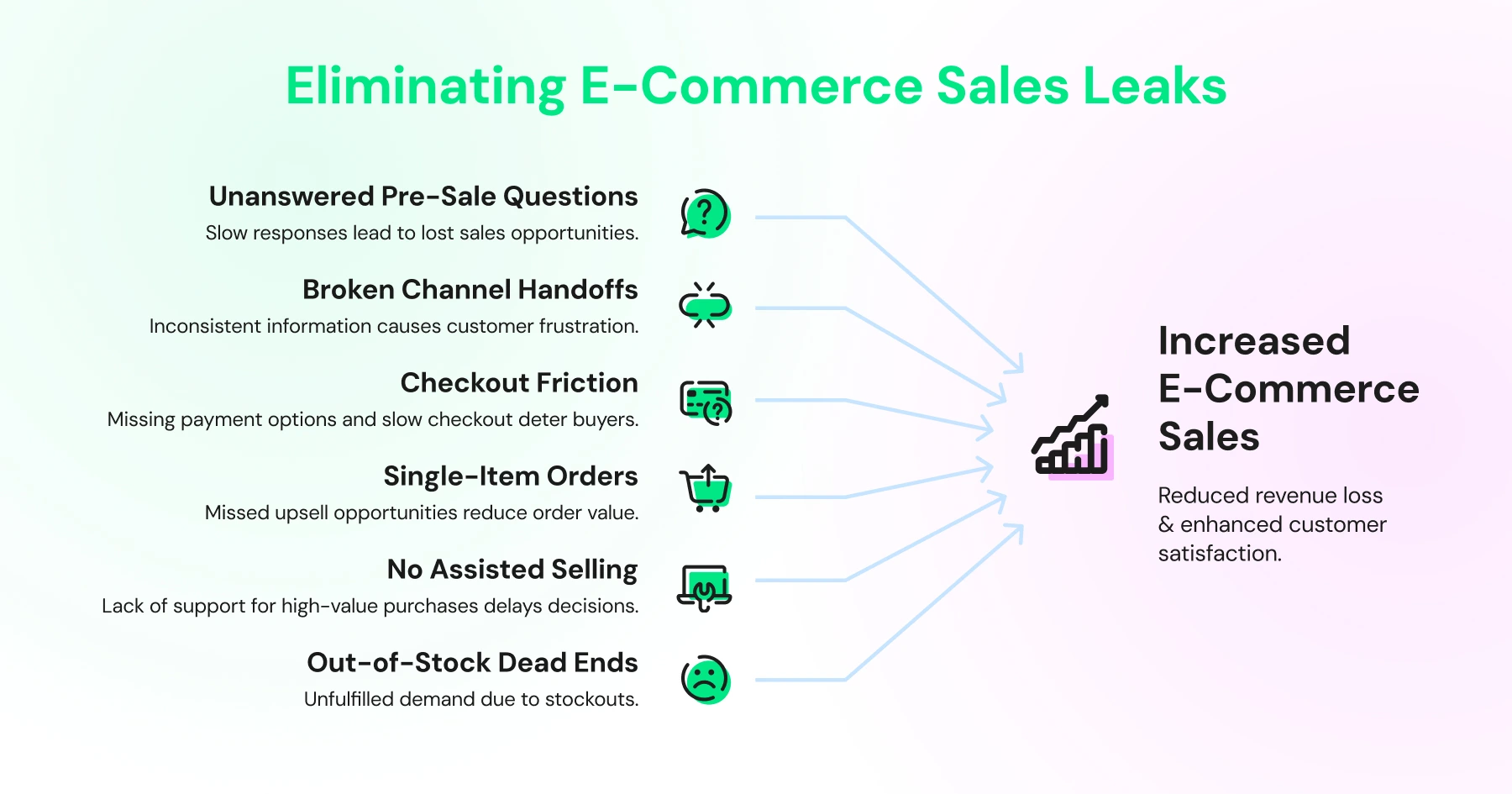
1. Unanswered Pre-Sale Questions
A shopper asks "Does this come in a larger size?" in a DM or chat. Nobody replies for hours, and by then they have bought from someone else. Pre-sale questions are buying signals, and slow answers turn them into lost sales.
How to fix it: Set a reply-time target for each chat channel, and let an AI agent handle common questions so no shopper waits. With Wati, Astra AI Agent answers product, sizing, and stock questions instantly on WhatsApp and website chat, day or night.
2. Broken Handoffs Between Channels
A shopper clicks an ad, lands on a product page, then opens a chat to ask a question. If the chat has no idea which product they were looking at, the shopper has to explain everything again. Each restart adds friction.
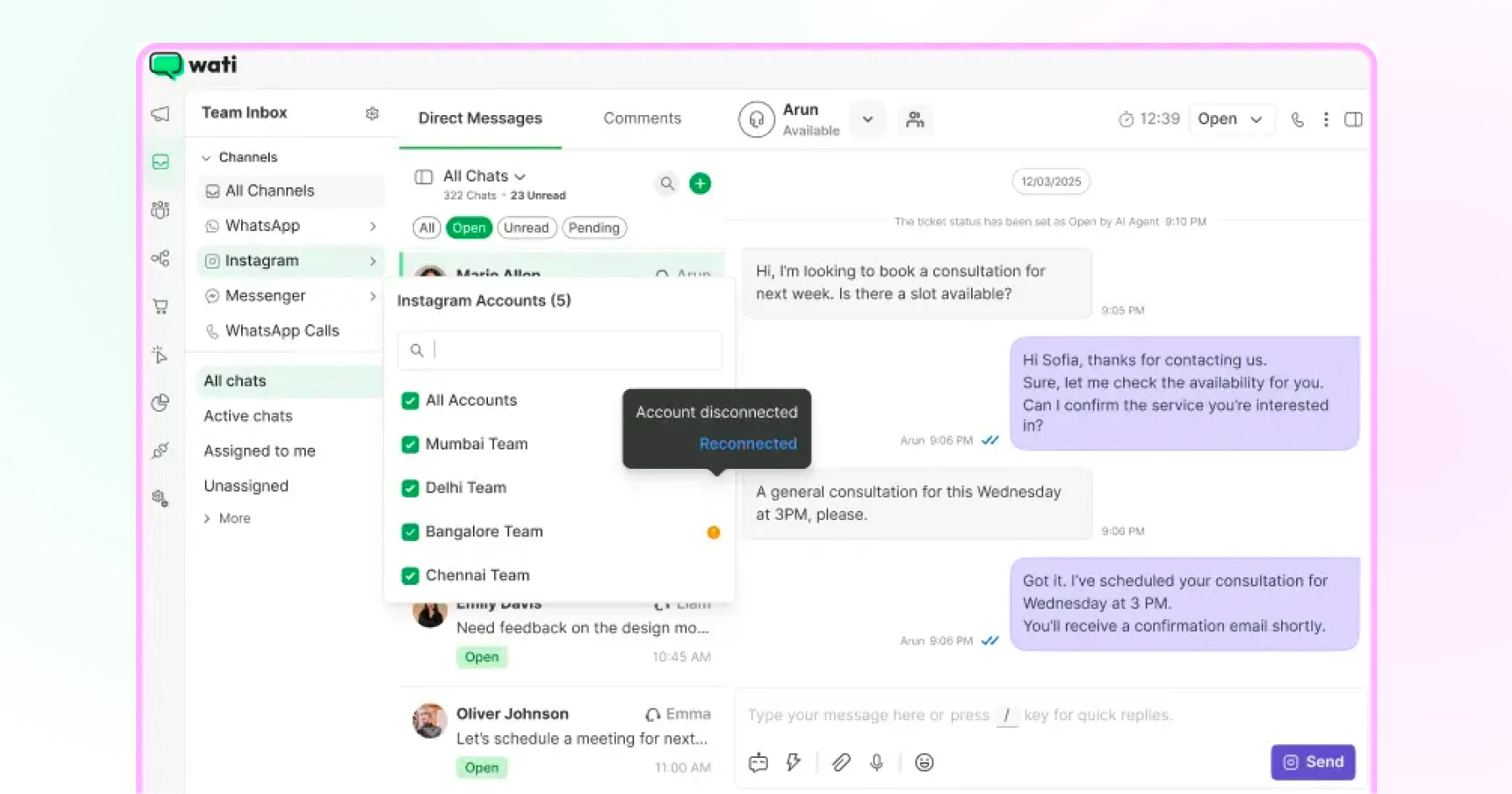
How to fix it: Route all channels into one shared inbox, and pass the product, cart, or ad the shopper came from into the conversation. Wati’s Team Inbox brings WhatsApp, Instagram, Messenger, TikTok, RCS, SMS, and WebChat conversations into one place, and click-to-WhatsApp ad leads arrive tagged by campaign, ad set, and creative.
3. Checkout and Payment Friction
Shoppers leave when their preferred payment method is missing, when payment fails, or when checkout feels slow on mobile. In cash-on-delivery markets, orders that are never confirmed often end up refused at the door.
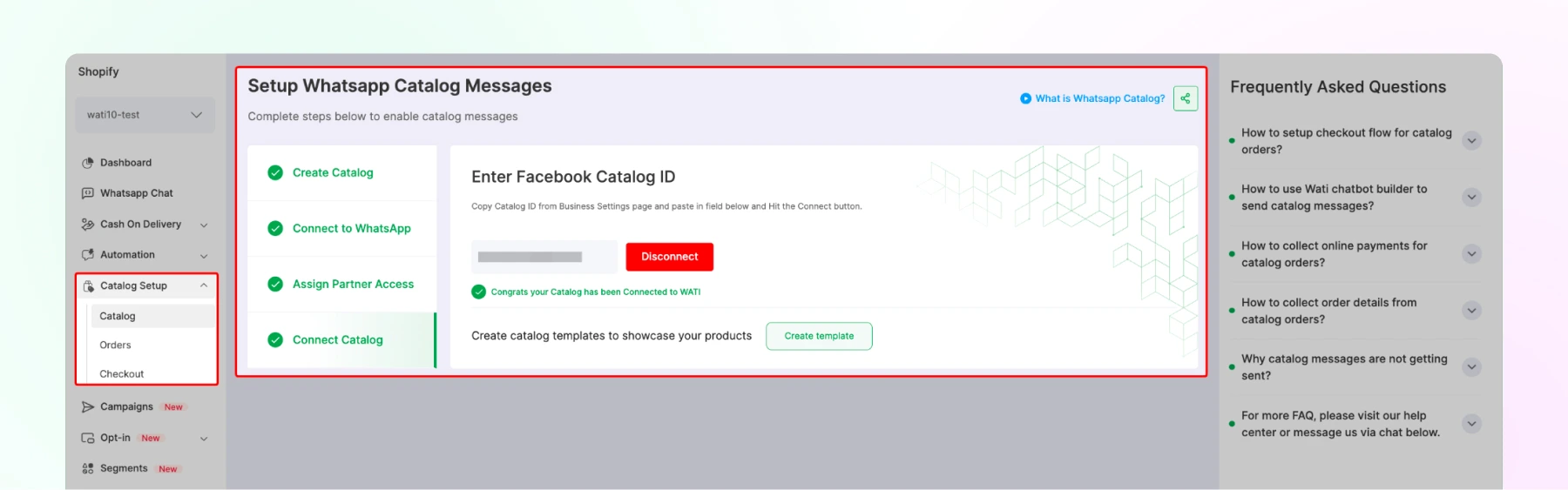
How to fix it: Offer the payment methods your market prefers, share payment links in chat, and confirm COD orders before dispatch. With WhatsApp Catalog on Wati, shoppers check out through a secure payment link in the chat, or WhatsApp Pay in supported markets. The Shopify integration sends COD verification requests automatically.
4. Single-Item Orders
Many shoppers would happily add a matching accessory, a refill, or a bundle. If nobody suggests it at the right moment, the order stays smaller than it could have been.
How to fix it: Recommend one relevant add-on in the cart, in chat, and after delivery.
5. No Assisted Selling for High-Value Purchases
Expensive or technical products usually need a conversation before purchase. When there is no easy way to talk to a person, high-intent shoppers delay the decision or leave.
How to fix it: Offer a clear way to reach a sales rep by chat or call for high-value products and large carts. On Wati, Astra hands these conversations to a sales rep with full context, Wati AI scores intent so reps know who to prioritize, and shoppers can call from the same chat through WhatsApp Business Calling.
6. Out-of-Stock Dead Ends
A shopper wants a product that is sold out. Without a way to capture their interest and notify them on restock, that demand disappears.
How to fix it: Collect a "notify me" opt-in on the product page or in chat, and send an alert the moment stock returns. With Wati, you can tag interested shoppers during the conversation and send them a segmented broadcast as soon as the product is back.
How Do You Decide Which Sales Leak to Fix First?
You decide which sales leak to fix first by comparing how much revenue each one costs with how much effort it takes to fix. Most stores can run this audit in an afternoon.
Start by answering five questions with your own data:
1. How fast do you reply to pre-sale questions? Check the median first-reply time on Instagram DMs, WhatsApp, and web chat.
2. How many carts are abandoned, and how many do you recover? Compare abandoned carts with recovered orders over the last month.
3. What share of orders include more than one item? This is your attach rate, and it shows how much room upsells and cross-sells have.
4. How many cash-on-delivery orders are refused or returned? In COD-heavy markets, this can be one of the largest hidden leaks.
5. What share of customers buy again within your normal repeat window? This shows whether purchase frequency is a leak.
Then rank each leak:
Leak Size | Fix Effort | What to Do |
|---|---|---|
Large | Low | Fix it this week |
Large | High | Plan it for this quarter |
Small | Low | Batch it with other quick wins |
Small | High | Leave it for later |
For many stores, slow pre-sale replies and unconfirmed COD orders land in the "large leak, low effort" box. Fix those first, then move to upsells and repeat purchases.
How Do You Increase E-Commerce Sales Across Channels?
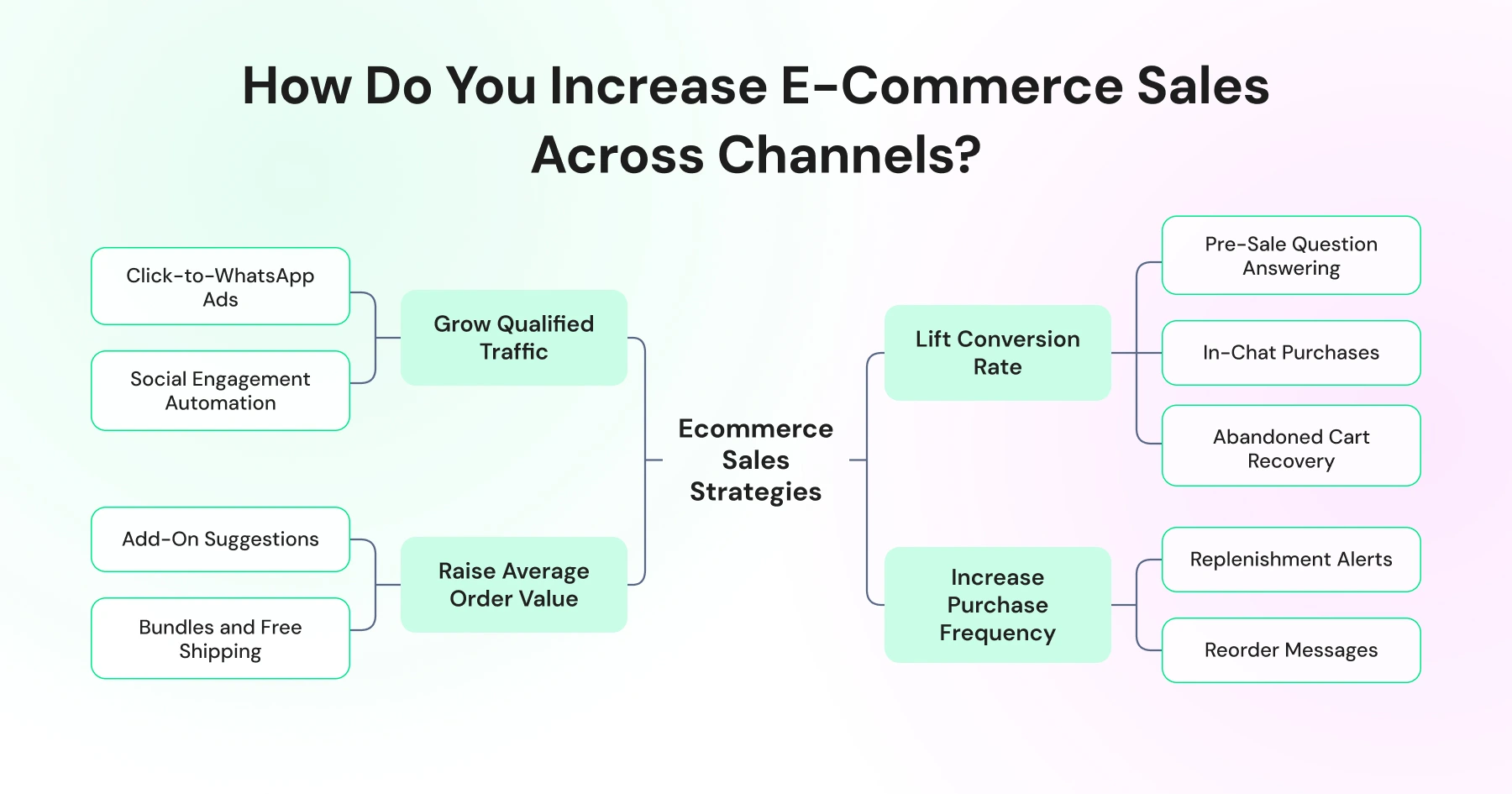
You increase e-commerce sales by improving each lever of the revenue formula across all your channels. These strategies are grouped by the lever they move.
Grow Qualified Traffic
- Start conversations, not just visits. Click-to-WhatsApp ads open a chat instead of a landing page, so interested shoppers can ask questions right away.
- Turn social engagement into sales conversations. Reply to product comments with an automated DM, so interest on Instagram turns into a conversation. Our guide to Instagram comment automation covers the setup.
Lift Conversion Rate
- Answer pre-sale questions within minutes on every channel.
- Let shoppers buy where they are, including inside a chat.
- Recover abandoned carts with reminders that answer the question that stopped the shopper.
Our guide to cart recovery on WhatsApp shows how brands build these flows.
Raise Average Order Value
- Suggest one relevant add-on at the cart and right after purchase.
- Offer bundles and free-shipping thresholds that make a bigger order feel worthwhile.
Increase Purchase Frequency
- Send replenishment and back-in-stock alerts on the channel each customer reads.
- Make reordering effortless, such as replying "yes" to a reorder message.
For campaign planning and personalization across these channels, see our guide to omnichannel marketing for e-commerce.
How Do Consumer AI Agents Change E-Commerce Sales?
Consumer AI agents are a new sales touchpoint where shoppers ask an AI assistant to find, compare, and sometimes buy products for them. Instead of visiting five product pages, a shopper asks ChatGPT for “the best vitamin C serum for oily skin under ₹1,500” and acts on the shortlist it returns.
This shift is already moving money.
McKinsey estimates that agentic commerce could orchestrate up to $1 trillion in US B2C retail revenue by 2030, with global projections of $3 trillion to $5 trillion.
ChatGPT now focuses on product discovery: after OpenAI retired in-chat Instant Checkout in March 2026, purchases moved to merchant apps inside ChatGPT, while the open Agentic Commerce Protocol connects shoppers to merchant catalogs.
Why it’s a leak: An AI agent can’t recommend what it can’t read. If your product details, stock, prices, delivery times, and return policy are missing, inconsistent, or locked inside images, the agent recommends a competitor whose data is clearer. You never see the lost sale because the shopper never reached your store.
How to fix it:
- Make product data machine-readable. Use complete titles, specs, sizes, and ingredients in text, plus product schema markup on every page.
- Keep one source of truth. Price, stock, and delivery promises should match across your website, marketplaces, and chat channels, because AI agents cross-check them.
- Publish clear policies. Shipping, returns, and COD terms should be written in plain text that an agent can quote.
- Own the moment after the purchase. Even when an AI agent completes the checkout, the merchant still handles fulfillment and customer support. Order confirmations, delivery updates, and post-purchase questions on WhatsApp are where you turn a one-time agent-driven buyer into a repeat customer.
The same accurate product, pricing, and policy data that helps consumer AI agents recommend you also keeps your own AI agent, such as Wati’s Astra AI Agent, from giving wrong answers.
How Do AI Sales Agents Fit Into E-Commerce?
An e-commerce AI sales agent is software that talks to shoppers, answers questions, recommends products, and helps them buy, usually on chat and messaging channels. AI sales agents are becoming a bigger part of how people shop.
A well-set-up AI sales agent can:
- Answer product, sizing, stock, and delivery questions instantly, day or night
- Recommend products based on what the shopper says they need
- Share catalog items and payment links in the chat
- Follow up on abandoned carts and back-in-stock requests
- Spot high-intent shoppers and hand them to a sales rep
It should not:
- Invent discounts, prices, or policies
- Handle complaints or sensitive issues without a person
- Keep a shopper in an automated loop when they ask for a human
Give your AI sales agent accurate product, pricing, and order data, and define clear handoff rules.
How Do You Use Upselling and Cross-Selling in E-Commerce?
E-commerce upselling encourages a shopper to choose a higher-value version of the product they want, such as a larger size or a premium model.
E-commerce cross-selling recommends a related product that adds to the purchase, such as a case for a phone or a cleanser with a serum. Both raise average order value when they are relevant and well timed.
Moment | Best Approach | Example |
|---|---|---|
Product page | Upsell to a better-value option | "The 100 ml size costs only 20% more" |
Cart | Cross-sell one complementary item | "Add the matching belt" |
In a chat | Recommend based on the shopper's question | "For oily skin, pair it with this toner" |
After purchase | Cross-sell for next time | "Complete the look" message after delivery |
Replenishment | Upsell to a bundle or subscription | "Save with a 3-month pack" |
A few rules keep upselling and cross-selling helpful rather than pushy:
- Suggest one item, not five. One relevant suggestion converts better than a long list.
- Keep add-ons cheaper than the main item. A small add-on feels like an easy yes.
- Explain why. "This pairs well with your order because..." builds trust.
- Use what you know. Base recommendations on the cart, past purchases, and what the shopper told you in chat.
Let shoppers buy without leaving the chat. With WhatsApp Catalog, shoppers browse your products in the chat and check out through a secure payment link, or WhatsApp Pay in supported markets. Explore WhatsApp Catalog |
When Should E-Commerce Brands Use Assisted Selling?
E-commerce brands should use assisted selling when a purchase is expensive, technical, personal, or easy to get wrong. In these cases, a short conversation often decides the sale.
Assisted selling works best for:
- High-value products, such as furniture, electronics, and jewelry
- Fit-sensitive products, such as fashion, footwear, and eyewear
- Regimen-based products, such as skincare and supplements
- Gifts, where shoppers want reassurance before they buy
Common formats include chat consultations, voice or video calls, and live shopping sessions where a host demonstrates products and answers questions in real time.
Voice works especially well when it happens inside the same conversation, so shoppers do not have to switch apps. WhatsApp Business Calling lets shoppers call a brand directly from the chat.

The most efficient setup splits the work. AI agents answer routine questions and qualify shoppers, while human sales reps take over for high-value carts, complex questions, and hesitant buyers.
How Do Sales Operations Differ by E-Commerce Model?
The revenue formula applies to every store, but the biggest leaks differ by business model.
- D2C brands: Own the customer relationship, so the biggest wins usually come from conversational selling, upsells, and repeat purchases on owned channels.
- Marketplace sellers: Have limited direct contact with buyers, so listing quality, reviews, and pricing matter most. Where allowed, moving repeat buyers to owned channels can lift frequency.
- B2B e-commerce: Orders are larger and repeat often, so fast quotes, reorder reminders, and account-specific pricing drive revenue.
- Quick commerce and grocery: Speed is everything, so stock accuracy, substitutions, and real-time order updates protect conversion and frequency.
For how each stage of the buying experience fits together, see our guide to the e-commerce customer journey.
How Does Wati Help E-Commerce Brands Sell Across Channels?
Wati is an agentic customer engagement platform that turns conversations into revenue growth across marketing, sales, and support. For e-commerce brands, Wati helps plug the leaks that cost the most sales.
Sales Leak | Wati Feature |
|---|---|
Unanswered pre-sale questions | Astra |
Broken handoffs between channels | Team Inbox and click-to-WhatsApp ad tagging |
Checkout and payment friction | WhatsApp Catalog checkout and COD verification |
Abandoned carts | Shopify cart reminders, with RCS and SMS fallback on supported plans and markets |
Single-item orders | Astra AI Agent product recommendations and post-purchase follow-ups |
No assisted selling | Astra AI Agent lead scoring and WhatsApp Calling for Business |
Out-of-stock dead ends | Segmented broadcasts and retargeting |
For more ways to sell on messaging, read our guide to building a WhatsApp e-commerce store.
What Should an E-Commerce Sales Dashboard Track?
An e-commerce sales dashboard should track each lever of the revenue formula, with a view by channel. That way, you can see which lever is leaking and where.
Lever | Metrics to Track | Channel View |
|---|---|---|
Traffic | Sessions, new conversations, and click-to-chat volume | By ad, social, search, and marketplace |
Conversion | Conversion rate, cart abandonment, and first-reply time | By website, chat, and marketplace |
Order value | Average order value, attach rate, and bundle share | By channel and campaign |
Frequency | Repeat purchase rate and time between orders | By customer segment |
Revenue | Revenue, contribution margin, and recovered revenue | Total and by channel |
Review the dashboard weekly. A healthy traffic number paired with a falling chat conversion rate, for example, points straight to a response-time leak.
Stop Losing Sales Between Touchpoints
Omnichannel sales for e-commerce is not about being on more channels. It is about making sure every channel can answer, recommend, and close.
Start with the leak that costs you most, measure it with the revenue formula, and fix one lever at a time.
Ready to turn more conversations into sales? Start your free Wati trial or book a demo.
Frequently asked questions
What is omnichannel sales in e-commerce?
Omnichannel sales in e-commerce means every channel, such as your website, marketplaces, social media, and messaging apps, can answer questions and close sales using the same customer and order data. Shoppers can move between channels without starting over.
How can I increase my e-commerce sales quickly?
The fastest way to increase e-commerce sales is usually to avoid leaks rather than buy more traffic. Respond to shopper questions before they lose interest, recover abandoned carts, let shoppers check out in the chat, and recommend one matching item at checkout.
What is the difference between upselling and cross-selling in e-commerce?
Upselling encourages a shopper to buy a higher-value version of the product they want, such as a larger size. Cross-selling suggests a related product to add to the order, such as an accessory or refill. Both increase average order value.
What is an e-commerce AI sales agent?
An e-commerce AI sales agent is software that talks to shoppers on chat and messaging channels. It answers questions, recommends products, shares payment links, and follows up on carts, then hands complex or high-value conversations to a human sales rep.
What should an e-commerce sales dashboard include?
An e-commerce sales dashboard should include traffic, conversion rate, average order value, purchase frequency, and revenue, broken down by channel. It should also track first-reply time on chat channels and recovered revenue from abandoned carts.
How do AI shopping assistants affect e-commerce sales?
AI shopping assistants such as ChatGPT research, compare, and sometimes buy products for shoppers. Stores with clear, consistent, machine-readable product data, prices, and policies are more likely to be recommended. Stores without it lose sales they never see.