
Too Long? Read This First
- Omnichannel sales connects every sales channel around one customer record, so buyers never have to restart the conversation.
- Buyers now research on their own across many channels, so sellers who arrive with context win more deals than sellers who arrive with a script.
- A strong omnichannel sales mix covers where buyers already talk to you, which increasingly includes messaging apps like WhatsApp and Instagram.
- AI agents can qualify leads instantly and around the clock, while sales reps step in with full context to advise and close.
- You should measure omnichannel sales by speed to lead, qualification rate, handoff conversion, and revenue per conversation across all channels together.
Omnichannel sales is a way of selling in which every channel a buyer uses, from your website and store to WhatsApp, Instagram, voice, and email, shares one customer record and one sales conversation.
A buyer can discover you on one channel, ask questions on another, and buy on a third, and every step picks up where the last one left off.
This guide explains what omnichannel sales is, how it differs from multichannel selling, and which channels belong in your mix.
You will also get a seven-step plan to build an omnichannel sales strategy, a framework for aligning sales teams, real-world sales journeys, and the metrics that show whether it is working.
What is Omnichannel Sales?
Omnichannel sales is an approach that coordinates every buyer touchpoint, online and offline, around one shared view of the customer.
Sales occur across every channel and touchpoint for the same customer, but the brand will have a complete view of the customer journey across all channels.
Each interaction builds on the previous one, whichever channel it happens on and whoever handles it, whether that is a sales rep, an AI agent, or a self-service checkout.
Teams also call this omnichannel selling. The idea applies to two kinds of businesses:
- Ecommerce and retail: A shopper sees a product on Instagram, asks about sizing on WhatsApp, and buys online or in-store, with the same prices, offers, and conversation history at every step.
- Considered purchases and B2B: A prospect clicks an ad, gets qualified in a chat, books a call with a sales rep, and receives a quote, and every person involved sees the same deal context.
In both retail and B2B, the goal of omnichannel sales is the same: remove the gaps between channels where buyers lose interest, and give them everything they need to complete the purchase
How is Omnichannel Sales Different From Multichannel Sales?
The difference between omnichannel and multichannel sales is coordination. Multichannel sales offers several ways to buy, but each channel runs with its own data, team, and follow-up.
There's no shared view across channels, so no single salesperson can see the customer's full journey.
Omnichannel sales connect those channels so every interaction informs the next.
Factor | Multichannel Sales | Omnichannel Sales |
|---|---|---|
Customer data | Separate per channel | One shared customer and deal record |
Lead follow-up | Depends on which channel the lead came from | Consistent speed and ownership on every channel |
Handoffs | Manual, context often lost | Structured, with full conversation history |
Pricing and offers | Can differ by channel | Consistent everywhere |
AI and automation | Isolated bots, if any | AI agents and sales reps share one pipeline |
Reporting | Revenue credited to one channel | Revenue tracked across the full journey |
Multichannel adds reach. Omnichannel adds continuity, which is what actually shortens sales cycles.
Why Does Omnichannel Sales Matter in 2026?
Omnichannel sales matter because buyers now control most of the journey and move between channels on their own terms.
A Gartner survey of 632 B2B buyers found that 61% prefer an overall rep-free buying experience, and 73% actively avoid suppliers who send irrelevant outreach.
That does not mean buyers want no help. The same Gartner research found that buyers prefer seller input for tasks that need context, such as deciding whether a product fits their needs, and that 69% report inconsistencies between what a company's website says and what its sellers tell them.
Omnichannel sales solves both problems: it lets buyers self-serve where they want to, and it makes sure every seller arrives with consistent, relevant context.
Buyers are also using more channels than ever. According to McKinsey's B2B Pulse Survey, B2B decision makers use an average of 10 channels during their buying journey, up from five in 2016.
Every extra channel is another place where a disconnected sales process can drop the thread.
What are the Benefits of Omnichannel Sales?
The biggest benefit of omnichannel sales is that no lead or buyer falls through the gaps between channels. That single change drives six measurable gains:
- Faster response to leads: Every channel has an owner and a response standard, so high-intent buyers get answers while they are still interested.
- Higher conversion rates: Sales reps and AI agents start every conversation with full context, which makes each touchpoint more relevant and easier to act on.
- Shorter sales cycles: Buyers never repeat themselves or wait for information to be passed between teams, so deals move through the pipeline faster.
- Consistent pricing and more trust: The same prices, offers, and information on every channel remove the doubts that stall purchases.
- Clearer attribution: Tracking the full journey shows which channels and conversations actually create revenue, so budget goes where it works.
- More repeat revenue: A connected record makes reorders, upsells, and follow-ups easy, turning one-time buyers into repeat customers.
What are the Core Principles of Omnichannel Selling?
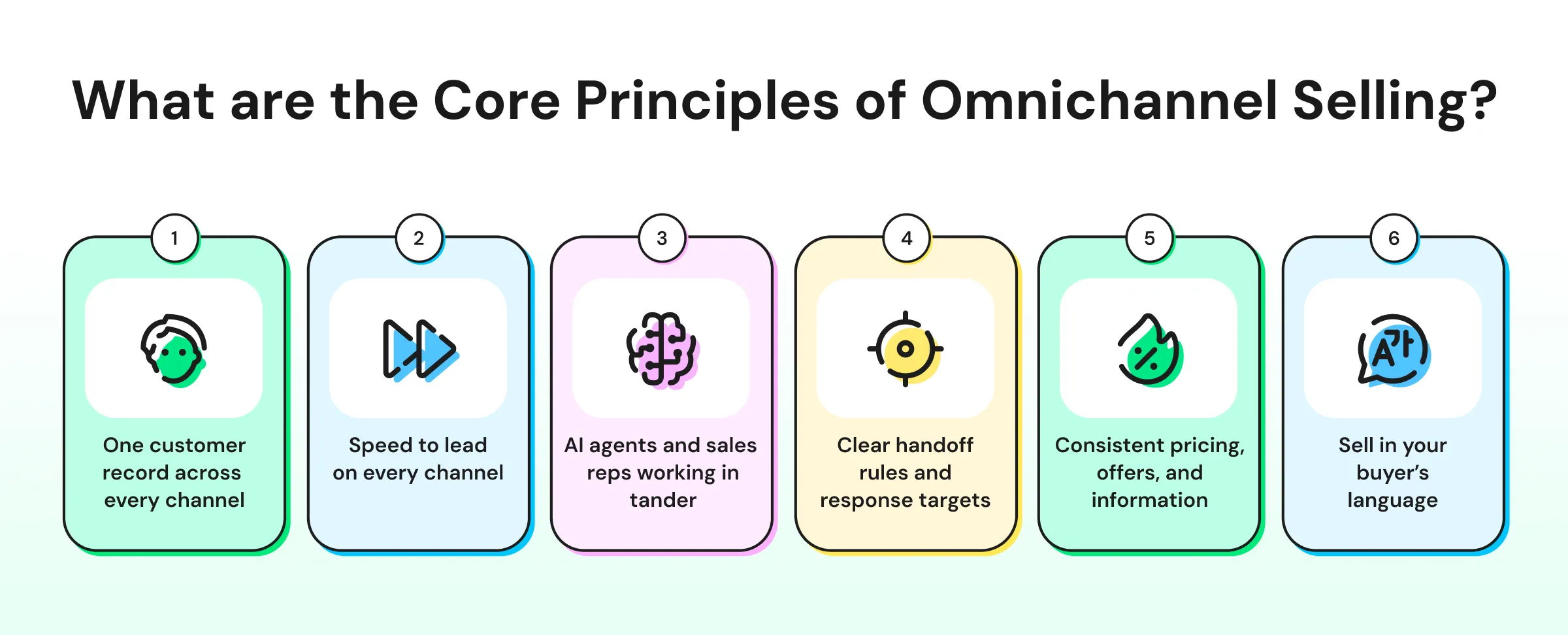
Omnichannel selling works when six principles hold across every channel and team.
1. One Customer Record Across Every Channel
Every sales conversation, order, and note lives in one profile. A sales rep answering a WhatsApp message sees the Instagram DM from last week, the quote sent by email, and the order history from your store.
2. Speed to Lead on Every Channel
Buyers who reach out on a messaging app expect a reply in minutes, not days. Every channel needs the same response standard, and every lead needs an owner the moment it arrives.
3. AI Agents and Sales Reps Sharing One Pipeline
AI agents handle the first response, answer common questions, and ask qualifying questions around the clock. Sales reps step in when a buyer needs advice, negotiation, or reassurance. The handoff between the two is where omnichannel selling is won or lost.
4. Clear Handoff Rules and Response Targets
Define who follows up, on which channel, and how fast, after each trigger, such as a qualified lead, a demo request, or a quote request. Every handoff should carry the full conversation, so the next person never asks a question the buyer already answered.
5. Consistent Pricing, Offers, and Information
A buyer should see the same price, stock availability, and promotion whether they check your website, ask in a chat, or visit a store. Inconsistency erodes trust faster than a slow reply.
6. Sell in Your Buyer's Language
In multilingual markets, buyers often switch languages mid-conversation. Replying in the buyer's preferred language removes friction and builds trust faster.
Tools with built-in translation let one sales team serve buyers across languages without hiring for every one.
Why is Messaging Becoming the Center of Omnichannel Sales?
Messaging is becoming the center of omnichannel sales because it is where buyers already spend their time and where every stage of a sale can now happen.
According to Meta, 80% of people globally already message a business every week.
Four shifts make messaging a full sales channel rather than just a support line:
- Buyers start conversations themselves: Click-to-message ads, website chat buttons, and social DMs let buyers ask a question the moment they are interested.
- Conversations are fast and personal: A two-way chat feels more like talking to a helpful store associate than reading a sales email, which suits both quick purchases and considered ones.
- The whole sale fits in the chat: Catalogs, voice calls, quotes, and payments can now happen inside the same thread, so buyers do not have to switch channels to buy.
- AI agents make round-the-clock coverage possible: AI agents reply and qualify leads at any hour, and sales reps pick up with full context when a buyer is ready.
For businesses in markets where WhatsApp is part of daily life, such as India, Latin America, Southeast Asia, and the Middle East, messaging is often the channel where the sale actually closes.
What Channels Belong in an Omnichannel Sales Mix?
The right omnichannel sales mix includes every channel where your buyers already research, ask questions, or buy. Most businesses combine several of these.
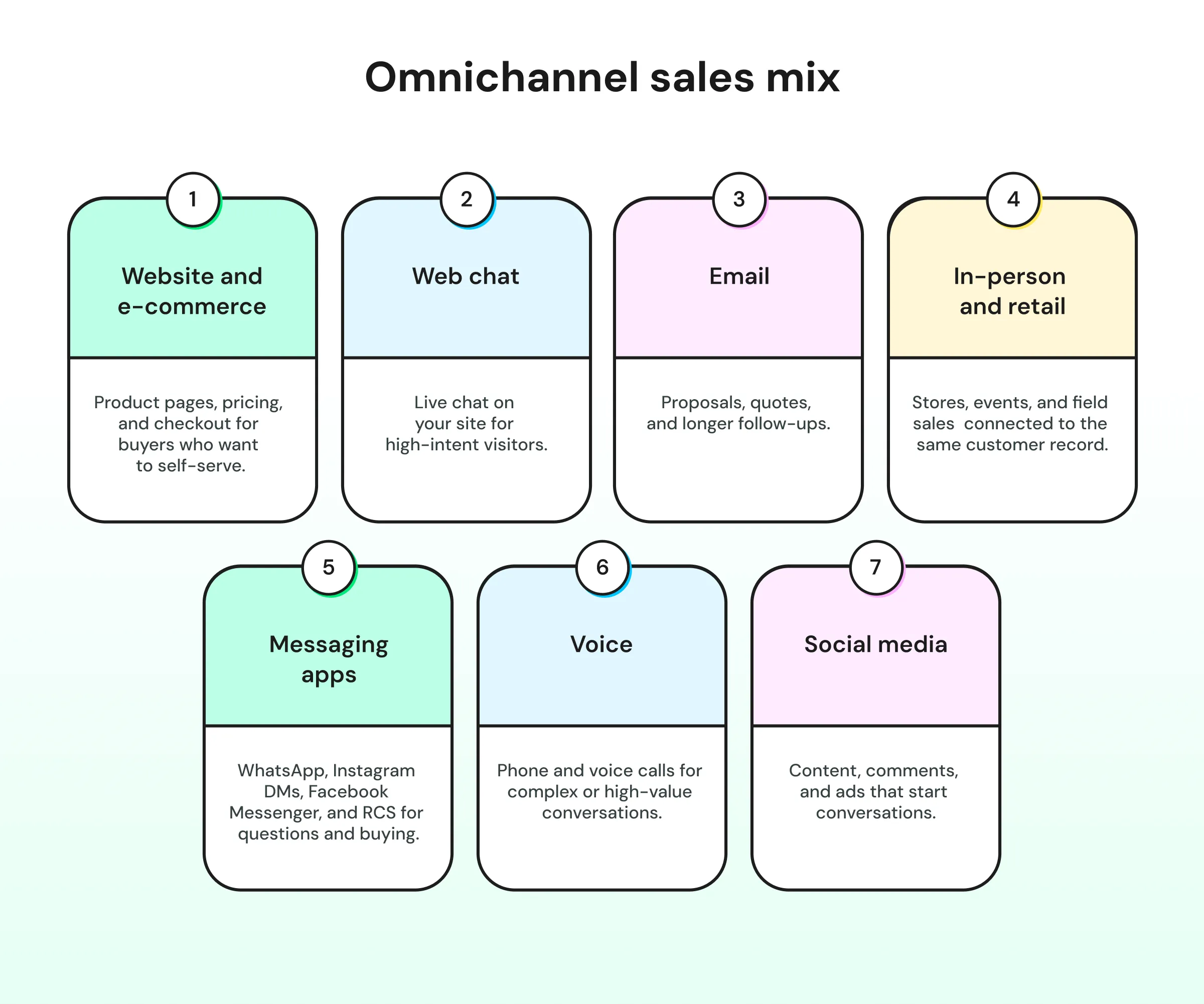
- Website and e-commerce store: Product pages, pricing, and checkout for buyers who want to self-serve.
- Messaging apps: WhatsApp, Instagram DMs, Facebook Messenger, and RCS, where buyers ask questions and increasingly buy inside the chat. Our guide to the WhatsApp Business API explains how businesses run sales conversations on WhatsApp at scale.
- Web chat: Live chat on your site for high-intent visitors.
- Voice: Phone and voice calls for complex or high-value conversations, including calls placed inside messaging apps.
- Email: Proposals, quotes, and longer follow-ups.
- Social media: Content, comments, and ads that start conversations.
- In-person and retail: Stores, events, and field sales, connected to the same customer record.
Paid ads often act as the entry point. Click-to-WhatsApp ads, for example, open a sales conversation directly from Facebook or Instagram instead of sending buyers to a landing page.
Never let a lead wait. Astra AI Agent replies instantly on WhatsApp and Instagram, by text or voice, asks your qualifying questions, and hands sales-ready leads to your sales reps with full context. See how Astra AI Agent qualifies leads |
How Does Omnichannel Sales Work in Retail vs B2B?
Omnichannel sales follow the same principles in retail and B2B, but the tactics look different. Retail focuses on connecting online and physical stores, while B2B focuses on connecting self-service with sales rep support.
Area | Retail and Ecommerce | B2B and Considered Purchases |
|---|---|---|
Typical journey | Discover on social or search, ask in chat, buy online or in store | Research independently, get qualified, talk to a sales rep, receive a quote |
Key tactics | Buy online, pick up in store; ship from store; endless aisle ordering in stores | Self-serve reordering, rep-assisted deals, quotes and approvals in chat |
Role of messaging | Product questions, sizing help, order updates, and personal follow-ups from store associates | Lead qualification, meeting booking, quote follow-ups, and reorders |
Role of AI agents | Instant answers on stock, sizing, and delivery | Qualifying questions, lead scoring, and routing to the right sales rep |
What success looks like | Higher conversion and repeat purchases across online and offline | Shorter sales cycles and higher win rates |
In retail, a practice called clienteling ties the two worlds together. Store associates keep in touch with their customers over messaging, share new arrivals, and get credit for sales that close online.
How Do You Build an Omnichannel Sales Strategy?
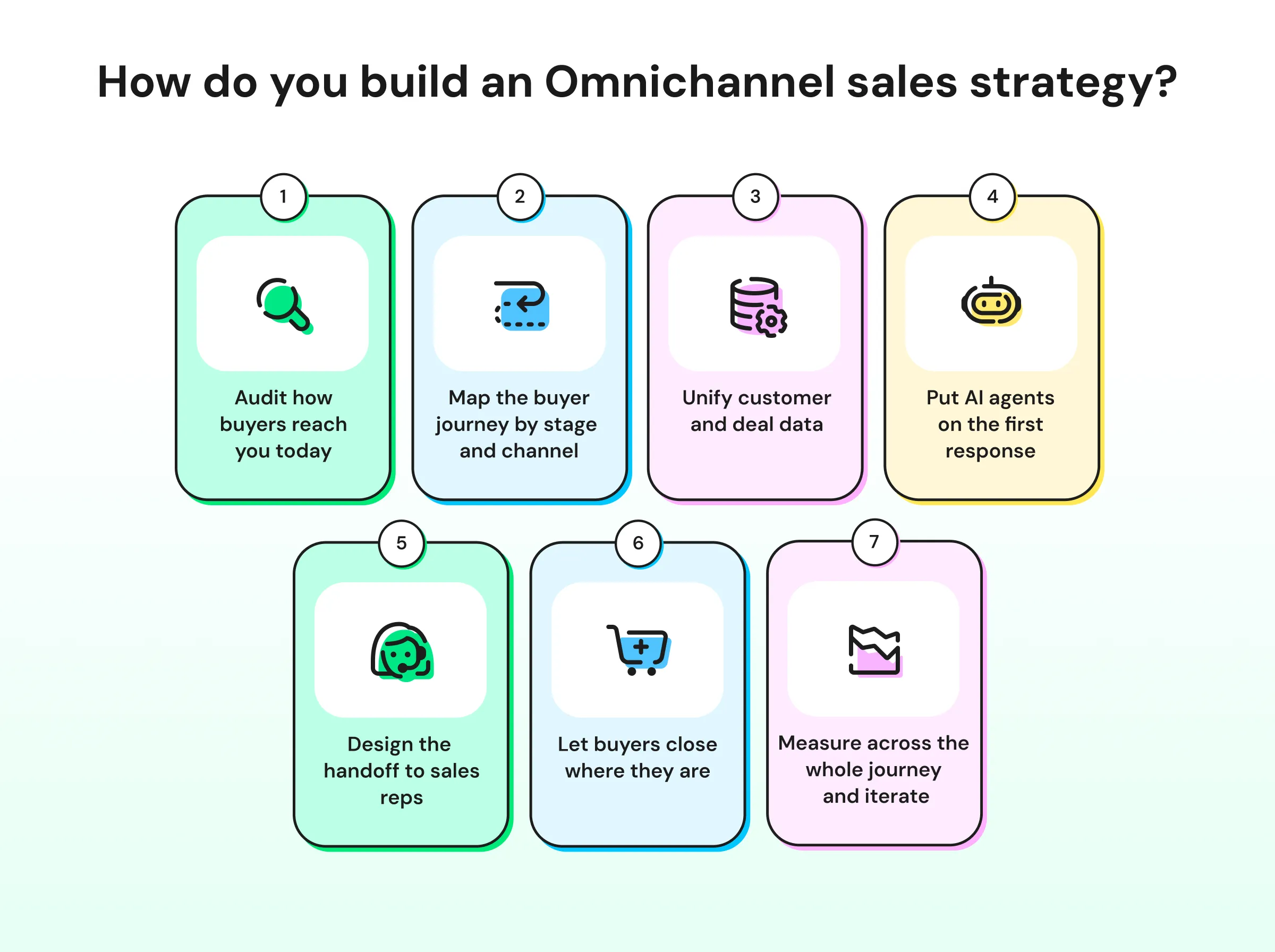
You can build an omnichannel sales strategy in seven steps, moving from audit to rollout to ongoing improvement.
Step 1: Audit How Buyers Reach You Today
List every channel where leads arrive and deals close, including informal ones such as a sales rep's personal WhatsApp. For each channel, note lead volume, response time, conversion rate, and whether conversations are logged in your CRM.
Step 2: Map the Buyer Journey by Stage and Channel
For each stage, from discovery to consideration to decision, identify the primary channel buyers use and the backup channel if they go quiet. Trace a few recent closed deals backward to see which touchpoints actually moved them forward.
Step 3: Unify Customer and Deal Data
Connect your messaging channels, store, and CRM so every conversation lands on the same customer and deal record. Clean up duplicate contacts before you connect channels, or the mess spreads to every system.
Step 4: Put AI Agents on the First Response
Use AI agents to reply instantly on every channel, answer product and pricing questions, and ask the qualifying questions your sales reps would ask.
Step 5: Design the Handoff to Sales Reps
Decide which signals trigger a handoff, such as budget confirmed, a demo requested, or a high-value cart, and route those conversations to the right sales rep with the full history attached. Set a response target for each lead tier.
Step 6: Let Buyers Close Where They Are
Remove the need to switch channels at the moment of purchase. Share catalogs, quotes, and payment links inside the conversation, so a buyer who is ready on WhatsApp can pay on WhatsApp. Our guide to WhatsApp Pay catalog checkout explains how in-chat checkout works.
Step 7: Measure Across the Whole Journey and Iterate
Track results by journey and channel mix, not by the last channel touched. Review weekly at first, then monthly, and adjust channel order, handoff rules, and AI coverage based on what closes deals.
How Do You Align Sales Teams With Omnichannel?
You align sales teams with omnichannel by giving everyone the same pipeline, the same customer view, and the same incentives, whatever channel a deal comes from.
- One shared pipeline: SDRs, account executives, and customer success managers work from the same deal records, so no one keeps a private spreadsheet or phone.
- Ownership by buyer, not by channel: Assign leads to sales reps by territory, segment, or product, not by whether the lead came in on WhatsApp or email. Our guide to running WhatsApp with multiple team members shows how to structure shared ownership.
- Shared inbox for every conversation: Sales reps reply from one workspace, and managers can see and reassign any conversation. The WhatsApp team inbox guide explains how this works in practice.
- Incentives that credit every channel: Commission and targets should reward closed revenue, not the channel where the deal happened to close, so sales reps never steer buyers to the channel that pays them best.
- Clear rules for AI agents and sales reps: Document what AI agents handle, when they hand off, and what sales reps own after the handoff.
- Smooth handoff to support: After the sale, pass the full history to your support team.
What Should an Omnichannel Sales Platform Include?
An omnichannel sales platform should connect your channels, your customer data, and your sales team in one place. Look for these capabilities:
- Unified inbox across sales channels: Messaging, social, web chat, and voice conversations in one workspace.
- CRM sync: Two-way connections to your CRM so every conversation, lead score, and deal update is logged automatically.
- AI agents for qualification: AI that asks qualifying questions, scores leads, and routes them.
- Intelligent handoff: Rules that transfer conversations to the right sales rep with full context.
- In-chat commerce: Catalogs, quotes, and payments inside the conversation.
- Routing and ownership: Assignment by team, territory, language, or deal value.
- Attribution: Tracking that connects ads and campaigns to conversations and revenue.
Let buyers check out from the chat. With WhatsApp Catalog, buyers browse your products in the chat and check out through a secure payment link, or WhatsApp Pay in supported markets. Explore WhatsApp Catalog |
What are Some Omnichannel Sales Examples?
Omnichannel sales is easiest to understand through real buying journeys. In each example below, the buyer changes channels but the sales conversation never restarts.
1. An Online Course Enrolment That Starts With an Ad
A parent taps a click-to-WhatsApp ad for a coding course. An AI agent answers questions about batches and fees, then asks the child's age and preferred schedule.
It routes the qualified lead to an admissions counselor, who calls the parent on WhatsApp, shares a payment link in the same chat, and confirms enrolment.
2. A D2C Purchase Closed Inside the Chat
A shopper comments on an Instagram post asking whether a jacket comes in her size.
The brand moves the conversation to a DM, recommends a size based on her previous order, and sends a catalog link. She adds the jacket to her cart and checks out in a couple of taps
3. A Home Services Booking That Moves From Web to Voice
A homeowner asks for a quote through web chat on a renovation company's website. The AI agent collects the room size and budget, then books a call.
The sales rep calls with the chat history already on screen, sends the quote on WhatsApp, and follows up there until the homeowner signs.
4. A B2B Reorder Handled Over Messaging
A retail buyer messages a wholesale supplier on WhatsApp to reorder stock. The AI agent confirms the usual order from the account's history and flags a new product line.
A sales rep follows up with volume pricing, and the order is confirmed and invoiced in the same thread.
5. A Store Visit That Continues Online
A customer tries a sofa in a showroom but wants to check measurements at home.
The store associate saves her details and sends fabric swatches on WhatsApp that evening. She confirms the order in the chat a week later, and the store credits the associate for the sale.
Which Metrics Should You Track for Omnichannel Sales?
The most useful omnichannel sales metrics measure the whole buying journey across channels. Track these in one report:
Metric | What It Measures | Why It Matters |
|---|---|---|
Speed to lead | Time from a buyer's first message to the first reply | Fast responses keep high-intent buyers engaged |
Qualification rate | Share of new leads that meet your qualification criteria | Shows lead quality and AI agent effectiveness |
Handoff-to-opportunity rate | Share of handed-off leads that become active deals | Reveals whether context transfers cleanly to sales reps |
Conversion rate by channel mix | Close rate for deals touching one channel vs several | Shows whether coordination actually lifts results |
Deal velocity | Time from first contact to closed deal | Measures whether omnichannel shortens the cycle |
Revenue per conversation | Revenue divided by sales conversations | Connects messaging effort to business results |
What are the Biggest Omnichannel Sales Challenges?
Most omnichannel sales challenges come from connecting channels without connecting the people, data, and rules behind them. Watch for these six:
- Data silos: Conversations on messaging apps or personal phones never reach the CRM. Fix it by routing every sales channel into one shared inbox connected to your CRM.
- Channel conflict: Sales reps or teams compete for credit depending on where a deal closes. Fix it by crediting closed revenue, not channels.
- Over-messaging buyers: Several teams follow up on the same lead across different channels. Fix it by setting one owner and a total contact limit per buyer.
- Inconsistent pricing and information: Offers differ between the website, the store, and the chat. Fix it by syncing product, price, and promotion data from one source.
- Missing opt-in and consent: Messaging outreach without permission damages trust, and WhatsApp users can block or report businesses that send messages they did not sign up for. Fix it by collecting opt-in on your website, in-store, or in the chat before you send sales messages.
- AI agents with no handoff: Buyers get stuck in automated loops when they need a person. Fix it by defining clear handoff triggers and routing those conversations to a sales rep with the full history.
How Does Wati Power Omnichannel Sales?
Wati is an agentic customer engagement platform that turns conversations into revenue growth across marketing, sales, and support.
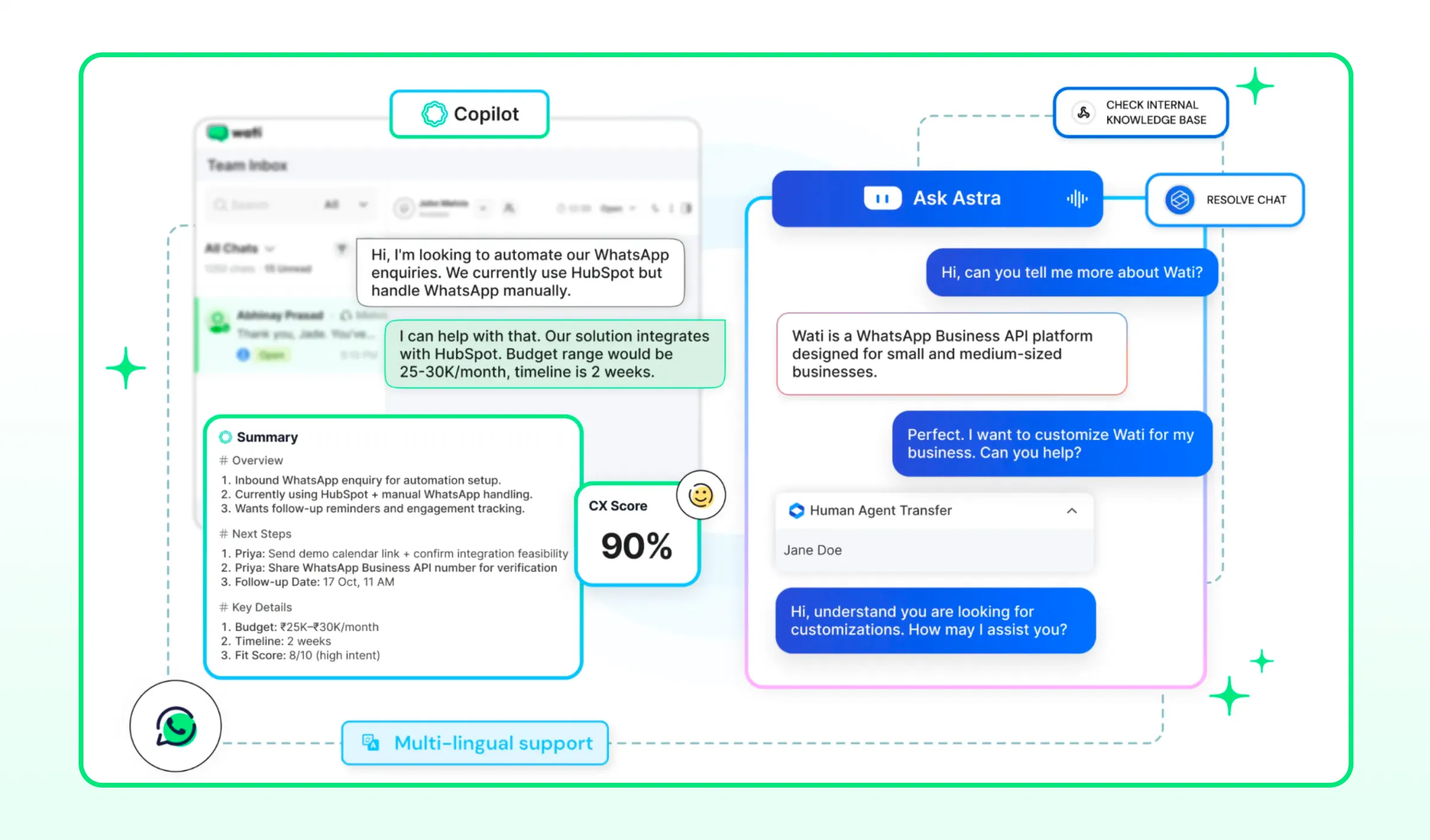
For sales teams, Wati's AI agents and sales reps work in tandem: Astra AI Agent handles conversations on WhatsApp and Instagram, by text or voice, and the Team Inbox brings Messenger, RCS, and more into the same workspace.
- Astra AI Agent for qualification: Astra AI Agent asks qualifying questions and routes sales-ready leads to the right rep around the clock, while Wati AI scores intent so reps know who to prioritize.
- Smart handoffs to sales reps: Astra AI Agent knows when a person is needed and transfers the conversation with full context.
Wati AI Copilot for sales reps: Wati AI Copilot suggests the best responses, summarizes long threads, and translates messages in one click, so sales reps move faster in every conversation.
- Bring your own AI: Teams can connect their own models, including OpenAI, Claude, Gemini, or custom models, to every conversation through Wati.
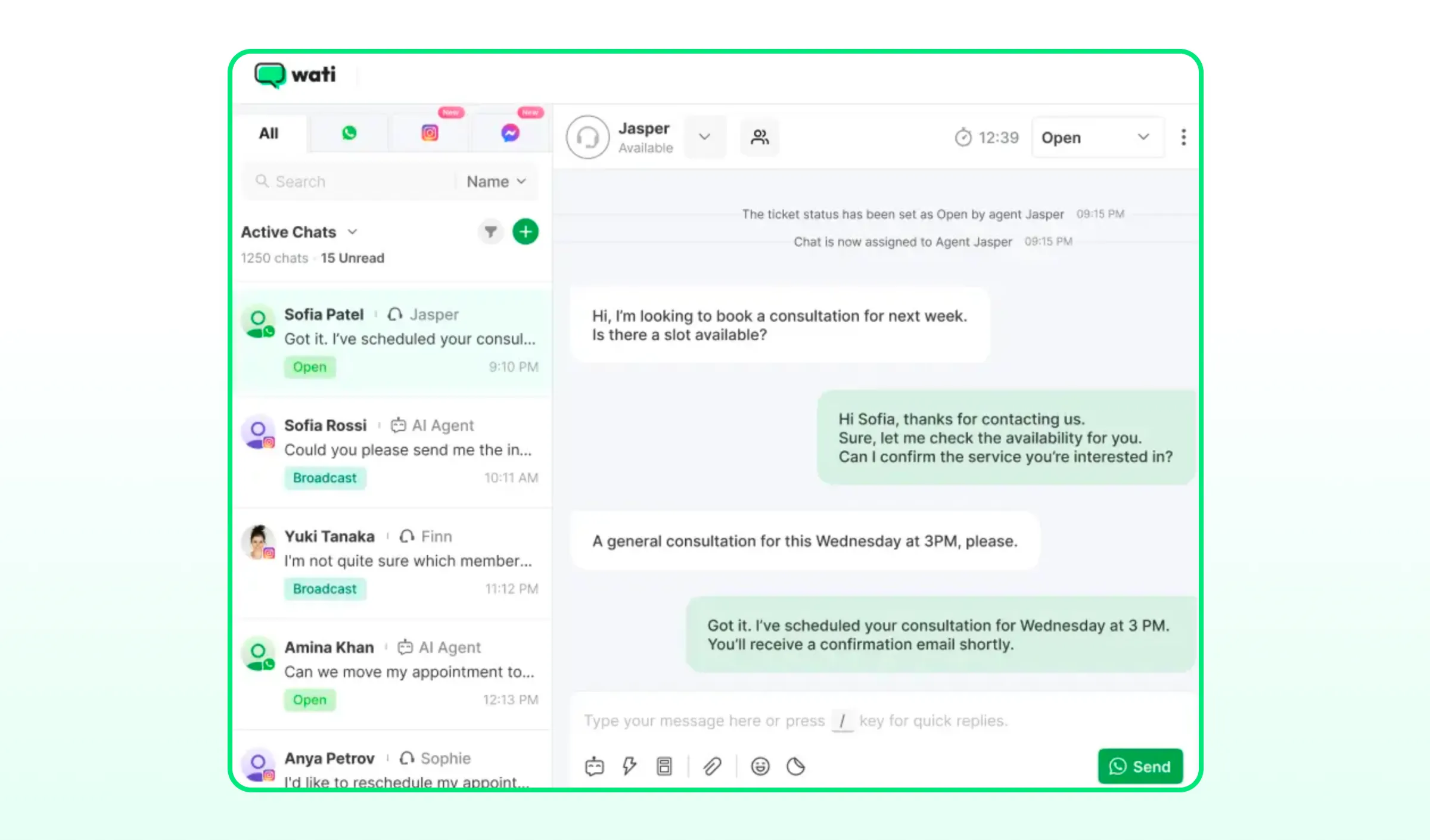
One shared inbox: The Team Inbox brings WhatsApp, Instagram and Facebook Messenger, and other channels together, with assignment and routing for sales teams.
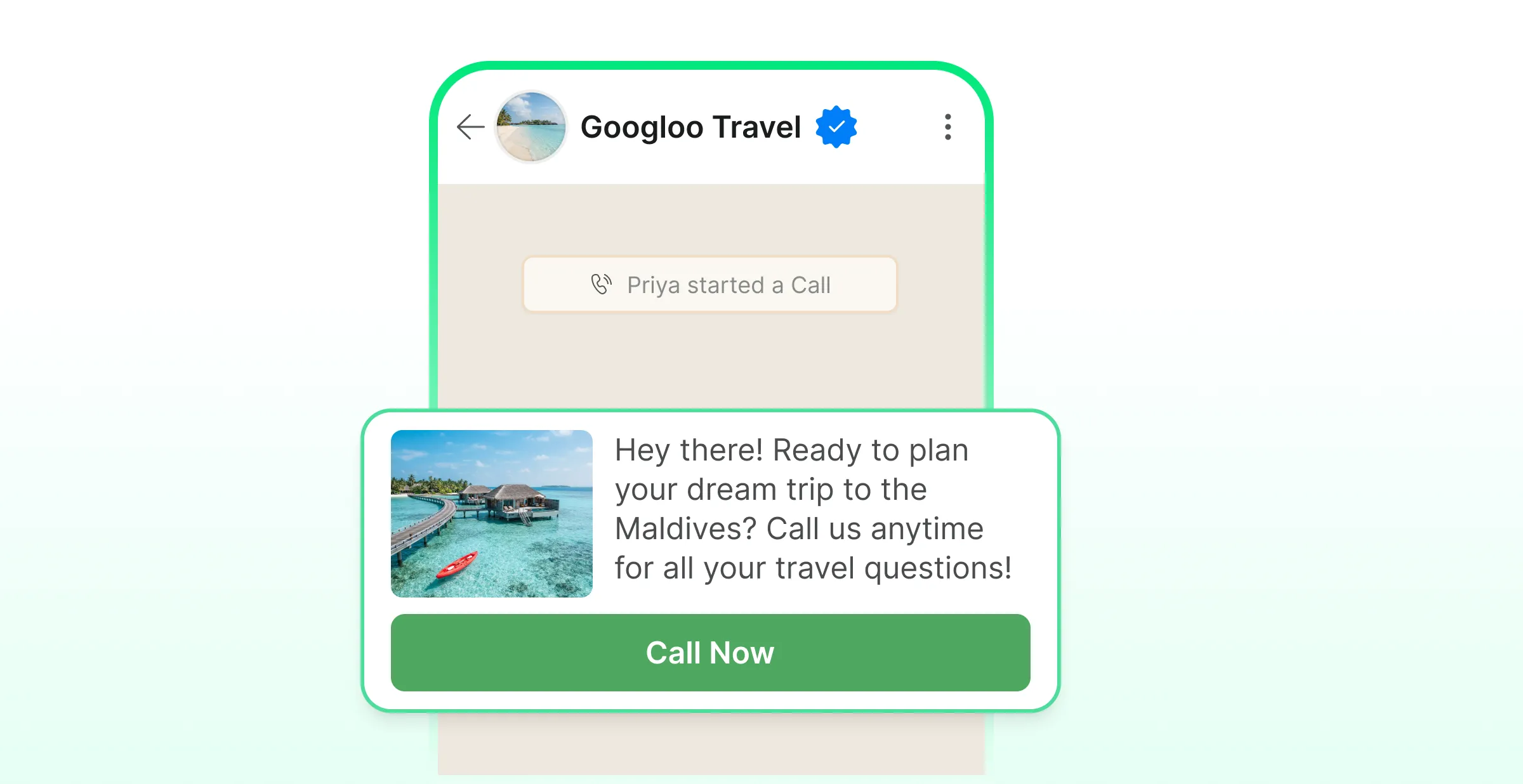
Selling inside the chat: With WhatsApp Catalog, buyers browse products in the chat and check out through a secure payment link, or WhatsApp Pay in supported markets, and WhatsApp Business Calling adds voice to the same thread.
- CRM and commerce integrations: Wati connects with HubSpot, Salesforce, Shopify, and 100+ other tools.
Results show up in the pipeline. Printcious, a B2B custom printing provider, cut quote response times from 3 hours to 3 seconds and lifted closing rates from 10% to between 25% and 30% after moving its sales conversations to Wati.
Wati is trusted by 16,000+ businesses in 190+ countries and is an official Meta Business, Google Partner, and official WhatsApp Business Solution Provider.
Start Building Your Omnichannel Sales Motion
Omnichannel sales turns scattered channels into one continuous buying conversation.
Start by auditing where buyers reach you, connect your channels and CRM, put AI agents on the first response, and design clean handoffs to your sales reps. Then let buyers close where they already are, and measure across the whole journey.
To keep the experience connected after the sale, see our guide to omnichannel customer service and for automated follow-ups that feed your pipeline, read our guide to omnichannel marketing automation.
Ready to turn conversations into revenue? Start your free Wati trial or book a demo.
Frequently asked questions
What is omnichannel sales?
Omnichannel sales is a sales approach that connects every channel a buyer uses, such as your website, store, messaging apps, voice, and email, around one shared customer record. Each interaction builds on the last, so buyers can move between channels without repeating themselves.
How do you optimize retail omnichannel sales?
You optimize retail omnichannel sales by keeping prices, stock, and promotions consistent across every channel, connecting in-store and online customer records, and letting shoppers ask questions and buy on messaging apps. Store associates should be able to follow up digitally and get credit for the sales they influence.
Why use headless commerce for omnichannel sales?
Headless commerce separates the storefront from the commerce engine behind it, so the same product, price, and inventory data can power your website, app, marketplaces, and chat channels through APIs. That makes it easier to add new sales channels without rebuilding your store each time.
Is omnichannel sales the same as a CRM?
No, omnichannel sales is not the same as a CRM, but most businesses need one to do it well. The CRM holds the shared customer and deal record that every channel updates, which is what lets sales reps and AI agents pick up a conversation with full context.
Who are omnichannel retailers?
Omnichannel retailers are brands that sell through several connected channels, such as physical stores, a website, an app, marketplaces, and messaging, with shared inventory, pricing, and customer records. A shopper can start with one retailer on one channel and finish on another without losing their cart, history, or offers.
Can AI agents close sales on their own?
AI agents can close simple, low-risk sales on their own, such as a repeat order or a product purchase with in-chat checkout. For complex or high-value deals, AI agents work best at qualifying and preparing the buyer, then handing the conversation to a sales rep who advises, negotiates, and closes.
Related posts
- How to Send Bulk Messages on WhatsApp Without Getting Blocked
Learn how to send bulk WhatsApp messages without getting blocked. Compare the WhatsApp Business app and API, messaging limits, costs, templates, and best practices for safe, compliant bulk messaging.
- Complete Guide to Instagram Automation
Instagram comment automation auto-replies to comments and DMs commenters within seconds via Meta's API. Covers strategy, use cases, and Wati setup.
- How to Set Up a TikTok Business Account: Step-by-Step Guide
Set up a TikTok Business Account step by step: switch from personal, pick a category, add your profile, and unlock ads and analytics.
- TikTok for Business: How to Set Up, Market, Advertise & Grow (2026)
Learn how to use TikTok for Business to build your brand, create content, run ads, manage customer messages, and turn views into growth.