
Too Long? Read This First
- Omnichannel marketing for education coordinates each admissions campaign across the channels prospective students and parents use, with one message and one plan.
- Admission marketing moves through five phases: pre-season, admissions open, peak season, closing, and post-admission.
- Each type of institution, from K-12 schools to edtech platforms, needs its own channel mix and messages.
- A shared calendar built around exams, results, and festivals keeps campaigns from colliding.
- Messaging prospects on WhatsApp or SMS requires their consent first, even if they started the chat by clicking an ad.
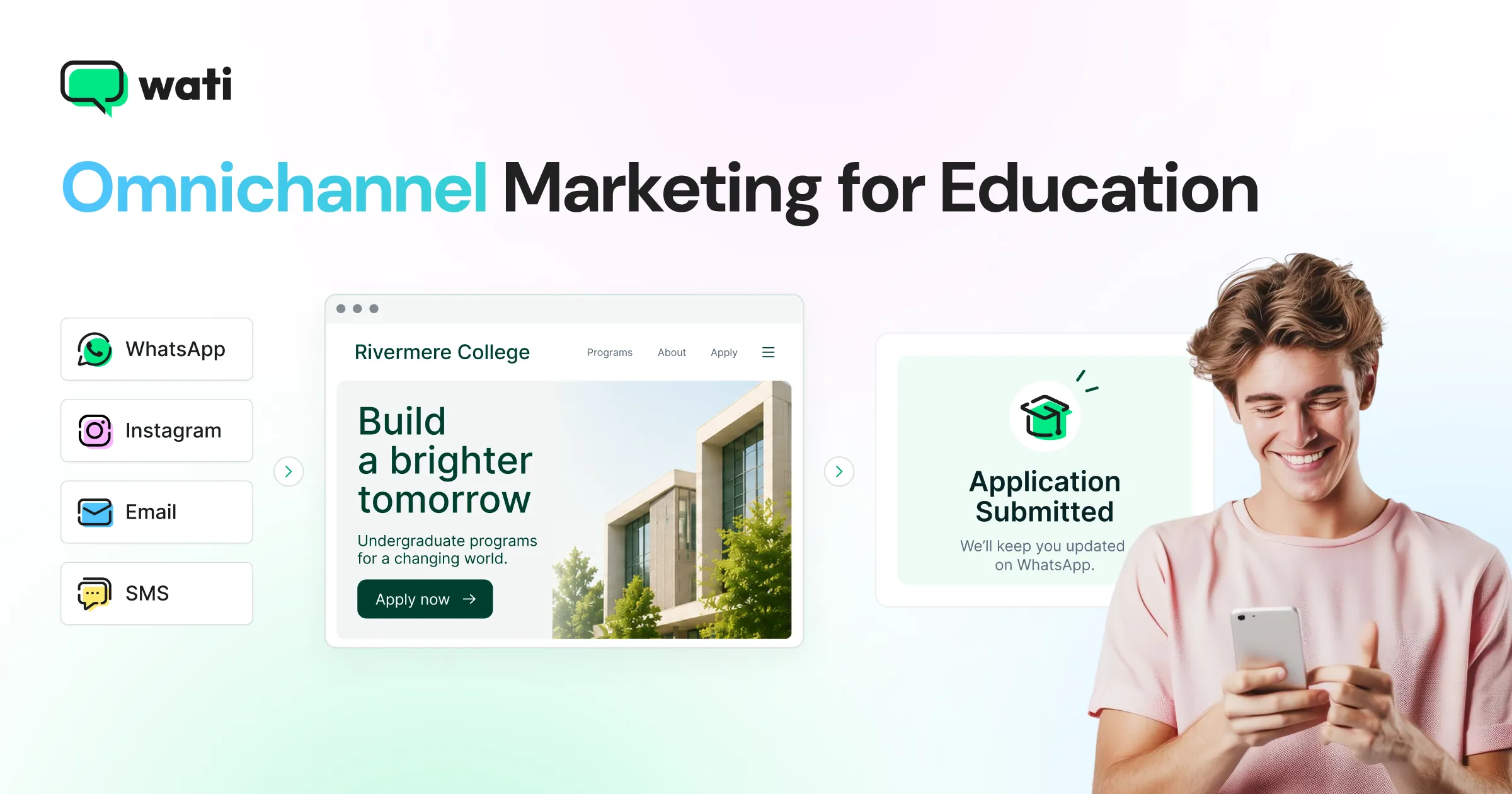
Omnichannel marketing for education means running each admissions campaign as one coordinated effort across Instagram, search, WhatsApp, email, events, and campus visits.
A prospective student or parent sees a single, consistent story wherever they look. The goal is simple: turn interest into applications before another institution does.
What makes education different is timing. Admissions don't run all year at the same pace. They rise and fall with exam calendars, results days, and academic-year starts, so the right message on the right channel shifts month by month. Wati for Education is built for that rhythm.
This guide is a playbook organized around the admission cycle. You'll see how campaigns shift across five phases, how each type of institution should approach marketing, and a library of admission campaign ideas you can adapt. We also cover building a marketing calendar, measuring campaigns, and the mistakes that cost institutions applications.
What is Omnichannel Marketing for Education?
Omnichannel marketing for education is the practice of planning admission campaigns once and running them across every channel an institution uses, with shared data, consistent messages, and clear handoffs between channels.
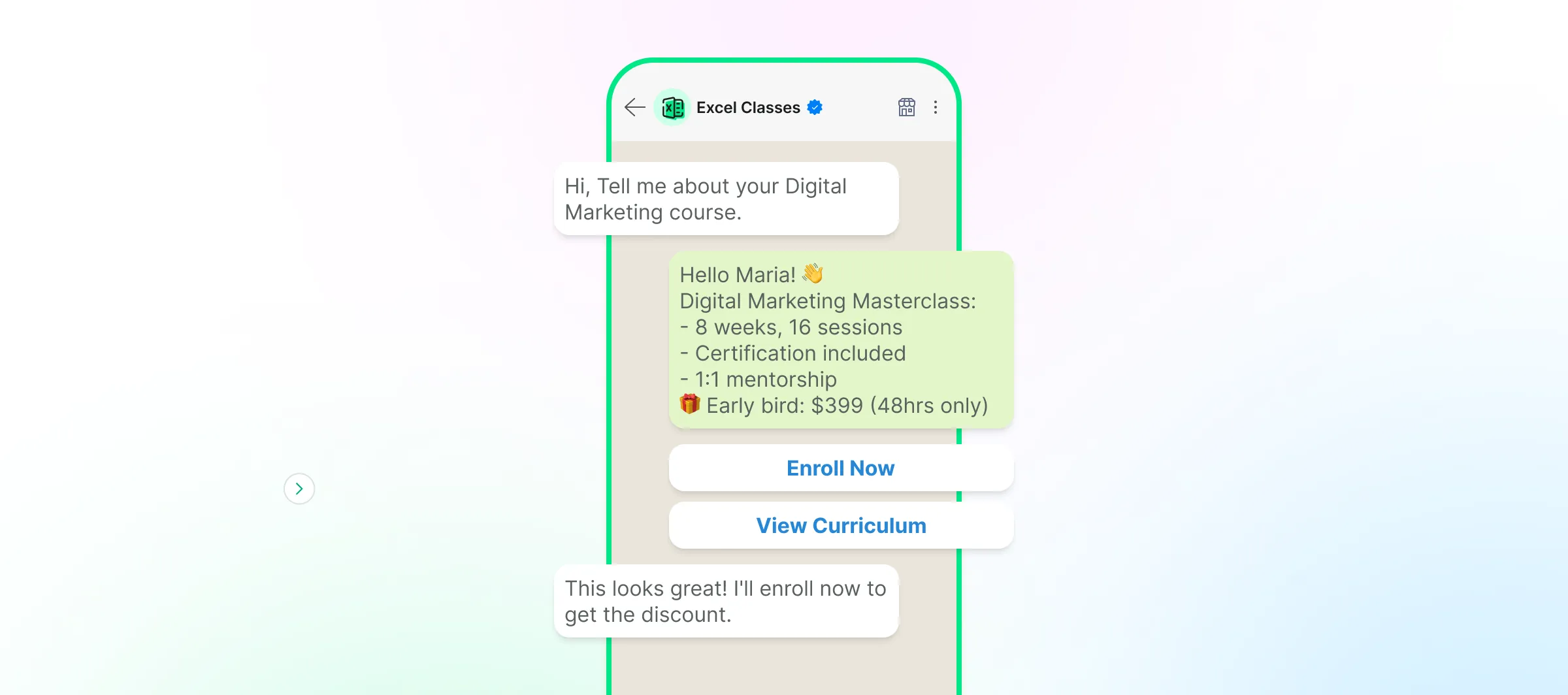
A parent who sees an Instagram reel about a school, clicks a search ad, and then messages on WhatsApp should experience one campaign, not three disconnected ones.
It sits alongside, but is different from, how an institution engages students after they make contact. Marketing is about attracting interest and turning it into applications.
For how the full student journey connects across departments after the first inquiry, see our guide to omnichannel customer engagement for education.
The scale of the opportunity is large. In India alone, enrolment in higher education reached about 4.50 crore students in 2023-24, according to the All India Survey on Higher Education released in July 2026.
Every one of those students was reached, persuaded, and enrolled by some combination of channels.
How Does Omnichannel Marketing Change Across the Admission Cycle?
Admission marketing follows five phases. Each one has its own goal, channel mix, and measure of success.
Phase 1: Pre-Season
Goal: build awareness and trust before admissions open.
Content does the heavy lifting here. Share campus life, student achievements, faculty profiles, and past results on Instagram and YouTube. Host open days and webinars, and invite past inquirers back. The aim is to be familiar by the time parents and students begin comparing options.
Wati helps you capture this early interest. When someone comments "fees?" or "admissions open?" on a post, an Instagram comment automation can reply with a DM and invite them to opt in for updates. Wati's campaign planning tools also flag seasonal moments early, so the busiest weeks are planned rather than rushed.
Sample message: "Thanks for your interest in Greenfield School! Reply YES to get updates when admissions open, plus an invite to our next open day."
Measure: reach, engagement, and opt-ins collected.
Phase 2: Admissions Open
Goal: turn awareness into inquiries.
Launch the campaign on every channel at once: search ads for high-intent queries, social ads for discovery, email to past inquirers, and a clear announcement on your website. Make the first step easy, such as a short inquiry form or a "message us" button.
Click-to-WhatsApp ads work well at this stage because they open a chat instead of a form. In Wati, each ad lead arrives tagged by campaign, ad set, and creative. Astra answers questions about fees, batches, and eligibility right away on WhatsApp and Instagram, and Dynamic WhatsApp Flows collect inquiry details as a short in-chat form.
A chat that started from an ad does not constitute permission for future marketing, so ask for opt-in during the conversation if you want to send updates later.
Sample message: "Hi! Admissions for 2027 are now open. Tap below to check eligibility, fees, and available seats for Grade 6."
Measure: inquiries by channel and cost per inquiry.
Phase 3: Peak Season
Goal: convert inquiries into applications while demand is highest.
Peaks arrive around board results, entrance exam results, and application deadlines. Interest spikes for a few days, and institutions that respond quickly win. Run deadline reminders, scholarship announcements, and "last seats" updates, but keep every claim accurate.
Send results-day messages only to prospects who opted in, using segmented broadcasts rather than one blast to everyone.
Wati can retarget people based on whether they read, replied, or clicked, and Astra scores each lead's intent so counselors call the most interested families first. Counselors can then call those families directly through WhatsApp Business Calling.
Sample message: "Congratulations on your results! Applications for the B.Com program close on Friday. Want a counselor to call you today?"
Measure: inquiry-to-application rate by campaign.
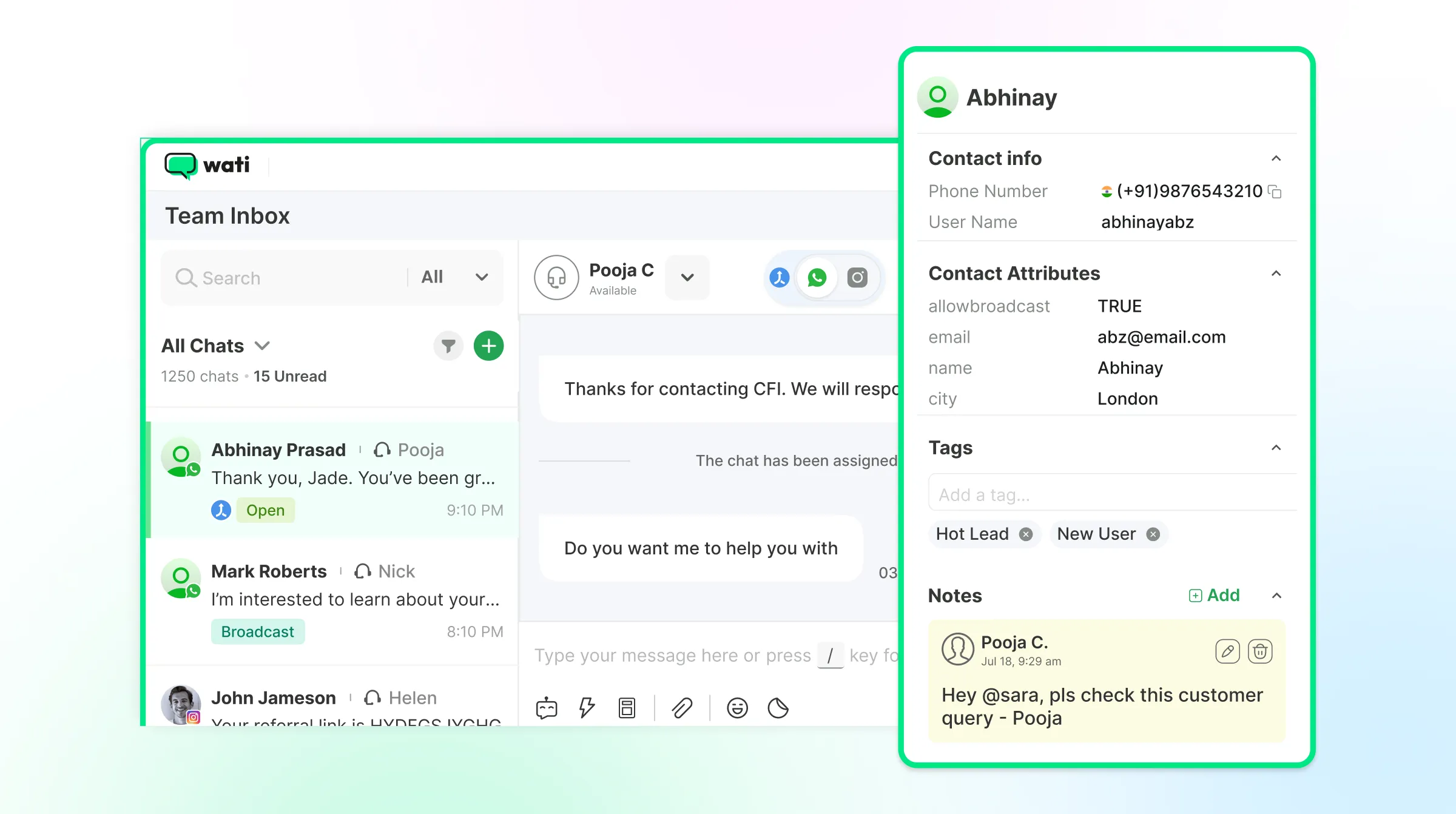
Give every counselor one view of every inquiry. Wati's Team Inbox brings WhatsApp, Instagram, and Messenger conversations into one workspace, so no admission question waits in a personal phone. Explore the Team Inbox |
Phase 4: Closing and Yield
Goal: turn offers into confirmed seats.
An accepted offer is not an enrolled student. Families still compare options, wait on other results, or delay fee payment. Send clear reminders about fee deadlines, documents, and orientation dates, and make it easy to ask last questions.
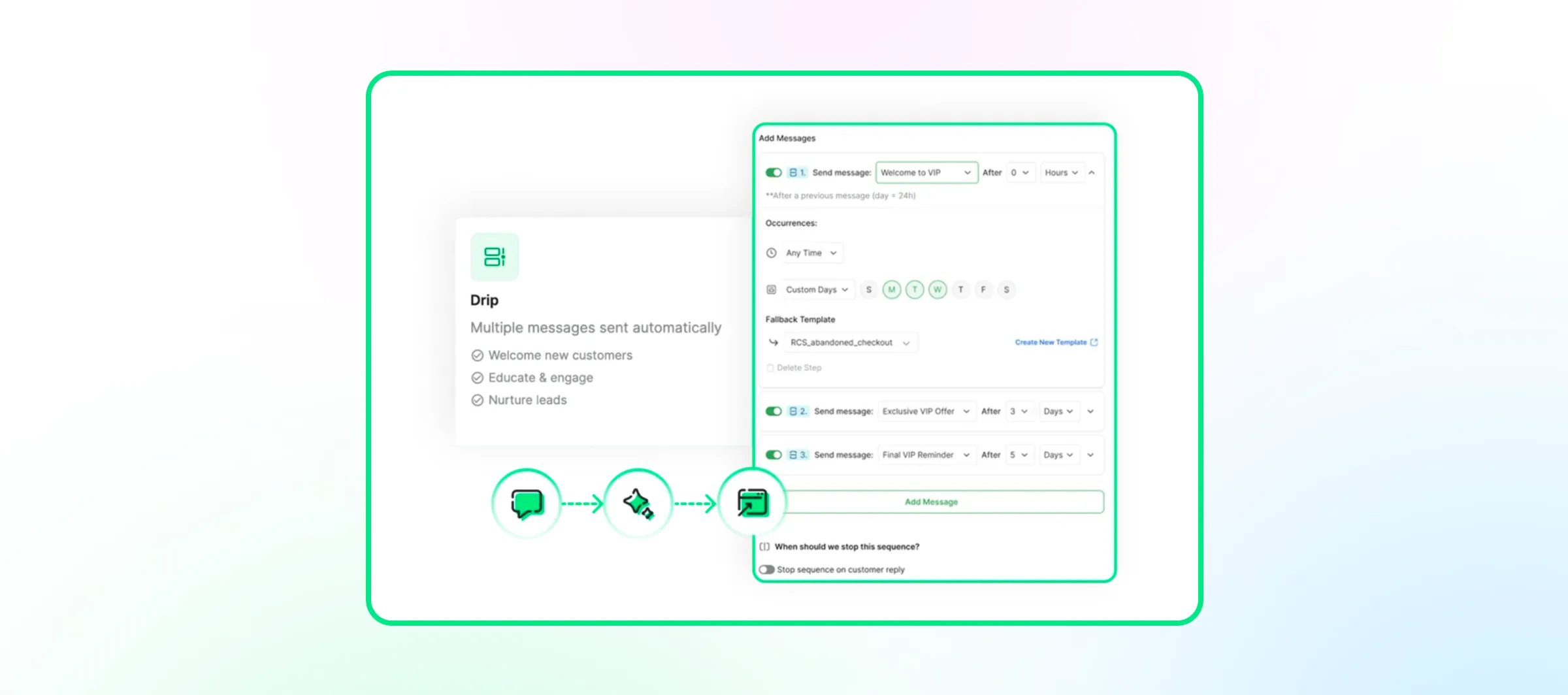
Drip campaigns in Wati can space these reminders over the final weeks. Predefined segments such as At Risk and Winback help you spot applicants who have gone quiet, and messages can fall back to email, SMS, or RCS on supported plans and markets.
Sample message: "Your seat is reserved until 30 June. Pay the first installment through the link below, or reply here with any questions."
Measure: offer-to-enrolment rate.
Phase 5: Post-Admission
Goal: turn new students into advocates and set up next year.
Once seats are filled, ask satisfied families for referrals and testimonials, share early student stories, and keep in touch with prospects who didn't enroll this year. Review what worked, then begin planning the following cycle.
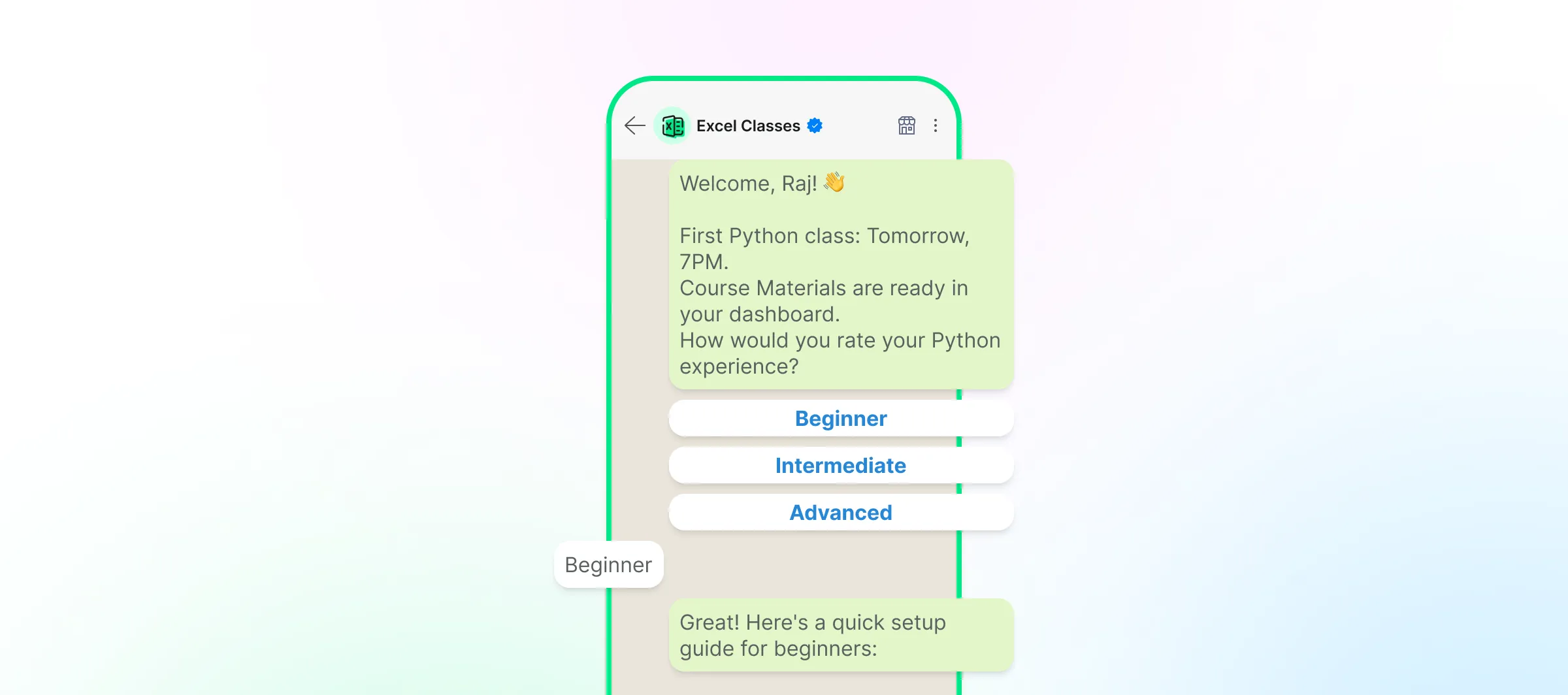
Wati Recommended Campaigns suggests upcoming sends based on your past campaigns, which speeds up planning for the new season. Contact records can also sync with tools like HubSpot or the Google Sheets integration, so next year's campaigns start with this year's data.
Sample message: "Welcome to the Greenfield family! Know someone looking for a school? Share this link, and you both get a fee benefit."
Measure: referral inquiries and opt-ins for the coming cycle.
How Should Schools, Colleges, Coaching Institutes & Edtech Teams Market Differently?
The five phases apply to every institution, but the audience, timing, and channel mix vary by segment.
School Marketing Strategies
K-12 schools market mainly to parents, who decide and pay. Trust, safety, location, fees, and results matter most.
Effective school marketing strategies combine campus tours, local events, parent testimonials (where permitted), and messaging apps for quick questions.
Parents often prefer WhatsApp for updates, so a shared inbox helps front-office staff answer quickly.
Ready-made templates schools can adapt are available in our post on WhatsApp for education.
College and Higher Education Marketing
Colleges and universities market mostly to students, with parents still influencing the choice.
College marketing strategies lean on social media, program-specific search ads, virtual tours, and student ambassadors.
Applicants compare programs, rankings, placements, and scholarships over many months, so consistent follow-up across channels matters more than any single ad.
Coaching and Test Prep Marketing
Coaching institutes run on exam calendars and batch start dates. Marketing peaks before new batches open and right after results are declared. Demo classes, topper results, and limited-seat batches drive decisions, and fast replies on WhatsApp often decide which institute a student joins.
Edtech Marketing
Edtech platforms sell online, often to parents who pay for a child's learning. Edtech marketing relies on performance ads, free trials or demo classes, and quick follow-up after sign-up. Astra AI Agent can qualify demo requests around the clock.
Study-Abroad Consultancy Marketing
Study-abroad consultancies guide students and their parents through a lengthy, document-heavy decision-making processlong, document-heavy decision.
Marketing works best when it builds credibility over months: country-specific webinars, visa and scholarship explainers, and success stories from past students.
Because applications involve many steps, counselors who reply quickly and keep each family's checklist moving tend to convert more inquiries into filed applications.
What are the Best Admission Campaign Ideas?
The best admission campaign ideas give prospects a reason to act now and an easy way to respond. Here are 16 ideas, grouped by institution type.
For K-12 schools:
1. A "day in the life" reel series showing classrooms, activities, and lunch breaks.
2. Open-house weekends with WhatsApp registration and a reminder the day before.
3. A sibling referral offer for current families.
4. Early-bird admission windows with a clear deadline.
For colleges and universities:
5. Program-specific landing pages paired with search ads for each course.
6. Live Q&A sessions with faculty and current students on Instagram.
7. Scholarship eligibility checkers that end in a counselor chat.
8. Alumni success stories by program and career path.
For coaching and test prep:
9. Free mock tests that capture contact details and consent.
10. Topper interviews published right after results.
11. "Last few seats" alerts for new batches, sent only to opted-in prospects.
12. Doubt-clearing sessions before major exams.
For edtech platforms:
13. Free demo classes booked directly from an ad.
14. Progress reports for trial users that show what they learned.
15. Parent-focused webinars on study habits and exam preparation.
16. Bundled course offers timed to the start of the academic year.
Choose two or three ideas per phase rather than running all of them at once. A few well-run campaigns outperform many rushed ones.
How Do You Build an Omnichannel Education Marketing Calendar?
You build an education marketing calendar by mapping the year around the dates your audience cares about, then assigning campaigns to each window. Plan in four layers:
1. Academic dates: academic-year start, term breaks, and application deadlines.
2. Exam and results dates: board exams, entrance tests, and results days.
3. Seasonal moments: festivals, holidays, and local events. For festive peaks, these Diwali marketing campaign ideas show how to plan ahead.
4. Always-on programs: referrals, alumni stories, and content that runs between peaks.
Put every channel on one shared calendar, so a social media push, an email sequence, and a WhatsApp broadcast never compete for one household's attention in a single week.
Wati's AI Campaign Calendar and Wati Recommended Campaigns show sent, scheduled, and recommended WhatsApp campaigns in one view, and queue holiday and seasonal moments early. Both are available on Pro and Business plans. You can learn how the recommendations work in this overview of AI-powered campaign tools.
How Do You Turn Open Days and Campus Visits Into Applications?
Open days and campus visits are often where a decision is made, but many institutions treat them as stand-alone events. An omnichannel approach connects them to everything before and after.
- Before the visit: promote the event on social media and email, confirm registrations on WhatsApp, and send directions plus a short agenda the day before.
- During the visit: use a QR code at the welcome desk that opens a WhatsApp chat, so visitors can save the conversation and ask questions later.
- After the visit: send a thank-you message within a day, with a link to apply and the name of a counselor who can help.
- For no-shows: share a recording or virtual tour, and offer another date.
The visit then becomes one step in a connected campaign instead of a one-off appearance. With Wati, registrations and follow-ups can run through a no-code chatbot, and each visitor's chat history stays in one place for the counselor who follows up.
How Should You Budget an Admission Campaign?
You should budget for an admissions campaign by phase because demand and cost per inquiry varyan admission campaign by phase, because demand and cost per inquiry change sharply across the cycle. A practical split looks like this:
- Pre-season: a modest share for content, brand ads, and open-day promotion. This is the cheapest time to build awareness.
- Admissions open: the largest share of acquisition spend, focused on search and social ads that drive inquiries.
- Peak season: a reserve for short bursts around results days and deadlines, when intent is highest and competition for attention is fierce.
- Closing: a small share for retargeting and reminders to applicants who haven't confirmed. Owned channels keep this phase inexpensive.
- Post-admission: minimal paid spend. Referrals and alumni content do most of the work.
Two rules keep the budget honest.
- First, hold back some funds until you see which channels produce applications, not just clicks.
- Second, compare cost per enrolled student by campaign at the end of the cycle and allocate the following year's budget based on what worked.
Owned channels reduce costs over time. Every prospect who opts in to WhatsApp, email, or SMS this season is someone you can reach again without paying for an ad.
How Do You Measure Admission Campaign Performance?
You measure admission campaigns by tracking each one from first touch to enrolment on every channel. Five metrics matter most:
Metric | What It Shows |
|---|---|
Cost per inquiry by channel | Which channels bring interest most efficiently |
Inquiry-to-application rate by campaign | Which campaigns attract serious prospects |
Offer-to-enrolment rate | How well closing campaigns secure seats |
Opt-in rate | How many prospects agree to hear from you again |
Assisted conversions | How often a channel contributes before the final step |
Look beyond the last click. A student might discover you on Instagram, research you through search, and apply after a WhatsApp conversation. Each of those touchpoints played a part.
With Wati, click-to-WhatsApp ad tagging shows which campaigns start conversations, and campaign reports show reads, replies, and clicks for each send.
What Mistakes Should Education Marketers Avoid?
Most education marketing mistakes stem from treating every audience and every week the same way. Avoid these five:
- Messaging without consent. Send WhatsApp or SMS marketing only to people who opted in. Student data is sensitive, especially for minors, so follow local rules.
- One message for parents and students. Parents care about safety, fees, and outcomes, while students care about campus life, courses, and friends. Write for each.
- Over-messaging at peak season. Several teams contacting one household on results day feels like pressure. Set a frequency cap that applies to all channels.
- Exaggerated claims. "Guaranteed admission" or unverifiable results damage trust and may break advertising rules. Keep claims factual.
- Stopping at the offer. Many applicants drop off between accepting an offer and paying fees. Keep campaigns running until seats are confirmed.
How Does Wati Help Education Teams Run Omnichannel Campaigns?
Wati is an agentic customer engagement platform that turns conversations into revenue growth across marketing, sales, and support.
For admissions teams, here is a checklist for setting it up before admissions open:
- Connect WhatsApp, Instagram, and Messenger to a single Team Inbox, and assign counselors to the appropriate teams.
- Switch on Instagram welcome and out-of-office rules, which Wati creates but leaves off until you activate them.
- Train Astra on your fees, programs, eligibility rules, and deadlines.
- Build an inquiry form with Dynamic WhatsApp Flows and connect it to HubSpot, Salesforce, or Google Sheets.
- Launch click-to-WhatsApp ads and add an opt-in question to the first reply.
- Review the AI Campaign Calendar and accept or adjust the recommended campaigns for your key dates.
- Prepare segments for past inquirers, current applicants, and prospects who have gone quiet.
- Turn on fallback channels for critical reminders, where your plan and market support them.
Fill Your Seats With Campaigns That Connect
Omnichannel marketing for education works when every channel follows the same admission plan and adapts to where families are in the cycle.
Map your season, choose a few strong campaigns per phase, write for parents and students separately, and keep going until seats are confirmed.
Ready to plan your upcoming admission season? Start your free Wati trial or book a demo.
Frequently asked questions
What is omnichannel marketing in education?
Omnichannel marketing in education is the practice of running admission campaigns across every channel an institution uses, with one plan and consistent messages. Typical channels include social media, search, messaging apps, email, and events. Prospects get a connected experience instead of separate messages from each channel.
When should schools start admission campaigns?
Most schools should begin building awareness three to six months before admissions open, then launch the main campaign when applications begin. The exact timing depends on your academic calendar and when parents in your area begin comparing options.
Which channels work best for education marketing?
The best channels depend on your audience. Parents often respond well to messaging apps, email, and in-person events, while students spend more time on Instagram, YouTube, and search. Most institutions combine social media, search ads, messaging, and campus visits.
How do you market to parents and students at the same time?
Run one campaign, but tailor the message and channel for each audience. Share fees, safety, and outcomes with parents, and campus life, courses, and peer stories with students.
Can schools send marketing messages on WhatsApp?
Yes, schools can send marketing messages on WhatsApp to people who have opted in, using approved message templates. They should also follow local data protection rules, take extra care with minors' information, and make it easy to opt out.
Related posts
- Instagram Comment Automation: How It Works and How to Set It Up in Wati
Instagram comment automation auto-replies to comments and DMs commenters within seconds via Meta's API. Covers strategy, use cases, and Wati setup.
- Shared Team Inbox for Instagram: A Buyer’s Checklist for 2026
Use this fastest checklist to evaluate any shared team inbox for Instagram, which covers DMs, comments, automation, and multi-channel support.
- How to Send Bulk Messages on WhatsApp Without Getting Blocked
Learn how to send bulk WhatsApp messages without getting blocked. Compare the WhatsApp Business app and API, messaging limits, costs, templates, and best practices for safe, compliant bulk messaging.
- How to Set Up a TikTok Business Account: Step-by-Step Guide
Set up a TikTok Business Account step by step: switch from personal, pick a category, add your profile, and unlock ads and analytics.